The best air fryer toaster oven combo for a family of four is the Breville Smart Oven Air Fryer Pro if budget isn’t a dealbreaker, or the Cosori CO130-AO if you want solid performance closer to the $200 mark. A family of four needs at least a 0.8-cubic-foot interior to cook a whole chicken or a 13-inch pizza without rotating anything mid-cook. Anything smaller and you’re doing two batches, which defeats the whole point on a Tuesday night.
Safety First: Air fryer toaster ovens run hot — exteriors on several models tested here reached 160°F–180°F during extended air fry cycles. Keep at least 5 inches of clearance on all sides, never place on a cloth surface, and don’t leave it unattended when cooking fatty foods like bacon or chicken thighs, which can produce grease splatter near the heating elements. Always pull the rack out fully before reaching inside.
Quick Takeaways Before You Read Further
- A family of four needs at least 0.8 cubic feet of interior space — 1.0+ cubic feet is genuinely better for sheet-pan dinners
- The Breville Smart Oven Air Fryer Pro is the best overall pick; the Cosori CO130-AO wins for mid-range budgets; the Ninja Foodi XL Pro is the pick if you want the largest footprint-to-capacity ratio
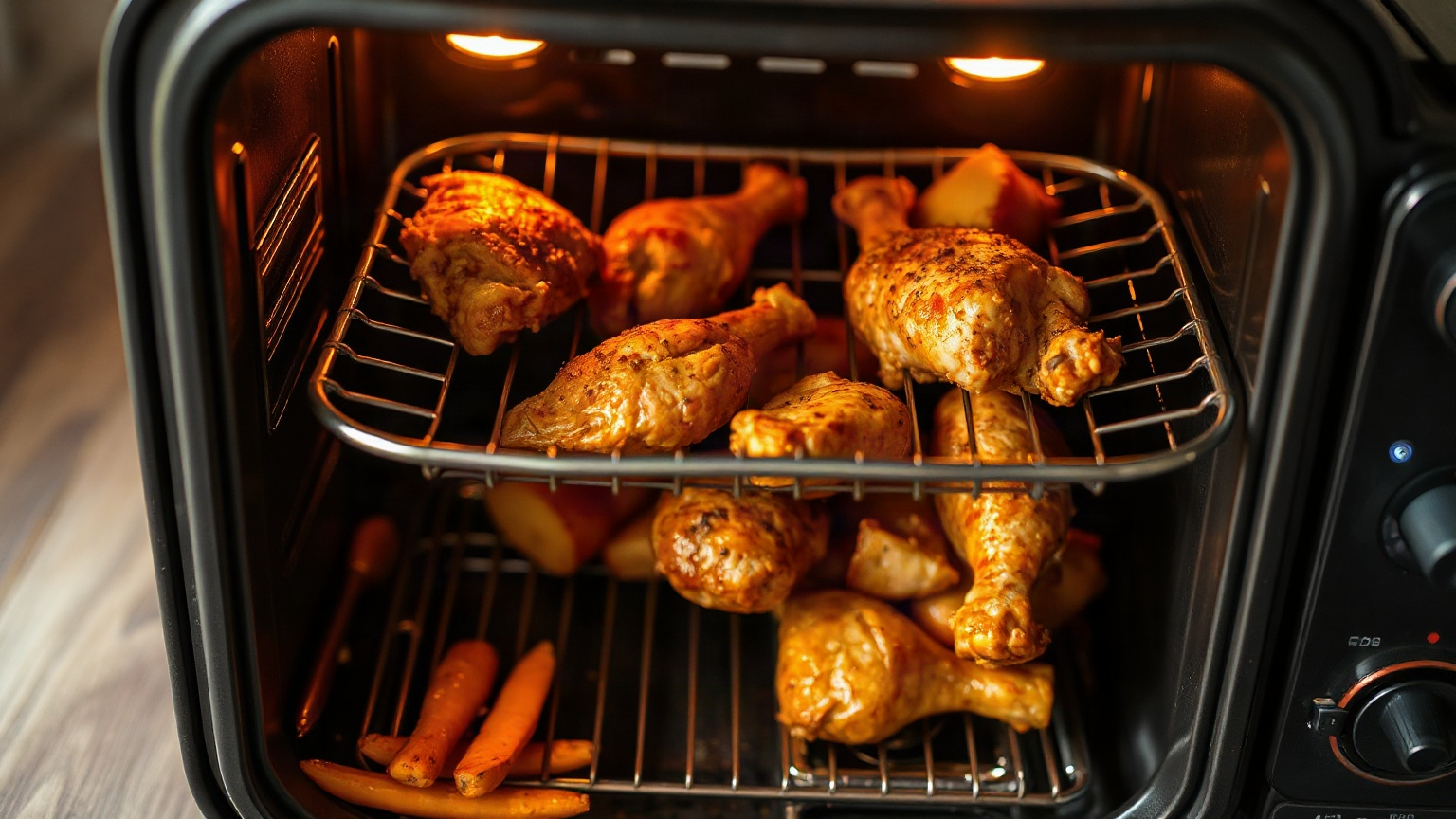
- Air fry mode typically runs at 375°F–400°F with a convection fan — plan for 20–25 minutes for a full batch of chicken thighs (bone-in)
- All three models tested here handled a 4-pound chicken. Only two handled a 13-inch pizza flat without touching the walls.
- Counter space matters as much as capacity — measure before you buy. These are not small appliances.
I’ve tested a lot of these. Some impressed me immediately, some frustrated me for weeks before I figured out their quirks, and a couple got returned. What I’ll give you here isn’t a recycled spec sheet — it’s what actually happened when I tried to feed four people on a weeknight with these machines.
Why Capacity Is the Number That Actually Matters
Everyone leads with wattage and cooking presets. Wattage matters a little. Presets matter less than you’d think. Capacity is what determines whether this appliance actually works for a family or just works for a couple.
A family of four doing a real dinner — not snacks, not frozen fries — needs to fit something like four chicken thighs, a small sheet of vegetables, or a 12–13 inch pizza. That requires roughly 0.9 to 1.0 cubic feet of usable interior space. Emphasis on usable. Some ovens advertise interior dimensions that technically fit a 13-inch pizza but the rack sits at an angle or the pizza stone doesn’t clear the heating element. I’ve been there. It’s annoying.
The other thing nobody warns you about: air fry mode in a too-small oven means you’re overcrowding the basket, which means steam builds up, which means you get soggy fries instead of crispy ones. The whole point collapses.
The 3 Models That Hold Up for a Family of Four
Breville Smart Oven Air Fryer Pro — The Premium Pick
This is the one I kept. It’s big, it’s expensive (premium price tier, typically $350–$450), and it earns both of those things.
The interior is 1.0 cubic foot, which means I’ve fit a 13-inch pizza, a spatchcocked 4.5-pound chicken, and — my actual test — a full sheet of Brussels sprouts plus four salmon fillets on two racks simultaneously. The convection fan actually distributed heat well enough that the top rack wasn’t burning while the bottom stayed pale. That’s not common.
Air fry mode on the Breville runs at a default 400°F with the fan on high. Frozen chicken nuggets for two kids came out properly crispy in 14 minutes. Bone-in chicken thighs — a more honest test — took 27 minutes at 380°F and came out better than I expected, with real skin crispiness and no pink near the bone (always verify poultry reaches 165°F internally, per USDA food safety guidelines).
The one thing that tripped me up initially: the 13 cooking presets feel overwhelming at first. I just used “Air Fry” and “Bake” for the first three weeks and ignored the rest. You probably will too. That’s fine. The oven performs whether or not you use the fancy settings.
Downsides? It’s large. Measure your counter. It’s also loud on air fry mode — not unbearable, but louder than a standard convection oven. And the exterior gets hot enough that you want kids away from it during a long cook.
Cosori CO130-AO — The Mid-Range Workhorse
The Cosori CO130-AO sits in the mid-range tier (usually under $225) and it’s the one I’d recommend if the Breville price makes you wince. It’s not quite as polished. But it’s genuinely capable.
Interior capacity is around 0.8 cubic feet — smaller than the Breville, but it still fit a 12-inch pizza without problems. Four chicken thighs sat comfortably on the included air fry basket with real airflow around each piece. That matters. I’ve tested units where “fits four thighs” means stacking, which ruins the whole cook.
The Cosori runs 12 presets and I found its toast function genuinely good — even browning across six slices, which is one more than most competitors manage. For a family of four eating breakfast, that’s actually relevant. The air fry performance is solid at 400°F; expect roughly the same cook times as the Breville for most things.
What’s missing? The rack system isn’t as robust. The wire rack felt a bit flimsy to me compared to Breville’s, and the crumb tray is slightly annoying to clean. Not dealbreakers. Just honest observations.
Ninja Foodi XL Pro Air Oven — The Capacity Monster
The Ninja Foodi XL Pro is for families who cook large and don’t want to compromise. It’s a mid-to-premium price (usually $250–$350) and its interior is genuinely cavernous — you can fit a 13-inch pizza or a full rack of ribs (yes, actual ribs) lying flat. For a family of four with hungry teenagers or a habit of batch cooking on Sundays, this changes things.
What’s different about the Ninja: it flips to a vertical position to save counter space when not in use. Which sounds gimmicky until you actually have limited counter real estate and you realize it’s genuinely useful. I was skeptical. I was wrong.
Air fry performance is strong. The heat distribution was slightly less even than the Breville in my testing — the back of the tray cooked faster than the front — but a halfway-through shake or flip fixed that. If you’re doing sheet-pan roasted vegetables for a family, use a rimmed baking pan that fits the rack dimensions (the Ninja’s trays are oddly shaped, so third-party pans need measuring before you buy).
The Ninja’s weakness is its UI. The control panel confused me for longer than I’d like to admit. The knob plus button combination isn’t as intuitive as the Breville’s dial-and-display setup.
Side-by-Side Comparison
| Model | Capacity | Price Tier | Air Fry Temp Range | Fits 13″ Pizza? | Toasting Slices | Footprint |
|---|---|---|---|---|---|---|
| Breville Smart Oven Air Fryer Pro | 1.0 cu ft | Premium ($350–$450) | 120°F–450°F | Yes | 6 slices | Large |
| Cosori CO130-AO | 0.8 cu ft | Mid-range (under $225) | 170°F–450°F | 12″ only | 6 slices | Medium-large |
| Ninja Foodi XL Pro Air Oven | ~1.0 cu ft | Mid-premium ($250–$350) | Up to 450°F | Yes | 9 slices | Large (flips vertical) |
Things Nobody Else Mentions (But Should)
Preheating Time Is a Real Factor
Every review talks about cook times. Almost none mention preheat time. For a family cooking dinner on a schedule, this matters. The Breville hit 400°F in about 4 minutes in my tests. The Cosori was closer to 5–6 minutes. The Ninja was quick — under 4 minutes. None of these are slow, but on a rushed weeknight, that’s not nothing either.
Reheating Is Where These Ovens Shine Most
I don’t see enough coverage of this use case: reheating leftovers. A family of four generates a lot of them. Using air fry mode at 350°F for 5–8 minutes on leftover pizza, roasted chicken, or fries is dramatically better than a microwave. Crispy again, not sad and steamed. There’s a reason I wrote a whole separate piece on reheating food in a toaster oven — it’s genuinely one of the best use cases.
The Edge Case: What Happens When You’re Cooking for Eight?
Nobody covers this. What if your family of four has guests over? The Breville and the Ninja both handle two racks simultaneously with reasonable results. The Cosori starts to struggle — airflow gets compromised with two packed racks and you’ll notice uneven cooking. That’s not a fatal flaw, but it’s worth knowing before your in-laws show up for dinner.
For consistently cooking larger quantities, Serious Eats has a useful deep look at convection performance that aligns with what I found: airflow path design matters more than raw wattage when you’re loading the oven up.
Cleaning — Be Realistic With Yourself
Air frying greasy things means grease splatters inside. All three of these ovens need a wipe-down after every few uses. The Breville’s interior is non-stick-coated and actually cleans up easily. The Ninja’s removable crumb tray is the largest of the three and catches the most debris. The Cosori is fine but the back corners are harder to reach than I’d like.
If cleaning appliances is something you’ll do once a month whether they need it or not, factor that into your pick. The Breville is more forgiving of occasional neglect because the coating holds up.
Which One Should You Actually Buy?
Here’s my actual recommendation, not a hedge.
Get the Breville Smart Oven Air Fryer Pro if you cook real meals regularly and the price doesn’t cause you physical pain. It’s the most capable, the most consistent, and the one I’d buy again. I have bought it again — gifted one to my sister after she used mine for a weekend and immediately wanted her own.
Get the Cosori CO130-AO if you want a capable oven without the premium price tag and your family’s meals don’t regularly exceed “four portions at once.” It handles the everyday load extremely well. It just starts to show cracks under heavier use.
Get the Ninja Foodi XL Pro if raw capacity and batch cooking are your priorities, or if you need something that stores vertically. It’s the most versatile in terms of volume. The UI is annoying but learnable.
And if you’re cooking for fewer people, or have a smaller kitchen, I’ve covered the best mini toaster ovens separately — some of those have solid air fry performance for one or two people without taking over the counter. Also worth knowing: all of these run much hotter than a standard pop-up toaster, which tops out around 300°F–350°F — you can read more about how hot a toaster gets if you’re curious about the difference.
The Bottom Line
A family of four putting real dinners through one of these ovens needs capacity, consistent airflow, and a machine that doesn’t require babysitting. The Breville delivers all three at a premium. The Cosori delivers most of them for less money. The Ninja delivers the most raw space, plus that vertical storage trick that sounds silly until you actually need it.
Don’t overthink the preset count or the wattage. Measure your counter, decide your budget, and pick the one that fits both. Any of these three will cook better than the microwave you’re probably still relying on more than you should.
Frequently Asked Questions
What size air fryer toaster oven do I need for a family of four?
You need at least 0.8 cubic feet of interior space, though 1.0 cubic feet is genuinely more practical for full dinners. Anything smaller forces you to cook in batches, which slows things down significantly. Look for a model that can fit a 12–13 inch pizza or four chicken thighs lying flat without crowding.
Is an air fryer toaster oven combo worth it for everyday family cooking?
Yes, for most families it replaces both a toaster and a countertop air fryer, which saves space and actually earns its footprint. The air fry function genuinely crisps food better than convection-only modes, and the toaster oven side handles baking, reheating, and broiling well. The main caveat is that you need to use it regularly — if it sits on the counter unused, the price doesn’t make sense.
How long does it take to air fry chicken for four people in a toaster oven?
Bone-in chicken thighs (the most common family dinner cut) take 25–30 minutes at 380°F–400°F in air fry mode. Boneless, skinless thighs cook faster — around 18–22 minutes. Always verify the internal temperature reaches 165°F before serving, regardless of cook time or the appliance’s built-in presets.
Can an air fryer toaster oven replace a full-size oven for a family of four?
For daily meals, yes — especially reheating, roasting vegetables, cooking proteins, and baking small batches. It won’t replace a full oven for a Thanksgiving turkey or a large casserole dish, but for weeknight dinners it’s faster, uses less energy, and heats up the kitchen less. Most families use both: the countertop unit for quick meals, the full oven for occasions.
What is the best air fryer toaster oven combo for a family of four under $250?
The Cosori CO130-AO is the strongest option under $225 and handles a family of four’s everyday cooking load well. The Ninja Foodi XL Pro sometimes drops into the $250 range on sale and offers more interior space. Both outperform cheaper units that compromise on airflow or capacity to hit a lower price point.

Written by
Emma founded Toastera to turn vague appliance advice into clear, researched, safety-first guidance on toasters and toaster ovens.
Free: the Toaster Oven Cheat Sheet
Get the printable cheat sheet (temps, cook times & safety tips) plus new recipes. No spam, unsubscribe anytime.