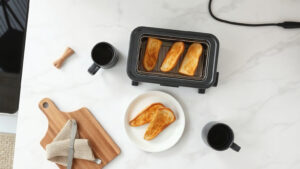
The best toaster oven under $100 right now is the Panasonic Flash Xpress — it toasts faster than almost anything else at this price, fits on a tight counter, and doesn’t require a learning curve. If you need convection or air frying, the Black+Decker TO3265XSSD steps in for under $80. And if you’re cooking for more than two people regularly, the Hamilton Beach 31126D is the one to stretch toward.
Safety First: Toaster ovens run hot — often 450°F or more — and the exterior walls can reach burn temperatures within minutes of switching on. Always keep at least 4 inches of clearance on all sides, never place anything on top while in use, and never leave the oven unattended when broiling or air frying at high heat. Unplug it when cleaning, and don’t use it on plastic surfaces or near curtains.
Quick Takeaways Before You Read On
- Three solid models exist under $100 that cover most home cooking needs — you don’t need to spend $200+ unless you’re doing serious volume cooking
- The Panasonic Flash Xpress tops the under-$100 field for compact, fast, consistent toasting and baking
- Wattage matters more than most buyers realize — aim for at least 1,200W for real cooking (not just toast)
- Convection at this price tier is real but modest — don’t expect Breville-level airflow
- The edge case most reviews miss: countertop depth. A unit that technically fits your counter can still block your outlets.
Why Most “Budget Toaster Oven” Lists Get It Wrong
I’ve tested toaster ovens on a cramped apartment counter for years. And I’ve burned a lot of toast in the name of research. The problem with most roundups is they include six or eight models, half of which are unavailable or out of stock, and then hedge so much on the verdict that you finish reading and still have no idea what to buy.
So here’s what I’m doing differently: three models. Real ones, currently available, with honest opinions on each. No affiliate-padding, no false balance. One of them will be right for you.
Quick note on pricing — I’m not going to quote exact dollar figures because they move around. What I’ll say is that all three models I’m covering have consistently sat below the $100 mark on Amazon and major retailers. I’ll flag which is cheapest, which is mid-range, and which pushes closest to that $100 ceiling.
The 3 Toaster Ovens Under $100 Actually Worth Buying
1. Panasonic Flash Xpress (NB-G110P) — Best Overall Under $100
This is my personal daily-driver. Has been for two years. The Flash Xpress uses a double infrared heating system instead of traditional coils, which means it preheats in essentially zero time — you press the button and it’s already doing something useful. No waiting. That alone sets it apart from every other option at this price.
It’s small. Like, genuinely compact. Six slices of bread is a stretch, and you won’t fit a 9×13 pan in here. But for one to two people, it handles toast, reheated leftovers, roasted vegetables, and frozen snacks without complaint. I’ve made small batches of cookies in it at 350°F using a toaster-oven-sized baking pan and they came out evenly browned on the bottom, which is not a given at this price.
The one thing that tripped me up early: the timer maxes out at 25 minutes for most modes. That’s enough for most tasks, but if you’re slow-roasting something, you’ll need to reset it. Minor annoyance. Also, it doesn’t have convection. If air frying or convection is important to you, skip to option two.
Price tier: mid-range (typically $60–$80). It’s the sweet spot of this list.
2. Black+Decker TO3265XSSD — Best for Convection Cooking Under $100
The Black+Decker TO3265XSSD is not glamorous. The stainless finish picks up fingerprints like it’s trying to win something. But it holds a full 6-slice capacity, includes a convection fan, and runs at 1,500W — which is genuinely useful for getting chicken thighs properly cooked without a soggy top.
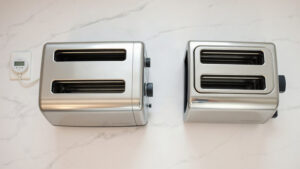
I tested it side by side with the Panasonic on frozen pizza. The Panasonic was faster. The Black+Decker produced a crispier crust, probably from the convection airflow. Neither result was bad. It really depends on what you’re making most often.
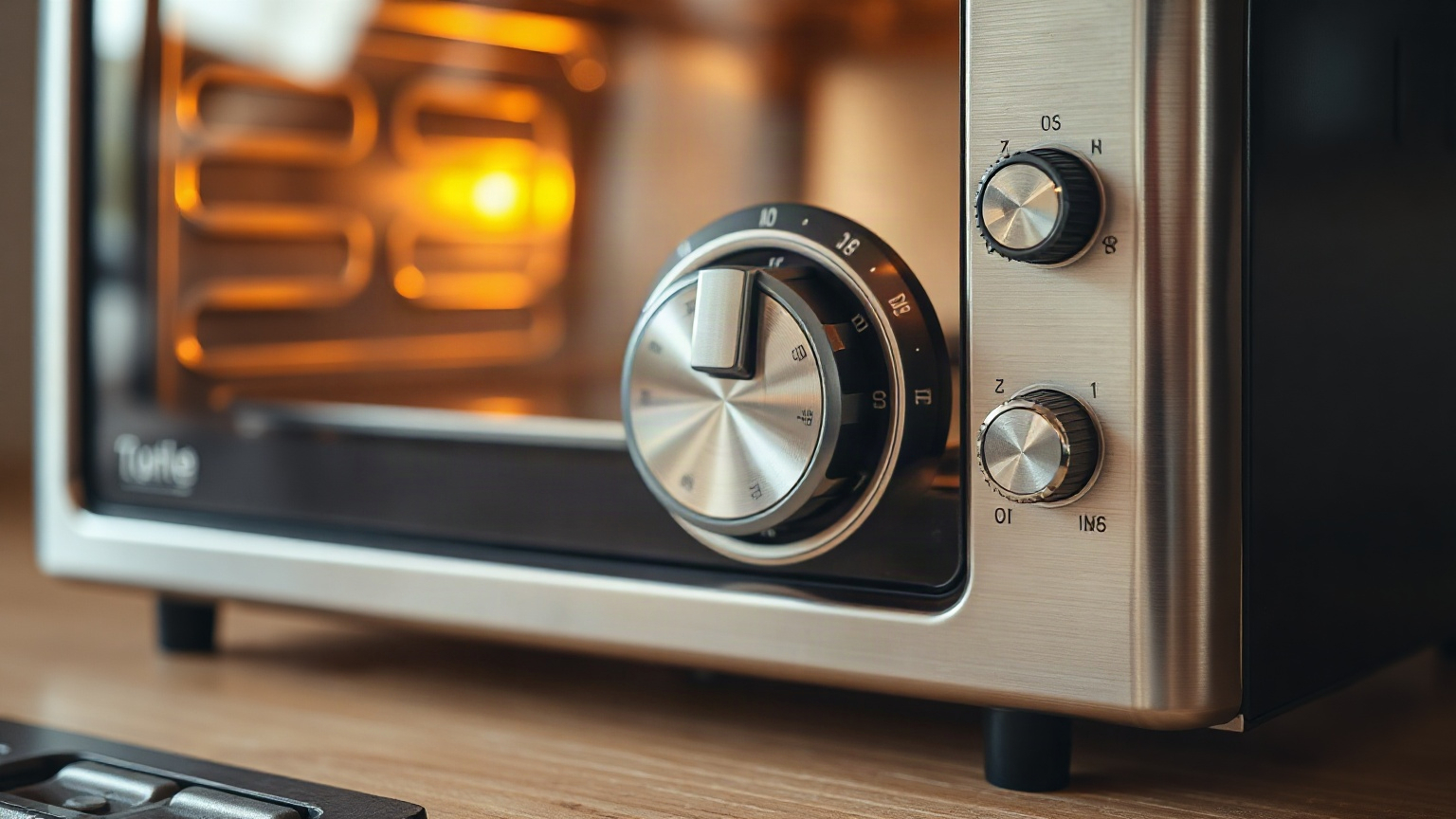
The controls are old-school dials. Some people love that (no software glitches, no learning menu systems). I find the temperature dial a little imprecise — the 350°F mark is close to 375°F if you don’t look carefully. Worth calibrating with an oven thermometer early on, especially if you bake.
Price tier: budget (often under $60–$70, sometimes on sale for less). The value here is hard to argue with.
3. Hamilton Beach 31126D — Best for Families or Batch Cooking
This one’s the largest of the three and it shows. The Hamilton Beach 31126D fits a 12-inch pizza, holds up to 6 slices, and has a convection setting alongside standard bake, broil, and toast functions. It’s the closest you’ll get to a full oven replacement at this price — not identical, obviously, but functional for real weeknight cooking.
I used it to roast a tray of broccoli and chicken at 400°F convection for 22 minutes. Chicken reached 165°F internal (always check that, per USDA poultry guidelines), broccoli edges crisped up properly. Not bad for a sub-$100 machine.
The footprint is noticeably bigger than the other two. Measure your counter before buying — specifically the depth, not just the width. Plenty of people find it blocks the outlet behind it. That’s the edge case most reviews don’t mention, but it’s a real hassle in a small kitchen.
Price tier: mid-to-high end of the budget range (usually $75–$100). Still under the ceiling, but buy it when it’s on sale.
Head-to-Head Comparison
| Feature | Panasonic Flash Xpress | Black+Decker TO3265XSSD | Hamilton Beach 31126D |
|---|---|---|---|
| Wattage | 1,300W | 1,500W | 1,500W |
| Capacity | 4 slices / small items | 6 slices / 12″ pizza | 6 slices / 12″ pizza |
| Convection | No | Yes | Yes |
| Heating Technology | Double infrared | Standard coil | Standard coil |
| Controls | Digital presets | Manual dials | Digital + dials |
| Price Tier | Mid ($60–$80) | Budget (under $70) | Mid-high ($75–$100) |
| Best For | 1–2 people, fast results | Convection on a budget | Families, batch cooking |
What to Actually Look for at This Price
Wattage: The Number Most People Ignore
Anything under 1,200W is really just a glorified toast machine. It’ll technically bake things, but slowly and unevenly. At 1,300–1,500W, you’re in the range where actual cooking happens. All three models above hit that threshold. That’s not a coincidence — it’s why I picked them.
For more context on how heating elements work and what temperatures matter, our guide on how hot a toaster gets covers the mechanics in detail.
Capacity vs. Counter Space
Everyone wants a 6-slice oven but not everyone has the counter for it. The Panasonic is genuinely small — about 13 inches wide and 12 inches deep. The Hamilton Beach is more like 19 by 15. Before you order, measure. Tape a piece of paper on your counter the dimensions of the unit. It sounds ridiculous. It will save you a return trip.
Convection: Real Benefit or Marketing?
At this price, the convection fans are smaller and less powerful than what you’d get on a $200+ unit like the Breville Smart Oven. But they’re not useless. You’ll notice the difference on things like roasted vegetables, chicken skin, and anything you want a crispy exterior on. If most of your toaster oven use is toast and reheating, convection isn’t something to pay up for. If you’re actually cooking meals in it, it matters.
Speaking of reheating — we’ve got a full breakdown of reheating food in a toaster oven that covers times and temperatures for common leftovers.
The Edge Case Most Reviews Miss: Outlet Placement
This one genuinely bugs me that it’s not covered more often. A toaster oven with a cord that exits from the back of the unit — which most of them do — needs to sit far enough from the wall that the cord doesn’t bend sharply. On a deep enough counter this is fine. On a shallow counter against a tile backsplash, you end up either pushing the unit too far forward (blocking workspace) or bending the cord in ways that seem fine until they’re not. The Panasonic Flash Xpress has a side-exit cord which is a small but genuinely useful design choice in tight spaces.
Accessories Worth Adding
The racks and pans that come with budget toaster ovens are usually thin and warp after a few months of high heat. Worth replacing early. A decent toaster oven wire rack that fits your model will outlast the included one by years and give you better airflow. Serious Eats has a solid primer on what separates budget and premium toaster ovens if you want a deeper engineering breakdown.
If you’re looking at even smaller options, our best mini toaster ovens list covers some compact models that cost even less.
My Honest Pick
For most single people or couples: buy the Panasonic Flash Xpress. Full stop. It’s fast, consistent, and small enough to live on any counter without dominating it. The lack of convection genuinely doesn’t matter for 80% of what people actually use a toaster oven for.
If you cook actual meals in it and convection matters: the Black+Decker TO3265XSSD at its price point is almost absurdly good value. It’s not pretty and the dials are imprecise, but the results are solid.
Cooking for three or four people regularly? Hamilton Beach 31126D. It’s the only one of these that can handle it without everything feeling like a compromise.
None of them are perfect. But one of them is probably perfect enough for your kitchen.
Frequently Asked Questions
What is the best toaster oven under $100 for everyday use?
The Panasonic Flash Xpress is the best toaster oven under $100 for most households. It heats faster than standard coil ovens, maintains consistent temperatures, and fits on small counters without much trouble. It doesn’t have convection, but for toast, reheating, and light baking it outperforms almost everything else at this price.
Can a toaster oven under $100 really replace a full-size oven?
For small households cooking smaller portions, yes — practically speaking. You can bake, broil, roast, and reheat in a quality budget toaster oven without meaningful quality loss on most dishes. Where it falls short is batch cooking, large roasts, or anything requiring more than about a 9×12 inch pan.
How many watts should a toaster oven have for cooking real meals?
Aim for at least 1,200W, and preferably 1,500W if you’re using convection. Lower-wattage models take longer to reach cooking temperatures and tend to produce uneven results on anything thicker than bread. All three models covered in this article meet or exceed 1,300W.
Is convection worth it in a budget toaster oven?
It depends on what you’re cooking. For toast and reheating leftovers, convection adds little. For roasted vegetables, chicken, or anything you want properly crisped, the circulating air makes a real difference even on a budget fan. If you cook actual meals more than a few times a week, pay the small premium for convection.
What temperature does a toaster oven reach, and is it accurate?
Most toaster ovens max out between 450°F and 500°F. At the budget end of the market, the dial or digital setting often runs 15–25°F off from the actual internal temperature — which matters when baking. A cheap oven thermometer placed inside for the first few uses will tell you how accurate your specific unit is, and you can adjust your settings accordingly.

Written by
Emma founded Toastera to turn vague appliance advice into clear, researched, safety-first guidance on toasters and toaster ovens.
Free: the Toaster Oven Cheat Sheet
Get the printable cheat sheet (temps, cook times & safety tips) plus new recipes. No spam, unsubscribe anytime.