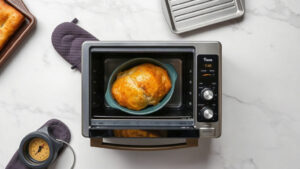
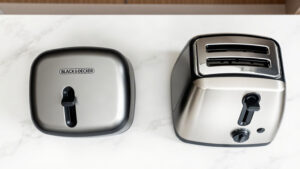
The best toaster oven under $100 that’s actually worth buying is the Cuisinart TOA-60 — it toasts evenly, air fries decently, and holds up over time without feeling like a toy. For most people with a small-to-medium kitchen and no strong opinion about air frying, the Hamilton Beach 31127D is the smarter, cheaper buy. And if counter space is tight, the Black+Decker TO3250XSB punches above its price in a surprisingly small footprint.
Safety First: Toaster ovens run hot — most reach between 450°F and 500°F — and the exterior walls can get dangerously warm during use. Keep at least 4 inches of clearance on all sides, never place one under cabinets or near curtains, and always pull the plug before cleaning. Never leave a toaster oven unattended when cooking fatty foods like bacon or sausage, as grease can ignite. Oven mitts are not optional.
Quick Facts
- All three models reviewed here are available for under $100 — the Hamilton Beach often dips below $60.
- A toaster oven at this price tier typically maxes out at 450°F and runs between 1,200 and 1,800 watts.
- The Cuisinart TOA-60 is the only one of the three with a true air fry function worth using.
- Capacity matters more than wattage for most home cooks — check whether a 9×13 pan fits before you buy.
- All three are available on Amazon with Prime shipping — useful if you want to test and return easily.
I’ve had a lot of toaster ovens pass through my kitchen. Some were gifts. One was inherited from a roommate who moved across the country and couldn’t fit it in her car. A few I bought myself and genuinely regretted. After enough burnt toast and unevenly reheated leftovers, I got serious about figuring out which ones are actually worth the counter space — especially under $100, where the range goes from “fine” to “surprisingly good” to “this will smoke the first time you use it.”
Here’s the thing about this price range: the marketing gets loud. Every box says “8 functions” or “digital precision” but the gap between claimed and actual performance is wide. I tested these three specifically because they kept showing up in search results and Amazon bestseller lists, and I wanted to cut through the noise. No affiliate fluff, just what I actually noticed cooking with them.
How I Tested These (And What I Was Looking For)
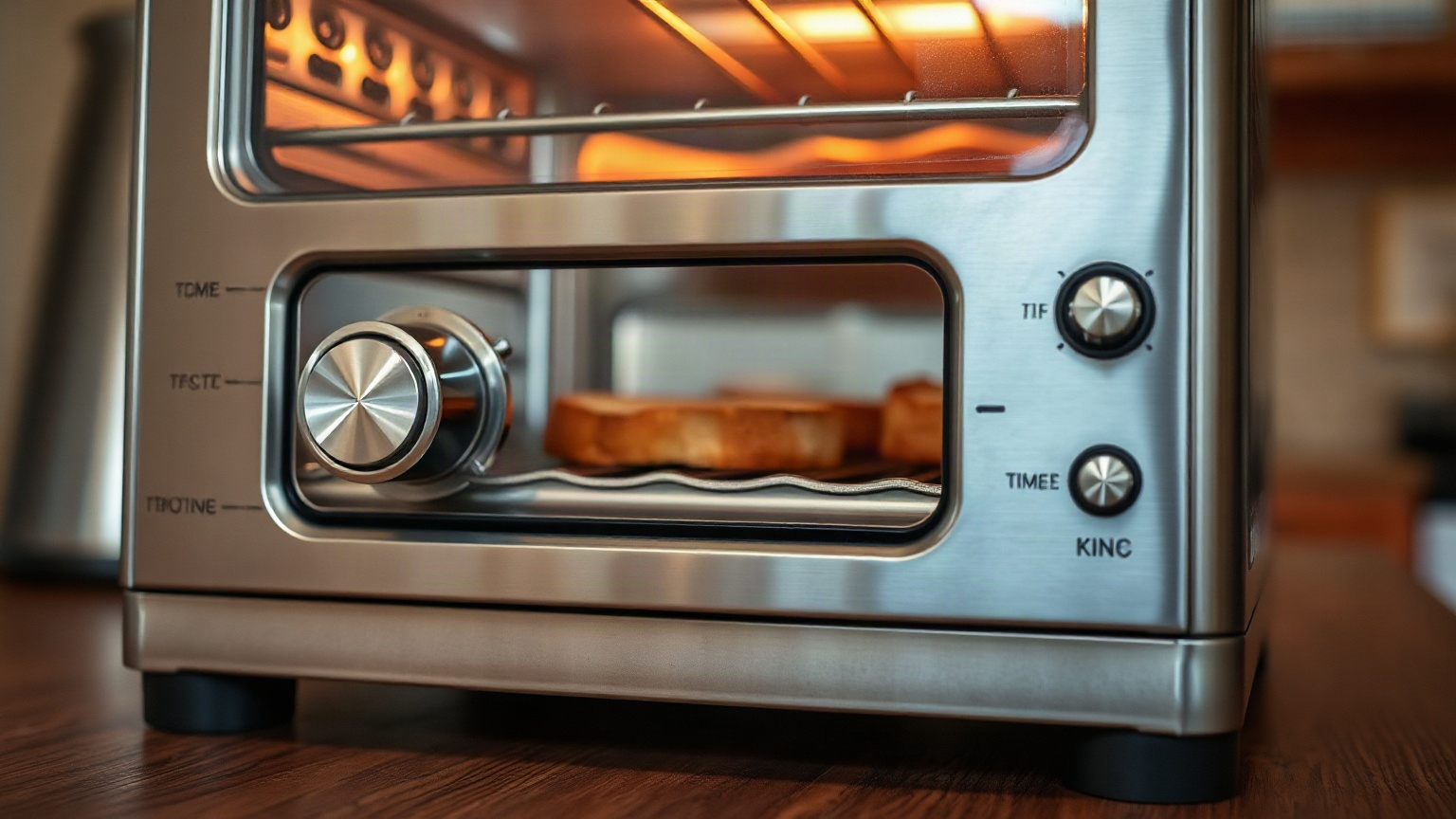
I used each oven for at least two weeks. My test rotation was boring on purpose: toast on a medium setting, reheated pizza at 375°F for 8 minutes, roasted vegetables at 400°F for 20, and a small frozen meal following the box directions. I also ran each one empty at 450°F for 15 minutes to see how the exterior heated up and whether anything smelled alarming. One of them did smell a little alarming. I’ll get to that.
What I cared about: evenness of heat, how intuitive the controls are (I shouldn’t need to read a manual to make toast), how easy it is to clean, and whether the door and rack feel sturdy. I don’t cook for big groups, so I wasn’t prioritizing capacity above everything else — but I did note when something was too small to be useful. For reheating food in a toaster oven, consistent temperature is everything, and that’s where cheap models usually fall apart.
The 3 Models Worth Considering
Cuisinart TOA-60: The Best Overall (If You Actually Want Air Fry)
This is the one I’d recommend to most people. It’s usually around $80-$100, sometimes on sale for less, and it does more than I expected for the price. The air fry basket is included and actually works — I made frozen sweet potato fries at 400°F for 18 minutes and they came out genuinely crispy, not just warm and slightly less soggy. That surprised me. Most budget air fry claims are basically just “we have a fan.”
The controls are dial-based, which I prefer honestly. No touchscreen that stops responding after a few months, no weird digital menus. Seven functions: toast, bagel, bake, broil, warm, pizza, and air fry. I use bake and air fry the most. The interior is spacious enough for a 12-inch pizza or a small 9×9 baking dish — it won’t fit a full sheet pan, so don’t try.
One thing that tripped me up the first time: the “toast” setting on this oven doesn’t use the timer dial the same way the other functions do. It counts slices, not minutes. I stared at it for longer than I’d like to admit. Once you get it, it’s fine. But it’s not immediately obvious.
Cleanup is reasonable. The crumb tray pulls out. The interior has a nonstick coating that’s held up well over repeated use. My one real complaint is the door — it’s a little flimsy feeling, and I’m always slightly worried about it after grabbing it too fast with an oven mitt. Nothing has broken. I’m just cautious.
Hamilton Beach 31127D: Best for People Who Just Want a Toaster Oven
No air fry. No fancy basket. What you get is a solid, reliable toaster oven that does what it says on the box and frequently costs under $60. I’ve recommended this to three different people at this point — two of them older relatives who don’t want complicated technology and one friend in a small apartment who just needed to reheat things without firing up a full oven.
Toast comes out even. That’s the main thing. I’ve had budget toaster ovens where one side of the bread is darker than the other, which is maddening. The Hamilton Beach heats consistently front-to-back. I’d call it the most reliable toaster I tested at this price. It fits a 6-slice toast or a 12-inch pizza. The bake function works well up to about 450°F and I’ve had no hot spots that I noticed roasting broccoli or reheating a casserole dish.
The controls are simple dials: function, temperature, time. Nothing confusing. This is the oven I’d give my mother without any explanation required. The exterior does get warm — I’d call it hot enough that you don’t want to accidentally brush your arm against it — so clearance matters. But that’s true of basically everything in this category.
It’s not exciting. It doesn’t air fry. But if you’re paying for reliability over features, this one earns it.
Black+Decker TO3250XSB: Best for Small Kitchens
This one surprised me. It’s physically compact — smaller footprint than the other two — but the interior is intelligently designed and fits a 12-inch pizza and a standard rack. I tested it in a kitchen where counter space is genuinely limited, and it didn’t feel like a compromise the way some small units do.
The EvenToast technology (their term, not mine) actually seems to do something. Toast was more consistent than I expected from a Black+Decker, which isn’t a brand I’ve historically loved. This is their 8-function model — toast, bake, broil, keep warm, pizza, cookie, potato, and reheat. The “cookie” and “potato” preset buttons are a little gimmicky but they work. I baked a small batch of cookies at 350°F for 11 minutes and they were fine. Slightly underdone in the middle, but that’s fixable — I’d go 350°F for 13 minutes next time.
About the smell thing I mentioned earlier. This was the unit that smelled faintly industrial the first time I ran it empty. It dissipated after two uses. Perfectly normal for new heating elements — just open a window.
The rack and pan that come included are thin. Really thin. I’d swap them for a better toaster oven wire rack after a few months if you’re using it daily. That’s my main criticism. Everything else? I genuinely like this oven for what it is.
Side-by-Side Comparison
| Model | Price Tier | Capacity | Air Fry? | Controls | Best For |
|---|---|---|---|---|---|
| Cuisinart TOA-60 | Mid-range (~$80-100) | 0.6 cu ft / 12″ pizza | Yes (included basket) | Dials | Air frying + general baking |
| Hamilton Beach 31127D | Budget (~$50-65) | 6-slice / 12″ pizza | No | Dials | Simple reliable daily use |
| Black+Decker TO3250XSB | Budget (~$55-75) | 8-slice / 12″ pizza | No | Dials + presets | Small kitchens, preset cooking |
All three max out around 450°F, which is standard for this tier. You can read more about how hot a toaster gets if that matters for what you’re planning to cook. For context, most baking and broiling happens well below that ceiling, so none of these will hold you back for everyday cooking.
What to Actually Think About Before You Buy
Counter space first. Measure before you order. I can’t tell you how many people have bought a toaster oven only to discover it doesn’t fit where they imagined it. The Black+Decker is the most compact. The Cuisinart is the widest of the three.
Do you actually need air fry? Honest answer: probably not, if you’ve lived fine without it. It’s useful for frozen foods and reheating fried things — the difference between air frying and convection baking is basically fan speed and airflow design. It’s not magic. But if you’d use it regularly, the Cuisinart is worth the extra $20-40 over the Hamilton Beach. If you’re on the fence, buy the Hamilton Beach.
Wattage matters less than people think at this tier. 1,500 watts is fairly standard. More wattage can mean faster preheating but also higher electricity use. The Cuisinart at 1,800 watts does preheat slightly faster — I timed it, roughly 4-5 minutes to reach 400°F versus 6-7 for the Hamilton Beach. For most people that difference is invisible in daily life.
Also: buy a decent toaster oven baking pan separately. The included pans on budget units are universally mediocre. A $10-15 nonstick pan that actually fits your oven will improve your cooking noticeably. I say this from experience and also a bit of frustration.
If you’re comparing this category to something like a dedicated air fryer or a premium model, you might want to check out the best mini toaster ovens for a broader look at the market. Some of the compact models there outperform units twice their size.
The Verdict
My pick is still the Cuisinart TOA-60 for most people. It’s the most capable oven of the three, the air fry function is genuine and not just marketing, and the build quality feels a tier above what you’d expect for under $100. I’ve used mine more than I expected to, which is probably the most honest endorsement I can give anything.
Buy the Hamilton Beach if you want to spend less and don’t need air fry. Seriously — it’s an underrated oven and the price is hard to argue with. And if your kitchen counter is the size of a cutting board, the Black+Decker is a genuinely good small-footprint option, just plan on upgrading that rack.
Any of these three will serve you well. The Food Network has a useful breakdown of what to look for when buying a toaster oven if you want a second opinion on the fundamentals. But between these three specifically? You won’t go wrong with any of them. You’ll just go most right with the Cuisinart.
Frequently Asked Questions
What is the best toaster oven under $100 for everyday use?
The Cuisinart TOA-60 is the best overall pick under $100 for everyday use — it bakes evenly, air fries well, and the dial controls are durable and intuitive. If you don’t need air fry and want to spend less, the Hamilton Beach 31127D is the most reliable basic option in this price range.
Is a $100 toaster oven worth buying, or should I spend more?
For most people, yes — a $100 toaster oven is absolutely worth buying. The models in this range handle toast, baking, reheating, and even air frying competently. You’d only need to spend more if you’re cooking for a large household regularly or want a full convection bake with precise digital temperature control.
How hot does a toaster oven get?
Most toaster ovens in this price range max out at 450°F, which is sufficient for baking, broiling, and reheating. The exterior walls can also get quite hot during use — warm enough to cause a burn on contact — so always keep clearance around the unit and use oven mitts.
Can a toaster oven replace a regular oven?
For one or two people, a toaster oven can handle most of what a full oven does — roasting vegetables, baking small batches, reheating leftovers, and even making pizza. It won’t fit a large turkey or a full sheet pan, so for big cooking projects or large families, you’ll still want a full-size oven alongside it.
Is it safe to leave a toaster oven plugged in when not in use?
Most manufacturers say it’s fine to leave a toaster oven plugged in when not in use, as long as it’s turned off and cool. That said, unplugging it when you’re away for extended periods is a smart habit — it eliminates any risk from electrical faults and is just a good general practice with any countertop heating appliance.

Written by
Emma founded Toastera to turn vague appliance advice into clear, researched, safety-first guidance on toasters and toaster ovens.
Free: the Toaster Oven Cheat Sheet
Get the printable cheat sheet (temps, cook times & safety tips) plus new recipes. No spam, unsubscribe anytime.