Hamilton Beach wins for most people shopping in the budget-to-mid-range toaster space. Their toasters tend to toast more evenly out of the box, the controls are less fiddly, and the extra-wide slots on models like the Hamilton Beach 2-slice stainless toaster actually fit a thick bagel without the drama. Black & Decker isn’t bad — they’re just more inconsistent, and their shade settings don’t always do what you’d expect.
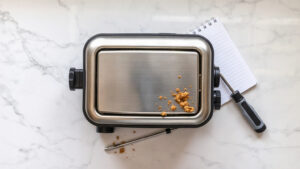
Safety First: Toasters run at 800–1,500 watts and internal heating elements can reach over 1,000°F — never operate one near water, never insert metal utensils to retrieve stuck bread, and always unplug before cleaning. Keep at least 4 inches of clearance on all sides, and don’t leave either brand running unattended if crumbs haven’t been emptied in a while. A full crumb tray is a legitimate fire hazard, not a minor inconvenience.
Key Takeaways
- Hamilton Beach generally toasts more evenly and has better slot depth for thick bread — a real advantage for bagel lovers
- Black & Decker toasters cost slightly less at the entry level but shade settings can be unreliable, especially at the lighter end of the dial
- Both brands sit firmly in the budget-to-low-midrange tier; neither is competing with Breville or Cuisinart
- For a basic 2-slice toaster under $35, Hamilton Beach is the safer buy; for a toaster oven, the comparison shifts
- Neither brand is great for frozen waffles on the lighter settings — that’s a quirk worth knowing before you buy
How I Actually Tested These
I’ve had both a Black & Decker and a Hamilton Beach 2-slice toaster on my counter at the same time — not as some formal lab setup, just because I kept the old one when I bought the new one, which felt excessive but turned out useful. My testing isn’t clinical. I ran both through regular weekday mornings: plain white sandwich bread, a thick slice of sourdough, a frozen Eggo, and a split bagel. I used each toaster on its “3” setting (middle of the dial), then compared results side by side. Then I pushed to the darkest setting to see how either handled it.
First-use note: the Black & Decker smelled pretty strongly of burning plastic/coating on its first two cycles. That’s apparently normal for new units but it caught me off guard. Hamilton Beach had almost no odor on first use. Minor thing, but worth mentioning if you’re sensitive to that.
Toasting Performance: Who Actually Wins
Even Browning
This is the thing that matters most and where the gap between the two brands is most obvious. On standard sandwich bread at setting 3, the Hamilton Beach came out evenly golden across about 90% of the slice. The bottom quarter-inch was slightly lighter — that’s pretty typical for pop-up toasters at any price. The Black & Decker had a more patchy result: one side would brown faster than the other, and I’d frequently get a pale stripe across the middle of the slice.
On thick sourdough, Hamilton Beach handled it fine. Black & Decker struggled slightly — the center of a thick slice came out underdone even at setting 4. You’d probably bump it up to 5 and risk over-browning the edges. Not a dealbreaker, but annoying.
Shade Settings
Both toasters have 7 shade settings, which sounds like plenty. But on the Black & Decker, settings 1 and 2 produce barely-warm bread — like it sat next to a toaster rather than inside one. Setting 3 jumps noticeably. This inconsistency across the dial is a genuine frustration. Hamilton Beach’s gradation is smoother; you actually get meaningfully different results as you move from 2 to 3 to 4. For people who like lightly toasted bread (my preference, honestly — I want warmth and a little crunch, not char), Hamilton Beach is just more predictable.
Design, Slots, and Everyday Usability
Both brands offer 2-slice and 4-slice versions. The slot width is where they differ noticeably. Hamilton Beach’s standard 2-slice model has slots around 1.5 inches wide, which fits most bagels and artisan bread without squeezing. The equivalent Black & Decker model has slots closer to 1.25 inches — not a disaster, but thicker homemade bread can stick. I’ve had to coax a slice out of a Black & Decker toaster before, which is the kind of thing that makes you quietly resent an appliance.
Crumb trays on both models slide out from the bottom. Hamilton Beach’s is slightly wider and catches more, meaning less counter mess. Black & Decker’s tray has a tendency to slide out if you move the toaster, which sounds trivial until you’ve scattered crumbs across a freshly wiped counter.
The cord length on most Hamilton Beach models runs around 28–30 inches, which is decent for counter placement. Black & Decker is similar. Neither brand wins particularly here.
Model-by-Model Comparison: Specific Picks
Let’s get specific, because “Black & Decker” and “Hamilton Beach” cover a lot of ground.
| Model | Slices | Slot Width | Wattage | Price Tier | Standout Feature |
|---|---|---|---|---|---|
| Hamilton Beach 22897 (2-slice) | 2 | ~1.5 in | 850W | Budget | Extra-wide slots, bagel function |
| Hamilton Beach 24664 (4-slice) | 4 | ~1.5 in | 1400W | Budget-mid | Toast boost, 7 shade settings |
| Black & Decker TR1256B (2-slice) | 2 | ~1.25 in | 800W | Budget | Auto-shutoff, compact |
| Black & Decker TR4310FSD (4-slice) | 4 | ~1.25 in | 1500W | Budget-mid | Extra-wide slots (4-slice version only) |
One thing worth flagging: Black & Decker’s 4-slice models often have wider slots than their 2-slice ones, which is counterintuitive. If you’re buying Black & Decker and care about fitting thick bread, the 4-slice version may actually serve you better even if you’re cooking for one. The Black & Decker 4-slice wide slot toaster is the model to look at in their lineup.
What About Toaster Ovens? (The Comparison Shifts Here)
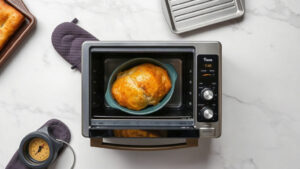
This is the edge case most comparison articles skip entirely. Both brands make toaster ovens, not just pop-up toasters, and the verdict flips somewhat. Black & Decker’s toaster ovens — particularly the 6-slice convection models — are genuinely solid for the price. The TO3250XSB, for example, gets to 450°F and has a convection fan that actually circulates air properly. I’ve used it for roasting vegetables and it does a respectable job.
Hamilton Beach’s toaster ovens are fine but feel a little more plasticky and less sturdy in the door hinges. For pop-up toasters, Hamilton Beach wins. For toaster ovens in the same budget tier, Black & Decker is more competitive. If you’re specifically shopping for a toaster oven, check out our roundup of the best mini toaster ovens — it covers some stronger competitors in both brands’ price ranges.
You’ll also want to know about how hot a toaster gets before using either brand for anything beyond basic bread — the temperature range matters more than most people realize, especially for reheating. And speaking of which, reheating food in a toaster oven is something both brands’ ovens handle well, just with slightly different timing.
For actual toaster oven cooking, a decent toaster oven wire rack matters as much as the oven itself — both brands’ included racks are a little flimsy, and aftermarket ones are cheap.
Durability and Long-Term Reliability
Neither brand is built to last a decade. They’re budget appliances, full stop. But there are patterns worth knowing.
Black & Decker toasters tend to get mixed reviews after 12–18 months. The most common complaint is the lever mechanism getting sticky or the toast not popping up fully — a real hazard if you’re not paying attention. Hamilton Beach units seem to hold up a little longer before mechanical issues show up, based on general user feedback patterns across major retail sites.
Both brands are widely sold at Walmart, Target, and Amazon, and both have models under $30 regularly. Replacements are cheap. I wouldn’t lose sleep over longevity at this price point — but if you want something that’ll last five-plus years without drama, you’re looking at Cuisinart or the toasters that Serious Eats recommends in their higher-tier reviews, which start around $50–$60.
The Frozen Waffle Problem (Nobody Talks About This)
Okay, this is the edge case I mentioned. Both brands have a dedicated frozen setting, but neither handles frozen waffles well on low-to-medium shade settings. The frozen function essentially adds time, but it doesn’t add enough heat for thick frozen waffles — they come out warm and limp in the middle. At setting 5 or 6 they’re fine, but your edges will be darker than ideal.
I found the Hamilton Beach slightly better here because its heating elements run hotter by default, so at setting 4 it achieves what Black & Decker needs a 5 to do. Small thing, but if frozen waffles are a regular part of your morning — no judgment — it’s worth knowing. The Food Network has a useful guide on getting the most out of a basic toaster, including the frozen setting nuances.
The Verdict
For a 2-slice pop-up toaster, Hamilton Beach is the better buy. The toast is more even, the shade gradation is more reliable, the slots are wider, and the crumb tray behaves itself. If you’re buying for a single person or a couple, the 22897 or similar 2-slice Hamilton Beach model is the one I’d hand to a friend without hesitation.
Black & Decker isn’t terrible — especially the 4-slice models and especially their toaster ovens. If you’re specifically looking at a small countertop toaster oven under $50, Black & Decker competes well. But for a straight pop-up toaster comparison at similar prices? Hamilton Beach wins, and it’s not particularly close.
If you find yourself wanting more than either brand can offer — better build quality, more precise browning, actual convection performance — that’s the moment to look beyond both and step up to a Cuisinart or a Breville. Both of these brands are entry-level appliances doing entry-level work. That’s fine for a lot of kitchens. Just know what you’re buying.
Frequently Asked Questions
Is Hamilton Beach or Black & Decker more reliable long-term?
Hamilton Beach has a slightly better track record for mechanical reliability in the 12–24 month range, based on aggregate user reviews. Black & Decker units more commonly develop lever or pop-up issues over time. Neither brand is built for a decade of daily use at these price points.
How hot does a toaster get inside?
The heating elements inside most pop-up toasters — including both Hamilton Beach and Black & Decker models — reach temperatures between 900°F and 1,100°F. The bread itself doesn’t reach those temperatures, but the exterior of the toaster can get hot to the touch during use. Always keep children away from operating toasters and never leave them unattended.
Which toaster is better for bagels, Black & Decker or Hamilton Beach?
Hamilton Beach is better for bagels. Their wider 1.5-inch slots accommodate most standard and thick-cut bagels without squeezing, and the bagel function (which heats the cut side more aggressively) works reliably. Black & Decker’s 2-slice models have narrower slots that can stick on thicker bagels.
Are Black & Decker toaster ovens better than Hamilton Beach toaster ovens?
Yes, at comparable price tiers, Black & Decker toaster ovens generally outperform Hamilton Beach toaster ovens. Black & Decker’s convection models reach 450°F with better air circulation, and the build quality on their oven units feels sturdier than Hamilton Beach’s equivalents. The pop-up toaster comparison goes the other direction.
Is it safe to leave a toaster plugged in when not in use?
Both Hamilton Beach and Black & Decker include auto-shutoff features, but it’s still safer to unplug your toaster when it’s not in use. A full crumb tray near active heating elements is a real fire risk, and unplugging eliminates any chance of accidental activation. Most electricians and fire safety guidelines recommend unplugging small appliances when not in use.

Written by
Emma founded Toastera to turn vague appliance advice into clear, researched, safety-first guidance on toasters and toaster ovens.
Free: the Toaster Oven Cheat Sheet
Get the printable cheat sheet (temps, cook times & safety tips) plus new recipes. No spam, unsubscribe anytime.