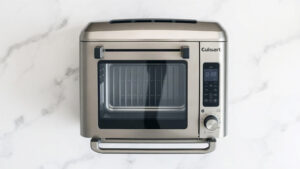
The Breville BOV800XL Smart Oven has five well-documented failure points: a blown thermal fuse, a sticky or cross-triggering start button, uneven heating from a failed element, an interior light that burns out, and erratic temperature readings from a dirty or failing sensor. Most of these are fixable at home for under $20 in parts. A few will tell you it’s time to move on.
Safety First: Before opening any panel or replacing any internal component on the BOV800XL, unplug the oven and let it cool completely — at least 30 minutes. The heating elements and the steel housing hold heat longer than you’d expect. Working on a plugged-in or warm oven risks both electric shock from the 1800W circuit and serious burns from residual heat on the quartz elements. If you’re replacing the thermal fuse, verify the replacement is rated at 167°C/10A before installing it.
Quick Facts: Breville BOV800XL Common Problems
- The thermal fuse is the #1 reason this oven suddenly stops heating — it’s a $3–$6 part and takes about 20 minutes to swap out
- A faulty start button that triggers the convection fan simultaneously is a known hardware defect on units made before 2016
- Uneven browning is almost always caused by one of the four quartz heating elements failing, not by user error
- The interior light is a standard G4 bi-pin 12V halogen bulb — usually available at hardware stores, not just Breville
- Breville’s warranty on the BOV800XL is 2 years from purchase; after that, DIY repair is usually worth it given how much the oven originally cost
The Thermal Fuse: Why Your Oven Just…Stopped
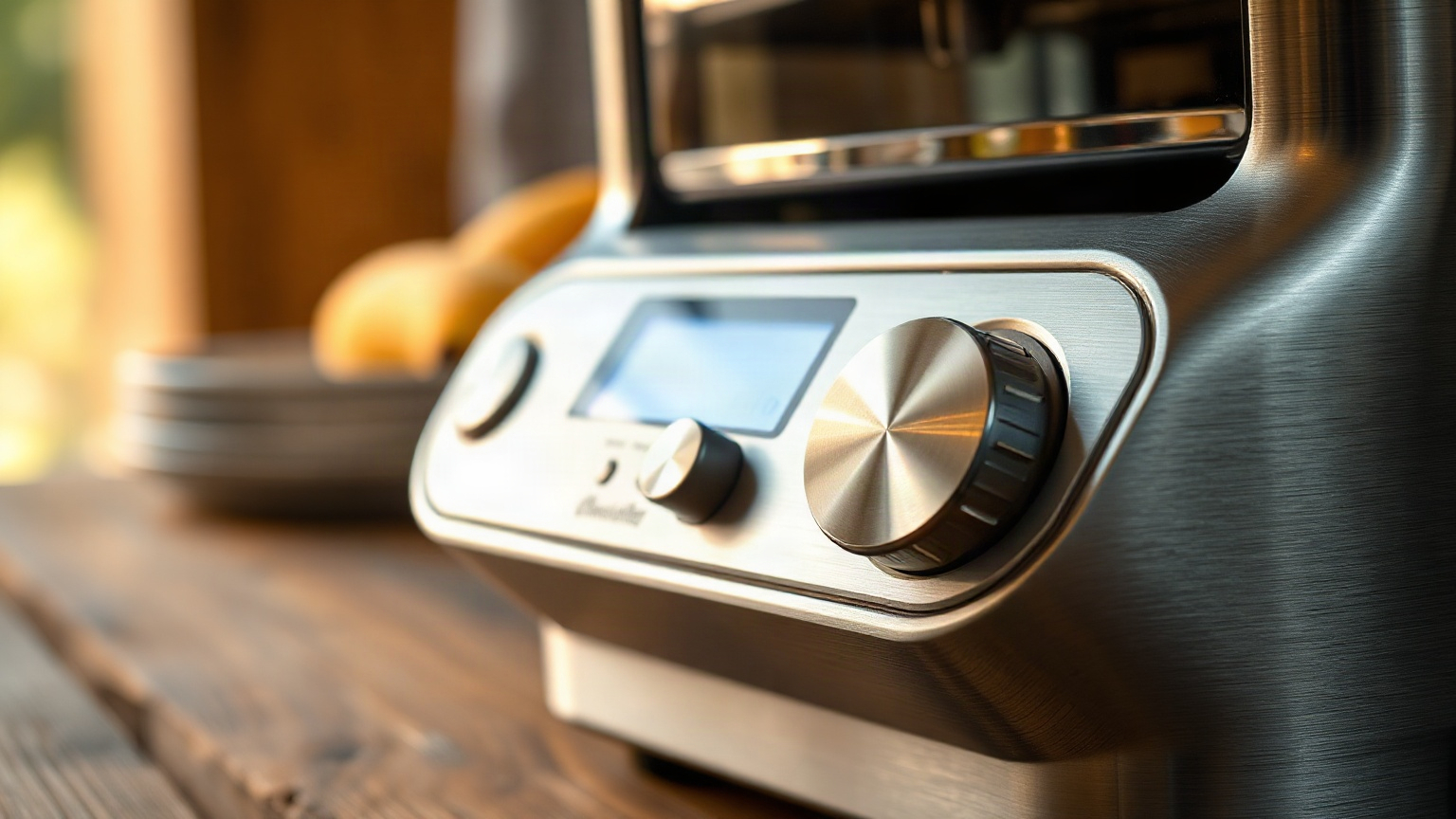
This is the big one. You go to make toast, the oven won’t heat, the display might still light up, but nothing happens inside. No warmth. Nothing. Nine times out of ten on an older BOV800XL, that’s the thermal fuse.
The thermal fuse is a small safety device — looks like a tiny pill with two leads — that sits near the back of the oven cavity. Its job is to blow permanently if the internal temperature climbs dangerously high, cutting power to the heating circuit. Once it blows, the oven won’t heat again until you replace it. It’s not resettable. There’s no button to push.
The part you need is a 167°C thermal fuse rated for at least 10A. You can find them in packs of five on Amazon for about $5 total. The replacement process means removing the outer casing (six screws, Phillips head), locating the fuse on the back wall of the chassis, snipping the leads, and soldering or crimping a new one in. I’d say it’s a 3 out of 10 on difficulty — the inside is actually pretty accessible once the shell comes off. The trickiest part is reaching the fuse without disturbing the wiring harness near the top element.
One thing most guides skip: if your fuse blew once, it’ll blow again unless you figure out why it overheated. Check that the crumb tray is empty and that nothing is blocking the back vents. I’ve seen people stack these ovens under cabinets with only an inch of clearance — Breville actually specifies 4 inches of clearance on all sides. That alone can kill the fuse repeatedly.
The Start Button Problem (and the Convection Fan Going Rogue)
There’s a specific, frustrating bug on some BOV800XL units: pressing Start also activates the convection fan, even when you haven’t selected convection. Or, in some cases, the Start button just stops responding unless you press it at a very specific angle. Both issues come down to the membrane switch panel on the front.
The membrane switches are thin, layered film circuits. Over time — especially with the heat cycling from daily use — they delaminate slightly, which causes adjacent buttons to register together. It’s not a software glitch. It’s a physical thing.
The honest fix here is replacing the membrane switch assembly. Breville sells replacement parts through their website (search “BOV800XL membrane” on their parts page), and third-party sellers have them on Amazon too. It’s fiddlier than the fuse job — you have to peel the old membrane off carefully and route the ribbon cable correctly — but still doable at home. Budget about 45 minutes and good lighting.
A temporary workaround: some people have had luck pressing the button from a slightly higher angle, almost rolling their finger downward onto it rather than pressing straight in. Not elegant, but if you just need to get through breakfast, it works about 70% of the time.
Uneven Heating and Hot Spots
The BOV800XL has four quartz heating elements — two on top, two on the bottom. If you’re getting food that’s scorched on one side and barely cooked on the other, a failed element is the likely culprit. Not a bad rack position, not the wrong pan. An element.
You can actually see this with a simple test. Preheat the oven to 375°F, let it run for five minutes, then look through the door (carefully — it’s hot). All four elements should glow orange. If one is dark or significantly dimmer than the others, it’s failing or already dead.
Replacing a quartz element on the BOV800XL is a bit more involved than the fuse. The elements attach with small ceramic clips and push-on terminals. Part costs run about $15–$25 per element depending on supplier. This is also where pan choice matters more than people realize — using a dark nonstick pan in an oven with one weak bottom element will give you wildly different results than a lighter aluminum one. If you want even results, a lighter aluminum toaster oven baking pan is a genuinely good investment regardless.
Also worth mentioning: the BOV800XL runs hot compared to its displayed temperature. I’ve verified this with an oven thermometer — set it to 350°F and it often reads 365–370°F actual. That’s not a defect so much as a calibration quirk. But if your elements are all working and things still burn, check your actual temp with a standalone thermometer before assuming the worst.
Interior Light Failures and Door Sensor Issues
Interior Light Out
The interior light on the BOV800XL uses a G4 bi-pin 12V halogen capsule bulb, typically 10–20W. These burn out. It happens. The bulb itself costs almost nothing — under $2 — and Breville has a replacement tutorial on their support page. You remove two screws from the light cover on the top-left interior wall, swap the bulb, done. Wear gloves or use a cloth. Touching the halogen capsule with bare fingers leaves oil that causes it to burn out faster.
Light Staying On (or Off) When It Shouldn’t
The door sensor is a small mechanical switch that tells the oven when the door is open or closed. If the light stays on with the door closed, or the oven’s heating cycle acts strange when you open the door mid-cook, the door switch is worth inspecting. It’s located at the top hinge area. Sometimes it’s just slightly out of alignment rather than actually broken — a small adjustment to how the door closes can fix it.
Should You Repair or Replace the BOV800XL?
Here’s the honest version of this question. The BOV800XL retailed for around $250 when it was being actively sold. Breville discontinued it in favor of newer models like the BOV860 and the Smart Oven Air Fryer Pro. Replacement parts are still available but getting harder to find through official channels.
My take: if it’s a thermal fuse or a light bulb, fix it. Easy, cheap, done. If it’s a failed heating element and you’ve had the oven for six or more years, the math gets closer. Two elements failing within a year of each other is a sign that the others are on borrowed time too.
If the control board is fried — which shows up as a display that won’t respond or shows garbled characters — that’s typically a $60–$80 part, and I’d probably put that money toward a newer oven instead. You can see how newer options stack up in our roundup of the best mini toaster ovens.
For context on what to look for in a replacement, Serious Eats has a solid, rigorously tested comparison of current toaster ovens that’s worth reading before you spend money.
| Problem | Likely Cause | DIY Difficulty | Part Cost | Verdict |
|---|---|---|---|---|
| Won’t heat at all | Blown thermal fuse | Easy (3/10) | $3–$6 | Repair |
| Start button triggering convection | Delaminated membrane switch | Moderate (5/10) | $15–$30 | Repair |
| Uneven browning | Failed heating element | Moderate (5/10) | $15–$25 | Repair (if oven is under 6 yrs) |
| Interior light out | Burned-out G4 bulb | Very easy (1/10) | Under $2 | Always repair |
| Display garbled or unresponsive | Failed control board | Hard (8/10) | $60–$80 | Consider replacing oven |
| Runs hotter than displayed temp | Factory calibration quirk | N/A | $10–$15 thermometer | Verify with thermometer, adjust habits |
One edge case I haven’t seen covered elsewhere: if your BOV800XL randomly shuts off mid-cook and restarts, check whether it’s on a shared circuit with a microwave or another high-draw appliance. The oven pulls 1800W. Sharing a 15A circuit with anything else that cycles on — a refrigerator compressor, a microwave — can cause momentary voltage drops that the BOV800XL’s electronics interpret as a fault and reset from. It’s not the oven. It’s your electrical setup. Moving it to a dedicated outlet fixed this for someone I know, no repair needed at all.
For reheating leftovers (where this oven genuinely shines even as it ages), our guide on reheating food in a toaster oven covers the settings worth using. And for a sense of how hot these ovens actually run internally, our piece on how hot a toaster gets has some useful context.
If you do decide the BOV800XL is worth keeping, a proper replacement wire rack is a cheap way to improve airflow and browning evenness while you’re at it. The original racks warp slightly over years of high-heat use, and a flatter rack makes a real difference.
The Bottom Line
The BOV800XL is a genuinely well-built oven that earns its reputation. Most of what goes wrong with it is fixable. The thermal fuse is the fix most people need and never know about. The button issues are annoying but solvable. Heating elements fail eventually on any oven that runs daily for years.
What I’d tell a friend: start with the fuse diagnosis, grab an oven thermometer to confirm the heating issue is real, and check that back clearance before you do anything else. If the oven is under six years old, almost every problem on this list is worth fixing. After eight or nine years of daily use, some of these repairs are just buying yourself another year before something else gives out. That’s not a reason to give up on it — just worth knowing going in.
Frequently Asked Questions
Why did my Breville BOV800XL suddenly stop heating?
The most common reason is a blown thermal fuse, a one-time safety component that cuts power permanently when the oven overheats. It costs $3–$6 to replace and is accessible once you remove the outer casing. Before replacing it, confirm the issue by checking whether the display still powers on — if it does but nothing heats, the fuse is almost certainly the culprit.
Can I fix the Breville BOV800XL start button myself?
Yes, the start button problem is usually a delaminated membrane switch panel, not a board failure. Replacement membrane assemblies are available online for $15–$30 and the swap takes about 45 minutes with basic tools. A temporary workaround is pressing the button at a slight downward angle rather than straight in, which helps on partially delaminated units.
Why is my Breville Smart Oven heating unevenly?
Uneven heating almost always means one of the four quartz heating elements is failing or dead. You can confirm this by preheating to 375°F and watching through the door — all four elements should glow evenly. A failing element will be noticeably dimmer or completely dark, and replacement elements run about $15–$25 each.
What type of bulb does the Breville BOV800XL use for its interior light?
The interior light uses a G4 bi-pin 12V halogen capsule bulb, typically rated 10–20W. These are standard bulbs available at hardware stores, not just through Breville. When replacing it, avoid touching the glass capsule with bare fingers — the oils from your skin cause the bulb to burn out prematurely.
Is the Breville BOV800XL worth repairing or should I replace it?
For most common failures — thermal fuse, interior light, membrane switch, single heating element — repair is worth it given the oven’s original $250 price tag. If the control board has failed or multiple elements are going out on an oven that’s been used daily for over eight years, replacing the unit makes more practical sense financially.

Written by
Emma founded Toastera to turn vague appliance advice into clear, researched, safety-first guidance on toasters and toaster ovens.
Free: the Toaster Oven Cheat Sheet
Get the printable cheat sheet (temps, cook times & safety tips) plus new recipes. No spam, unsubscribe anytime.