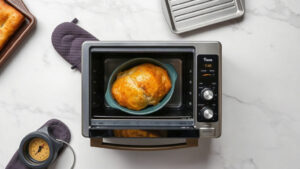
The Breville Smart Oven is worth the price difference for serious home cooks who use a countertop oven daily and want precise, consistent results — but it’s genuinely not for everyone. Hamilton Beach countertop ovens sit in the budget-to-mid range and do a respectable job for basic tasks like toast, reheating, and the occasional baked potato. If you’re mostly using it for toast and frozen pizza on a Tuesday night, paying three times more for a Breville is hard to justify.
Safety First: Countertop ovens get extremely hot on the exterior surfaces during use — keep at least 4 inches of clearance on all sides, never place them directly under cabinets, and always use oven mitts when removing racks or food. Unplug the unit before cleaning or moving it, and never leave either oven running unattended for extended periods.
Quick Facts: Breville Smart Oven vs Hamilton Beach
- The Breville Smart Oven Pro (BOV845BSS) typically lands in the premium tier — roughly three times the cost of most Hamilton Beach countertop ovens
- Breville uses Element IQ, a system that shifts wattage between heating elements based on the cooking function — Hamilton Beach uses fixed heating elements with manual dials
- Both ovens fit a 12-inch pizza, but interior usable space is noticeably larger on the Breville
- Hamilton Beach countertop ovens run around 1,200–1,440 watts; the Breville Smart Oven Pro runs at 1,800 watts
- For everyday toast and reheating, both work. For roasting, baking, and broiling with precision, the Breville pulls ahead significantly
What You’re Actually Getting for the Extra Money
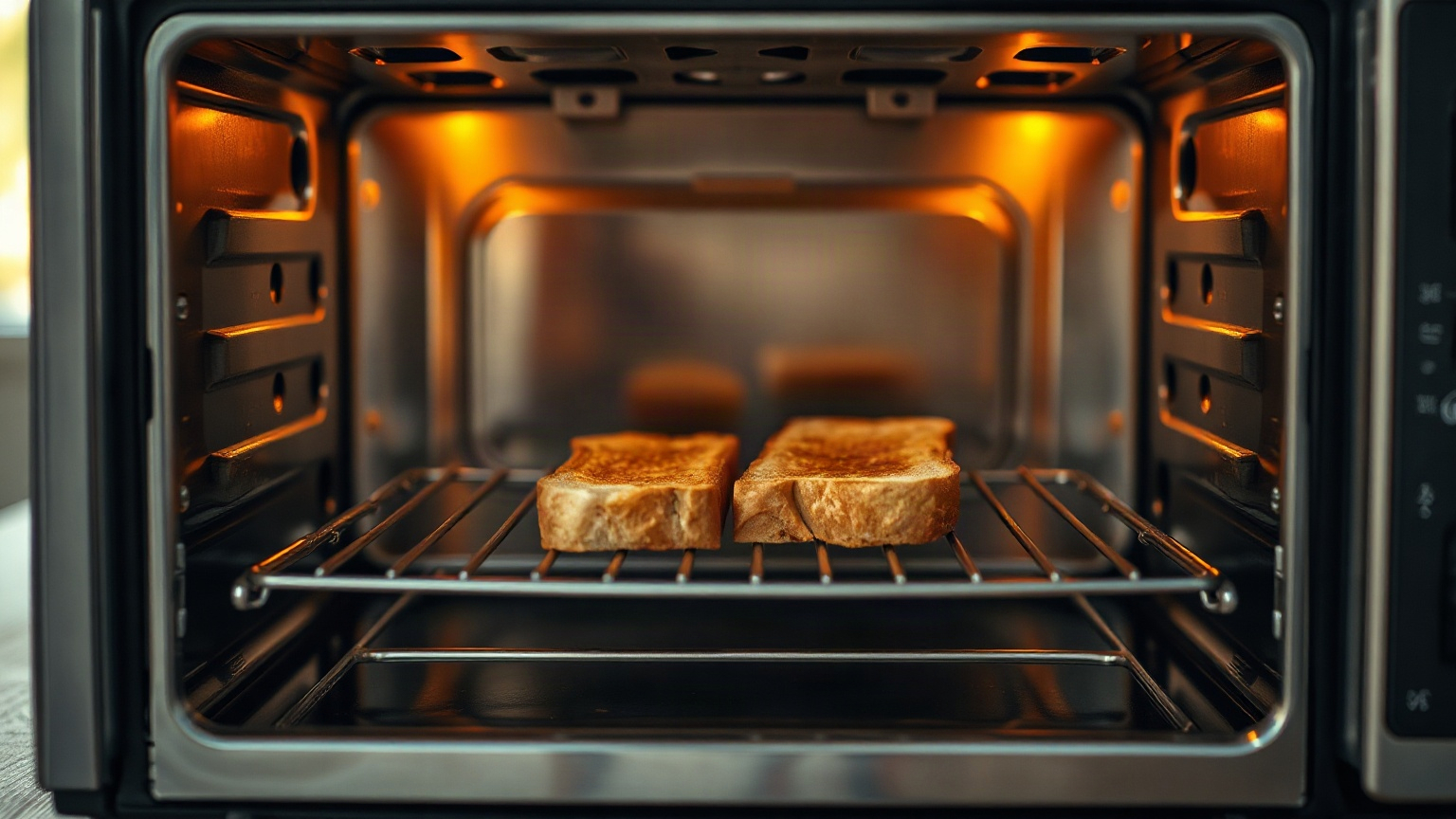
I’ve used both of these ovens side by side in my own kitchen, and the honest answer is that the price gap reflects a real difference in engineering — not just branding. The Breville Smart Oven Pro has five quartz heating elements. Five. Hamilton Beach typically has two or four, and they operate at fixed power. That matters more than you’d think.
The first time I tried to broil salmon in a Hamilton Beach oven (the 31123D, if you’re curious), I got uneven browning — one side of the fillet was practically charred while the other was barely kissed by the heat. Same fish, same seasoning, same rack position in the Breville. Evenly golden. That’s Element IQ doing its job, redistributing power to the heating elements that are most relevant to the cooking function you’ve selected.
That said — the Hamilton Beach isn’t bad. It toasts evenly enough, it heats up quickly, and the controls are simple to operate without reading a manual. My mother has one and loves it. She’s not trying to proof dough or slow-roast a chicken. She wants toast and she wants it fast. It delivers.
Head-to-Head Comparison
| Feature | Breville Smart Oven Pro (BOV845BSS) | Hamilton Beach Countertop Oven (31123D) |
|---|---|---|
| Price Tier | Premium | Budget / Mid-range |
| Wattage | 1,800W | 1,200–1,440W |
| Heating Elements | 5 quartz elements (Element IQ) | 2–4 fixed elements |
| Cooking Functions | 10 (toast, bagel, bake, roast, broil, pizza, cookies, reheat, warm, slow cook) | 6 (bake, broil, toast, keep warm, roast, pizza) |
| Interior Capacity | ~0.8 cu ft (fits 13×9 pan) | ~0.6 cu ft (fits 12-inch pizza) |
| Controls | Digital LCD with smart presets | Manual dials |
| Interior Light | Yes | No (most models) |
| Slow Cook Function | Yes | No |
| Build Quality | Stainless steel, heavy duty | Lighter stainless, plastic accents |
| Best For | Daily serious cooking, baking, roasting | Basic toasting, reheating, occasional baking |
Cooking Performance: Where the Gap Really Shows
Toast
Both do fine here. I’ll say the Breville’s bagel setting is genuinely smart — it toasts the cut side harder while just warming the crust side. The Hamilton Beach doesn’t have a dedicated bagel setting, so you’re guessing. Not a dealbreaker, but you’ll notice it.
Baking
This is where things get interesting. I baked chocolate chip cookies on both at 350°F, same dough, same toaster oven baking pan, same rack position. The Breville batch came out evenly golden on the bottom with a slightly soft center — exactly right. The Hamilton Beach batch had darker bottoms and drier edges. Not inedible, but not what I was going for. The temperature consistency inside the Breville is just tighter. Serious Eats has a great piece on using a countertop oven like a full oven, and the advice mostly assumes you have a model that holds temperature reliably — which applies to the Breville more than the Hamilton Beach.
Roasting and Broiling
Roasting a small chicken in the Breville? Genuinely excellent. The skin gets crispy, the inside stays juicy, and the whole thing takes about 55–60 minutes at 425°F with the roast setting. I’ve tried roasting vegetables in the Hamilton Beach and they come out okay — a bit steamed in the center sometimes, which tells you the heat distribution isn’t as aggressive.
For broiling, same story as the salmon situation I mentioned earlier. The Breville broiler is more powerful and more even. If you broil anything regularly — fish, cheese on toast, stone fruit for a dessert — this matters.
Reheating
Both handle reheating well enough. I actually prefer a countertop oven over a microwave for reheating food in a toaster oven almost always — pizza in particular. The Breville has a dedicated reheat setting that runs at a gentler temperature cycle. The Hamilton Beach doesn’t, so you set it manually at around 300–325°F and check. Either works for this use case.
Usability and Daily Life
Here’s something nobody tells you about the Breville: the first week, it’s a little overwhelming. Ten cooking functions. An LCD display. A probe thermometer socket (on some models). I set it to the wrong mode twice before I got my bearings. The Hamilton Beach has three dials and you’re up and running immediately. There’s real value in that.
The Breville is also heavier and larger. If your counter space is tight, measure before you commit. A lot of people buy it and then realize it’s sitting where nothing else can. My own kitchen has a dedicated spot for it on a lower shelf, which took some rearranging.
Cleaning is easier on the Breville — the interior is non-stick coated, the crumb tray pulls out cleanly, and the Breville Smart Oven racks are dishwasher safe. The Hamilton Beach crumb tray is fine but the interior is harder to wipe down. Not terrible, just a bit more effort.
One thing I genuinely appreciate about the Hamilton Beach: the exterior doesn’t get as searingly hot during operation. The Breville runs hotter, which is part of why it performs better, but you can’t absentmindedly brush against it. I’ve done it. Not fun.
Who Should Buy Which One
Buy the Breville Smart Oven Pro if you cook actual meals in a countertop oven regularly. If you bake from scratch, roast meat, or want something that can genuinely replace your full oven for small-batch cooking — this is it. It’s also worth it if you just want something that’s going to last a long time and feel solid every single day. The build quality is noticeably better.
Buy the Hamilton Beach if your needs are simpler. Toast, frozen pizza, reheating leftovers, maybe an occasional batch of vegetables. It does those things without complaint and costs a fraction of the price. If you’re equipping a small apartment, a college kitchen, or a secondary cooking space, it makes a lot more practical sense. You can check out our picks for the best mini toaster ovens if you’re working with really limited counter space, since there are smaller options worth considering in that range too.
And if you’re somewhere in the middle — you cook more than just toast but aren’t sure you need all the Breville’s features — I’d probably still lean Breville. The performance jump is meaningful enough that you’ll stop noticing the price gap pretty quickly once you’re using it every day. But I won’t pretend it’s an easy sell at three times the cost if your primary use is morning toast.
The Verdict
The Breville Smart Oven Pro is the better oven. That’s not really in dispute. It heats more evenly, handles more cooking tasks, builds to a higher standard, and produces consistently better results across baking, roasting, and broiling. If you’re a frequent cook, the price difference pays itself off in results over time — and honestly, in the satisfaction of having a tool that actually does what you expect it to do.
But “better” doesn’t always mean “right for you.” The Hamilton Beach countertop oven earns its place for lighter users and tighter budgets. It’s not a compromise if toast and basic reheating is genuinely all you need. Know what you’re cooking, and pick accordingly. That’s really the whole answer.
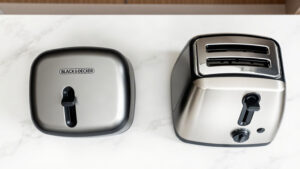
You can also read more about how hot a toaster gets if you’re trying to figure out how countertop ovens compare to traditional pop-up toasters for basic tasks.
Frequently Asked Questions
Is the Breville Smart Oven really worth three times the price of a Hamilton Beach countertop oven?
For daily cooking that includes baking, roasting, or broiling, yes — the Breville’s performance difference justifies the price. If you’re primarily making toast and reheating leftovers, the Hamilton Beach does those tasks competently at a fraction of the cost. The value calculation depends entirely on how often and how seriously you cook.
What is Element IQ on the Breville Smart Oven and does it actually matter?
Can a Hamilton Beach countertop oven replace a full-size oven?
For small households and basic cooking tasks, a Hamilton Beach countertop oven can handle a surprising amount — toast, pizza, roasted vegetables, baked potatoes, and reheating. It struggles with large roasts, precise baking, and anything that needs consistent high heat maintained over a long period. It’s a capable supplement, not a true replacement for most people.
How do I know what size countertop oven I need?
Think about the largest pan or dish you’d regularly cook in it — a 13×9 baking pan, a 12-inch pizza, a small roasting chicken. The Breville Smart Oven Pro accommodates a 13×9 pan; most Hamilton Beach models top out at a 12-inch pizza. Measure your counter space first too, because the Breville is substantially larger than it looks in photos.
What temperature does the Breville Smart Oven reach?
The Breville Smart Oven Pro reaches up to 500°F on its broil setting, with baking and roasting functions typically used between 250°F and 450°F. The Hamilton Beach countertop ovens generally max out around 450°F. That 50-degree gap at the top end matters most for high-heat broiling and pizza.
Element IQ shifts power between the five heating elements depending on which cooking function you’ve selected — so when you choose “broil,” the top elements get more wattage; when you choose “bake,” the bottom elements do more work. In practice, it produces more even and predictable results than fixed-element designs. It genuinely does matter for anything beyond basic toasting.

Written by
Emma founded Toastera to turn vague appliance advice into clear, researched, safety-first guidance on toasters and toaster ovens.
Free: the Toaster Oven Cheat Sheet
Get the printable cheat sheet (temps, cook times & safety tips) plus new recipes. No spam, unsubscribe anytime.