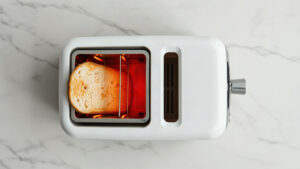
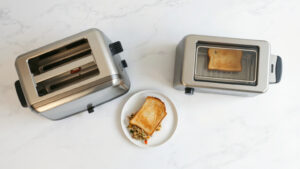
A toaster oven can handle a surprising amount of what a microwave does — reheating, cooking, even defrosting with the right model — but it can’t fully replace a microwave for every task. The two appliances work completely differently: microwaves excite water molecules to heat food fast, while toaster ovens use radiant heat from coils. That difference matters most for speed and texture, and for some households, the trade-offs are absolutely worth making.
Safety First: Toaster ovens run heating elements at temperatures up to 450°F and their exterior walls, racks, and pans get dangerously hot during and after use. Always use dry oven mitts (not a damp cloth), keep at least 4 inches of clearance on all sides for ventilation, never line the bottom tray with foil unless your manual explicitly permits it, and unplug the unit when it’s not in use. Never leave a toaster oven running unattended for extended periods, especially in a small or poorly ventilated kitchen.
Quick Facts: Toaster Oven vs. Microwave
- A toaster oven reheats food in 8–15 minutes; a microwave does the same job in 1–3 minutes.
- Toaster ovens produce crispier, browned results; microwaves tend to leave food soft or steamed.
- Microwaves are faster for liquids, soups, and anything that just needs to be warmed through quickly.
- Most countertop toaster ovens use 1,200–1,800 watts; most microwaves use 700–1,200 watts.
- A toaster oven cannot defrost safely at speed — but a microwave can, though results vary.
What a Toaster Oven Actually Does Well
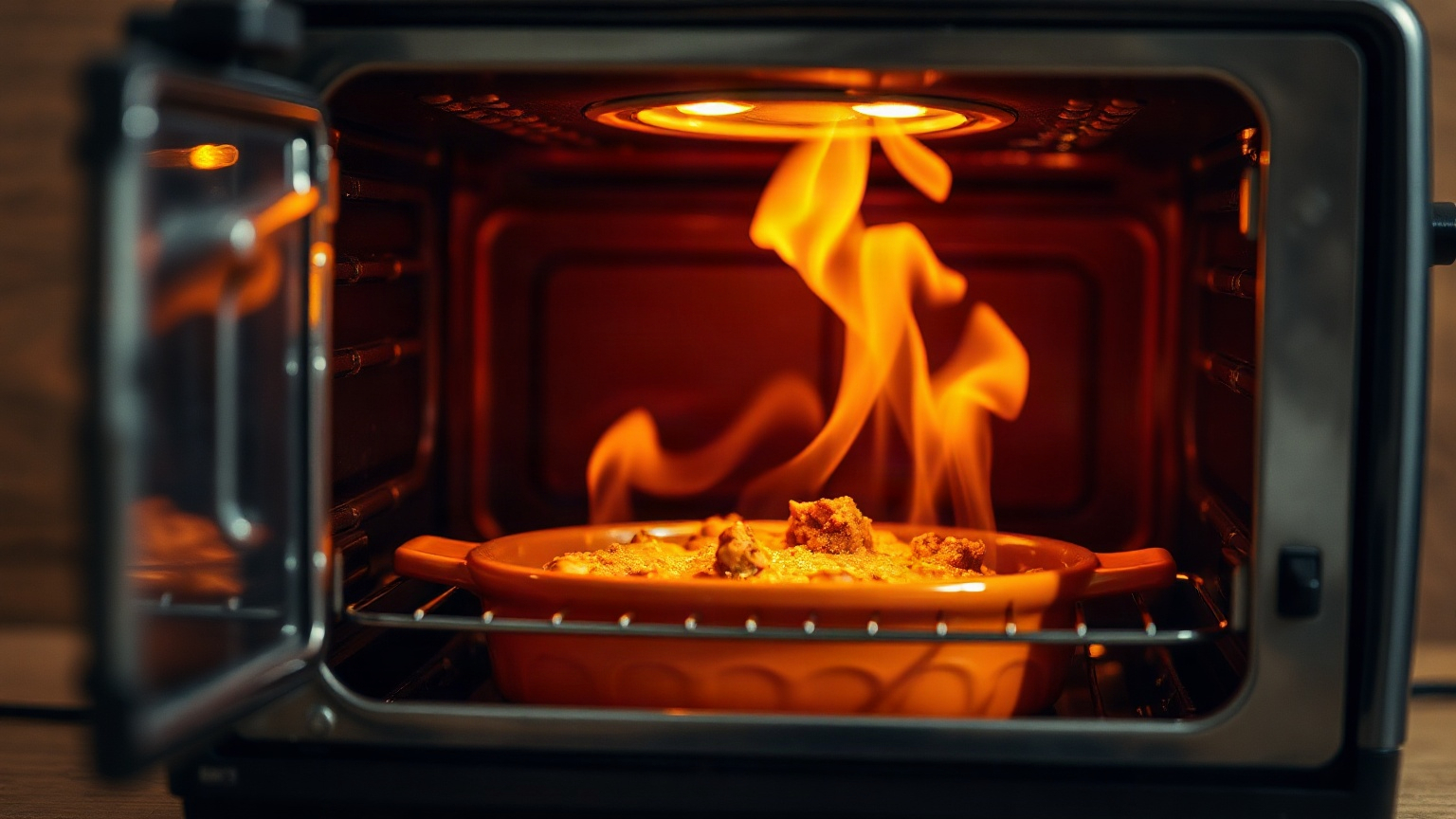
Let me be specific here, because I’ve had a Breville Smart Oven Air Fryer sitting on my counter for the better part of two years, and I genuinely use it every single day. Toast, obviously. But also reheating pizza on a toaster oven baking pan at 375°F for about 8 minutes — it comes out with a crisp base, not the sad soggy slice you get from a microwave. Leftover roasted vegetables, cold french fries, reheated chicken thighs. All of these are genuinely better from a toaster oven.
It also bakes. I’ve made sheet-pan cookies, roasted a whole chicken breast, and done fish fillets for a weeknight dinner. For a household of one or two people, a good toaster oven is basically a full oven for most tasks. You’re saving energy too — preheating a toaster oven to 400°F takes about 5 minutes and uses a fraction of the energy a full-size oven would draw.
The texture difference is real and it’s not trivial. Microwaves heat from the inside out, and they don’t brown anything. Toaster ovens use radiant heat, so you get the Maillard reaction — that’s the browning and crisping that makes food taste like it was actually cooked, not just warmed. For more on reheating food in a toaster oven, I’ve written a whole separate piece on temps and timing.
Specific Tasks Where Toaster Ovens Win
- Reheating pizza, fries, bread, pastries — anything that should be crispy
- Baking small batches (muffins, cookies, one-pan meals)
- Broiling fish or melting cheese on toast
- Roasting vegetables at 400–425°F
- Air frying (if your model has that function)
Where a Microwave Still Wins, Honestly
Speed. That’s the short answer. Heating a mug of coffee takes 90 seconds in a microwave and around 10 minutes in a toaster oven, and that’s genuinely annoying when you’re half-asleep. Reheating soup? Same deal. The microwave is just faster for anything liquid-based, and by a wide margin.
Defrosting is the other one. Yes, technically you can defrost in a toaster oven at a low temperature setting — around 150–170°F — but it’s slow, uneven, and you have to watch it carefully to avoid cooking the edges before the center thaws. The microwave’s defrost function, imperfect as it is, handles frozen chicken breasts or ground beef significantly faster. The USDA recommends that defrosted food be cooked immediately regardless of method, so the microwave’s speed advantage is real for weeknight cooking from frozen.
And then there’s reheating leftovers that don’t need to be crispy. A bowl of pasta, leftover stew, rice, scrambled eggs from this morning. The microwave does all of that in 2 minutes. A toaster oven takes 10–15 minutes to do the same job and doesn’t necessarily do it better. That time adds up when you’re eating lunch at your desk.
The Real-World Test: I Went Microwave-Free for 30 Days
I actually tried this. My microwave died in February and I decided to just not replace it for a month, using only the Breville and my stovetop. Here’s what I found out.
The first week was rough. I kept reaching for the microwave out of habit, then waiting 12 minutes for leftover soup when I could’ve just heated it in a saucepan. Eventually I figured out a rhythm: soups and liquids go on the stove, everything else goes in the toaster oven. That’s a workable system. Not effortless, but workable.
By week three I genuinely stopped missing it for most tasks. The food quality was noticeably better — reheated pasta from the toaster oven on a toaster oven wire rack at 350°F for 10 minutes came out with a slightly crisp top and warm center, way better than the gluey microwave version. Pizza? No comparison.
What I never got over: reheating a single cup of coffee. And defrosting. I ended up buying a small kettle for the coffee problem, but defrosting remained genuinely inconvenient the entire month. That’s the honest edge case most articles skip over — if you’re regularly cooking from frozen, skipping the microwave creates a real workflow problem.
I did eventually replace the microwave. But I use it maybe four times a week now instead of twelve. The toaster oven absorbed most of the cooking jobs and does them better.
Toaster Oven vs. Microwave: The Numbers Side by Side
| Factor | Toaster Oven | Microwave |
|---|---|---|
| Average wattage | 1,200–1,800W | 700–1,200W |
| Reheat time (pizza slice) | 7–10 min at 375°F | 45–75 seconds |
| Reheat time (soup, 1 cup) | 10–15 min | 90 seconds |
| Can it brown/crisp food? | Yes | No |
| Can it defrost quickly? | No (slow, uneven) | Yes |
| Can it bake or roast? | Yes | No |
| Countertop footprint | Larger (varies by model) | Medium–large |
| Price range (basic models) | $40–$300+ | $60–$200+ |
Which Model Should You Get If You’re Going Toaster Oven-First?
If you’re seriously considering leaning on a toaster oven as your primary cooking appliance, model choice matters a lot. Here are the ones I’d actually recommend, depending on your situation.
Breville Smart Oven Air Fryer (BOV900BSS)
This is my personal pick for anyone going toaster oven-primary. It’s premium-priced, no question, but it has 13 cooking functions, an interior large enough for a 14-inch pizza, and genuinely accurate temperature control. The Element IQ system adjusts heating automatically depending on the function you choose, and I’ve never had it burn the top of something while leaving the bottom underdone — which used to happen constantly with cheaper models. If you’re replacing a full oven as well as a microwave, this is the one. Check pricing on the Breville Smart Oven Air Fryer.
Cuisinart TOA-70
Mid-range, solid, and genuinely capable for air frying and baking. It’s smaller than the Breville and the temperature calibration is a little less precise in my experience, but for someone who wants to dip a toe into toaster-oven-primary cooking without spending $300, it’s a sensible entry point. Good for couples or single-person households.
Ninja Foodi XL Pro
If air frying is a priority, the Ninja Foodi line does it better than most at the mid-range price point. It’s also good at dehydrating, which is a nice extra. The interior is large and the controls are intuitive. My one complaint: the accessories that come in the box feel a bit plasticky and I’d recommend replacing the included pan early.
Hamilton Beach Easy Reach
Budget pick. The roll-top door is genuinely clever for small kitchens because it doesn’t swing out and block counter space. It doesn’t have air fry, the temperature dial is imprecise, and you’re not going to roast a chicken in it. But for toast, reheating, and the occasional baked potato, it does the job for a fraction of the cost of the Breville.
| Model | Price Tier | Capacity | Air Fry? | Best For |
|---|---|---|---|---|
| Breville Smart Oven Air Fryer | Premium | Large (14″ pizza) | Yes | Microwave replacement, serious cooking |
| Cuisinart TOA-70 | Mid-range | Medium | Yes | Couples, general use |
| Ninja Foodi XL Pro | Mid-range | Large | Yes (best in class) | Air fry-focused households |
| Hamilton Beach Easy Reach | Budget | Small | No | Tight budgets, minimal needs |
My clear pick: the Breville Smart Oven Air Fryer if budget allows. For smaller budgets, the Cuisinart TOA-70 is the one I’d recommend to a friend. Skip the Hamilton Beach if you’re trying to genuinely replace a microwave — it’s not built for that level of daily workload. For more options at different sizes, see our best mini toaster ovens guide.
The Edge Case Most Reviews Miss: Small Kitchens and Counter Space
Here’s something the other comparison articles I’ve read don’t address: counter real estate. A full-size microwave takes up roughly 1.5–2 square feet of counter space. A capable toaster oven like the Breville takes up around the same, sometimes more. If you’re in a small apartment, replacing one with the other doesn’t gain you any counter space at all — you’re just swapping appliances.
The real win is if you currently have both a microwave and a separate toaster. Combining those into one capable toaster oven (or toaster oven/air fryer combo) can actually free up significant counter space. That’s the scenario where going toaster-oven-primary makes the most practical sense. See also our guide on how hot a toaster gets if you’re comparing a pop-up toaster to a toaster oven for simple toast duties.
The Verdict
Can a toaster oven replace your microwave? For most of your cooking, yes. For quick liquid reheating and fast defrosting, probably not completely. The honest answer depends on how you actually use your microwave day-to-day.
If your microwave mostly reheats pizza, makes toast, bakes small things, and handles leftovers that benefit from some texture — a good toaster oven will do all of that better. If you’re heating soup every morning, regularly cooking from frozen, or reheating single-serve meals at speed, a microwave’s time advantage is real and you’ll feel its absence.
Going toaster-oven-primary is a genuinely reasonable choice for plenty of households. I did it for a month and it changed how I think about both appliances. The food was better. The process was slower. For me, the trade-off landed in a good place. It might for you too — but go in knowing what you’re giving up. According to Serious Eats, texture and browning are the cornerstones of food quality, and that’s exactly where the toaster oven has the edge. The microwave was never great at that anyway.
Frequently Asked Questions
Can a toaster oven reheat food as well as a microwave?
A toaster oven reheats food better in terms of texture and flavor, but it takes 3–5 times longer. For solid foods like pizza, fries, or roasted meat, the toaster oven wins easily — set it to 350–375°F and give it 8–12 minutes. For liquids or anything where speed matters most, the microwave is still the faster tool.
Can a toaster oven defrost food safely?
Technically yes, but it’s slow and you need to watch it carefully to avoid cooking the outer edges before the center thaws. Use the lowest temperature setting available — usually 150–170°F — and check every few minutes. The USDA advises cooking defrosted food immediately regardless of which method you use. For speed and consistency, a microwave’s dedicated defrost function is still more practical.
Is a toaster oven cheaper to run than a microwave?
Not exactly. Toaster ovens use more wattage (1,200–1,800W) compared to most microwaves (700–1,200W), and they typically run longer per task. However, they use far less energy than a full-size oven, so if you’re replacing big-oven cooking with a toaster oven, you’re saving electricity. The comparison with a microwave specifically is roughly a wash for daily use.
What can a toaster oven do that a microwave can’t?
A toaster oven can brown, crisp, toast, bake, roast, and broil — none of which a microwave can do. It produces the Maillard reaction, meaning food gets an actual crust or browned surface. You can bake cookies, roast a chicken breast, make crispy bacon, or broil cheese on toast. Microwaves only heat; they can’t create texture.
How long does a toaster oven take to reheat leftovers compared to a microwave?
A microwave reheats most leftovers in 1–3 minutes. A toaster oven takes 8–15 minutes for the same food, depending on thickness and density. The toaster oven results are usually better — crispier edges, no soggy texture — but if you’re on a tight schedule, that time gap matters. Set the toaster oven to 350°F and use a low-sided pan for best results.

Written by
Emma founded Toastera to turn vague appliance advice into clear, researched, safety-first guidance on toasters and toaster ovens.
Free: the Toaster Oven Cheat Sheet
Get the printable cheat sheet (temps, cook times & safety tips) plus new recipes. No spam, unsubscribe anytime.