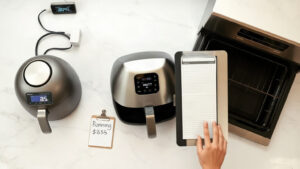
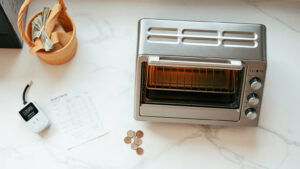
A convection oven uses a built-in fan to actively circulate hot air around your food, while a toaster oven relies on radiant heat from fixed heating elements — no fan, no airflow. That difference sounds minor until you’re staring at a pale, soggy chicken thigh and wondering why it’s taking forever. In practical terms, convection cooks faster (typically 20–25% quicker) and browns more evenly, but a standard toaster oven is simpler, cheaper, and often all you actually need.
Safety First: Both convection ovens and toaster ovens reach temperatures between 450°F and 500°F and retain significant heat after cooking — always use oven mitts rated for high heat, keep a minimum 4-inch clearance on all sides for ventilation, never place either appliance under overhead cabinets without checking manufacturer clearance guidelines, and never leave either running unattended with greasy foods inside, as drippings can ignite.
Quick Facts
- Convection ovens circulate hot air with a fan; toaster ovens use stationary radiant heat from top and bottom elements.
- Convection cooking is typically 20–25% faster and produces noticeably crispier exteriors on roasted and baked foods.
- A standard toaster oven typically draws 1,200–1,800 watts; a full countertop convection oven can pull 1,800–2,400 watts.
- Many modern “toaster ovens” now include a convection setting — meaning the line between these two categories has genuinely blurred.
- For small households doing mostly reheating and toast, a basic toaster oven wins on price and simplicity. For roasting, baking, or replacing a full oven, get convection.
How Each One Actually Works
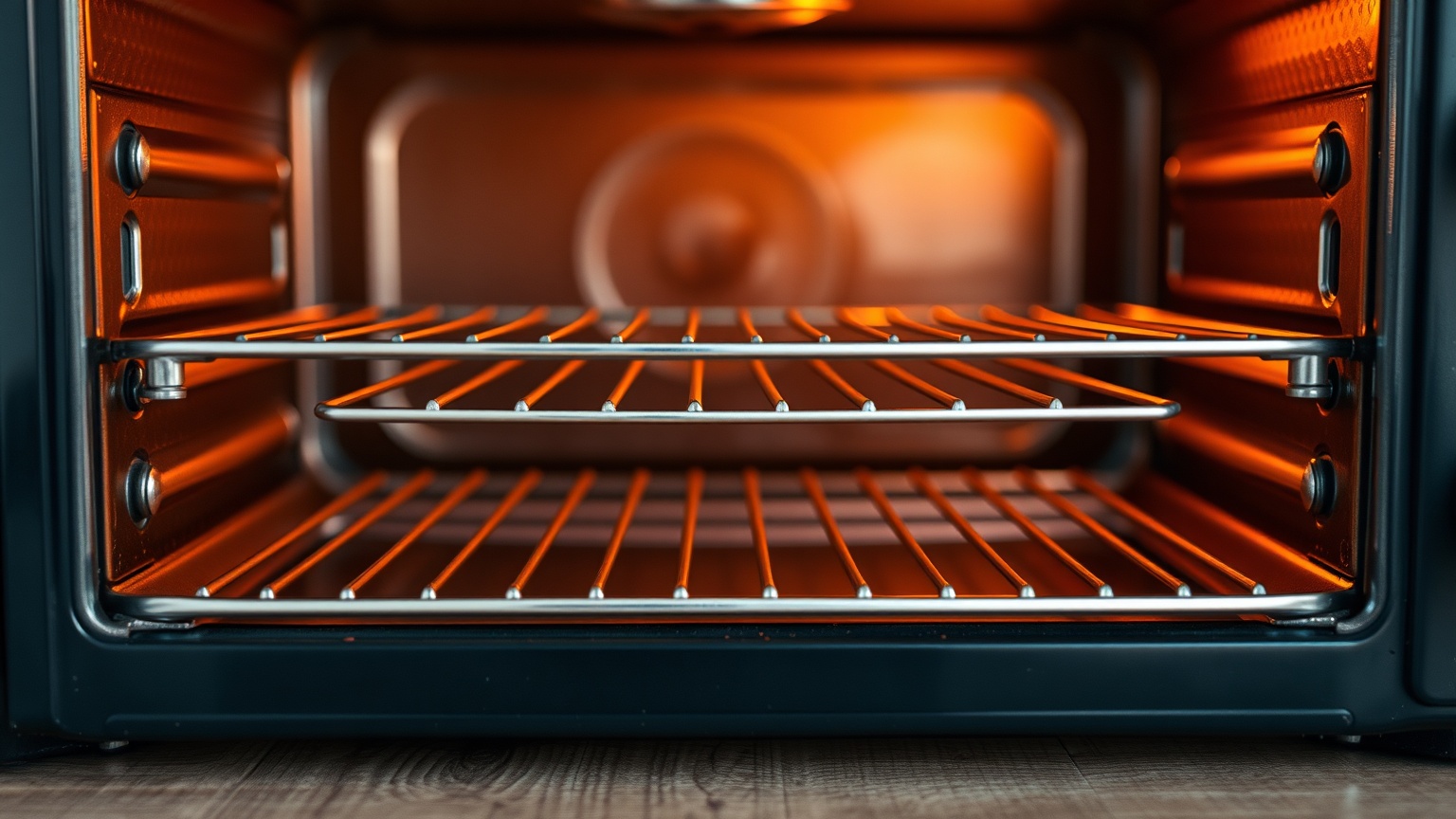
A toaster oven is essentially a small box with heating elements — usually two on top, two on the bottom — that radiate heat inward. The food sits there and absorbs it. Simple. Reliable. The problem is that radiant heat doesn’t distribute perfectly. Spots closer to the elements get hotter. That’s why you’ll sometimes pull toast out and find one corner darker than the rest.
A convection oven adds a fan (usually at the back wall) that pushes that heated air around constantly. It sounds like a small detail. It isn’t. Moving air transfers heat to food significantly faster than still air — this is the same physics reason why a 35°F windy day feels colder than a 35°F calm day. The fan strips away the cool, insulating layer of air that forms around your food and replaces it with hot air continuously. Result: faster cooking, more even browning, and a crispier texture on things like roasted vegetables or pastry.
Full-size wall convection ovens work the same way, just at larger scale. Countertop convection ovens are basically just bigger, more powerful versions of convection toaster ovens. The naming conventions in this category are honestly a mess.
Size, Footprint, and Capacity
This is where things get more concrete. A standard toaster oven — the kind that fits 4 slices of bread — typically has an interior around 12″ × 10″ × 6″ and a countertop footprint of roughly 16″ × 12″. You can fit a 9-inch pizza or a small sheet of cookies. That’s it.
Countertop convection ovens tend to run larger: interior capacities of 0.7 to 1.5 cubic feet are common, with footprints in the 20″ × 16″ range. You can actually fit a 12-inch pizza, a whole small chicken (under 4 lbs), or a standard 9×13 baking dish in a good countertop convection oven. Not so in most toaster ovens.
That said — and this is the thing that confuses a lot of people — plenty of toaster ovens sold today are also convection toaster ovens. Breville’s Smart Oven Pro, for example, is technically a toaster oven with a convection setting. So size doesn’t determine the cooking technology anymore. You have to check the spec sheet.
If you’re working with a small kitchen, check out our roundup of the best mini toaster ovens — some of those compact models pack in convection fans now, which is genuinely impressive for their size.
Temperature Range, Speed, and Real-World Cooking Performance
Temperature Ranges
Most toaster ovens top out around 450°F, though some go up to 500°F. Convection countertop ovens often max out at the same range, but they get there faster because the fan helps the cavity heat up more quickly. Preheat on a standard toaster oven can take 10–15 minutes to hit 400°F. A convection oven with a fan running during preheat can hit that temperature in 7–9 minutes. Not dramatic, but it adds up over time.
What the 25% Faster Claim Actually Means
You’ve probably seen this statistic — convection cuts cooking time by up to 25%. That’s real, but it’s not magic. I made roasted broccoli in a basic toaster oven and then made the same amount in a convection oven at the same temperature (400°F). The toaster oven needed 22 minutes to get good browning. The convection oven was done in 16 minutes. That’s 27% faster. The texture was also noticeably better — crispier florets, less steaming in the corners.
The standard advice from sources like Serious Eats is to reduce your recipe temperature by 25°F when switching to convection, or keep the temperature the same and reduce time by about 20%. Both approaches work. I personally prefer reducing the time rather than the temperature because I like browning.
What Each Handles Best
Toaster ovens are genuinely excellent for: toast (obviously), reheating pizza, making open-faced sandwiches, baking a few cookies, or heating up a small frozen meal. They’re also better for things that benefit from more gentle, indirect heat — a piece of fish, for instance, or a casserole with a dairy-based top that can break if it gets too aggressive airflow.
Convection works best for roasted meats, vegetables, pastry and pie crusts, anything you want crispy, and batch baking. If you’re trying to reheat food in a toaster oven and want it to come back crispy rather than soggy, a convection setting is your best friend. Reheated fries in convection? Genuinely good. Reheated fries in a standard toaster oven? Decent. Reheated fries in a microwave? Let’s not.
Wattage, Energy Use, and Cost
| Appliance Type | Typical Wattage | Average Price Range | Preheat to 400°F |
|---|---|---|---|
| Basic toaster oven (no convection) | 1,200–1,500W | $30–$80 | 10–15 min |
| Convection toaster oven | 1,500–1,800W | $80–$250 | 7–10 min |
| Countertop convection oven | 1,800–2,400W | $150–$400+ | 6–9 min |
| Full-size range convection oven | 2,000–5,000W | $700–$3,000+ | 12–18 min |
A basic toaster oven uses less electricity per session than a convection oven, simply because it draws fewer watts. But the convection oven finishes cooking faster, so the actual energy consumption per meal can end up similar. Both are dramatically more efficient than heating a full-size range oven for a single chicken breast — which is genuinely one of the best reasons to own either appliance.
If energy cost matters to you, check the wattage on the label and consider how long you’re actually running the appliance. A 1,500W toaster oven running 30 minutes costs roughly the same as a 1,800W convection oven running 25 minutes.
The Edge Case Nobody Talks About: Humidity and Moisture
Here’s something the other comparison articles tend to skip entirely. The convection fan doesn’t just distribute heat — it also actively dries out the cooking environment by venting moisture. That’s great for crispy skin on a chicken. It’s genuinely terrible for baking certain things.
Bread, for example. A good crusty loaf needs steam in the early baking phase to allow the crust to expand properly before it sets. Professional bakers inject steam into their ovens. A convection fan working against you will dry out the surface of your dough before the oven spring happens and you’ll end up with a dense, pale loaf with a tough crust — not in a good way. I learned this firsthand with a focaccia that came out looking like a cracker on top. Took me a minute to figure out what went wrong.
The fix is simple: if you’re baking bread or anything that benefits from retained moisture in the early stages, use a standard toaster oven setting (no fan) or cover the item for the first half of baking. Many convection toaster ovens let you turn the fan off entirely. Use that feature.
Custards, cheesecake, and anything baked in a water bath also don’t want a convection fan. The airflow can cause uneven surface setting and a cracked top. A regular toaster oven is actually a better tool for those.
Which One Should You Actually Buy?
Honestly? If you’re on a tight budget and mostly use a countertop oven for toast, reheating leftovers, and the occasional small bake, a basic toaster oven does the job. Something in the $40–$70 range with a decent build will serve you well. You don’t need a fan for those tasks. A good 4-slice toaster oven is still a solid kitchen tool.
But if you’re cooking actual meals, roasting vegetables more than once a week, baking cookies or small cakes, or trying to replace your full-size oven most of the time — get a convection toaster oven. The Breville Smart Oven Air Fryer and the Cuisinart TOA-60 are both well-regarded options. You’ll want a proper toaster oven baking pan and ideally a toaster oven wire rack to take full advantage of the airflow.
One thing I’d push back on slightly: the idea that a “real” convection oven has to be a large countertop unit. Some of the best convection cooking I’ve done has been in a compact Breville unit that’s technically a toaster oven. The category labels don’t tell you what the machine can actually do. Read the specs, not the product name.
Also worth knowing: the Food Network recommends checking whether your recipe was developed for conventional or convection heat before you start — that adjustment step is easy to miss, especially with baked goods where timing is less forgiving.
For more context on how high these appliances actually get, see our piece on how hot a toaster gets — the numbers might surprise you.
The Bottom Line
The difference between a convection oven and a toaster oven is real and it matters — but it’s not as clean a line as the marketing suggests. A fan changes how quickly and evenly your food cooks. No fan means simpler, cheaper, and occasionally more appropriate for what you’re making. Most people buying a toaster oven in 2025 should at minimum consider one with a convection option, even if they don’t use it all the time. The flexibility is worth the small price bump. But if your kitchen counter is already crowded and your needs are basic, don’t overthink it. A good basic toaster oven will still beat reheating everything in a microwave by a wide margin.
Frequently Asked Questions
Can I use a toaster oven instead of a convection oven for baking?
Yes, with some adjustments. A standard toaster oven without a fan will bake things like cookies, small cakes, and casseroles reasonably well, though browning can be less even and cooking times will be slightly longer than convection recipes assume. If your toaster oven has a convection setting, you can follow convection recipes directly — just reduce time or temperature slightly until you know how your specific unit runs.
Does a convection oven dry out food?
It can, yes. The fan circulates air and vents moisture from the cooking chamber, which is great for crispy textures but can dry out foods that need retained moisture — like bread dough in its early baking phase, custards, or anything you’d normally cover with foil. The fix is to either cover the food during cooking or turn the fan off if your appliance allows it.
How much faster does a convection oven cook compared to a toaster oven?
Convection typically cooks 20–25% faster than radiant heat at the same temperature setting. In practical terms, a dish that takes 20 minutes in a standard toaster oven might be done in 15–16 minutes in a convection oven. The difference is most noticeable with roasted vegetables, meats, and pastry — less significant for things like toast or reheating slices of pizza.
What is the difference between a toaster oven and a countertop convection oven in terms of size?
Standard toaster ovens are generally compact — fitting 4–6 slices of bread or a 9-inch pizza — with a countertop footprint around 16″ × 12″. Countertop convection ovens tend to be larger, with interior volumes of 0.7 to 1.5 cubic feet and footprints around 20″ × 16″, capable of fitting a 12-inch pizza or a small whole chicken. That said, many compact toaster ovens now include convection fans, so size alone doesn’t determine cooking technology.
Is a convection toaster oven worth it over a regular toaster oven?
For most people who cook actual meals rather than just making toast and reheating leftovers, yes. A convection toaster oven costs $80–$150 more than a comparable basic model but gives you noticeably better roasting and baking results, faster cook times, and more flexibility. If your countertop oven use is genuinely limited to toast, frozen waffles, and the occasional reheated slice, the upgrade probably isn’t worth the extra cost or counter space.

Written by
Emma founded Toastera to turn vague appliance advice into clear, researched, safety-first guidance on toasters and toaster ovens.
Free: the Toaster Oven Cheat Sheet
Get the printable cheat sheet (temps, cook times & safety tips) plus new recipes. No spam, unsubscribe anytime.