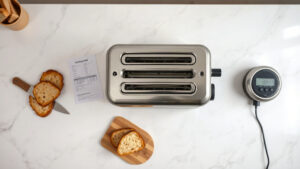
Yes, a convection toaster oven cooks faster than a regular toaster oven — typically 25–30% faster, thanks to a built-in fan that circulates hot air around your food instead of letting it just sit there. That moving air strips away the cool boundary layer clinging to food surfaces, so heat transfers more efficiently. In practical terms, a dish that takes 30 minutes in a standard toaster oven might be done in 20–22 minutes with convection running.
Safety First: Convection toaster ovens run hot and the fan can cause the exterior housing to get surprisingly warm during extended baking sessions. Keep at least 4 inches of clearance on all sides, never line the bottom tray with foil (it blocks airflow and can cause overheating), and always use oven mitts — the racks get significantly hotter than you’d expect from a countertop appliance. Keep children away from the vents while the fan is running.
Key Takeaways
- Convection toaster ovens cook roughly 25–30% faster than standard models at equivalent temperatures.
- The fan also distributes heat more evenly, so you get less hot-spot burning and more consistent browning across the whole rack.
- For most baking and roasting tasks, drop the temperature by 25°F when switching from a regular oven recipe to convection.
- Convection models cost more upfront — usually $30–$80 more than comparable non-convection units — but they’re genuinely more versatile.
- If you mostly make toast and the occasional frozen waffle, a regular toaster oven is probably all you need. If you actually cook in it, convection is worth it.
How Convection Actually Works in a Toaster Oven
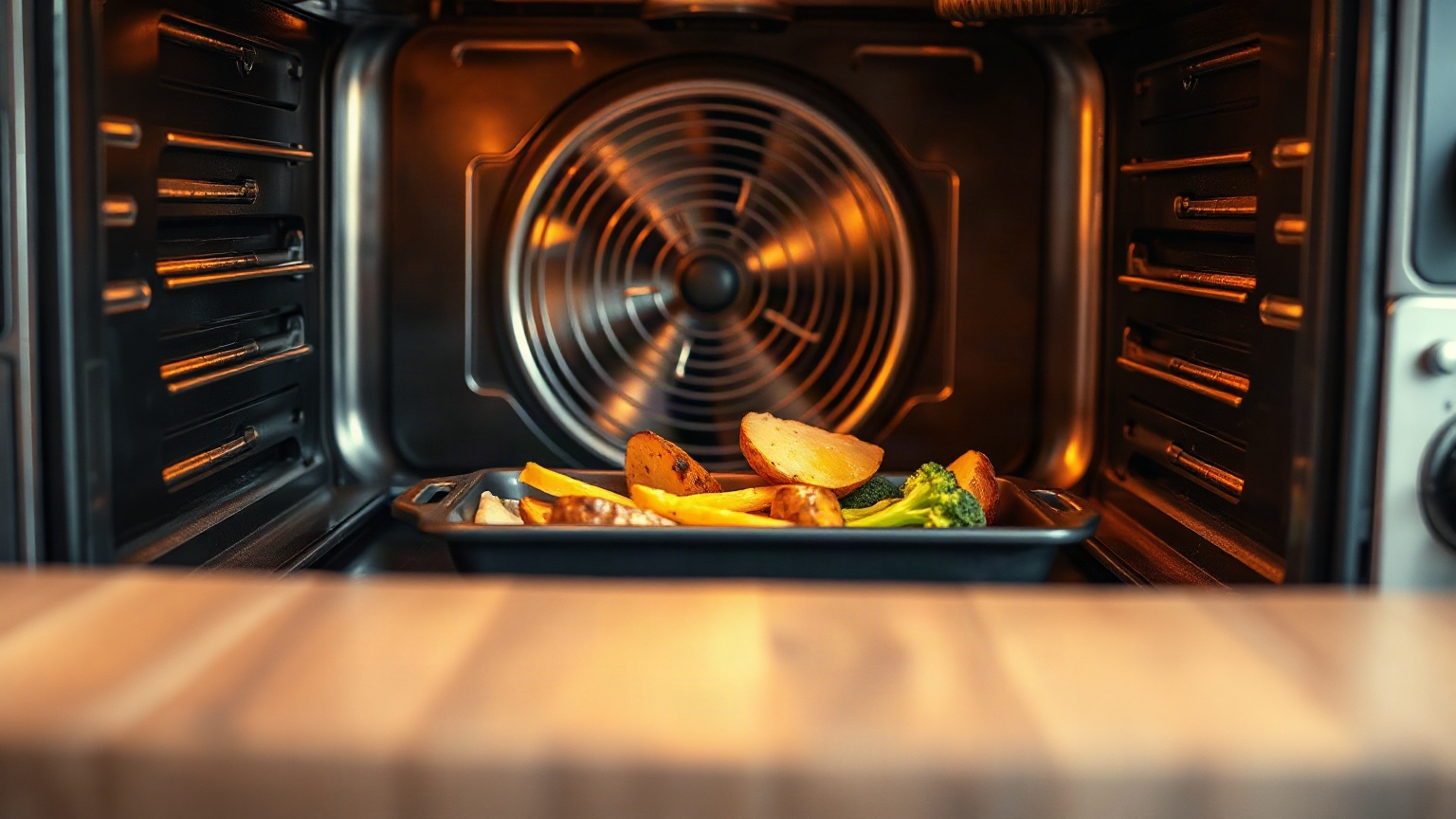
A regular toaster oven heats up via heating elements — usually at the top and bottom — and then just… waits for that heat to reach your food. That works fine. But the air inside is relatively static, and food sitting on a rack develops a thin layer of cooler air right at its surface that acts like insulation. Heat has to push through that layer every single time.
A convection toaster oven adds a small fan (usually at the rear wall) that keeps the hot air moving constantly. That boundary layer never really stabilizes. So heat hits the food surface more aggressively and more consistently, which speeds up cooking and tends to give you better browning — the kind of caramelized crust you actually want on roasted vegetables or a chicken thigh.
It’s not magic. The oven is still hitting the same temperature. It’s purely about airflow efficiency. And it makes a noticeable difference — not a subtle one.
The Speed Difference: Real Numbers
I tested this with a tray of bone-in chicken thighs, a standard benchmark I keep going back to because they’re unforgiving — undercook them and you know immediately, overcook them and they’re dry. At 400°F in a regular toaster oven, they hit a safe internal temp of 165°F at around 32 minutes. In convection mode on the same oven (I was using a Breville with a convection toggle), they were done at 23 minutes. Same rack position, same pan, same starting temperature.
That’s about 28% faster. Which tracks with what most cooking resources like Serious Eats report for convection cooking in general.
What tripped me up the first time I used convection mode: I didn’t reduce the temperature. The conventional advice is to drop 25°F (so 375°F instead of 400°F) when using convection, because the faster heat transfer essentially means your food cooks at a “hotter effective temperature” even if the dial says the same thing. I skipped that step once and ended up with the outside of a salmon fillet overdone before the center was cooked. Lesson absorbed.
When Convection Doesn’t Help Much
There are a few situations where convection either doesn’t matter or actively works against you. Delicate items — think custards, soufflés, or anything with a batter that needs to set slowly — can get blown around or cook unevenly on the surface before the interior is ready. I turn convection off for things like that. Same with toast, honestly. The fan doesn’t do anything useful for browning bread slices, and it can make lighter toppings flutter around annoyingly.
Also worth flagging: very small batches of food in a large convection oven sometimes cook less evenly than expected, because the fan creates turbulence that matters more when there’s nothing much to absorb it. This is a quirk most articles skip over. If you’re just reheating a single slice of pizza, the convection fan is basically irrelevant — check out the best method for reheating food in a toaster oven for more on that.
Convection vs Regular Toaster Oven: Side-by-Side Comparison
| Feature | Regular Toaster Oven | Convection Toaster Oven |
|---|---|---|
| Cooking Speed | Standard | ~25–30% faster |
| Heat Distribution | Uneven (hot spots common) | More even, consistent browning |
| Best For | Toast, reheating, simple baking | Roasting, baking, air frying, dehydrating |
| Temperature Adjustment Needed? | No | Yes — reduce by 25°F or cut time by ~20% |
| Noise Level | Quiet | Slight fan hum |
| Price Tier | Budget to mid-range ($30–$120) | Mid-range to premium ($80–$350+) |
| Energy Use | 1,200–1,500W typical | 1,500–1,800W typical |
| Cleaning Complexity | Simple | Fan area needs occasional wipe-down |
Specific Models Worth Considering
If you’re shopping for a convection toaster oven and want to skip the analysis paralysis, here’s my honest take on the models I’d actually recommend — and to whom.
Breville Smart Oven Air Fryer Pro
This is the one sitting on my counter. Premium price tier, but the convection is genuinely powerful and the temperature accuracy is better than most competitors I’ve tried. It has multiple fan speeds — “Super Convection” mode is aggressive and great for air-frying or roasting. It’s bigger than it looks in photos, so measure your counter space first. I’d recommend it for anyone who cooks real meals in their toaster oven regularly. Check current prices on the Breville Smart Oven Air Fryer Pro.
Cuisinart TOA-70
Mid-range, solid performer, and the air fry function works better than you’d expect at this price. The interior is a bit smaller than the Breville, which matters if you’re cooking for more than two people. Good choice if you want convection without the premium price tag. The controls are dial-based, which I actually prefer for quick adjustments. See the Cuisinart TOA-70 on Amazon.
Ninja Foodi XL Pro Air Fry Oven
If you’ve got a lot of counter space and cook for a family, the Ninja Foodi XL is worth a look. Big capacity, multiple cooking modes, strong convection performance. It’s on the louder side — the fan is noticeably noisier than the Breville — and the accessories feel a bit plasticky, but the cooking results are genuinely good for the mid-to-premium price.
Hamilton Beach Easy Reach
Budget tier, and honestly fine if your use case is light. Some Hamilton Beach models have basic convection, but it’s less powerful than the above options. If you’re mostly reheating leftovers and making toast with the occasional simple bake, this’ll do. Don’t expect the same browning results on a whole chicken.
Not sure which size you need? The best mini toaster ovens roundup covers compact options if counter space is tight.
Quick Model Comparison
| Model | Price Tier | Capacity | Convection Strength | Best For |
|---|---|---|---|---|
| Breville Smart Oven Air Fryer Pro | Premium | Large (0.8 cu ft) | Excellent (variable fan speeds) | Serious home cooks |
| Cuisinart TOA-70 | Mid-range | Medium | Good | Most households |
| Ninja Foodi XL Pro | Mid to Premium | Extra Large | Very Good | Families, meal prep |
| Hamilton Beach Easy Reach | Budget | Small to Medium | Basic | Light, occasional use |
Is the Extra Cost Actually Worth It?
Short answer: yes, for most people who cook regularly. The price gap between a basic toaster oven and a convection model has shrunk a lot — you can get decent convection for $80–$100 now, which used to be impossible. The question is really about how you use it.
If you’re baking cookies, roasting vegetables, cooking chicken, or using it as a substitute for your full-size oven — convection will improve your results and save you time. The energy savings are modest but real: shorter cook times mean less electricity used overall, even though convection models draw slightly more wattage. The Food Network has a solid primer on convection cooking adjustments worth bookmarking if you’re making the switch.
If you mostly make toast and reheat pizza, the fan does almost nothing for you. A regular toaster oven at half the price will serve you just as well. And you can pair it with a good nonstick toaster oven baking pan to get more even cooking without paying for convection at all.
One edge case worth mentioning that most reviews skip: if you live at high altitude, convection makes a bigger difference than it does at sea level. The thinner air means conventional radiant heat is even less efficient up there, so the fan-driven airflow closes that gap more dramatically. I noticed this when I was cooking at a friend’s place in Denver — the convection setting felt like a bigger upgrade than it does at home.
Also, if you’re curious about how toaster oven temperatures compare to conventional ovens, the deep look at how hot a toaster gets is worth a read for context.
The Bottom Line
Convection does cook faster — that part isn’t debatable. The real question was always whether it’s worth buying, and the answer is: probably yes, if cooking is what you’re using the appliance for. The Breville Smart Oven Air Fryer Pro is my top pick for anyone who wants the full package. The Cuisinart TOA-70 hits the sweet spot for most households. Skip the fan entirely only if your toaster oven use is genuinely minimal.
Just remember the 25°F temperature adjustment rule, don’t use it for custards, and wipe down the fan area every few months. That’s really all there is to it.
Frequently Asked Questions
Does a convection toaster oven cook faster than a regular toaster oven?
Yes — convection toaster ovens typically cook 25–30% faster than standard models at the same temperature setting. The built-in fan circulates hot air continuously, eliminating the cool boundary layer around food and transferring heat more efficiently. For a dish that normally takes 30 minutes, expect it to finish in roughly 20–22 minutes on convection.
Do I need to adjust the temperature when using convection mode?
Do I need to adjust the temperature when using convection mode?
Yes. Reduce the temperature by 25°F from whatever the recipe calls for, or keep the same temperature and check for doneness about 20% earlier than the stated time. Using the same temperature and time as a conventional recipe will likely result in overcooked food — especially proteins and baked goods that are sensitive to surface heat.
Is a convection toaster oven the same as an air fryer?
Not exactly, but they work on the same principle. An air fryer uses a more powerful, faster fan and a smaller chamber to circulate air more intensely, which creates a crispier result similar to frying. Many modern convection toaster ovens include an “air fry” mode that mimics this, and those models perform very similarly to standalone air fryers for most tasks.
What foods should not be cooked with the convection fan on?
Turn the convection fan off for custards, soufflés, quick breads, and anything with a loose batter that could be disturbed by airflow during the first critical minutes of baking. The fan can cause uneven surface setting before the interior is cooked. Standard toast also doesn’t benefit from convection and can scatter lightweight toppings.
Is a convection toaster oven worth the extra cost?
For regular cooking — roasting vegetables, baking, cooking proteins — yes, the extra $30–$80 is worth it. The speed improvement is real, browning is more consistent, and modern mid-range convection models like the Cuisinart TOA-70 have brought the price down significantly. If you only use a toaster oven for toast and reheating, a standard model will serve you just as well for less money.

Written by
Emma founded Toastera to turn vague appliance advice into clear, researched, safety-first guidance on toasters and toaster ovens.
Free: the Toaster Oven Cheat Sheet
Get the printable cheat sheet (temps, cook times & safety tips) plus new recipes. No spam, unsubscribe anytime.