A toaster’s heating elements reach between 1,000°F and 1,200°F (538°C–649°C) during a normal toasting cycle. The air inside the toaster cavity itself sits considerably lower — typically 300°F to 500°F (149°C–260°C) depending on your browning setting. That’s still hot enough to cause serious burns and, under the wrong conditions, start a fire.
Safety First: Toaster heating elements exceed 1,000°F and the outer slots can reach temperatures that cause immediate burns on contact. Never insert anything metal into a toaster, never reach inside while it’s plugged in, and keep the toaster at least 4 inches away from cabinets or curtains. Crumb trays should be emptied regularly — built-up crumbs at those temperatures are a genuine fire hazard.
Quick Facts
- Heating elements in a standard pop-up toaster glow at 1,000°F–1,200°F (538°C–649°C)
- Internal air temperature inside the toaster cavity ranges from roughly 300°F to 500°F depending on the shade setting
- The exterior of a toaster can reach 150°F–175°F on the sides during heavy use — enough to leave a mark on a plastic countertop
- Most toasters draw 800–1,500 watts, which is why they heat up so fast — usually fully warm in under 30 seconds
- Toaster ovens operate at set air temperatures (200°F–450°F+), making them far more precise for cooking than pop-up toasters
I’ll be honest — I never really thought about this until I burned my wrist grabbing toast out of a narrow-slot toaster. It healed fine. But it made me curious about what exactly was happening inside that little chrome box on my counter.
How Toaster Heating Elements Actually Work
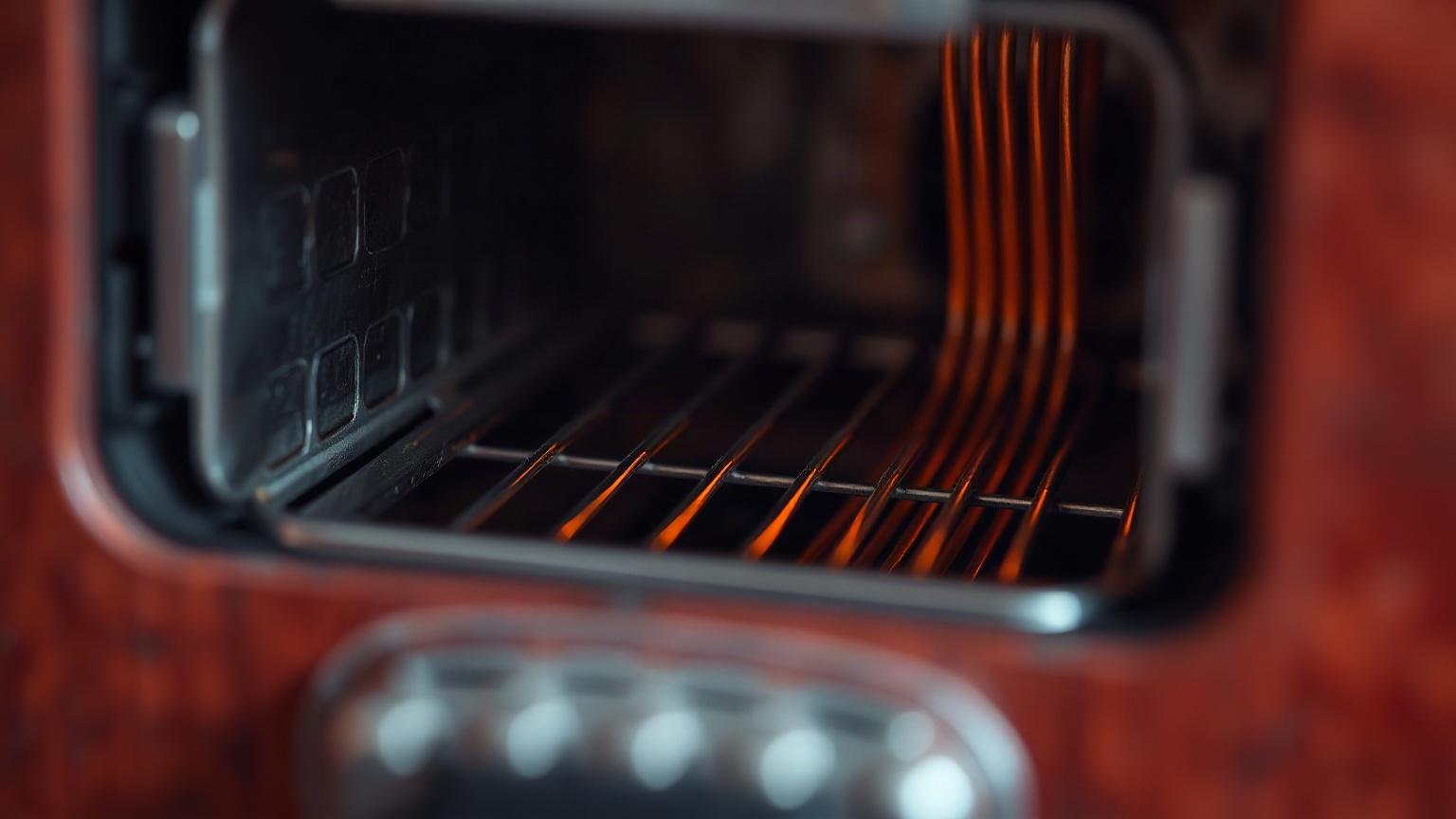
Standard pop-up toasters use nichrome wire — an alloy of nickel and chromium — wound around mica sheets. Nichrome is chosen because it has high electrical resistance and doesn’t oxidize quickly at extreme heat. When current flows through it, the wire converts electricity into heat almost immediately. Within about 20–30 seconds of pressing that lever down, the elements are already glowing a dull orange-red.
That glow tells you something. Visible red heat starts around 900°F. So when you can actually see it, you’re already past that threshold. At full brightness, those elements are well above 1,000°F.
The bread never touches those elements directly (hopefully). What’s cooking your toast is a mix of radiant heat — infrared radiation from the glowing wires — and some convection from the hot air trapped inside. Radiant heat is fast and intense, which is why the side of your bread facing the element browns faster than the center.
Why Your Browning Setting Changes Everything
The browning dial doesn’t actually lower the temperature of the elements. It controls how long the toasting cycle runs. A “light” setting clicks off earlier; a “dark” setting keeps those 1,000°F wires running longer. So the peak heat is roughly the same either way — the difference is exposure time.
This is something that tripped me up early on when I was testing a cheap two-slice toaster. I kept assuming the low setting meant gentler heat. It doesn’t. It means shorter heat. For delicate things like brioche, that distinction matters a lot.
Internal Cavity Temperature vs. Element Temperature
The element temperature and the air temperature inside a toaster are very different numbers, and mixing them up causes a lot of confusion.
The air inside the toaster cavity during a typical cycle hovers around 300°F on a medium-light setting, climbing toward 450°F–500°F on max. That’s based on informal probe thermometer readings I’ve done — not lab conditions, so take it as a reasonable estimate. The bread itself reaches surface temperatures of roughly 300°F–350°F when properly toasted, which is the range where the Maillard reaction really kicks in. That’s the browning reaction that makes toast taste like toast and not just dried bread.
For what it’s worth, Serious Eats has a good breakdown of what’s happening chemically when bread browns, if you want to go deeper on the science side.
How Hot Does the Outside of a Toaster Get?
More than most people expect. The exterior sides of a pop-up toaster can reach 150°F to 175°F after a few consecutive cycles. The top, near the slots, gets hotter — I’ve measured surfaces close to 200°F on inexpensive models with thin steel bodies. Premium toasters with double-wall construction stay cooler to the touch, but they’re not cold by any means.
The practical upshot: don’t put your toaster under a cabinet with almost no clearance. And definitely don’t stack anything on top of it while it’s running. I saw someone rest a paper towel on top of their toaster once. I didn’t say anything fast enough. Nothing caught fire, but it was close.
Pop-Up Toaster vs. Toaster Oven: Temperature Comparison
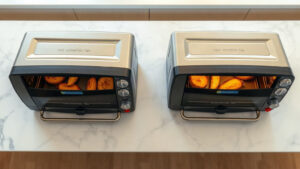
These are genuinely different appliances in terms of how they manage heat. A pop-up toaster runs at brutally high element temperatures for a short burst. A toaster oven heats a larger enclosed space to a controlled set temperature, more like a miniature oven.
| Appliance Type | Element/Source Temp | Internal Air Temp | Typical Cycle Time | Temperature Control |
|---|---|---|---|---|
| Pop-up toaster (light setting) | ~1,000°F–1,100°F | ~300°F–350°F | 60–90 seconds | Timer-based (no thermostat) |
| Pop-up toaster (dark setting) | ~1,000°F–1,200°F | ~400°F–500°F | 2–3 minutes | Timer-based (no thermostat) |
| Toaster oven (toast mode) | ~900°F–1,000°F | ~400°F–450°F | 3–5 minutes | Thermostat-regulated |
| Toaster oven (bake mode, 350°F) | Cycles on/off | ~350°F | Varies | Thermostat-regulated |
| Toaster oven (max broil) | ~900°F–1,000°F | ~500°F–550°F | Varies | Thermostat-regulated |
The big difference is control. A pop-up toaster hits its peak and coasts. A toaster oven cycles its elements on and off to hold a target temperature. That’s why toaster ovens are actually useful for reheating food without torching it — you can set 325°F and trust it’ll stay close to 325°F.
If you’re shopping for a toaster oven, the best mini toaster ovens handle this temperature regulation very well, even at smaller sizes.
What These Temperatures Mean for Safety
At 1,000°F+, the elements can ignite paper, thin plastic, and certain fabrics almost instantly if they come into direct contact. That’s not a hypothetical — it’s the reason kitchen fires from toasters are more common than people think. The U.S. Fire Administration notes that cooking equipment, including toasters, is involved in a significant share of home kitchen fires each year.
The Crumb Tray Problem
This is my actual pet peeve with people’s toaster habits. Most folks never empty the crumb tray. At 300°F–500°F internal air temps, accumulated crumbs are sitting right under elements that run past 1,000°F. They don’t burst into flame every time, but they can smolder, they absolutely can smoke, and under the right conditions they will ignite.
Empty it. Seriously. Once a week if you use your toaster daily. It takes 10 seconds.
Can a Toaster Start a Fire on a Wooden Countertop?
The exterior of the toaster reaching 150°F–175°F isn’t enough to ignite a dry wooden countertop on its own — wood typically needs to reach around 400°F–500°F to ignite. But a wooden surface directly under a malfunctioning toaster, or one covered in grease and crumbs, is a different story. It’s also enough to damage laminate or melt thin plastic cutting boards if they’re pressed right against the side. I know this from experience. The cutting board survived. I was embarrassed.
How to Get the Best Toast at the Right Temperature
Now for the actually useful part. Knowing these temperatures helps you get better toast — not just avoid fires.
The sweet spot for bread browning is a surface temperature of 280°F–330°F, sustained for long enough that moisture escapes and the crust crisps. That usually means a medium shade setting on most toasters. If you’re toasting thick slices (like a dense sourdough), running it on medium and then doing a second shorter cycle often gets better results than cranking the dial to dark, which can char the outside before the center is fully done.
For frozen bread or thick bagels, I always use the highest setting without apology. Those extra-long cycles are there for a reason. Some toasters have a dedicated frozen bread setting that extends the cycle — genuinely useful, not just a marketing feature.
If you want more precision than a pop-up toaster allows, a toaster oven with a proper thermostat is worth considering. I’d point you toward something like a Breville compact toaster oven or a Cuisinart convection toaster oven if you want that kind of control. Both hold temperature reliably and have toast modes that run longer, more even cycles than a standard pop-up. You can read more about how hot a toaster gets in different scenarios over on our dedicated guide too.
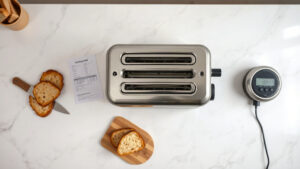
One thing worth having on hand: a kitchen infrared thermometer. They’re cheap, they’re fast, and they let you actually check surface temperatures. I used one for most of my testing. It’s a lot more informative than guessing.
The Bottom Line
Your toaster is running much hotter than it looks. The elements are past 1,000°F every single time you make toast — that’s just how they work. The internal air temperature is lower, in the 300°F–500°F range, which is still more than enough to brown bread, scorch fingers, and under the wrong circumstances, start something you don’t want started.
None of that means toasters are dangerous if you use them normally. They’re genuinely simple, reliable appliances. But knowing what’s actually happening inside makes you a smarter user — emptying that crumb tray, keeping clearance around the toaster, not hovering plastic bags near the slots. Small habits, real payoff.
And honestly, once you understand the radiant heat mechanics, you’ll start getting better toast too. That part’s just a bonus.
Frequently Asked Questions
How hot does a toaster get inside?
The heating elements inside a standard pop-up toaster reach 1,000°F–1,200°F (538°C–649°C). The internal air temperature in the cavity is lower, typically ranging from 300°F to 500°F depending on your browning setting. The bread’s surface itself reaches roughly 300°F–350°F when properly toasted.
Is it safe to leave a toaster plugged in when not in use?
A plugged-in toaster in standby draws very little current and won’t heat up on its own. That said, unplugging it when not in use is a smart habit — it eliminates any risk from electrical faults or accidental lever depression, and it’s the recommendation most fire safety organizations give for small kitchen appliances.
Can a toaster catch fire?
Yes, a toaster can catch fire, most commonly from accumulated crumbs in the crumb tray igniting near the heating elements, or from a foreign object (a bread bag twist tie, a fork, a piece of wrapping) contacting the elements. Regular crumb tray cleaning and keeping the toaster clear of flammable materials significantly reduces this risk.
How hot does the outside of a toaster get?
The exterior sides of a standard pop-up toaster can reach 150°F–175°F during and after use, with the top surface near the slots reaching close to 200°F on some models. This is enough to cause discomfort on skin contact and can damage laminate, plastic, or wooden surfaces placed directly against it.
What temperature do toaster ovens reach?
Toaster ovens typically have a temperature range of 150°F to 450°F on bake/broil settings, with some models going to 500°F on broil. Unlike pop-up toasters, they use a thermostat to regulate the internal air temperature, cycling elements on and off to hold a set temperature — which makes them far more precise for cooking tasks beyond just toast.

Written by
Emma founded Toastera to turn vague appliance advice into clear, researched, safety-first guidance on toasters and toaster ovens.
Free: the Toaster Oven Cheat Sheet
Get the printable cheat sheet (temps, cook times & safety tips) plus new recipes. No spam, unsubscribe anytime.