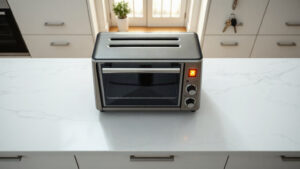
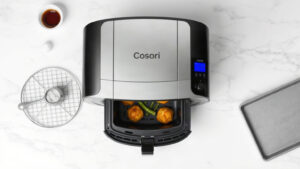
A convection toaster oven is worth it over a regular toaster oven if you cook more than just toast and reheated leftovers. The built-in fan circulates hot air around your food, cutting cook times by roughly 25% and producing crispier, more evenly browned results that a standard radiant-heat oven simply can’t match. For a solo apartment dweller who mostly reheats soup and toasts bread, a basic model is fine — but for anyone who actually cooks, the convection upgrade pays for itself fast.
Safety First: Convection toaster ovens run hot — exteriors can reach 150°F or higher during use. Always keep at least 4 inches of clearance on all sides, never place on or near flammable surfaces like paper towels or wooden cutting boards, and use oven mitts rated for high heat when removing pans. Never leave the oven unattended when cooking fatty or high-sugar foods, as drips can ignite on the heating element.
Quick Facts: Convection vs. Regular Toaster Oven
- Convection toaster ovens typically cook 20–30% faster than radiant-heat models at the same temperature setting.
- Most convection countertop ovens top out at 450°F; regular toaster ovens often cap at 400–425°F.
- The fan in a convection unit strips away the insulating layer of cool air that sits around food, which is why browning improves so dramatically.
- Convection models cost roughly $30–$100 more than comparable non-convection versions, depending on the brand and capacity.
- For delicate baked goods like soufflés or custards, you’ll actually want to turn the fan off — most mid-range and premium convection models let you do that.
What Convection Actually Does (and Why Most People Get It Wrong)
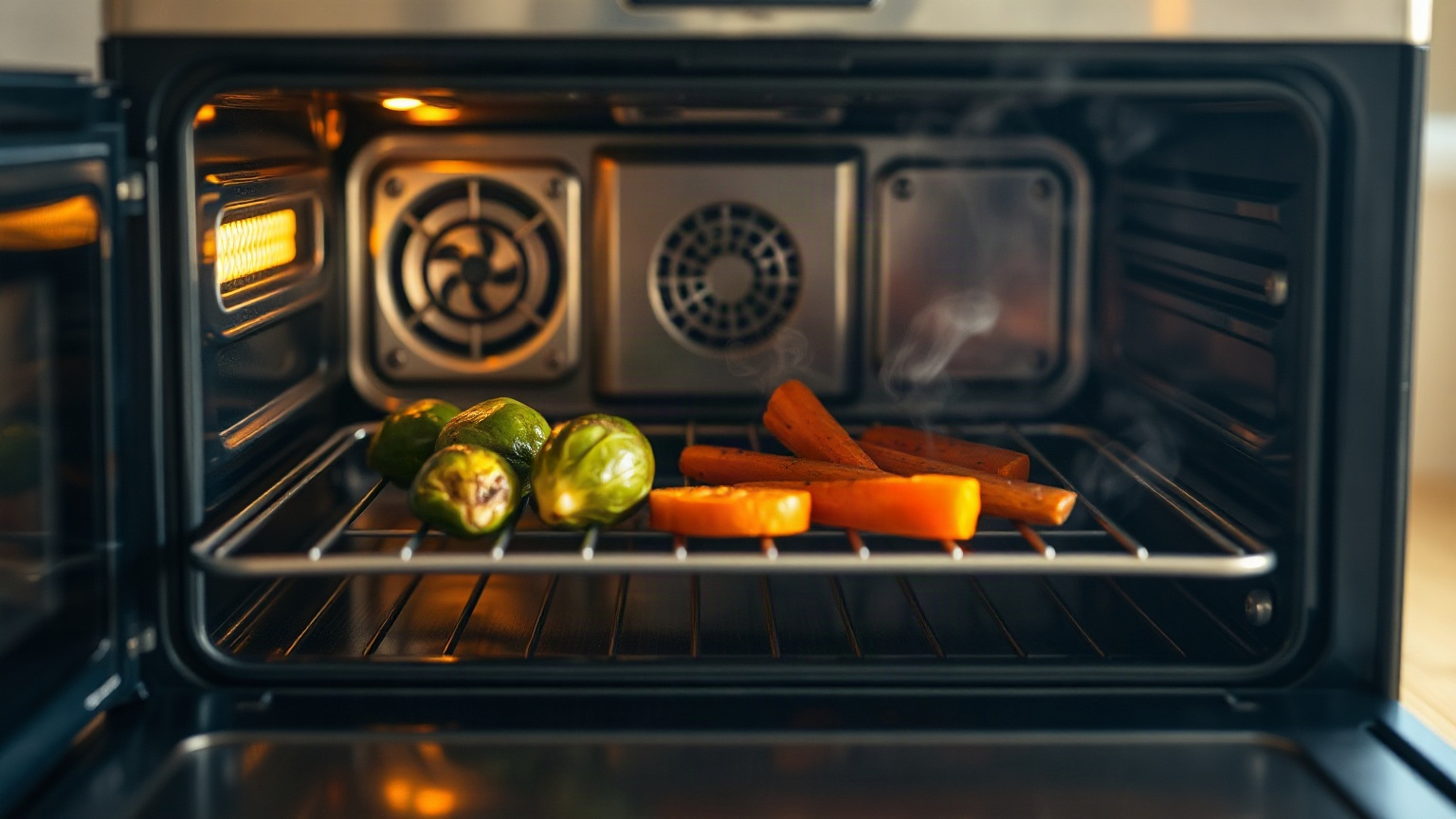
Here’s the thing most product descriptions gloss over: convection isn’t magic. It’s a fan. A small, usually rear-mounted fan that keeps air moving instead of letting it sit still around your food. Still air is actually a decent insulator — which is why a standard toaster oven can have perfectly heated air at 400°F and still produce a chicken thigh that’s weirdly pale on one side.
Moving air transfers heat more efficiently. That’s the whole story. The practical result is faster browning, crispier skin, and more even heat distribution across whatever you’re cooking. When I first switched from a basic Black+Decker 4-slice to a convection model, I kept burning things for the first two weeks because I didn’t lower the temperature. Standard rule of thumb: drop the recipe temperature by 25°F and start checking for doneness about 10 minutes earlier than the recipe says. It feels annoying at first. You get used to it.
Worth noting: “convection” and “air fryer mode” are related but not identical. Air fryer mode typically runs the fan at its highest speed and uses a specific rack position close to the top element, creating much more aggressive circulation. A standard convection setting is gentler. Some ovens — the better ones — let you choose between the two. That distinction actually matters.
Head-to-Head: Performance Where It Actually Counts
Roasting and Baking
Convection wins. Not close. Chicken thighs at 400°F convection are done in 28–32 minutes and the skin is genuinely crispy. The same thighs in a regular toaster oven at 400°F take 38–45 minutes and the skin is… fine. Acceptable. Not exciting. Roasted vegetables tell the same story — Brussels sprouts caramelize instead of steam, potato wedges get actual crunch.
For baking, the answer is a bit more nuanced. Cookies spread better and brown more evenly with convection on. Cakes and quick breads, though — I turn the fan off. The moving air can cause the top to set before the center catches up, and you end up with a dome that’s brown on the outside and gummy in the middle. Good convection ovens let you disable the fan for exactly this reason. Cheap “convection” models that only run the fan at one speed don’t always give you that option, which is a real limitation.
Reheating Leftovers
This is one area where convection’s advantage is obvious and immediate. Pizza reheated in a regular toaster oven at 350°F for 8–10 minutes comes out decent. The same pizza in a convection oven at 325°F for 6 minutes comes out genuinely good — crispy bottom, melted cheese, not dried out. If you want the full rundown on reheating strategies, I’ve covered it in detail over at the reheating food in a toaster oven guide, but short version: convection makes almost everything reheat better.
Plain Toast
Convection offers zero benefit here. Toast is browned by radiant heat from the element directly above and below the bread. The fan doesn’t help. On some convection models, the toast setting actually disables the fan automatically. If toast is genuinely the primary thing you need this appliance for, save your money — or look at the best mini toaster ovens for compact options that handle toast better than a large oven-style unit anyway.
Specific Models Worth Knowing About
Abstract comparisons only go so far. Here are the models I’d actually point someone toward, depending on their situation.
| Model | Capacity | Convection Type | Air Fry Mode | Price Tier | Best For |
|---|---|---|---|---|---|
| Breville Smart Oven Air Fryer Pro | Large (fits 13″ pizza) | Super Convection + standard | Yes | Premium | Serious home cooks who use it daily |
| Cuisinart TOA-70 | Large (0.6 cu ft) | Standard convection | Yes | Mid-range | Families wanting versatility without spending big |
| Ninja Foodi XL Pro Air Oven | Extra Large | True convection | Yes (aggressive) | Mid-range | People who prioritize air frying most |
| Hamilton Beach 31123D | Medium (6-slice) | Standard convection | No | Budget | Casual users who want basic convection cooking |
| Cuisinart TOB-260N1 | Large | True convection | No | Mid-range | Bakers who want even heat without air fry frills |
My honest picks: If budget isn’t the limiting factor, the Breville Smart Oven Air Fryer Pro is the one I’d buy without hesitation. The “Super Convection” setting moves air fast enough to genuinely replace a dedicated air fryer, and the standard convection mode is gentle enough for baking. It’s big and expensive and worth it if you use it daily.
For most people, though, the Cuisinart TOA-70 hits the sweet spot. It doesn’t do anything as impressively as the Breville, but it does everything competently, fits on a normal counter, and costs significantly less. That’s the one I’d recommend to a friend without any asterisks.
The Hamilton Beach is fine for what it is. I wouldn’t buy it over a good mid-range model if the price difference is under $40 — but if you find it on sale, it’s a solid entry point. According to Serious Eats’ testing methodology, consistent temperature is often more important than peak temperature, and the Hamilton Beach is more consistent than its price suggests.
The Edge Cases Nobody Talks About
One thing the standard “convection vs. regular” articles skip: humidity. Convection ovens vent moisture more aggressively than standard ones because that moving air is constantly carrying steam away from the food. For things like roast chicken, that’s fantastic — dry skin equals crispy skin. For bread baking, it’s a problem. A proper bread crust requires steam in the first 10–15 minutes of baking, and convection actively works against that. The workaround is to put a small pan of hot water on the lower rack and disable the fan for the first half of baking. It works, but it’s fiddly.
Another edge case: thin or delicate foods. Puff pastry, phyllo dough, thin fish fillets — the fan can actually blow them around or cause uneven puffing. I ruined a tray of palmiers the first time I used convection without thinking about this. Low fan speed or no fan is the move there. And if you’re cooking anything wrapped in foil, convection is entirely pointless — the foil traps air immediately around the food regardless of what the oven is doing.
Also worth mentioning: convection toaster ovens tend to be louder. That fan runs the whole time, and some models (the Ninja especially) are noticeably noisy. It’s not a dealbreaker, but if your kitchen is open-plan and you cook while people are sleeping, it’s worth knowing.
Is the Price Difference Justified?
For the majority of people reading this — yes. The $30–$100 premium over a comparable non-convection model is paid back quickly in energy efficiency alone. Convection models preheat faster (typically 3–5 minutes vs. 6–10 for a standard model reaching 400°F) and cook faster, so the oven is on for less total time. The U.S. Department of Energy notes that countertop convection cooking can use up to one-third less energy than a full-size oven for the same task. Even compared to a standard toaster oven, the time savings add up.
The people for whom convection is genuinely not worth it: someone who exclusively toasts bread, someone who only reheats coffee mugs (please just use a microwave), or someone living in a situation where counter space is so tight that a smaller basic toaster oven is the only viable choice. Check out what’s possible in a smaller footprint over at the best mini toaster ovens page if that’s you.
For convection toaster oven accessories like baking pans and racks, make sure whatever you buy fits your specific model — interior dimensions vary a lot between brands, and a pan that slides in smoothly will improve airflow and browning versus one that barely fits.
The Bottom Line
Convection toaster ovens cook faster, brown better, and handle a wider range of tasks than their non-convection counterparts. For anyone who cooks actual food — not just toast — the upgrade is worth the extra cost. The Cuisinart TOA-70 is my practical recommendation for most households. The Breville Smart Oven Air Fryer Pro is the one to get if you want the best performance available in a countertop oven and you’ll use it daily. And if you truly just need a toaster that can occasionally reheat things, a basic model is completely fine — no need to overbuy.
One last thing: whatever you choose, check out how it compares on temperature accuracy, not just maximum temperature. A toaster oven that claims 450°F but only reaches 410°F consistently is worse than one that claims 425°F and actually hits it. That real-world accuracy matters more than the spec sheet number. I’ve written more on how hot a toaster gets if you want to go deeper on that.
Frequently Asked Questions
Does a convection toaster oven cook faster than a regular toaster oven?
Yes — convection toaster ovens typically reduce cook time by 20–30% compared to radiant-heat models at the same temperature setting. The circulating fan strips away the cool air layer that insulates food, so heat reaches the surface more efficiently. A good rule of thumb is to reduce your target temperature by 25°F and start checking doneness 10 minutes earlier than any non-convection recipe says.
Can I bake in a convection toaster oven the same way I bake in a regular oven?
Mostly yes, but with some adjustments. Cookies, roasted vegetables, and savory dishes benefit from convection and need only the standard temperature-and-time reductions. Delicate items like custards, soufflés, and some cakes do better with the fan off, since the moving air can set the outer layer before the interior is ready — many mid-range and premium models let you toggle the fan.
Is a convection toaster oven the same as an air fryer?
Not exactly. Both use a fan to circulate hot air, but air fryers run the fan at a much higher speed and typically position food closer to a top heating element, creating more aggressive browning and crisping. A standard convection setting moves air more gently. Many current countertop ovens include both a “convection” and an “air fry” mode — they’re different fan speeds optimized for different results.
What is the best convection toaster oven for a small kitchen?
The Cuisinart TOA-70 fits on most standard counters while still offering a large enough interior to fit a 12-inch pizza or a whole chicken. For even smaller spaces, the Hamilton Beach 31123D has a more compact footprint and basic convection capability. Measure your available counter depth before buying — most full-featured convection models are 16–18 inches deep, which surprises people who haven’t accounted for the door swing.
Does convection use more electricity than a regular toaster oven?
Convection toaster ovens typically use slightly more wattage than basic models (around 1,500–1,800W vs. 1,200–1,500W for standard units), but they cook faster, so the oven is on for less total time. The net result is usually lower energy consumption per meal, not higher. The U.S. Department of Energy estimates countertop convection cooking can use up to one-third less energy than a full-size conventional oven for comparable tasks.

Written by
Emma founded Toastera to turn vague appliance advice into clear, researched, safety-first guidance on toasters and toaster ovens.
Free: the Toaster Oven Cheat Sheet
Get the printable cheat sheet (temps, cook times & safety tips) plus new recipes. No spam, unsubscribe anytime.