Yes, a convection toaster oven cooks faster than a regular toaster oven — typically 25–30% faster, and at temperatures 25°F lower than what a recipe calls for. The built-in fan circulates hot air around your food instead of letting it sit in a static heat bubble, which means more even browning and quicker cook times. In practical terms, if a recipe says 400°F for 20 minutes, you’d set a convection oven to 375°F and check at 14–15 minutes.
Safety First: Convection toaster ovens run hotter and faster than you might expect — always use oven mitts rated for high heat, never leave parchment paper loose near the fan (it can blow against the heating element and ignite), and keep at least 4 inches of clearance on all sides of the unit. Never place on carpeted surfaces or inside cabinets while in use.
Quick Facts: Convection vs. Regular Toaster Oven
- Convection toaster ovens cook approximately 25–30% faster thanks to a circulating fan that moves hot air across the food’s surface.
- You should reduce your target temperature by 25°F when using the convection setting, or reduce cook time by roughly 20–25% — not both, unless the recipe specifically says so.
- Regular toaster ovens are cheaper upfront (often $40–$80) and simpler to use; convection models typically start around $100 and run up to $350+ for premium units.
- Convection is best for roasting vegetables, baking cookies, and reheating pizza. It’s less ideal for delicate items like soufflés, custards, or anything with a batter that needs to set slowly.
- Many mid-range and premium convection models also double as air fryers, which changes the value equation considerably.
How Each Type Actually Works
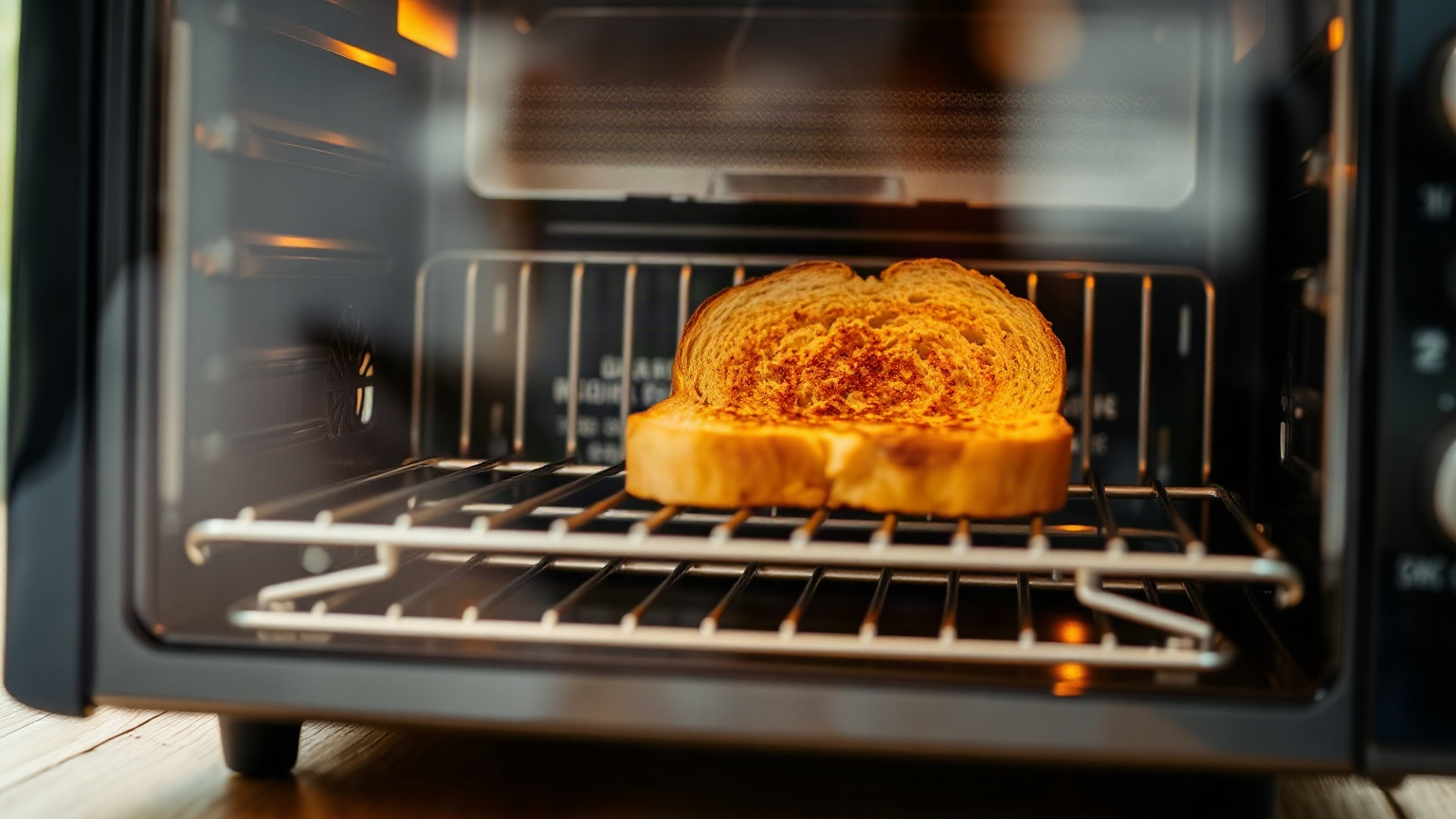
A regular toaster oven heats via two sets of metal heating elements — one on top, one on the bottom — and that’s basically it. The air inside gets hot, and the food cooks. Simple. The problem is that the air directly touching the food acts as a mild insulator, which slows heat transfer and can lead to uneven results. One side of your chicken breast might be done before the other side has caught up.
A convection toaster oven adds a fan (and usually a third heating element near that fan at the back). The fan blows that hot air in a continuous loop around the food. That constant movement strips away the cool boundary layer of air sitting right on the food’s surface. Heat gets in faster. Moisture evaporates more quickly. You get crispier outsides, more even cooking, and noticeably shorter times.
The first time I used my Breville Smart Oven on convection mode, I set it for my usual roasted broccoli time — 22 minutes at 425°F — and pulled out a tray of slightly-too-dark florets. Now I do 400°F for 16 minutes. Lesson learned the slightly smoky way.
The Speed Difference: Real Numbers
Let’s get specific, because vague promises of “faster cooking” aren’t actually useful when you’re standing in the kitchen.
| Food Item | Regular Toaster Oven | Convection Toaster Oven | Time Saved |
|---|---|---|---|
| Roasted vegetables | 425°F / 22 min | 400°F / 15–16 min | ~6 min |
| Chicken thighs | 400°F / 35 min | 375°F / 25–27 min | ~8–10 min |
| Frozen pizza (small) | 400°F / 12–14 min | 375°F / 9–10 min | ~4 min |
| Chocolate chip cookies | 350°F / 12 min | 325°F / 9–10 min | ~2–3 min |
| Reheated leftovers (pizza slice) | 375°F / 8 min | 350°F / 5–6 min | ~2–3 min |
These numbers come from my own testing with a Breville Smart Oven versus a basic Hamilton Beach two-slice toaster oven I’ve had since college. Your mileage will vary depending on the unit, how full the oven is, and whether you’re cooking from room temp or straight from the fridge. But the ratio holds up pretty consistently.
The speed gains are most dramatic with proteins and dense vegetables. Less dramatic with already-quick things like toast. And for things like reheating food in a toaster oven, convection absolutely wins — you get crispy pizza crust in about half the time, without the microwave’s soggy penalty.
Which Models Are Worth Buying? An Honest Look
The convection toaster oven market has gotten crowded. Here’s how the main contenders actually stack up.
Budget Pick: Hamilton Beach Sure-Crisp
If you want convection without spending much, Hamilton Beach makes a serviceable entry-level option. It’s not fancy. The fan is audible, the controls are analog dials, and the interior is smaller than you’d think from the outside. But it circulates air and it cooks faster than a standard toaster oven. Good for someone testing the waters.
Mid-Range Pick: Cuisinart TOA-70
The Cuisinart TOA-70 is a genuine all-rounder. It air fries, convection bakes, and broils. The interior fits a 13-inch pizza or six slices of toast. Controls are straightforward dials plus a digital display, which some people prefer over purely touchscreen interfaces (I’m one of them). At mid-range pricing, this is where I’d steer most home cooks. It runs a little hot — I’ve found I need to drop temperatures by 30°F rather than the standard 25°F advice.
Premium Pick: Breville Smart Oven Air Fryer Pro
The Breville is genuinely excellent and genuinely expensive. The “Element IQ” system adjusts heating element power based on what you’re cooking, which sounds like marketing fluff until you notice that your cookies actually come out more evenly than they do in cheaper convection units. It’s large, though. It’ll eat a significant chunk of your counter. If counter space is precious, that’s a real strike against it.
Compact Option: Ninja Foodi Digital Air Fry Oven
The Ninja Foodi flips up against the backsplash when not in use, which is either a brilliant space-saving design or a slightly awkward compromise depending on your kitchen setup. Cooking performance is solid — strong convection, good air fry results. The flip-up design means it preheats fast because it’s small inside. Worth considering if you’re tight on counter space and want convection plus air frying. Check our best mini toaster ovens roundup for more compact options.
| Model | Price Tier | Capacity | Air Fry? | Footprint | Best For |
|---|---|---|---|---|---|
| Hamilton Beach Sure-Crisp | Budget | Small (4-slice) | Some models | Compact | First-time convection users |
| Cuisinart TOA-70 | Mid-range | Medium (6-slice) | Yes | Moderate | Most home cooks |
| Breville Smart Oven Air Fryer Pro | Premium | Large (9-slice) | Yes | Large | Serious home cooks, frequent use |
| Ninja Foodi Digital Air Fry Oven | Mid-range | Medium (up to 13″ pizza) | Yes | Folds up | Small kitchens, counter space issues |
My honest verdict: the Cuisinart TOA-70 is the right call for most people. The Breville is better, but the price difference is hard to justify unless you’re cooking in it daily. The Ninja is clever but the flip mechanism feels fiddly after a while.
When Convection Actually Makes Things Worse
Here’s something the product listings won’t tell you. Convection isn’t universally better. The moving air can actively hurt certain foods.
Custards and flans need slow, even, gentle heat. The fan can cause the surface to set unevenly or crack. Same goes for delicate cakes — the fan can push the batter around before it sets, giving you a lopsided rise. Soufflés are basically out. And anything with a very light coating — breadcrumbs on top of a casserole, for example — can get blown around before it adheres.
Also, lightweight items like parchment paper or thin foil can actually lift and flap toward the heating element. That’s not just annoying — it’s a fire risk. I clip the edges of my parchment with the wire rack holding the pan down, or I use a heavier baking sheet and skip the parchment entirely when using convection.
The edge case most articles skip: altitude. At higher elevations (Denver, anyone?), convection’s moisture-stripping effect is amplified because the air is already drier. You may need to cover things with foil partway through to prevent them drying out. This especially affects baked goods. If you live above 5,000 feet and bake frequently, that’s worth factoring in.
Serious Eats has a good breakdown of when to use convection vs. conventional heat if you want to go deeper into the science side.
Is the Price Jump Actually Worth It?
Honest answer: it depends on what you cook. Which I know sounds like a dodge, but hear me out.
If you mostly make toast, reheat leftovers, and occasionally warm up a frozen thing — a standard toaster oven does that fine. Spending $150+ extra for convection speed on tasks that take 5–10 minutes anyway isn’t a smart use of money.
But if you roast vegetables a few times a week, regularly cook chicken or fish, bake cookies, or use your toaster oven as a true second oven — the convection feature pays off. Faster times mean less energy used per session. The food comes out better. And if the model also air fries, you’ve basically replaced a single-use appliance you might otherwise buy separately.
One thing I didn’t expect: I ended up using my full-size oven less after getting a convection toaster oven. A full-size oven can take 15–20 minutes just to preheat. A convection toaster oven gets there in 5–8. For anything that fits inside — which is most weeknight cooking — it’s just faster start to finish. That’s real energy savings too, worth noting given how much a big oven costs to run per session.
For reference on how heat works in these smaller appliances generally, our guide to how hot a toaster gets covers the heating element basics.
The Bottom Line
Convection toaster ovens genuinely do cook faster — not marginally, but meaningfully. Around 25–30% quicker, more even browning, and better results on anything crispy or roasted. The tradeoff is a higher upfront cost and a slight learning curve (the “reduce temp by 25°F” rule is real and you will forget it at least once).
If you’re buying new and budget allows, go convection. The Cuisinart TOA-70 is my recommendation for most people — solid performance, reasonable size, doesn’t require a second mortgage. If you already have a working regular toaster oven, it’s not worth replacing just for the fan. But when it eventually gives out, spring for the convection model. You’ll wonder why you waited.
Frequently Asked Questions
Does a convection toaster oven cook faster than a regular toaster oven?
Yes — convection toaster ovens cook approximately 25–30% faster than regular toaster ovens, thanks to a fan that circulates hot air and eliminates the cool air layer resting on food surfaces. To convert recipes, reduce your temperature by 25°F and start checking for doneness about 20% earlier than the recipe states. The speed difference is most noticeable with proteins and roasted vegetables.
What temperature should I use in a convection toaster oven vs. a regular oven?
Reduce your target temperature by 25°F when switching from a conventional to a convection setting. So if a recipe calls for 400°F in a regular oven, set your convection toaster oven to 375°F. Don’t reduce both time and temperature simultaneously unless you’re an experienced user who knows the quirks of your specific appliance — doing both at once usually leads to undercooked food.
Is a convection toaster oven worth the extra money?
For most home cooks who roast vegetables, bake occasionally, or cook proteins more than a few times a week, yes — the speed, evenness, and energy savings over time make up for the higher upfront cost. If you mainly make toast and reheat the occasional slice of pizza, a basic toaster oven serves you just as well and saves you $80–$150. The value jumps considerably if the convection model also includes an air fryer function.
Can you use a convection toaster oven for baking?
You can, and it works well for cookies, sheet-pan items, and quick breads. Avoid using convection for delicate baked goods like custards, soufflés, cheesecakes, or anything with a loose batter that needs time to set before the surface firms up — the moving air can cause uneven rises or cracked tops. Many convection toaster ovens let you turn the fan off, which is the right call for those items.
What is the difference between a convection toaster oven and an air fryer?
An air fryer is essentially a compact convection oven with a more powerful fan and a basket design that allows hot air to circulate completely around food from all angles. A convection toaster oven circulates air but food still sits on a flat rack or pan, so the bottom gets less direct airflow. Air fryers get crispier results faster on things like fries and wings; convection toaster ovens are more versatile for larger items and traditional baking. Many current models combine both functions.

Written by
Emma founded Toastera to turn vague appliance advice into clear, researched, safety-first guidance on toasters and toaster ovens.
Free: the Toaster Oven Cheat Sheet
Get the printable cheat sheet (temps, cook times & safety tips) plus new recipes. No spam, unsubscribe anytime.