Most toaster ovens need at least 4 inches of clearance on the sides and back, and a minimum of 6–8 inches above the top. The heating elements inside a toaster oven can reach 450°F or higher, and the exterior surfaces get genuinely hot — hot enough to scorch cabinets, melt plastic, and in worst cases, start a fire. Giving it real breathing room isn’t just a suggestion buried in the manual; it’s what separates a safe appliance from a hazard sitting on your counter.
Safety First: Toaster oven exteriors can reach temperatures above 200°F during normal use. Never place a toaster oven directly against a wall, inside a cabinet, or under overhead cabinetry without verified clearance of at least 6 inches. Keep combustible materials — paper towels, wooden cutting boards, plastic containers — well away from all sides. Always unplug the unit before moving it, and never leave it running unattended on a surface you haven’t confirmed is heat-resistant.
Quick Facts: Toaster Oven Clearance at a Glance
- Sides and back: minimum 4 inches from walls or other appliances
- Above the top: minimum 6 inches, ideally 8 inches if you’re under cabinetry
- Front clearance: at least 12 inches so the door can open fully without catching anything
- Surface underneath: must be heat-resistant — stone, tile, or a dedicated heat-safe mat
- Always check your specific model’s manual; some larger units (like the Breville Smart Oven Air Fryer) have their own stricter requirements
Why the Clearance Numbers Actually Matter
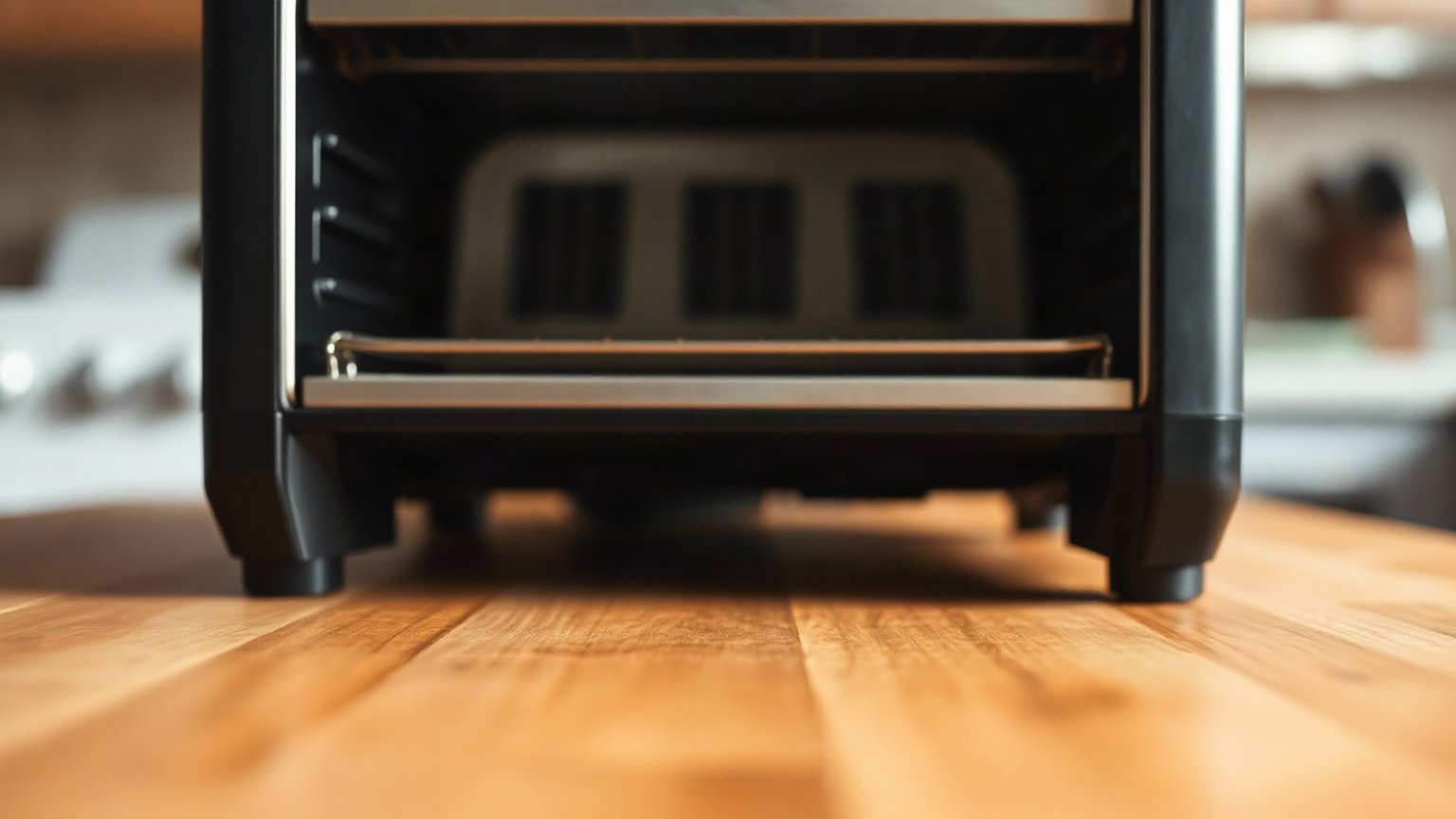
I’ll be honest — when I first got a toaster oven, I just shoved it into a corner of my counter and called it a day. Seemed fine. Then I noticed a faint discoloration on the painted drywall behind it after a few weeks of use. Nothing catastrophic, but it was a good reminder that heat is patient. It doesn’t need to cause an immediate problem to be doing slow, cumulative damage.
Toaster ovens work differently from a microwave. They use actual radiant and convection heat, which means the outer shell of the unit gets hot — sometimes uncomfortably so. On a full-temperature bake cycle at 400°F, the back panel and sides of many countertop models will reach temperatures between 150°F and 200°F on the exterior. That’s well above what most painted walls, laminate countertops, and certainly plastic appliances nearby can handle long-term.
And the top is where people tend to underestimate things. Hot air rises. If you’ve got a cabinet sitting 3 inches above your toaster oven, that cabinet is essentially getting slow-cooked every time you roast a chicken. Over months, the finish degrades. Over years, the wood dries and cracks. You can read more about how hot a toaster gets to put some of these numbers in context.
The Actual Clearance Numbers, Broken Down by Side
Back and Sides
Four inches is the commonly cited minimum for the back and sides. I’d call that the floor, not the target. If you’ve got the counter space, 6 inches on either side is genuinely more comfortable — both for heat dissipation and for not knocking the thing into the wall every time you adjust the rack. Some manufacturers specify less than 4 inches in their manuals, but those specs are often written to pass regulatory minimums, not to reflect what’s actually smart for everyday kitchen use.
The back clearance matters a lot if you have a tile backsplash. Tile is heat-resistant, obviously, but the grout and any adhesive behind it may not fare as well over time. And if your backsplash is anything other than tile — painted drywall, wallpaper, wood paneling — you really want that 6-inch buffer.
Above the Unit
Six inches minimum. Eight is better. If you’re placing a toaster oven under an upper cabinet, measure before you commit. I cannot tell you how many kitchen layouts I’ve seen where someone thought the toaster oven would fit under the microwave cabinet only to end up with a scorched shelf and a warranty voided on day one.
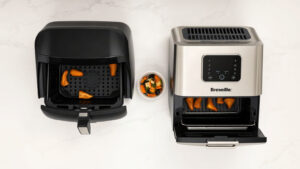
If you’re using a larger unit with an air fryer function — the Breville Smart Oven Air Fryer Pro, for instance — the manufacturer actually calls for at least 6 inches above, and their reasoning is sound: the convection fan pushes a lot of heat upward, more than a basic bake-only unit does. I’d bump that to 8 inches if you’re doing frequent air fryer cycles.
In Front
Twelve inches in front of the door. This one’s less about heat radiation and more about practicality. The door swings down fully, and if it hits something — a cutting board, another appliance, the edge of your island — you’re dealing with a drop hazard and a burn risk at the same time. Make sure you’ve got a clear pull zone.
Clearance Requirements by Toaster Oven Type
Not all toaster ovens are the same. A compact 4-slice toaster oven has a much smaller footprint and generates less heat than a full-size countertop convection oven. Here’s a general breakdown of what to expect by category.
| Type | Side/Back Clearance | Top Clearance | Notes |
|---|---|---|---|
| Compact / 4-slice | 4 inches | 6 inches | Lower wattage, less intense heat output |
| Mid-size countertop | 4–6 inches | 6–8 inches | Most common home-use category |
| Large convection oven | 6 inches | 8 inches | Higher sustained heat; treat it like a small wall oven |
| Air fryer toaster oven | 6 inches | 8–10 inches | Convection fan pushes heat upward more aggressively |
If you’re shopping for something smaller specifically because of counter constraints, the best mini toaster ovens are worth a look. Some of them have a genuinely small thermal footprint and can work in tighter spots — but always check the manual’s clearance spec for that specific model.
Where People Go Wrong With Placement
The Corner Problem
Corners seem like a natural home for a toaster oven. Tucked away, out of the main workspace. But two walls meeting at a corner means two surfaces getting blasted with heat simultaneously — and the airflow is worse because there’s no way for heat to dissipate naturally. If you do put it in a corner, you need that 4-inch minimum on both sides, which honestly means the unit can’t actually sit in the corner at all. Push it out far enough to meet the clearance on whichever side is more constrained, and accept the tradeoff.
Putting It on Top of the Fridge or Microwave
Don’t. Both appliances have ventilation requirements of their own, and stacking a heat-generating appliance on top of another one is asking for compounding problems. Fridges in particular vent warm air from their compressors, and adding toaster oven heat on top of that is genuinely bad for the fridge’s efficiency and lifespan.
Inside a Cabinet or Enclosed Shelf
I’ve seen this in apartments where counter space is scarce. Someone installs a little shelf unit or keeps the toaster oven inside a cabinet with the door open when in use. That’s not enough. An enclosed space can’t circulate air properly regardless of whether a door is open. The heat builds up around the unit and has nowhere to go. This is one of the more direct paths to a kitchen fire.
The Countertop Surface Itself
Laminate countertops can discolor and warp under sustained heat. Even some stone composites aren’t immune to thermal stress over time. If you’re placing a toaster oven directly on a surface you’re worried about, a heat-resistant counter mat is a cheap and practical fix. I’ve used one under my Cuisinart for a couple of years now — it’s held up fine and the counter underneath looks the same as the day I moved in.
A Few Practical Tips for Getting Placement Right
Read the manual first. I know. Nobody does this. But the clearance section is usually right at the front, in a box, and takes about 45 seconds to read. The manufacturer has a legal and practical interest in telling you the real minimums, so trust those numbers and then add an inch or two on top for peace of mind.
Run it empty for 10 minutes in its intended location before cooking anything. Feel the wall behind it. Check the cabinet above it. If either surface is uncomfortably warm to a brief touch, you need more space. This is a quick sanity check that’s saved me from bad placement decisions more than once.
If you frequently use your toaster oven for longer cooking sessions — an hour of roasting, or back-to-back batches of cookies — the heat accumulation over time is higher than a quick toast cycle. Your clearance requirements are effectively higher for sustained use. I’d apply the same logic as with air fryer ovens and add an extra couple of inches across the board.
For the accessories, using the right gear inside the oven matters too. A proper toaster oven baking pan that fits correctly keeps heat circulating inside the cavity the way it’s supposed to, rather than trapping it against the walls — which indirectly affects how hot the exterior gets. And if you need to adjust the rack height, a well-fitted toaster oven wire rack maintains proper airflow inside the unit. Both are small things that add up.
For anything involving food safety and cooking temperatures while you’re using the oven, the USDA’s guidance on food thermometer use is worth a quick read — especially if you’re reheating food in a toaster oven and want to do it safely.
The Bottom Line on Toaster Oven Clearance
Four inches on the sides and back. Six to eight inches above. Twelve inches in front for the door. A heat-safe surface underneath. That’s really the whole answer. It’s not complicated, but it does require actually measuring before you set the thing down and forget about it.
The slow damage from poor clearance is exactly the kind of thing that feels fine until it really, really isn’t. A slightly singed cabinet or a warped countertop is the minor version of this story. The fire version is obviously much worse. Neither needs to happen if you just take five minutes to measure and place the appliance correctly from day one. Your kitchen — and your insurance premiums — will thank you.
Frequently Asked Questions
How far should a toaster oven be from the wall?
A toaster oven should be at least 4 inches from any wall on the sides and back, and at least 6–8 inches below any overhead surface. These numbers reflect the minimum safe clearance to prevent heat damage to surrounding surfaces and to allow adequate ventilation for the unit itself. If you’re using an air fryer toaster oven or running long cooking cycles, lean toward the higher end of those ranges.
Can I put a toaster oven under a cabinet?
You can, but only if there’s at least 6 inches of clear space between the top of the toaster oven and the bottom of the cabinet — 8 inches is safer, especially for larger or air fryer models. Cabinets can sustain heat damage and finish degradation over time with less clearance than that. Always measure before you commit to a permanent spot.
How hot does the outside of a toaster oven get?
The exterior surfaces of most toaster ovens reach between 150°F and 200°F during normal operation at high temperatures. The top panel tends to run hottest because heat rises inside the cavity and transfers through the top. That’s hot enough to cause burns on contact and to damage laminate, painted surfaces, and wood over repeated exposure.
Is it safe to use a toaster oven on a laminate countertop?
Technically possible, but not ideal for long-term use. Laminate can discolor, bubble, or warp under sustained heat from a toaster oven. Using a heat-resistant mat or a stone trivet under the unit is a practical way to protect the surface. Don’t skip this if your countertop is anything other than tile or natural stone.
Can I put a toaster oven in a cabinet or enclosed shelf?
No — operating a toaster oven in an enclosed cabinet is a fire risk, even with the cabinet door open. Enclosed spaces trap heat and prevent the ventilation the appliance needs to run safely. Toaster ovens should always be used in open, well-ventilated areas on a flat, heat-resistant surface.

Written by
Emma founded Toastera to turn vague appliance advice into clear, researched, safety-first guidance on toasters and toaster ovens.
Free: the Toaster Oven Cheat Sheet
Get the printable cheat sheet (temps, cook times & safety tips) plus new recipes. No spam, unsubscribe anytime.