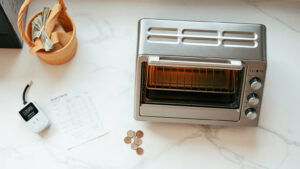
A 4-slice toaster typically lasts between 3 and 7 years under regular daily use, though budget models often quit closer to the 2–3 year mark while well-built units from brands like Breville or Cuisinart can push past a decade. The heating elements, crumb buildup, and the carriage lever mechanism are the most common failure points. How long yours actually lasts depends heavily on how often you use it and whether you ever clean it.
Safety First: A failing toaster with damaged heating elements, frayed internal wiring, or crumb-clogged slots is a genuine fire and shock hazard. If your toaster is sparking, producing visible smoke when empty, or the carriage lever no longer holds, unplug it immediately and don’t use it again. Never attempt to repair internal wiring yourself.
Quick Facts: 4-Slice Toaster Lifespan
- Average lifespan: 3–7 years for daily use; up to 10+ years for light use with proper care
- Most common failure point: heating element burnout, usually after roughly 2,000–3,000 toasting cycles
- The carriage lever and spring mechanism typically degrade before the heating elements in cheaper models
- Crumb buildup is the single most preventable cause of early failure (and a fire risk)
- A 4-slice toaster uses more wattage than a 2-slice — typically 1,500–1,800W — which puts more cumulative stress on components
I’ve gone through five toasters in my own kitchen over the past twelve years — two of them were 4-slice models. One lasted almost eight years (a Cuisinart that I babied), one gave up after about 22 months (a cheap supermarket brand I’d rather not name). So I’ve had some time to think about what actually kills these things.
What Actually Wears Out First
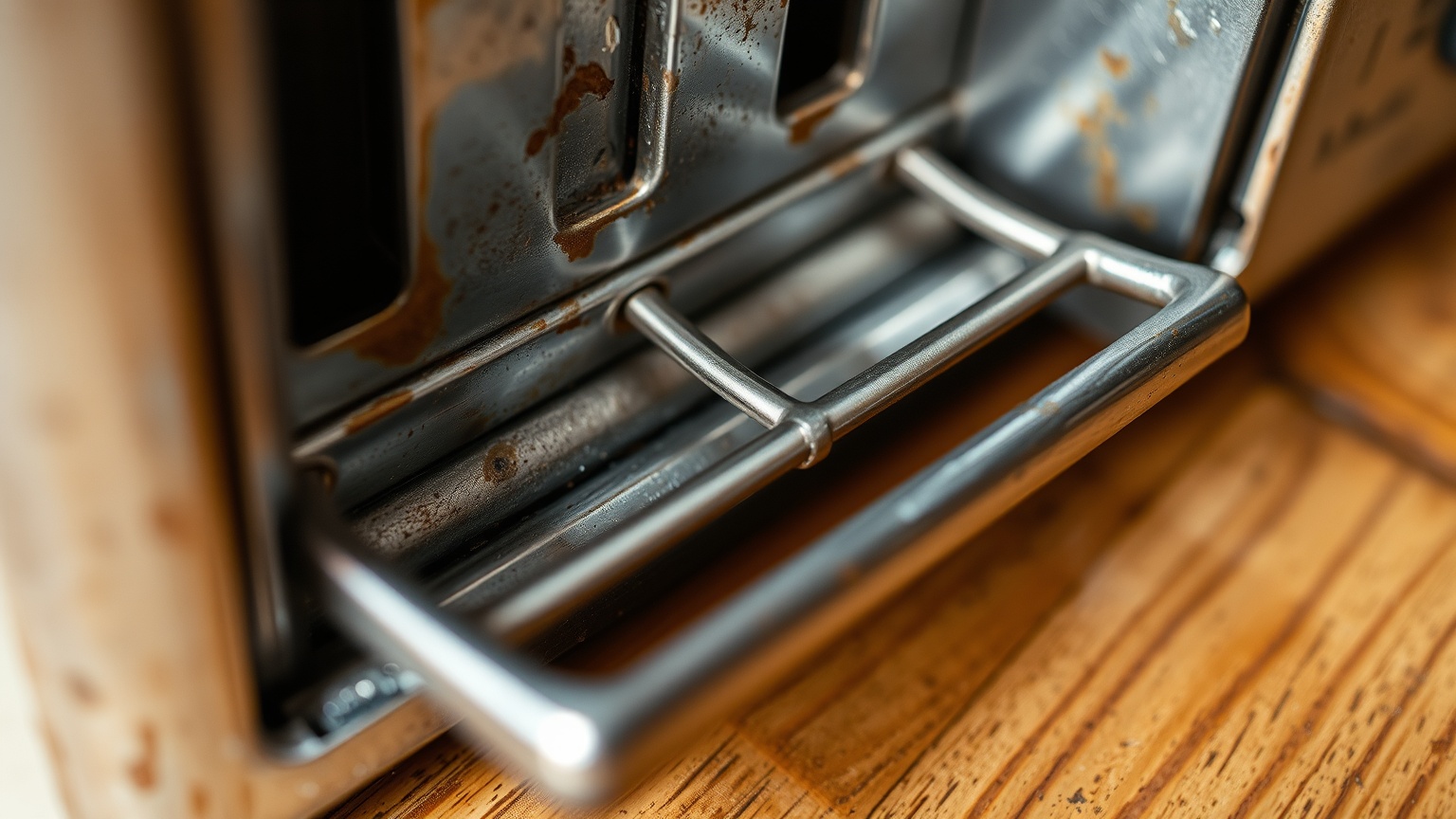
People assume it’s the heating elements that go first. And sometimes it is. But in my experience — and I’ve disassembled more toasters than any normal person should — the carriage lever mechanism is usually what fails first in the $25–$50 price bracket.
The Carriage Lever and Spring
This is the lever you push down to lower your toast. There’s a spring-loaded latch and a solenoid or bimetallic strip underneath that releases when the timer fires. That mechanism gets pushed, pulled, and heat-stressed hundreds of times a year. In budget 4-slice toasters, the spring loses tension gradually. You start to notice the bread doesn’t hold down fully, or it pops up too early. Eventually it won’t latch at all. That’s not fixable in any practical sense.
Heating Elements
The elements are coiled nichrome wire that heat to somewhere between 850°F and 1,200°F during operation — you can read more about how hot a toaster gets and why that matters for component wear. Nichrome is tough stuff, but repeated thermal expansion and contraction causes hairline fractures over time. When an element breaks, that slot usually just stops toasting, or toasts unevenly. In a 4-slice toaster with two separate heating chambers, one side can die while the other keeps working fine, which is a weird half-broken state that a lot of people just… tolerate for months.
The Control Board and Timer
Mid-range and higher-end toasters have actual electronic controls rather than a simple bimetallic timer. Those components can fail too — usually from heat exposure over years of use. You’ll notice the browning dial stops being consistent. Setting 3 produces the same result as setting 5. That’s often the control circuit going flaky, not the element itself.
How Build Quality Changes Everything
Not all 4-slice toasters are built the same, obviously. But the difference in lifespan between price tiers is more dramatic than most people expect. Here’s a rough breakdown based on what I’ve observed and what other long-term testers report:
| Price Tier | Typical Build | Expected Lifespan (Daily Use) | Common First Failure |
|---|---|---|---|
| Under $30 | Thin plastic, basic spring latch | 1.5–3 years | Carriage lever / spring |
| $30–$60 | Mixed plastic/metal, simple timer | 3–5 years | Heating element or timer |
| $60–$120 | Stainless exterior, electronic controls | 5–8 years | Control board or element |
| $120+ | Heavy-gauge steel, motor-driven carriage | 7–12+ years | Element (eventually) |
The Cuisinart CPT-740 I tested for about two years before writing this piece held up remarkably well — the browning was still consistent at year two and the lever felt as solid as day one. Compare that to a plastic 4-slicer I bought at a discount chain: by month 14, one slot was toasting noticeably darker than the others, and the lever had developed a slight wobble. Small things. But they compound.
One edge case worth mentioning that most articles skip entirely: humidity. If your toaster sits near a sink or in a coastal kitchen with regular salt-air exposure, internal metal parts — especially the spring and any exposed contacts — corrode faster than you’d expect. I heard from a reader in Florida who went through two cheap toasters in three years and couldn’t figure out why. Moved the toaster away from the sink and her next one lasted five. Correlation isn’t causation, but it tracks.
How Usage Habits Affect Lifespan
Daily use puts very different strain on a toaster than occasional weekend use. A family of four running four slices every morning is probably running 1,400–1,500 cycles per year. At that rate, a budget toaster is getting close to its mechanical limit in under two years. A single person who toasts a couple times a week? That same toaster might still be running fine at year six.
What You’re Toasting Matters
Bagels and thick artisan bread require more heat and longer cycles than standard sandwich bread. Frozen waffles — which I toast more than I’d like to admit — start cold and wet, which extends the cycle and dumps more moisture into the toaster. Repeated moisture exposure rusts out the crumb tray and can corrode contacts near the base of the slots. It’s not catastrophic with any single waffle. But years of this? You’re shortening the lifespan, probably by 20–30% compared to only toasting dry bread.
Crumb Buildup: The Slow Killer
I can’t stress this one enough. Crumbs that accumulate under the heating elements don’t just smell bad — they smolder, they cause uneven heat distribution, and in worst cases they ignite. The National Fire Protection Association lists toasters among the most common small appliance fire sources, and crumb buildup is the primary reason why.
Empty and rinse the crumb tray every week or two if you’re using the toaster daily. If your 4-slice model doesn’t have a removable tray (some budget ones just have a flip-open bottom, others have nothing), tip the toaster upside down over the sink periodically. Slightly less elegant but it works.
Signs Your 4-Slice Toaster Is on Its Way Out
Some of these are obvious. Some aren’t.
- Uneven toasting between slots: One slot is darker or lighter than the others, or one side of a slice is burnt while the other is pale. Usually means an element is failing.
- The lever won’t stay down: Or it takes two attempts to latch. The spring mechanism is worn. Not fixable cheaply.
- Inconsistent browning: You’ve been using setting 3 for two years and suddenly it’s either barely toasted or overdone. Control circuit or timer going bad.
- Burning smell when empty: Could be crumbs. Could be something worse — an arcing element or melting plastic near the wiring. Unplug it. Inspect before using again.
- Visible sparking: Unplug it. Don’t use it. Full stop.
The tricky ones are the middle cases — toaster still works, but inconsistently. I know people who’ve run a “mostly working” toaster for two extra years just because replacing it felt like a hassle. I get it. But by that point you’re usually wasting electricity on longer cycles and the reliability has degraded enough that the toaster isn’t doing its actual job very well.
How to Get More Years Out of Your Toaster
A few things that genuinely extend lifespan, based on what I’ve actually done (or wish I’d done earlier):
- Clean the crumb tray every 1–2 weeks, not “when you remember”
- Keep it away from the sink — even 18 inches makes a difference in humid environments
- Don’t force oversized items into the slots; flexing the slot guides stresses the element supports
- Unplug it when not in use — this is both a safety habit and removes any standby heat cycling from electronic controls
- Don’t use it as a storage shelf (I’ve seen people put a cutting board on top; the vents are on the top of most 4-slice models and blocking them accelerates internal heat damage)
If you’re buying a new one and want it to last, I’d steer you toward something in the $60–$120 range with a stainless steel housing and a removable, full-width crumb tray. Check out some of the options in our list of best mini toaster ovens if you’re thinking about whether a toaster oven might suit you better — for a lot of households, it actually does. And for more daily cooking, knowing the ins and outs of reheating food in a toaster oven can reduce how hard you’re working your standard toaster.
For cleaning supplies — specifically a toaster cleaning brush and crumb tray set — I’ve had good luck with the soft-bristle options on Amazon. A long-slot 4-slice stainless toaster is also worth looking at if you’re upgrading — the longer slots handle artisan bread without forcing it.
When Replacement Makes More Sense Than Repair
Toasters are not worth repairing. I’ll just say it. The internal components are cheap, they’re not standardized, and labor cost for any repair shop would exceed the replacement cost of the toaster within the first 15 minutes. If the lever mechanism has failed and the toaster is past 3 years old, replace it. If the element is broken in one slot and the unit is under warranty, contact the manufacturer. Otherwise, recycle it and move on.
The one exception I’d make: premium toasters over $150 with motor-driven carriages (the Dualit Vario comes to mind) sometimes have manufacturer-serviceable parts. Dualit, specifically, sells individual replacement elements. That’s a deliberately repairable design philosophy, and it genuinely extends the lifespan to 15+ years for some users. Rare in this category, but it exists.
The Serious Eats toaster review guide has a useful breakdown of which models hold up over multi-year testing if you want a second opinion on specific brands.
Wrapping Up
The honest answer to “how long does a 4-slice toaster last” is: it depends on what you paid for it and how you treat it, but planning for 3–5 years with a mid-range model and daily use is realistic. Budget for replacement at year 3 if you’re hard on appliances. Take care of it — especially the crumb tray — and a good toaster can easily run 7–8 years without drama. And if your current one is already sparking, smoking, or refusing to hold the lever down, that’s your sign. Time to go.
Frequently Asked Questions
How many years does a 4-slice toaster last on average?
A 4-slice toaster used daily typically lasts 3–7 years, depending on build quality and how well it’s maintained. Budget models under $30 often fail within 2–3 years, while quality stainless models in the $80–$120 range commonly reach 7–10 years. Cleaning the crumb tray regularly is the single biggest factor you can control.
What is the most common reason a toaster stops working?
In budget toasters, the carriage lever spring mechanism usually fails first — it loses tension and won’t hold the bread down. In mid-range and higher-end toasters, heating element burnout is more common after several thousand toasting cycles. Crumb buildup causing overheating is a close third.
Is it worth repairing a toaster that stopped working?
Almost never, for standard models. Repair costs exceed replacement costs immediately because toaster components aren’t standardized and labor isn’t cheap. The exception is premium brands like Dualit that sell individual replacement elements — those are worth repairing if the element is the only failure.
Does leaving a toaster plugged in shorten its lifespan?
For basic toasters with no electronics, leaving them plugged in has minimal electrical impact, but it does create an ongoing fire risk from crumb smoldering and keeps the toaster exposed to humidity. For toasters with digital controls or keep-warm features, constant standby power can slowly stress the control board over years. Unplugging when not in use is a low-effort habit that helps both lifespan and safety.
How do I know when my toaster needs to be replaced?
Replace your toaster if the lever won’t stay latched, if one or more slots toast unevenly or not at all, if you see sparking or smell burning when the slots are empty, or if the browning setting has become unreliable. These are signs of component failure rather than normal wear that cleaning will fix.

Written by
Emma founded Toastera to turn vague appliance advice into clear, researched, safety-first guidance on toasters and toaster ovens.
Free: the Toaster Oven Cheat Sheet
Get the printable cheat sheet (temps, cook times & safety tips) plus new recipes. No spam, unsubscribe anytime.