Most toaster ovens last between 3 and 5 years with everyday use, though well-maintained units from quality brands can push past 8 to 10 years without much fuss. The main killers are grease buildup around the heating elements, a failing thermal fuse, and door seals that stop holding heat properly. Know what’s wearing yours out and you can realistically add years to its life.
Safety First: If your toaster oven stops turning on, smells like burning plastic, or sparks when you plug it in — unplug it immediately and don’t use it again until you’ve identified the cause. Never attempt to replace internal electrical components like a thermal fuse unless you’re confident working with mains-voltage appliances; when in doubt, replace the unit rather than risk a shock or fire.
Quick Facts: Toaster Oven Lifespan at a Glance
- Average lifespan: 3–5 years for budget models, 7–10+ years for premium brands like Breville
- Top cause of sudden failure: a blown thermal fuse (a $3–8 part, but labor-intensive to replace)
- Grease fires inside the cavity are the #1 preventable cause of early death
- Heating elements typically degrade noticeably after 500–1,000 cooking hours
- A toaster oven used twice daily will hit the 3-year mark having run roughly 2,190 cycles — that’s a lot of thermal stress
So What’s Actually a “Normal” Lifespan?
It depends more on how you use it than the brand name on the door. A cheap $35 Black+Decker used only for the occasional slice of toast might outlast a $300 Breville that’s being pushed through daily air-fry and convection bake cycles at full temperature. That said, build quality matters a lot once you get into heavy use.
I’ve had a mid-range Cuisinart sitting on my counter for going on six years now. It still heats evenly, still toasts a bagel without charring one side, and I haven’t done anything heroic to maintain it — just wiped the crumb tray and kept the glass door clean. Meanwhile, a cheap Hamilton Beach I had before it gave up around year two. The thermostat started running hot, then one day it just stopped responding to the timer dial.
The honest breakdown by price tier looks something like this:
| Price Tier | Typical Brands | Expected Lifespan | Most Common Failure |
|---|---|---|---|
| Budget (under $60) | Black+Decker, Hamilton Beach | 2–4 years | Thermostat drift, dial failure |
| Mid-range ($60–$150) | Cuisinart, Panasonic | 4–7 years | Heating element degradation |
| Premium ($150–$300+) | Breville, Wolf Gourmet | 7–10+ years | Thermal fuse, control board |
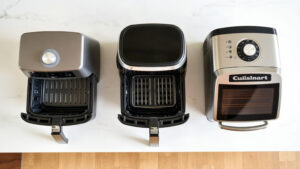
One edge case worth flagging: air fryer combo units tend to fail faster than traditional toaster ovens. The fan motor adds a mechanical component that plain radiant-heat models don’t have, and it’s usually what goes first in heavy-use households. If you’re running the air fry function every single day, mentally subtract a year or two from whatever lifespan estimate you’ve heard.
The Four Things That Are Quietly Wearing Out Your Toaster Oven
1. Grease and Food Buildup Around the Elements
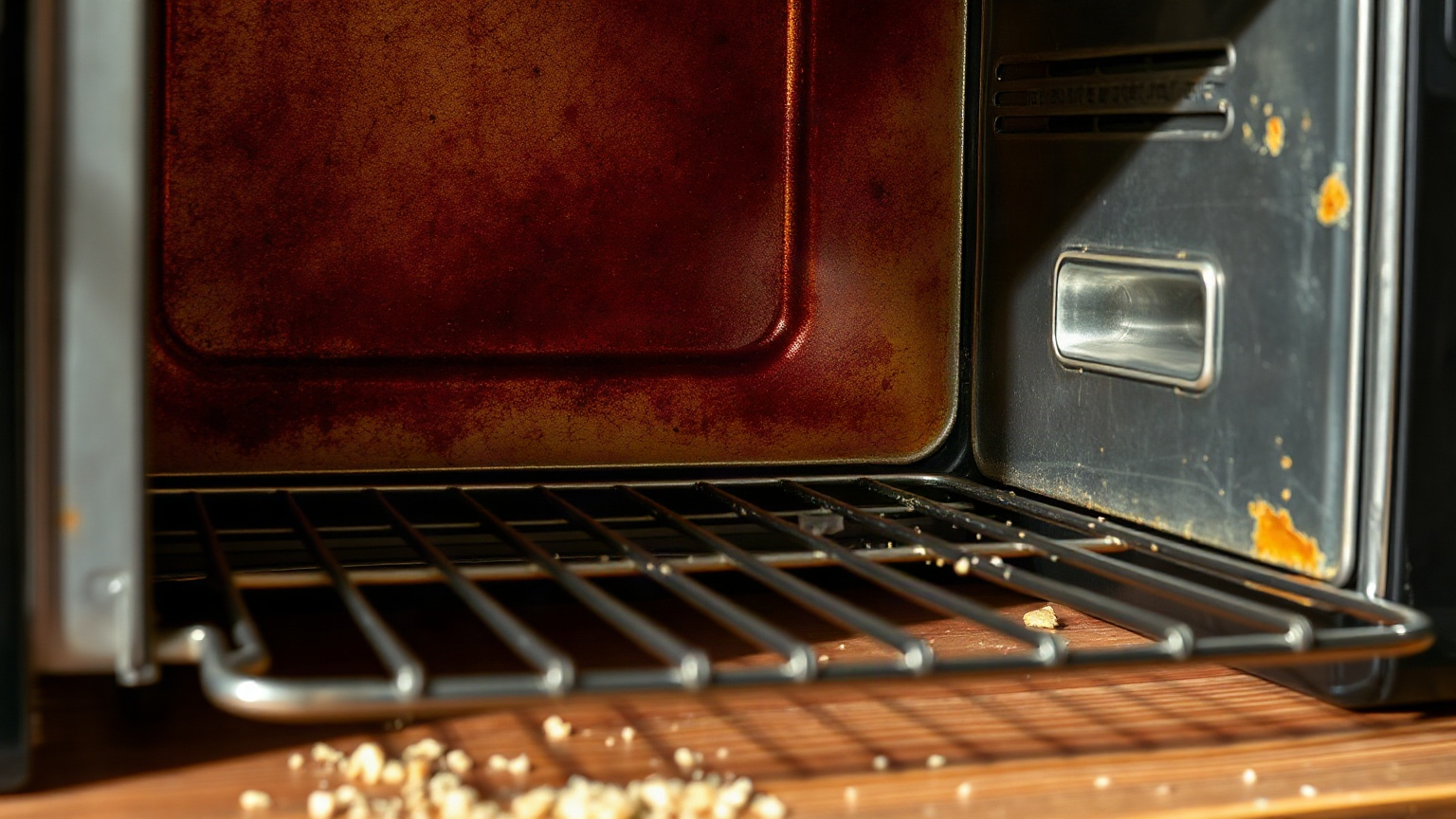
This is the big one. Fat drips down from whatever you’re cooking, lands on the bottom heating element or the floor of the cavity, and gets baked on cycle after cycle. Over time it doesn’t just smell bad — it insulates the element, makes it run hotter than intended, and can eventually cause the thermal fuse to blow as a safety response. I’ve seen the inside of ovens where the bottom element was basically encased in black carbonized grease. No toaster oven survives that for long.
A non-stick toaster oven liner on the floor of the cavity makes a real difference here. Not a foil sheet — manufacturers explicitly warn against those because they block airflow and can cause uneven heating. Get a proper cut-to-fit liner made for the purpose.
2. The Thermal Fuse
This tiny component is designed to blow permanently if the oven overheats — it’s a one-shot safety device, not a resettable breaker. When it goes, the oven is completely dead. No lights, no heat, nothing. People frequently assume the whole unit is broken and throw it out, but in many cases it’s just a $5 fuse that someone brave enough to open the case could replace in 30 minutes.
Breville owners know this story well. There are whole Reddit threads about Breville Smart Ovens dying at exactly the one-year mark — which is suspiciously close to when the warranty expires, but that’s a different conversation. The fix usually involves disassembling the outer shell, locating the fuse (often rated around 192°C or 216°C depending on model), and swapping it. Not complicated, but not for everyone.
3. The Door Seal and Hinge
A loose or warped door is something most people completely ignore. But if the door doesn’t close flush, the oven loses heat, runs longer to compensate, works the elements harder, and you end up with longer cook times and food that’s browning unevenly. If you’re noticing your reheating results have gotten inconsistent over the past few months, check whether the door sits flat when closed. Push gently on it while the oven is preheating and see if you feel heat escaping.
Hinges can be bent back carefully in some models. Seals, if yours has them, can sometimes be replaced. But on most budget units, a warped door is effectively the beginning of the end.
4. The Control Mechanism
Mechanical dial controls — the kind with a satisfying click when you set the timer — are actually pretty durable. It’s the electronic touch controls and digital displays on fancier models that tend to cause trouble. Moisture gets in, the display starts acting up, buttons stop registering. I personally trust a physical dial over a touchpad for longevity. It’s less flashy, but there’s genuinely less to go wrong.
Signs Your Toaster Oven Is Nearing the End
Not all failures are sudden. Most toaster ovens give you warning signs for weeks or months before they quit. Here’s what to watch for:
- Uneven browning that’s gotten worse over time — one heating element is likely degrading faster than the other
- Taking noticeably longer to preheat — if it used to hit 375°F in four minutes and now takes eight, the elements are losing efficiency
- Burning smell that isn’t food — could be insulation, plastic housing near the elements, or old grease that’s now embedded in the element itself
- The timer dial spins freely without resistance — the mechanical mechanism inside has worn out
- Glass door that’s cracked or badly discolored — the glass on toaster ovens is tempered, but it can shatter if thermal stress gets too high
One thing nobody talks about: the smell test on a cold oven. Open the door first thing in the morning before you’ve used it and take a sniff. A healthy toaster oven smells like nothing, or faintly of whatever you last cooked. A burning, acrid, or electrical smell when it’s completely cold is a red flag worth taking seriously.
How to Actually Make It Last Longer
Maintenance advice for toaster ovens tends to be vague. So here’s what actually works, based on years of using these things daily.
Clean the crumb tray every week. Not monthly. Weekly if you’re using it regularly. Crumbs sitting under the lower element are a fire risk and they also absorb grease and smoke, creating a cycle that degrades the element faster. Pull it out, tap it over the trash, wipe it with a damp cloth, done. Two minutes.
Wipe the interior walls monthly. You don’t need any special cleaner — a damp cloth with a tiny amount of dish soap, with the oven unplugged and completely cool. Don’t spray anything directly onto the heating elements. Don’t use abrasive pads. The interior coating scratches easily and once it’s scratched, food sticks to it even more aggressively. See Serious Eats’ guide on cleaning toaster ovens for a thorough walkthrough if you’ve got a particularly gunked-up unit.
Use a rack, not the bare floor. Placing food directly on the oven floor concentrates grease exactly where you don’t want it. A proper toaster oven wire rack keeps food elevated, allows airflow, and makes cleanup vastly easier. If yours came with a rack and you’ve lost it, replacements are cheap and worth it.
Don’t run it at max temperature unless you need to. Heating elements wear fastest at their upper limit. If you’re just reheating pizza, 350°F does the job fine. You don’t need 450°F. Save the high heat for when you actually need it — like finishing a steak or crisping up something that genuinely needs aggressive heat. Understanding how hot your appliance runs helps you calibrate this.
Let it cool before unplugging and storing. This applies especially if yours sits on a shelf between uses. Running it at 450°F and immediately jamming it back in a cabinet stresses the internal components. Give it ten minutes.
When to Repair vs. When to Replace
Thermal fuse replacement? Worth doing if the unit is otherwise in good shape and you’re comfortable with basic disassembly. The part is cheap and you can find model-specific tutorials on YouTube for most popular brands.
Control board failure on a mid-range unit? Probably not. Replacement boards for specific models are hard to source and often cost nearly as much as a new unit.
Heating element replacement? Possible on some models, awkward on most. If you can find the exact replacement element and the oven is worth saving financially, go for it. If you’re spending $80 in parts and three hours on a unit that cost $90 new, the math doesn’t work.
My general rule: if the repair costs more than 40% of what a comparable new unit would cost, replace it. And if your current oven is more than 6 years old, even a successful repair is just buying you another year or two before the next thing fails. Sometimes a fresh start makes more sense — check out our picks for the best mini toaster ovens if you’re at that point.
The Bottom Line
Three to five years is realistic for most people, and that’s fine — it’s a heavily used kitchen appliance, not a heirloom. But “realistic” isn’t a ceiling. With basic maintenance and a decent unit to start with, eight years isn’t unusual. The things that kill toaster ovens early are almost always preventable: grease buildup, cheap construction, and running them harder than they need to be run.
If yours is behaving strangely — smelling odd, heating unevenly, taking forever to get to temperature — don’t just live with it. Troubleshoot it now, before the problem turns into a dead oven on a Sunday morning when you actually need it. And if it’s already dead? Check the thermal fuse before you throw it out. You might save yourself a hundred bucks and feel unreasonably proud of yourself in the process.
Frequently Asked Questions
How long does a toaster oven last before it stops working?
Most toaster ovens last 3 to 5 years under regular use, with premium models from brands like Breville often reaching 8 to 10 years. Budget units used daily tend to fall toward the shorter end, while well-maintained mid-range ovens often exceed expectations. Cleaning habits and usage intensity have as much impact on lifespan as build quality does.
Why did my toaster oven suddenly stop working?
A blown thermal fuse is the most common cause of a toaster oven dying suddenly with no warning — the oven will be completely dead, no lights, no heat. This fuse is a one-use safety device that trips when the oven overheats, often due to grease buildup around the elements. The part itself costs $3–8 and can be replaced, but it requires disassembling the outer casing.
Is it worth repairing a toaster oven or should I replace it?
Repair is worth considering if the fix is simple (like a thermal fuse), the unit is relatively new, and parts cost less than 40% of a replacement unit. If the control board has failed, or if the oven is already 5+ years old, replacement usually makes more practical sense. Factor in that an aging unit that’s been repaired once is likely to have another failure soon after.
What is the most common toaster oven problem?
Uneven heating is the most commonly reported issue, usually caused by one heating element degrading faster than the other or by grease buildup insulating parts of the element. A blown thermal fuse is the most common cause of complete failure. Both problems can be extended or prevented with regular cleaning and avoiding running the oven at maximum temperature unnecessarily.
How do I know when my toaster oven needs to be replaced?
The clearest signs are significantly longer preheat times, visibly uneven browning that’s gotten worse over several months, a burning smell when the oven is cold, or a door that no longer closes properly. If you’re seeing two or more of these at once, the oven is likely past the point where maintenance will help. A cracked or heavily discolored door glass is also a signal to stop using it immediately.

Written by
Emma founded Toastera to turn vague appliance advice into clear, researched, safety-first guidance on toasters and toaster ovens.
Free: the Toaster Oven Cheat Sheet
Get the printable cheat sheet (temps, cook times & safety tips) plus new recipes. No spam, unsubscribe anytime.