A standard 2-slice toaster uses between 750 and 1,200 watts, with most models sold in the US landing right around 850–1,000W during active toasting. The heating elements draw full power only while they’re on — which is typically 1 to 3 minutes per cycle. So even at 1,000W, you’re using less than 0.05 kWh per slice of toast.
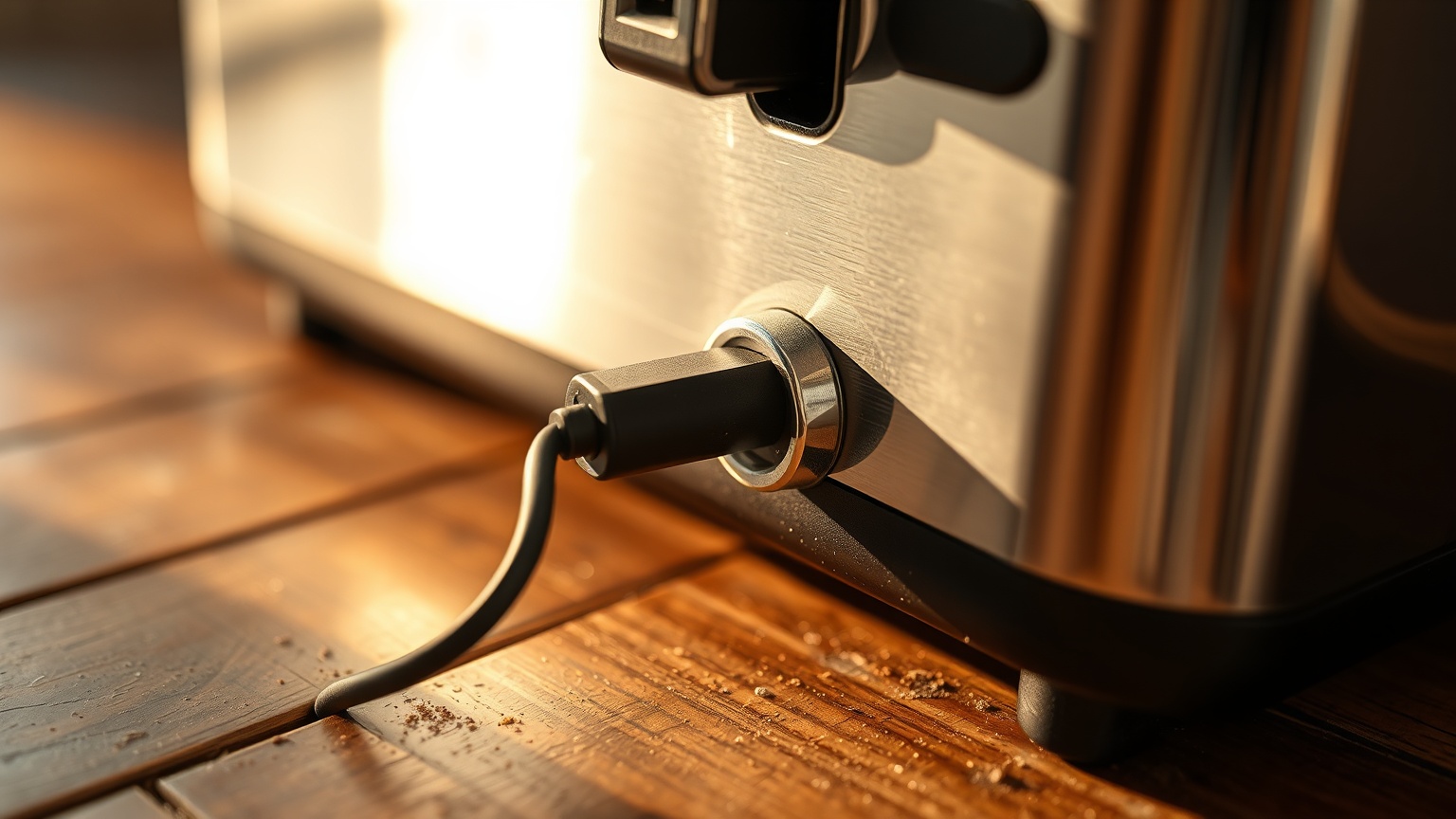
Safety First: Toasters draw significant current from your outlet — some models up to 12–13 amps on a standard 15-amp circuit. Never use a toaster on an extension cord or power strip, as the sustained current draw can overheat the cord and create a fire hazard. Always plug directly into a grounded wall outlet, and unplug when not in use.
Quick Facts: 2-Slice Toaster Wattage
- Typical wattage range for a 2-slice toaster: 650W to 1,600W
- Most common wattage in US models: 850W–1,000W (mode average around 880W)
- Average toasting cycle: 1.5 to 3 minutes, meaning real energy use per session is tiny
- At $0.16/kWh (US average), toasting twice a day costs roughly $1–$2 per year
- Higher wattage = faster toasting, not necessarily better toasting
I’ve tested a bunch of these in my kitchen over the past few years — from a no-name $18 dorm toaster to a Cuisinart that cost more than it should have. Here’s what I actually found, including one thing that surprised me about how wattage affects toast quality (spoiler: it’s more nuanced than the spec sheet suggests).
The Wattage Range: What “Normal” Actually Looks Like
Most people assume toasters are all pretty much the same wattage. They’re not. The spread is genuinely wide — from about 650W on the low end (usually older or very compact models) up to 1,600W on high-end or commercial-style units. But the realistic, day-to-day range you’ll encounter at a Target or on Amazon sits between 800W and 1,200W.
The 880W average figure gets cited a lot, and it’s accurate enough — but it flattens out a lot of variation. Budget 2-slice toasters often hit 750W. Mid-range models like the Black+Decker 2-Slice (which I’ve used) typically land at 850W. Step up to something like a Breville Bit More and you’re at 1,500W. That’s a real difference, and it affects how fast your toast comes out, not just your electricity bill.
Why the Range Is So Wide
It comes down to how many heating elements the toaster has, how long they are, and what material they’re made from. Nichrome wire is standard. Quartz elements heat up faster and hold temperature more consistently — they’re also why some “premium” toasters justify their higher wattage. A longer slot (for artisan bread or Texas toast) needs more element coverage, which drives up wattage too.
Also worth knowing: a toaster’s rated wattage is its peak draw. Some toasters cycle their elements on and off at lower browning settings, so actual consumption at “2 out of 6” is meaningfully less than the nameplate says. I noticed this with my Cuisinart — on light settings it barely warmed the kitchen, but cranked to 5 or 6 it was noticeably hotter near the slots.
Wattage Comparison: Popular 2-Slice Toasters
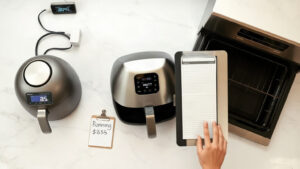
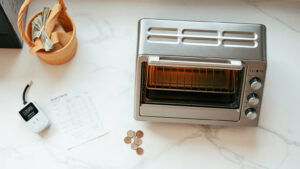
Here’s a real-world comparison of wattage across some common models. I pulled these from product specs and confirmed several with a plug-in watt meter (a Kill A Watt, if you’re curious — plug-in energy monitors like this one are cheap and weirdly satisfying to use).
| Toaster Model | Rated Wattage | Slot Size | Price Tier |
|---|---|---|---|
| Proctor Silex 2-Slice | 650W | Standard | Budget (~$18) |
| Black+Decker TR1278B | 850W | Standard | Budget (~$25) |
| Hamilton Beach 22708 | 900W | Wide slot | Mid-range (~$35) |
| Cuisinart CPT-122 | 1,000W | Wide slot | Mid-range (~$45) |
| Breville BTA720XL Bit More | 1,500W | Extra wide | Premium (~$100) |
| Dualit Architect 2-Slice | 1,200W | Wide slot | Premium (~$180) |
The Breville’s 1,500W surprised me the first time I measured it. It toasts noticeably faster than anything at 850W — but whether that makes your morning better is debatable. I’ll take a 900W toaster with good slot design over a 1,500W model with uneven elements any day.
How Much Electricity Does a 2-Slice Toaster Actually Use?
This is where the numbers get reassuring. Toasters don’t run continuously — they run for maybe 90 seconds to 3 minutes per session. That makes a huge difference to your actual energy consumption.
The Math (Keep It Simple)
Energy (kWh) = Watts ÷ 1,000 × Hours used
A 1,000W toaster running for 2 minutes uses: 1,000 ÷ 1,000 × (2/60) = 0.033 kWh per session. At the US average electricity rate of roughly $0.16 per kWh, that’s about half a cent. Run it twice a day for a full year and you’re looking at about $1.20 to $2.50 annually, depending on your rate and how long your browning cycles run.
Compare that to a mini toaster oven, which might draw 1,200–1,800W and run for 10–20 minutes to cook the same toast. Your 2-slice toaster is dramatically more efficient for basic toast. Not even close.
Standby Power: The Part Nobody Mentions
Here’s the edge case most wattage articles skip entirely: standby draw. Most basic 2-slice toasters use zero watts when plugged in but idle — there’s no digital display, no clock, no keep-warm circuit. The moment the lever pops, they’re fully off electrically. This is actually why toasters are one of the most efficient appliances you own, per use.
But. Some newer toasters with LED displays or digital browning controls do maintain a small standby draw — typically 0.5W to 2W. It’s not a lot, but it’s worth knowing if you’re obsessive about phantom loads. (I unplug mine anyway, mostly because I know how hot a toaster’s interior gets and I don’t love leaving it on the counter plugged in when I’m out of the house.)
Does Higher Wattage Mean Better Toast?
Not automatically. This is the thing that took me a while to figure out. More watts means more heat, faster. That can be good — quick browning can create a crispier exterior without drying out the interior too much. But if the elements are unevenly distributed or the slot design forces bread to sit off-center, higher wattage just burns one side faster.
I did a side-by-side test once with a 750W budget toaster and a 1,500W Breville using the same loaf of sourdough, same browning setting (roughly middle of the dial on both). The Breville finished in about 80 seconds. The budget toaster took about 2 minutes 40 seconds. The Breville toast had a slightly more uniform color. But — and this matters — the budget toaster’s crumb was actually a little softer inside, which I prefer for thick-cut bread. Neither was objectively “better.” Just different.
For most people buying a 2-slice wide slot toaster, somewhere in the 900–1,100W range is a good sweet spot. Fast enough, efficient enough, and the price range in that wattage tier tends to mean decent build quality.
What About Circuit Load?
Standard US household outlets are 15-amp circuits at 120V, giving you 1,800W of capacity. A 1,000W toaster draws about 8.3 amps — totally fine on its own. But run a 1,500W toaster alongside a 1,200W toaster oven reheating leftovers on the same circuit and you’re at 22.5 amps. That trips a breaker. Learned that one the hard way during a Sunday brunch situation involving croissants and leftover quiche.
The fix: use different outlets on different circuits, or just don’t run both at the same time. Most kitchens have at least two circuits for countertop outlets, but not all do. Worth checking if you’re setting up a small kitchen or a rental.
Low-Wattage Toasters: Are They Worth It?
You’ll find toasters rated at 650W or even lower, usually marketed for RVs, boats, or off-grid use. Some 12V DC toasters for vehicles run even lower. For household use, a 650W toaster isn’t “bad” — it just toasts slowly, and on thick bread it can produce that annoying result where the outside is toasted but the inside is still cold. I wouldn’t buy one for a main kitchen setup unless I had a specific reason (limited circuit capacity, solar power system, etc.).
There are also 120V toasters marketed for travel use — compact, sometimes collapsible — that run at 700–800W and work fine for a week in a hotel room or Airbnb with US-style outlets. Just don’t try using them abroad without a proper voltage converter. A 120V, 1,000W toaster plugged into a 240V European outlet without a converter is a quick way to have a bad morning. The US Department of Energy’s appliance energy estimator has good general guidance on calculating usage costs if you want to get precise about your own rates.
The Bottom Line on Toaster Wattage
For most households, a 2-slice toaster in the 850–1,100W range is the practical sweet spot. It’s fast enough, cheap to run (truly cheap — we’re talking pocket change per year), and won’t strain a standard kitchen circuit. The specific wattage matters less than the slot design, element quality, and whether the browning dial actually does anything consistent — which, on cheap models, it often barely does.
Don’t stress too much about whether you’re buying an 850W or a 1,000W model. The energy difference is negligible. Focus on slot width (wider is more versatile), how easy it is to clean the crumb tray, and whether the cord is long enough to reach your outlet without stretching. Those things will affect your life more than a 150-watt difference. And if you want to actually verify your toaster’s real-world draw, a plug-in watt meter costs about $15 and is one of those things you end up using on everything in the kitchen.
Frequently Asked Questions
How many watts does a 2-slice toaster use on average?
The average 2-slice toaster in the US uses around 850–1,000 watts during active toasting, with 880W being the commonly cited average across a wide sample of models. Budget models often run closer to 750W, while premium wide-slot toasters can hit 1,200–1,500W. Actual energy consumed per session is tiny because toasters only run for 1–3 minutes at a time.
How much does it cost to run a toaster every day?
Running a 1,000W toaster twice a day for about 2 minutes per session costs roughly $1.50–$2.50 per year at average US electricity rates (around $0.16/kWh). It’s genuinely one of the cheapest appliances to operate in any kitchen — far cheaper per use than a microwave or toaster oven doing the same job. Even if you toast four times a day, you’re still under $5 annually.
Does a higher-watt toaster use significantly more electricity?
In absolute terms, a 1,500W toaster uses roughly twice the electricity per minute compared to a 750W model — but because both finish their job in under 3 minutes, the real-world difference is a fraction of a cent per session. Over a full year, the gap in electricity cost between a budget and premium toaster is probably under $1. The wattage difference matters more for toast speed than your electric bill.
Is it safe to leave a toaster plugged in when not in use?
Basic 2-slice toasters draw zero power when idle and plugged in, so there’s no energy waste. The safety concern is fire risk — crumbs accumulate in the heating chamber, and if a toaster malfunctions or tips over while plugged in, there’s a real ignition risk. Most fire safety guidelines recommend unplugging toasters when not in use, especially if you’re leaving the kitchen or going out. It takes two seconds and it’s a reasonable habit.
Can I run a toaster and a toaster oven on the same outlet?
You can, but you probably shouldn’t — at least not on the same circuit simultaneously. A 1,000W toaster and a 1,500W toaster oven running at the same time draw about 20+ amps combined, which exceeds a standard 15-amp household circuit and will trip the breaker. Plug them into outlets on separate circuits, or simply don’t run both at exactly the same time. Most kitchen circuits are 15 or 20 amps — check your breaker panel if you’re not sure what you’re working with.

Written by
Emma founded Toastera to turn vague appliance advice into clear, researched, safety-first guidance on toasters and toaster ovens.
Free: the Toaster Oven Cheat Sheet
Get the printable cheat sheet (temps, cook times & safety tips) plus new recipes. No spam, unsubscribe anytime.