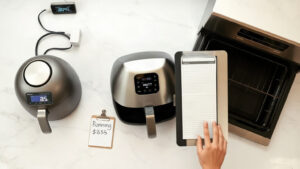
To convert oven cookie bake time to an air fryer, reduce the temperature by 25°F and cut the bake time by 20–25%. So if your recipe says 350°F for 12 minutes, set your air fryer to 325°F and check at 9 minutes. Air fryers circulate heat much more aggressively than a conventional oven, which means cookies brown faster on the outside — sometimes before the center sets properly.
Safety First: Air fryer baskets and trays get extremely hot during and after baking — always use oven mitts when removing cookie batches, and never place parchment paper without food on top of it, as loose parchment can blow into the heating element and ignite. Let the basket cool for at least 5 minutes between batches before touching it with bare hands.
Quick Facts: Air Fryer Cookie Conversion at a Glance
- Drop oven temp by 25°F (e.g., 350°F oven → 325°F air fryer)
- Reduce bake time by 20–25% and start checking early — 9 minutes for a 12-minute recipe
- Most drop cookies (chocolate chip, snickerdoodle) take 7–10 minutes in an air fryer at 325°F
- Batch size matters: most air fryer baskets fit 4–6 cookies max without crowding
- Parchment paper is your friend — perforated parchment rounds work especially well for airflow
I’ll be honest — the first time I tried baking cookies in an air fryer, I was skeptical. My Cosori basket-style unit was sitting on the counter and I had leftover chocolate chip dough, so I figured why not. What came out was a cookie that looked done on top, felt done in the middle, and had a slightly crispier bottom than I expected. Not bad. Not perfect. But after a few more rounds of testing, I figured out exactly what was going wrong and what to adjust. Here’s everything I’ve learned.
The Core Conversion Formula (and Why It Works)
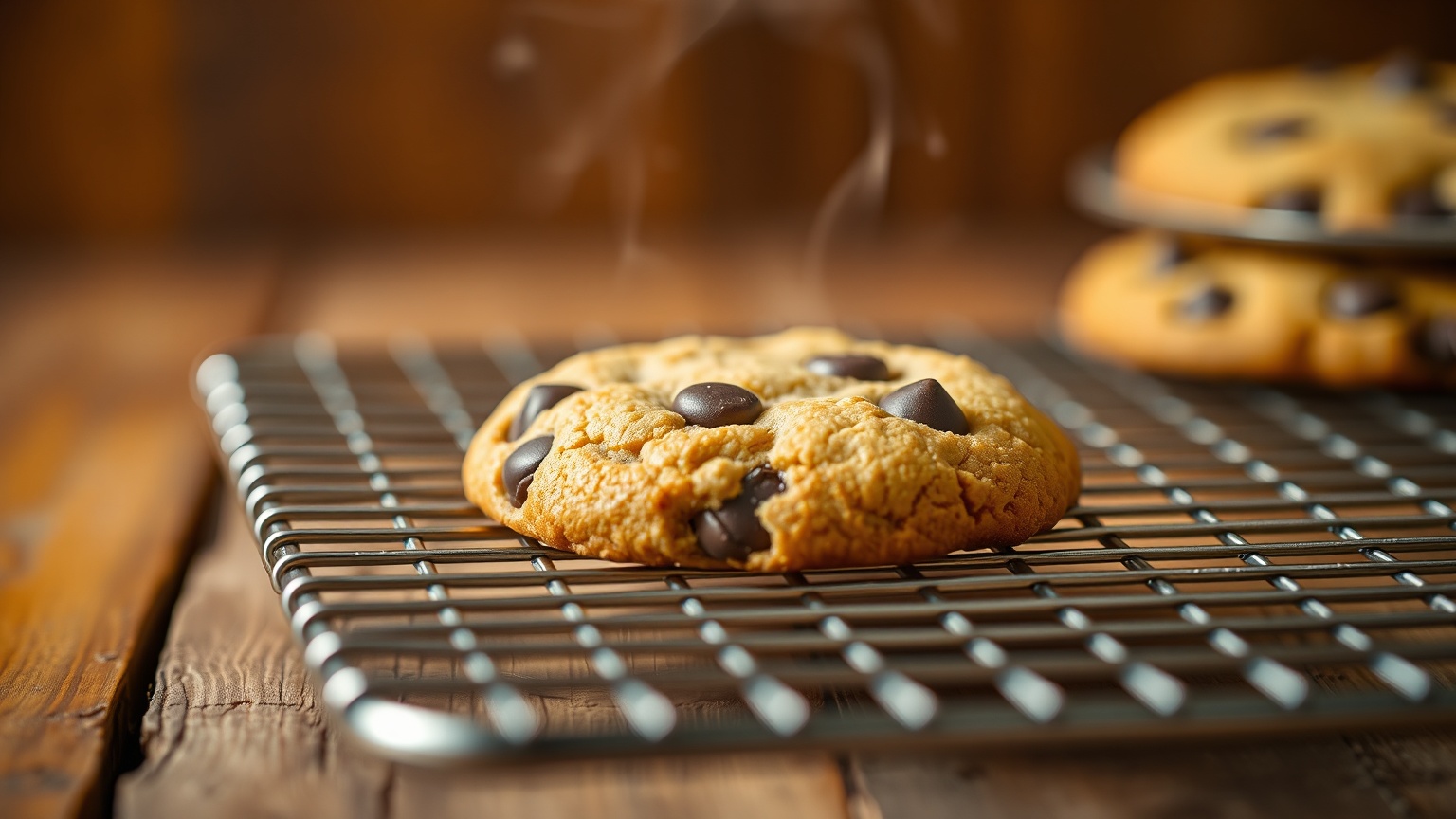
Air fryers are essentially compact convection ovens with a more powerful fan. That fan is the whole story. It strips moisture from the surface of food faster and pushes hot air into every corner of the basket, which means your cookies are cooking harder and faster than they would in a standard oven — even at the same temperature setting.
The standard rule: subtract 25°F from the oven temp, and reduce time by 20–25%. That’s it. It’s not a perfect science, but it’s a solid starting point for almost any drop cookie recipe. Slice-and-bake cookies follow roughly the same rule, though they can be slightly more forgiving because they’re denser.
Here’s a quick reference table for the most common oven cookie temps:
| Oven Temperature | Air Fryer Temperature | Typical Oven Time | Estimated Air Fryer Time |
|---|---|---|---|
| 325°F | 300°F | 14–16 min | 11–13 min |
| 350°F | 325°F | 10–12 min | 8–10 min |
| 375°F | 350°F | 9–11 min | 7–9 min |
| 400°F | 375°F | 8–10 min | 6–8 min |
Always start checking 2 minutes before the low end of the estimated range. Seriously. Air fryers vary by brand and model, and the difference between a golden cookie and a scorched one can be 60 seconds.
What I Actually Found When Testing (The Honest Version)
My standard test was a classic chocolate chip cookie dough — butter-based, brown sugar heavy, baked at 350°F for 11 minutes in a conventional oven. I ran three batches in the air fryer to nail down the settings.
Batch 1: 350°F, 11 Minutes
Overcooked. The bottoms were dark brown — not burnt, but definitely past where I wanted them. The tops looked fine, almost underdone visually, which was confusing. The issue was the direct heat radiating up from the basket element, combined with the fan running the whole time. I should’ve known better.
Batch 2: 325°F, 9 Minutes
Much better. Centers were just barely set, edges had a nice color. I let them sit in the basket for 2 minutes after turning the air fryer off, which finished the carryover cooking perfectly. This is the batch I’d be happy serving to someone.
Batch 3: 325°F, 8 Minutes + 2-Minute Rest
Honestly my favorite. Slightly underbaked when I pulled them, but the carryover heat in the closed basket brought them to exactly the soft, chewy texture I was after. If you like soft cookies, this approach — pull early, rest in the basket — is worth trying.
The takeaway from all three: 325°F and 8–9 minutes is the sweet spot for standard chocolate chip cookies in a basket-style air fryer. Your unit might run slightly hot or cool, so adjust by 1–2 minutes as needed. For more on how these appliances handle heat, here’s a breakdown of how hot toaster-style heating elements actually get.
Practical Setup Tips That Actually Make a Difference
Use Parchment — But the Right Kind
Regular parchment cut to fit works fine as long as the dough is holding it down. If you toss a bare sheet in there and turn the fryer on first, it’ll fly up into the heating element. Not great. I prefer perforated parchment rounds made for air fryers — the holes let air circulate under the cookies, which helps the bottoms bake evenly without burning.
Don’t Overcrowd the Basket
Four to six cookies per batch, depending on your basket size. They need room to spread, and if they’re touching, you’ll get uneven baking and weird edges where two cookies merged into one sad blob. (I’ve been there.)
Skip the Preheating — Usually
Some recipes tell you to preheat your air fryer. For cookies, I don’t bother. Because the basket is small, it reaches temp within the first minute or two of baking anyway. Preheating just adds a step, and in my experience the results are basically identical. That said, if your model explicitly recommends preheating, follow the manufacturer’s guidance.
Chill Your Dough
This one matters more in an air fryer than in a regular oven. Cold dough holds its shape longer before the edges set, which means less spreading and a thicker cookie. If your dough is room temp or warm (say, you just made it), stick it in the fridge for 20–30 minutes first. The difference is noticeable. Serious Eats has written extensively about why chilling dough matters for cookie texture, and those principles apply doubly here.
Edge Cases Most Guides Don’t Cover
Here’s where things get more specific. Most conversion guides just give you the 25°F/25% rule and call it done. But there are a few situations where that formula doesn’t quite work.
Thin, Crispy Cookies (Like Florentines or Lace Cookies)
Don’t air fry these. I know that sounds harsh, but very thin, sugar-heavy cookies have almost no margin for error in an air fryer. The intense airflow causes them to puff up or shift before they set, and the sugar hits that burning point extremely fast. Stick to a conventional oven for anything delicate.
Cookies with Add-Ins That Burn Easily
Cookies loaded with nuts, coconut, or white chocolate chips need extra attention. White chocolate especially scorches fast. Try dropping the temp an extra 10–15°F beyond the standard conversion and checking even earlier. And if the tops are browning too fast, a small square of foil loosely set on top of the batch (not touching the sides) can slow it down. This is a common technique for reheating food in a toaster oven too, and it transfers well here.
High-Altitude Adjustments
If you’re baking above 3,500 feet, standard high-altitude cookie adjustments (less sugar, slightly more flour, lower temp) still apply. The air fryer doesn’t change the atmospheric pressure issue. Factor those adjustments in before you apply the conversion formula.
Oven-to-Air Fryer Toaster Oven (Not Basket Style)
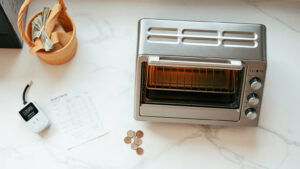
If you’re using an air fryer toaster oven rather than a basket-style unit, the conversion is slightly more forgiving. The larger cavity means less concentrated heat, so you may only need to reduce the time by 15% rather than 25%. Check out our list of the best mini toaster ovens if you’re still deciding which setup works best for you. Using a proper toaster oven baking pan in these units also helps distribute heat more evenly than the wire basket alone.
Wrapping Up
Air fryer cookies aren’t magic, and they’re not as effortless as some posts make them sound. But they’re fast, they’re genuinely good when you get the settings right, and once you understand why the conversion works the way it does — aggressive airflow, smaller cavity, concentrated heat — it becomes intuitive. Subtract 25°F, cut time by 20–25%, check early, and let them rest before you decide they need more time. That sequence handles probably 80% of cookie recipes without any fuss.
The other 20%? That’s just experience. Make a few batches, take notes, and your air fryer will stop feeling like a guessing game pretty quickly.
Frequently Asked Questions
How do I convert oven cookie baking temperature to air fryer temperature?
Subtract 25°F from whatever temperature your oven recipe calls for. If the recipe says 350°F, set your air fryer to 325°F. This compensates for the air fryer’s more powerful fan, which circulates heat more intensely than a standard oven even at the same temperature setting.
How long do cookies take in an air fryer compared to an oven?
Air fryer cookies typically take 20–25% less time than the original oven recipe. A cookie that bakes for 12 minutes in the oven will usually be done in 9–10 minutes in an air fryer. Always start checking 2 minutes before the low end of your estimate — air fryers vary by model and can run hotter than expected.
Can you bake any type of cookie in an air fryer?
Most drop cookies and slice-and-bake cookies work well. Very thin, delicate cookies like lace cookies or Florentines aren’t good candidates — the strong airflow disrupts them before they set, and high-sugar recipes burn fast. Stick to thicker, doughier cookies for the best results.
Do I need to preheat my air fryer before baking cookies?
For cookies, preheating is generally unnecessary. The small cavity of most air fryers reaches baking temperature within the first couple of minutes, so your cookies are already heating up during that time. If your air fryer’s manual recommends preheating, follow that guidance, but don’t stress about it otherwise.
Why are the bottoms of my air fryer cookies burning?
The most common cause is baking at too high a temperature — use the converted temp (25°F lower than the oven recipe), not the original. Placing a perforated parchment liner under the cookies also creates a small buffer between the dough and the hot basket, which significantly reduces bottom scorching without blocking airflow.
—
Written by
Emma founded Toastera to turn vague appliance advice into clear, researched, safety-first guidance on toasters and toaster ovens.
Free: the Toaster Oven Cheat Sheet
Get the printable cheat sheet (temps, cook times & safety tips) plus new recipes. No spam, unsubscribe anytime.