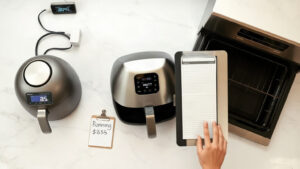
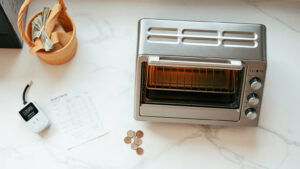
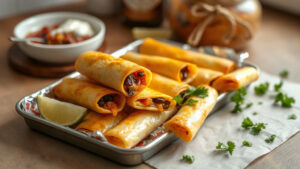
Yes, you can cook a full meal in a dorm room toaster oven — protein, vegetables, and even a simple dessert — using a compact 1,200–1,800 watt unit that reaches temperatures between 200°F and 450°F. Most toaster ovens sold for dorm use land around 1,500 watts, which is enough heat to roast chicken thighs, bake potatoes, and broil vegetables properly. The main limits aren’t the appliance itself — they’re your dorm’s wattage rules and counter space, both of which are very solvable problems.
Safety First: Toaster ovens run hot — exterior surfaces can exceed 200°F during use. Keep the unit at least 4 inches from walls, curtains, and any plastic items. Never leave it unattended while broiling, and always unplug it when you leave the room. Check your dorm’s specific wattage limit before buying (many cap at 1,500 watts); exceeding it can trip circuit breakers or, in older buildings, create a fire risk. Use oven mitts every single time — the rack and the interior walls will burn you fast.
Quick Facts: Dorm Toaster Oven Cooking
- Most college dorms allow toaster ovens up to 1,000–1,500 watts — always confirm with your RA before buying.
- A standard 6-slice toaster oven fits a 9×9 baking pan, which is plenty for single-serve meals and most two-person dinners.
- Broil mode (usually 450°F–500°F) can replicate a stovetop sear on chicken or fish in under 10 minutes.
- Toaster ovens preheat in 5–8 minutes, versus 15–20 for a full-size oven — genuinely one of their best qualities for impatient college students.
- You’ll need at minimum: one small baking pan, one oven-safe rack, and heat-resistant mitts. Everything else is optional.
Setting Up Your Toaster Oven in a Dorm Room the Right Way
First things first: ask your RA or check the student handbook before you bring anything in. Seriously. Some dorms ban anything with an exposed heating element, some cap wattage at 1,000 watts, and a few (usually newer buildings) are surprisingly relaxed. I’ve tested half a dozen compact toaster ovens, and the difference between a 900-watt and a 1,500-watt unit in real cooking performance is significant — you just can’t brown things properly at the lower end.
Once you’ve cleared the policy hurdle, placement matters more than most people realize. The toaster oven needs to sit on a hard, heat-resistant surface — not a mini fridge top (too close to the wall), not a wooden shelf without clearance, and absolutely not anywhere near your bedding. I keep mine centered on a small cutting board on my counter, which gives it a little buffer from the laminate surface beneath. At least 4 inches of clearance on all sides, including above. The back vents get especially hot.
What to Look For in a Dorm-Approved Toaster Oven
For a dorm specifically, I’d focus on three specs: wattage (stay at or under your dorm’s limit), interior size (a 6-slice capacity fits most real food without being too wide), and whether it has a broil setting. That broil function is what separates useful from genuinely useful. You can see our full breakdown in the best mini toaster ovens guide if you’re still shopping.
The accessories that came with my test unit were mostly useless — thin pan that warped, tiny rack that didn’t fit right. Grab a proper small toaster oven baking pan separately. The stock ones are often too flimsy to hold up to regular use, and a warped pan means uneven cooking.
Understanding the Temperature and Wattage (So You Don’t Blow a Fuse)
Here’s a table I put together from testing and manufacturer specs. It covers the wattage and temperature range you’ll see across the types of toaster ovens typically available for dorm use:
| Toaster Oven Type | Typical Wattage | Max Temp | Best For | Dorm-Friendly? |
|---|---|---|---|---|
| Compact (2–4 slice) | 700–1,000W | 400°F | Toast, reheating, small snacks | Usually yes |
| Mid-size (6 slice) | 1,200–1,500W | 450°F | Full meals, roasting, baking | Check your dorm limit |
| Convection toaster oven | 1,500–1,800W | 450°F+ | Faster roasting, better browning | Often prohibited |
| Air fryer/toaster oven combo | 1,400–1,700W | 400–450°F | Crispy food, fries, chicken wings | Check wattage carefully |
The takeaway: a mid-size 6-slice unit at 1,200–1,500 watts is the sweet spot for actual cooking. Anything under 1,000 watts struggles with real protein — the surface dries out before the inside finishes. You can read more about how hot a toaster gets in our dedicated guide, which breaks down the heating element specifics.
How to Actually Cook a Full Meal (Not Just Reheat Stuff)
This is where most dorm cooking guides fall short — they list “frozen burritos” and call it a day. You can do so much better than that with the same appliance. I’m talking about an actual meal: a protein, a vegetable, and something starchy, cooked back-to-back in under 45 minutes total. Here’s how I’d structure it.
The One-Pan Chicken + Vegetable Method
Bone-in chicken thighs are your best friend here. They’re forgiving (hard to overcook compared to breast meat), cheap, and they fit two at a time on a standard 6-slice pan. Season them with olive oil, salt, pepper, garlic powder — whatever you’ve got. Set your oven to 400°F, bake on the middle rack for 35 minutes, then switch to broil for the last 3–4 minutes to crisp the skin. Internal temperature should hit 165°F; if you don’t have a thermometer, the juices should run clear and the thigh should pull cleanly from the bone.
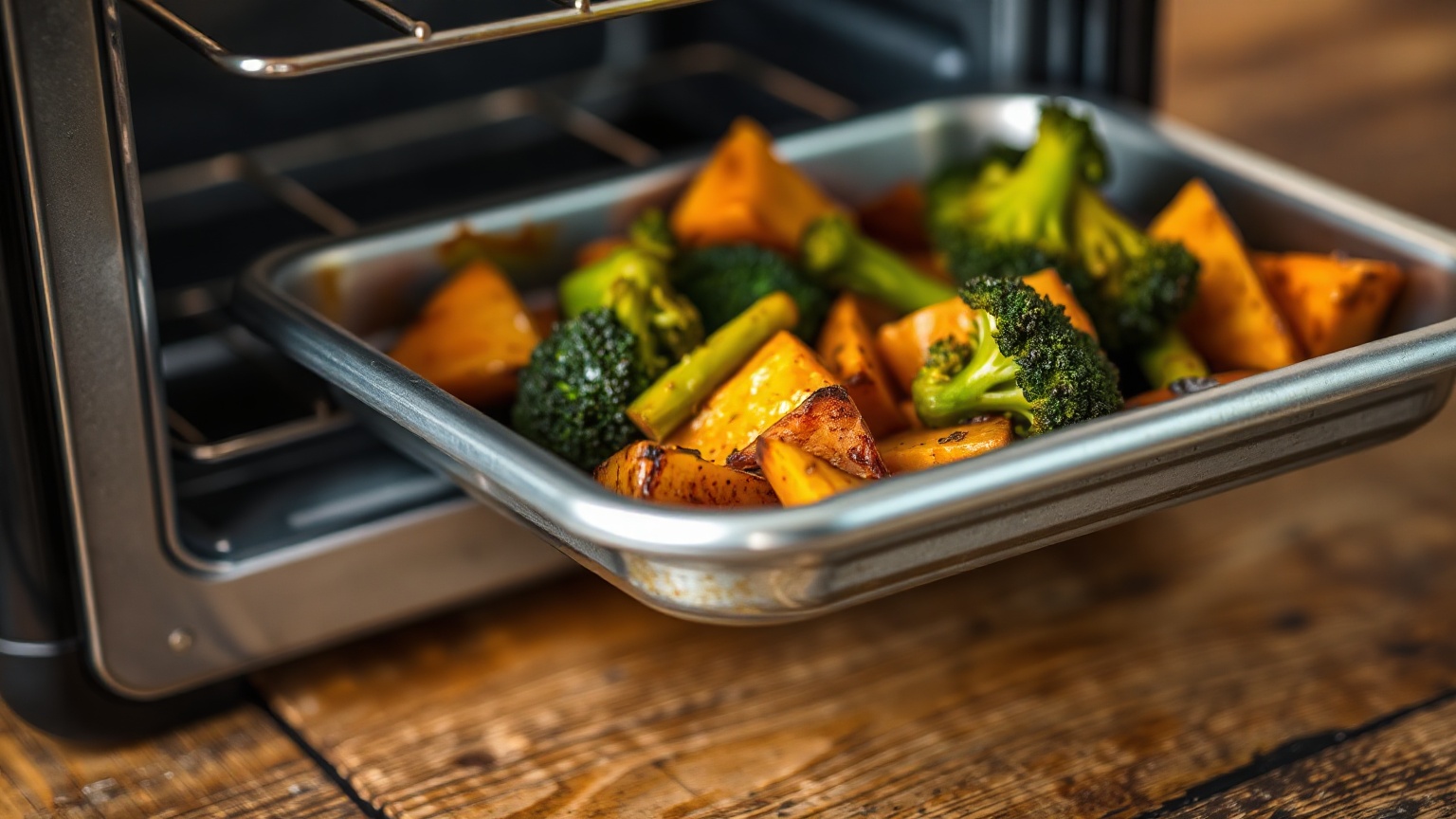
While that’s baking, prep your vegetables. Broccoli florets or sliced zucchini tossed in oil take about 15 minutes at 400°F, so slide them in during the last 15 minutes of chicken time. They’ll share the rack if you’re strategic about spacing. One pan, one cook time, minimal cleanup. That part genuinely works.
Baked Potato (The Underrated Dorm Staple)
A medium russet potato takes 45–55 minutes at 400°F. Poke it several times with a fork first — this is not optional; a sealed potato builds pressure and can split messily inside your oven. Rub it with a little oil and salt, set directly on the rack (not the pan), and let it go. When the skin is crispy and a fork slides in without resistance, it’s done. Add canned beans, cheese, sour cream if your floor has a shared fridge — suddenly you have a meal that takes almost zero active effort.
Eggs: Baked, Not Scrambled
Most people don’t think of their toaster oven for eggs. But baked eggs in a small ramekin at 350°F for 12–15 minutes work well — crack two eggs into a greased ramekin, add a splash of cream or milk if you have it, season, and bake until the whites are just set. The yolks stay a little jammy. I actually prefer this method to scrambled for a lazy Sunday morning. It requires zero stirring and your hands stay clean.
Actual Baking (Yes, in a Dorm)
Brownies from a box mix work fine in a toaster oven. Use a 8×8 or 9×9 pan (check it fits before you buy), reduce the listed oven temperature by 25°F from what the box says (so if it says 350°F, use 325°F), and check about 5 minutes early. Toaster ovens run hot and the heat comes from close-proximity elements, so the edges can overbake fast. This is the one area where you’ll need to pay attention — I ruined my first batch by trusting the box time exactly.
For more detail on reheating leftovers the right way once you’ve cooked a full meal, check out our guide on reheating food in a toaster oven — it covers which foods reheat well and which turn into something sad and rubbery.
Dorm Cooking Tips That Most Guides Skip
A few things I’ve figured out the hard way, or just noticed that don’t get mentioned enough:
- The crumb tray is not optional maintenance. It fills up fast with crumbs, oil drips, and cheese that fell off your toast. A greasy crumb tray is a real fire hazard. Pull it out and wipe it down every few uses — takes 30 seconds.
- Steam is your enemy in a small room. Cooking fish or anything with high moisture content will set off smoke detectors in dorm hallways embarrassingly fast. Stick to drier cooking methods — roasting and broiling — rather than anything that produces a lot of steam or smoke. Bacon under a broiler is another one to avoid in tight quarters.
- Parchment paper makes cleanup almost nothing. Line your pan with it before every use. Just make sure it’s not hanging over the edges near the heating elements — it can catch.
- A small wire rack is worth buying separately. A small toaster oven wire rack that fits your unit lets you elevate food for better airflow, which means more even browning and less steaming from trapped moisture. The stock rack that comes with most units is fine but often only has one height position.
- Don’t use glass baking dishes unless they’re rated for it. A regular glass bowl or random Pyrex you grabbed from home might not be oven-safe up to 450°F. Check the bottom of the dish for the rating. This is an edge case most people ignore until something breaks — or worse.
And one thing worth knowing that almost nobody mentions: if your dorm has a shared kitchen somewhere in the building, even just a floor lounge with a microwave, you can use that for the steps that create smoke risk (like searing meat) and then finish in your room’s toaster oven. Splitting the cooking this way actually works really well and keeps your room from smelling like you’ve been running a restaurant out of it.
For inspiration on recipes and technique, Serious Eats has solid coverage of toaster oven cooking with the kind of specificity that actually helps. Worth a read if you want to go deeper on technique.
Wrapping Up
A toaster oven in a dorm room isn’t a compromise — it’s a genuinely capable cooking tool if you know how to use it. The limits are real (wattage caps, smoke detectors, counter space) but they’re all workable. Start with simple things: roasted chicken thighs, baked potatoes, a tray of vegetables. Once you’re comfortable with the timing and heat behavior of your specific unit, you’ll stop thinking of it as a “dorm appliance” and start thinking of it as just your oven. Which, for the next few years, it probably is.
The main thing: check your dorm’s policy first, buy a unit that fits within the wattage limit, keep the crumb tray clean, and never leave it running unsupervised under a broil setting. Everything else is just cooking.
Frequently Asked Questions
Are toaster ovens allowed in dorm rooms?
It depends entirely on your school’s specific policy, which varies a lot — some schools allow toaster ovens under a wattage limit (commonly 1,000–1,500 watts), while others prohibit any appliance with an exposed heating element. Check your student housing handbook or ask your RA directly before purchasing anything. Many schools that prohibit microwaves still allow low-wattage toaster ovens, so it’s worth checking even if you assume the answer is no.
What can you cook in a toaster oven in a dorm room?
Quite a lot, actually: roasted chicken thighs, baked potatoes, vegetables, eggs, quesadillas, fish fillets, boxed brownies, and reheated leftovers all work well. The practical limits are food items that produce a lot of smoke (like bacon or anything with high fat splatter under a broiler), since dorm smoke detectors are sensitive and close by. Stick to roasting and baking methods and you’ll cover most meals without issue.
How many watts does a dorm toaster oven need to be?
Most dorm wattage caps fall between 1,000 and 1,500 watts, so you’ll want a unit that sits at or below your school’s specific limit. For real cooking (not just reheating), aim for at least 1,200 watts if your dorm allows it — units under 1,000 watts struggle to properly roast protein or achieve any real browning. Always verify the exact wattage of the model you’re considering before buying, since marketing descriptions like “compact” don’t tell you the draw.
Is it safe to leave a toaster oven unattended in a dorm?
For standard baking (350°F–400°F range) you can step away briefly, but you should never leave a toaster oven running on the broil setting without someone in the room — broiling is high heat, close to the elements, and things can go wrong quickly. Always unplug the unit when you leave your room entirely. Keeping the crumb tray clean also significantly reduces fire risk from accumulated grease.
Can a toaster oven replace a microwave in a dorm room?
For most tasks, yes — a toaster oven reheats food better than a microwave (less sogginess, more even browning) and can cook things a microwave simply can’t. The one real gap is speed for liquids: heating soup or a mug of water is much faster in a microwave. If you had to pick one, a toaster oven is the more versatile choice for someone who actually wants to cook; if you mostly heat up drinks and leftovers at midnight, a microwave might win.
—
Written by
Emma founded Toastera to turn vague appliance advice into clear, researched, safety-first guidance on toasters and toaster ovens.
Free: the Toaster Oven Cheat Sheet
Get the printable cheat sheet (temps, cook times & safety tips) plus new recipes. No spam, unsubscribe anytime.