
For one or two people, a compact toaster oven (under 0.5 cubic feet) handles daily toast and reheating just fine, but a larger model (0.5–1.0 cubic feet) pays for itself if you’re regularly roasting vegetables, baking small casseroles, or air frying chicken thighs — tasks where a cramped interior genuinely hurts results. The size question really comes down to what you’re cooking, not just how many people you’re feeding. If your current routine is mostly toast and frozen pizza, a compact unit is probably the smarter buy. If you’ve been firing up your full-size oven for a single salmon fillet, a larger toaster oven will save you real money on your energy bill.
Safety First: Toaster ovens run hot — exterior surfaces on larger models can reach 200°F or more during extended use. Always keep at least 4 inches of clearance on all sides, never place one under a cabinet without checking the manufacturer’s minimum clearance spec, and use oven mitts rated for at least 400°F when pulling racks or pans. Never leave a toaster oven unattended on a high broil setting.
Quick Takeaways Before You Decide
- Compact toaster ovens (under 0.5 cu ft) are genuinely great for toast, bagels, and reheating — but feel punishing the moment you try to fit a 9×13 pan or a whole chicken breast.
- Larger countertop ovens (0.5–1.0 cu ft) preheat in 5–8 minutes versus 15–20 minutes for a full-size oven, and typically use 1,200–1,800 watts versus a full oven’s 2,000–5,000 watts.
- For a solo cook who actually uses the oven a few times a week, a mid-size or large toaster oven can cut oven-related electricity costs by 30–50%.
- Counter space is the real constraint — a large toaster oven can occupy 20–25 inches of width, which rules it out for smaller kitchens without dedicated appliance space.
- The Breville Smart Oven Air Fryer and the Cuisinart TOA-70 are the two models I’d actually recommend most people look at — for different reasons.
What “Compact” and “Large” Actually Mean in Toaster Oven Terms
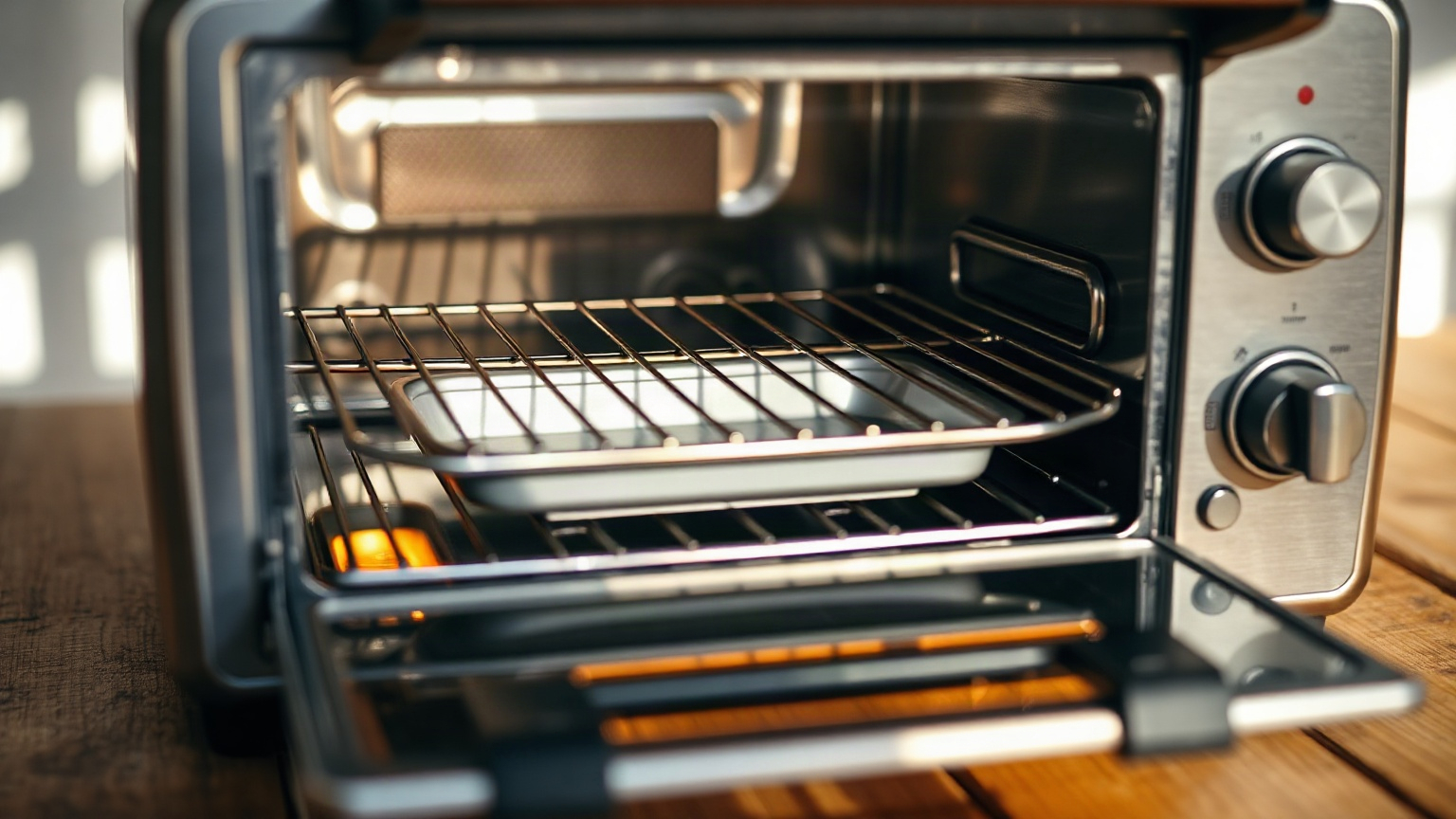
Toaster oven sizing isn’t standardized, which is mildly annoying. Brands throw around “family size” and “compact” like they mean something objective, but they don’t. Here’s roughly how I’d break it down based on actual interior dimensions:
| Category | Interior Volume | Fits | Typical Footprint | Typical Wattage |
|---|---|---|---|---|
| Compact / 2-Slice | Under 0.35 cu ft | 2 slices toast, small frozen snacks | ~12–15″ wide | 1,000–1,200W |
| Mid-Size / 4-Slice | 0.35–0.55 cu ft | 4 slices, 9″ pizza, small sheet pan | ~16–19″ wide | 1,200–1,500W |
| Large / 6-Slice | 0.55–0.80 cu ft | 12″ pizza, whole chicken, 9×13 pan | ~19–22″ wide | 1,500–1,800W |
| Extra Large / Smart Oven | 0.80–1.0+ cu ft | 13″ pizza, turkey breast, multiple racks | ~22–25″ wide | 1,800W+ |
The first time I bought a “large” toaster oven, I didn’t measure the cabinet clearance above my counter. It fit — barely — but I couldn’t open the door fully without pulling it forward first. Learned that lesson with a burnt forearm reaching for a sheet pan. Measure twice.
The Real Cost Difference (And When It Matters)
Electricity isn’t free. A full-size electric oven draws 2,000–5,000 watts and takes 10–20 minutes to preheat. A large toaster oven draws roughly 1,800 watts and is ready in 5–8 minutes. For a couple making dinner 4–5 nights a week, that difference adds up to somewhere around $60–$100 per year depending on your local electricity rate — not life-changing, but not nothing either.
Compact models use less power overall, obviously. But here’s the edge case nobody mentions: if your compact toaster oven can’t fit the food properly, you end up running two cycles instead of one. Or worse, you give up and use the big oven anyway. So the actual savings depend heavily on whether the oven fits your actual cooking habits.
You can read more about reheating food in a toaster oven to get a better sense of the kinds of tasks where size really starts to matter.