A mid-size toaster oven is usually worth it over a compact model even in a small kitchen — but only if you’re cooking actual meals, not just reheating leftovers. The footprint difference is real (typically 4 to 6 inches of extra depth), but so is the cooking capacity jump, often from a 4-slice interior to a 6-slice one that fits a 9-inch round pan or a small whole chicken. If your countertop can spare the space and you’re cooking for more than one person most nights, the mid-size wins on versatility without requiring a full-size oven.
Safety First: Toaster ovens run extremely hot — surfaces including the glass door, side panels, and top can reach 300°F or higher during normal use. Always keep at least 4 inches of clearance on all sides and never place a toaster oven under a cabinet or against a wall. Use oven mitts rated for at least 450°F when removing pans, and don’t leave the unit unattended during high-heat cooking or broiling.
Quick Facts: Mid-Size vs Compact Toaster Oven
- Compact toaster ovens typically measure 16–18 inches wide and fit 4 slices of toast; mid-size models run 19–22 inches wide and fit 6 slices or a 9×13-inch pan.
- Mid-size models usually draw 1,500–1,800 watts vs. 1,100–1,200 watts for most compacts — real preheat time and browning consistency depend heavily on this.
- The usable cooking area difference is bigger than it sounds: a mid-size can fit a whole rotisserie chicken (around 4 lbs) or a 9-inch pizza; a compact tops out around a 6-inch pizza or thin chicken breasts laid flat.
- Budget compact models start around $40–$60; mid-size models worth buying start closer to $100–$150, with premium versions topping $300+.
- If you’re replacing a full-size oven entirely, a mid-size is the minimum viable option — compacts just can’t do that job.
What “Compact” and “Mid-Size” Actually Mean in Real Life
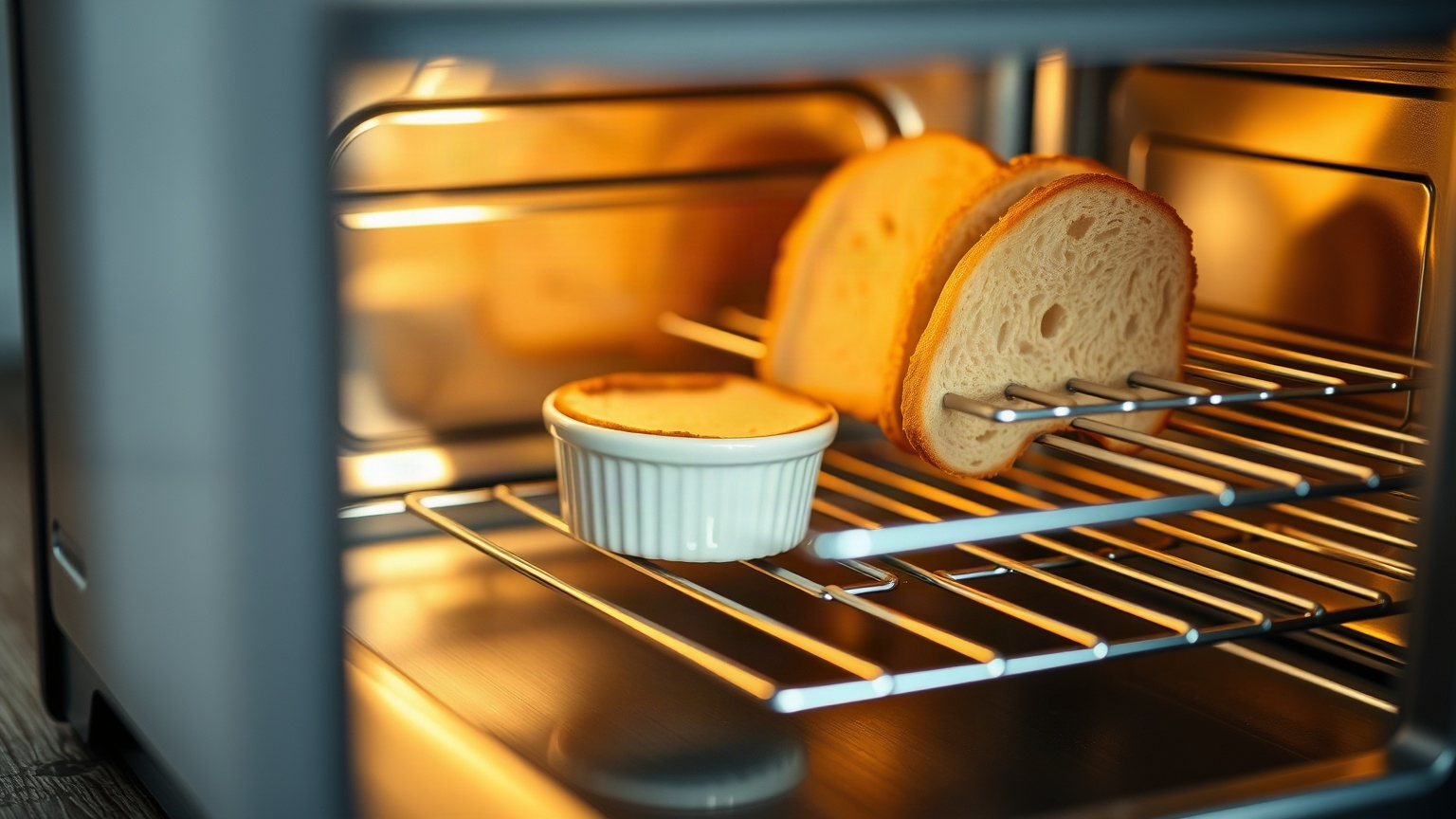
These category names aren’t standardized across brands, which is mildly annoying. One company’s “compact” is another’s “mini.” So let me just give you the numbers I actually use to sort them out.
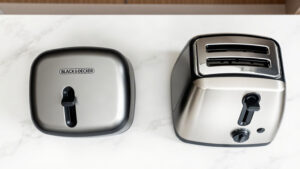
Compact toaster ovens: roughly 16 to 18 inches wide, 11 to 13 inches deep, 9 to 10 inches tall. Interior capacity around 12 to 18 liters. Think Hamilton Beach 4-slice models or the basic BLACK+DECKER TO1760SS. These are countertop fixtures in a lot of first apartments for good reason — cheap, light, and they toast bread fine.
Mid-size toaster ovens: 19 to 22 inches wide, 14 to 17 inches deep, 10 to 12 inches tall. Interior capacity around 21 to 30 liters. This is where you start seeing models like the Cuisinart TOA-60, Ninja Foodi SP101, and the Breville Smart Oven (non-Air). Real cooking happens here. You can roast vegetables on a sheet pan without having to cut everything to miniature sizes.
The depth difference is the one that kills people in small kitchens. Width you can often squeeze. But 4–5 extra inches of depth can mean the difference between the oven fitting on the counter and you having to move it every time you open the back door to a cabinet.
The Real Cooking Capacity Gap (With Actual Numbers)
Here’s where the abstract comparisons stop and the real-life friction starts. I’ve cooked in both, and the thing that surprised me most the first time I switched from a compact to a mid-size was how often I’d unconsciously adjusted my recipes to fit the smaller oven — cutting chicken breasts differently, avoiding sheet-pan dinners, never even attempting anything that needed a real baking dish.
What Fits in a Compact
Four slices of toast. A 6-inch personal pizza. Two chicken thighs, flat. A small batch of cookies — maybe 6 to 8 at a time on a toaster oven baking pan, not a full dozen. Single-layer reheating works fine. Anything that needs a 9×13 pan? Forget it. For more on what you can and can’t do when reheating, check out our guide to reheating food in a toaster oven.
What Opens Up in a Mid-Size
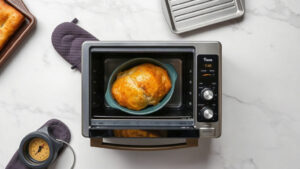
A 9-inch round cake pan. A 9×9 baking dish. A full-size 12-inch pizza (in some models). One pound of salmon with vegetables on a sheet pan alongside it. A 3–4 lb chicken. That’s not hypothetical — I’ve done the chicken in a Cuisinart TOA-60 and it came out genuinely well at 400°F for about 55 minutes with a dry brine the night before.
You can also fit a proper toaster oven wire rack that allows for two-level cooking in some mid-size models — something compact units just can’t offer at all.
Model Comparison: Popular Compact vs. Mid-Size Options
Rather than talk in abstractions, here’s how some of the most commonly purchased models actually stack up. Prices are approximate tiers, not live prices — they shift constantly.
| Model | Size Category | Capacity | Wattage | Key Functions | Price Tier |
|---|---|---|---|---|---|
| Hamilton Beach Easy Reach (31123) | Compact | 4-slice / ~12L | ~1,100W | Toast, Bake, Broil | Budget ($40–$60) |
| BLACK+DECKER TO1760SS | Compact | 4-slice / ~16L | ~1,150W | Toast, Bake, Broil | Budget ($50–$70) |
| Cuisinart TOA-60 | Mid-Size | 6-slice / ~17L | ~1,800W | Toast, Bake, Broil, Air Fry | Mid-Range ($120–$160) |
| Ninja Foodi SP101 | Mid-Size | 6-slice / ~19L | ~1,800W | Toast, Bake, Air Fry, Dehydrate, Reheat | Mid-Range ($130–$170) |
| Breville Smart Oven BOV800XL | Mid-Size | 6-slice / ~21L | ~1,800W | Toast, Bake, Roast, Broil, Cookies, Pizza | Premium ($200–$250) |
| Breville Smart Oven Air Fryer Pro | Mid-Size (large) | 13-slice / ~28L | ~1,800W | 13 functions including Air Fry, Dehydrate | Premium ($300+) |
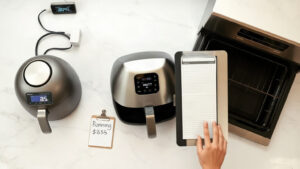
My honest take: the Ninja SP101 is the sweet spot for most people making this decision. It’s not as refined as the Breville but it does everything and it’s actually compact enough to feel reasonable on a smaller counter. The Breville Smart Oven Air Fryer Pro is genuinely excellent but it’s large even for a mid-size — I’d only recommend it if you’re treating it as a full oven replacement.
If budget is the actual constraint and you’re just toasting and reheating: get the BLACK+DECKER. No shame in it. It does those two things reliably. Just don’t expect it to roast anything.
The Small Kitchen Reality Check
Small kitchen people get told to buy compact things. And mostly that’s right. But there’s a version of this that backfires: you buy the small toaster oven, it can’t actually do what you need, you end up using your full-size oven anyway (if you have one), and the compact just toasts bread twice a week. That’s a waste of counter space too.
Measure Before You Decide
Seriously, get a tape measure out before you look at any specs. Measure the actual usable counter space — not corner to corner, but the space that accounts for the outlet location, the minimum clearance required (generally 4 inches on sides and back, more if near anything combustible), and how the appliance door opens. A lot of compact ovens have a drop-down door that swings out 12+ inches. Mid-size doors do the same but farther. That front clearance is something most people forget.
The Edge Case Most Comparisons Miss: Apartment Kitchens with No Range
Some apartments — especially older urban ones — have a two-burner cooktop and no actual oven. Or a broken oven the landlord won’t fix. In that situation, a compact toaster oven is genuinely inadequate for cooking real food regularly. A mid-size is the minimum, and if it needs to replace an oven, get the largest mid-size you can physically fit. The Breville Smart Oven (BOV800XL) and Ninja SP101 both work well in this scenario. You can check out our list of the best mini toaster ovens too, but for oven-replacement use, mini is the wrong direction.
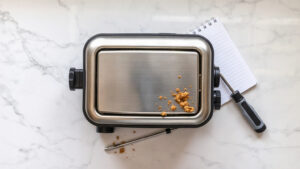
Also: toaster ovens run hot on the outside. This is a consistent thing regardless of size. See how hot a toaster gets to get a sense of what we’re talking about thermally. In a galley kitchen with limited airflow, this genuinely matters for where you position the unit.
Power Draw in Older Buildings
Power Draw in Older Buildings
Mid-size models at 1,800 watts on a 15-amp circuit — which is what most kitchen outlets are — is fine on its own. But if you’re also running a coffee maker or electric kettle on the same circuit? You’ll trip the breaker. Compact models at 1,100–1,200 watts have more headroom for that. In older apartments with fewer circuits in the kitchen, this is a real practical consideration, not a theoretical one. I found this out the hard way.
Who Should Actually Buy Each One
Compact toaster oven is the right call if: you mostly toast and reheat, you have under 18 inches of available counter depth, you already have a real oven that works, you’re cooking for one person with simple needs, or budget is tight and you need something functional for under $60.
Mid-size is the right call if: you cook actual meals regularly, you’re in an apartment without a functioning oven, you want to air fry without buying a separate appliance, you cook for two or more people, or you’re genuinely tired of limiting what you cook to fit a small box. According to Serious Eats, mid-size models with convection fans dramatically outperform compact models for anything requiring even browning — and that tracks exactly with my experience roasting vegetables.
The Food Network recommends mid-size for anyone replacing regular oven use, and I’d second that without hesitation. Just go in knowing the footprint and plan for it, rather than being surprised when the thing arrives.
The Verdict
If you’re genuinely torn, here’s my actual recommendation: measure your counter, be honest about how you cook, and don’t buy a compact just because it feels safer. The compact is only “smarter” if you actually have the space constraints or the limited cooking needs to justify it. For most people who are cooking real food — not just reheating slices of pizza — the mid-size pays for itself in versatility within a few months.
My personal pick for the small-kitchen cook who wants to do actual cooking: the Ninja Foodi SP101. It air fries, it toasts evenly, it bakes reasonably well, and it’s not so enormous that it takes over a small counter. The Breville BOV800XL is objectively better engineered, but it costs significantly more and the difference matters less than manufacturers want you to think.
Get the compact only if you know, specifically, that you’ll only be toasting and reheating. Otherwise? Just get the mid-size. You won’t regret the extra inches.
Frequently Asked Questions
Is a mid-size toaster oven worth it for a one-person household?
Yes, if you cook actual meals rather than just reheating. A mid-size lets you roast a single chicken breast with vegetables on the same pan, bake a small batch of cookies in a real pan, or air fry without cramming food into a tiny basket. For purely minimal use — toast and the occasional reheated takeout — a compact is fine and cheaper.
How much counter space does a mid-size toaster oven actually need?
Plan for at least 22–24 inches of width and 18–20 inches of depth when you account for required clearance on sides and back. The oven itself is typically 19–22 inches wide and 14–17 inches deep, but you need 4 inches minimum clearance around all sides for heat and safety. Also account for the door swinging open in front — that adds another 12+ inches of temporary clearance needed.
Can a mid-size toaster oven replace a regular oven?
For most everyday cooking, yes — with caveats. A mid-size toaster oven can bake, roast, broil, and air fry, and it preheats in 5–8 minutes versus 15–20 for a full oven. It can’t fit a full-size turkey or a large roasting pan, and baking results for very large batches (like multiple trays of cookies) will require multiple rounds. For single people or couples, it handles 80–90% of what a full oven does.
What’s the difference in electricity cost between compact and mid-size toaster ovens?
A compact at 1,100 watts running 30 minutes costs roughly 5–6 cents at average U.S. electricity rates; a mid-size at 1,800 watts for the same time costs about 8–9 cents. Over a year of daily use, that’s a difference of maybe $10–$15 — not a meaningful factor in the decision. Toaster ovens are significantly more efficient than full-size ovens regardless of which size you choose.
Which mid-size toaster oven is best for a small kitchen?
The Ninja Foodi SP101 and Cuisinart TOA-60 are the two I’d recommend most often for small kitchens — both offer air frying, baking, and real cooking capability without being as oversized as the Breville Smart Oven Air Fryer Pro. The Ninja is slightly more versatile; the Cuisinart is slightly easier to use and clean. Either lands in the $130–$170 range and handles real cooking without dominating a small counter.

Written by
Emma founded Toastera to turn vague appliance advice into clear, researched, safety-first guidance on toasters and toaster ovens.
Free: the Toaster Oven Cheat Sheet
Get the printable cheat sheet (temps, cook times & safety tips) plus new recipes. No spam, unsubscribe anytime.