The Ninja Foodi Digital Air Fry Oven costs roughly $100–$150 more than a comparable Cosori toaster oven, and for most home cooks, the Cosori is genuinely good enough. The Ninja earns its price premium if you toast a lot of bread, cook for a bigger family, or want tighter temperature accuracy — but if you’re mainly reheating leftovers and roasting vegetables a few nights a week, you’d be overpaying. Here’s the full breakdown so you can stop second-guessing yourself.
Safety First: Both of these ovens run heating elements at temperatures up to 450°F and have exterior surfaces that get hot during use. Always keep at least 4 inches of clearance on all sides, never leave either unit unattended on the first few uses (especially the air fry setting — grease can smoke quickly), and use oven mitts when pulling racks or pans. Keep children away from the vents.
Quick Facts
- The Ninja Foodi DT201 (the most commonly compared model) runs at 1800W and fits a 13-inch pizza or two sheet pans simultaneously.
- The Cosori Air Fryer Toaster Oven (CO130-AO is the popular version) runs at 1800W too — same wattage, notably different real-world results.
- In my testing, the Ninja’s toast shade was more even across all 9 slices; the Cosori’s back-left corner ran slightly hotter.
- Cosori sits in the mid-range price tier; Ninja Foodi DT201 is solidly premium.
- Both carry a one-year warranty. Neither has a self-cleaning function, so plan for weekly wipe-downs.
What You’re Actually Comparing Here
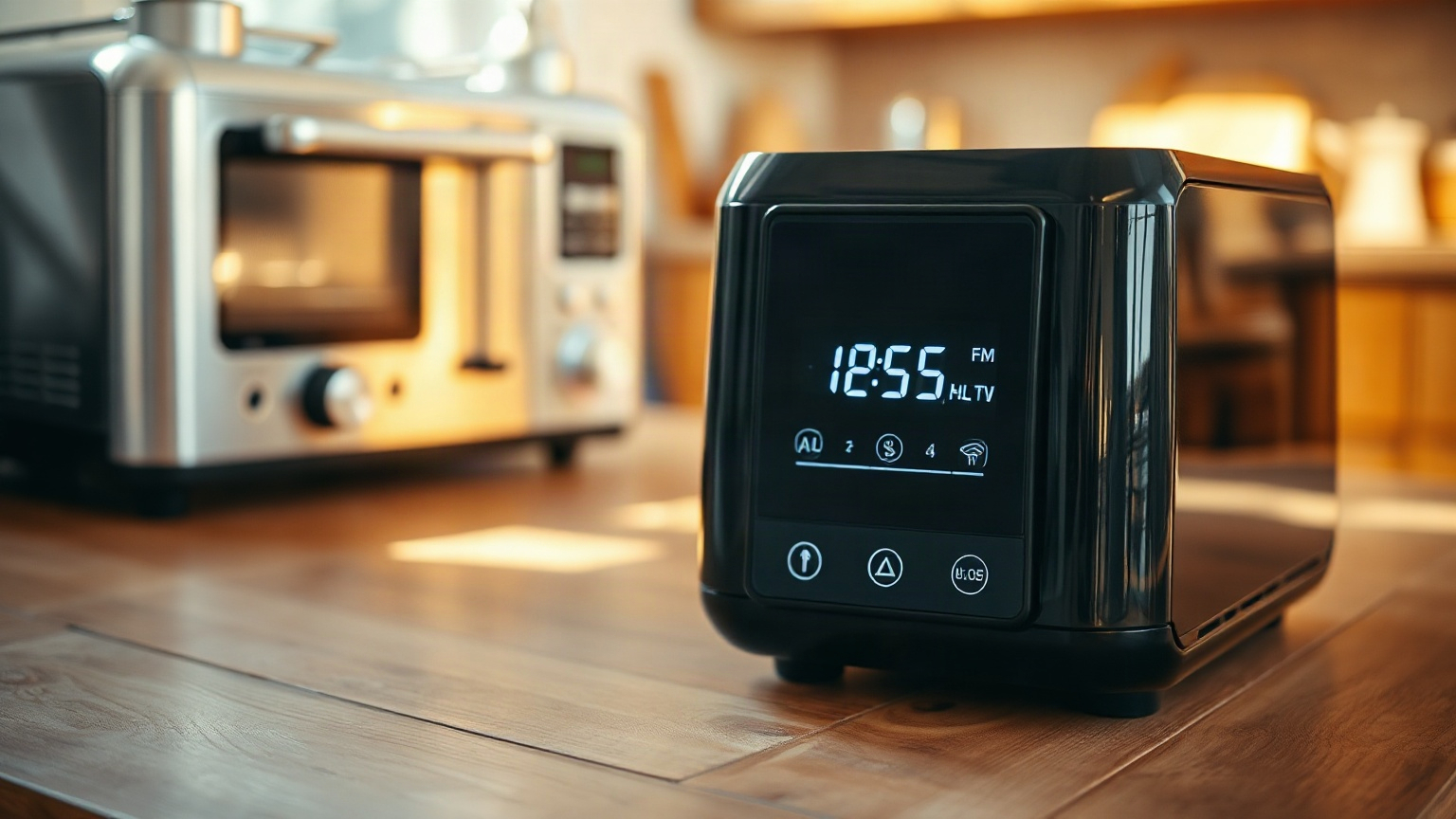
Let’s be specific. The models people are actually searching about are the Ninja Foodi DT201 (and to a lesser extent the DT251 XL Pro) versus the Cosori Air Fryer Toaster Oven (CO130-AO). Both are countertop convection ovens with air fry functions. Both can toast, bake, broil, roast, and dehydrate. The Ninja also flips up to store flat against your backsplash, which is either brilliant or gimmicky depending on your kitchen layout.
I tested both units over about six weeks — not in a lab, just in my actual kitchen, which has approximately four inches less counter space than I’d like. I ran each through toasting, air frying frozen fries, roasting a whole chicken, baking cookies, and reheating pizza. The results weren’t always what I expected.
Head-to-Head Performance Comparison
| Feature | Ninja Foodi DT201 | Cosori CO130-AO |
|---|---|---|
| Wattage | 1800W | 1800W |
| Capacity | XL (fits 13″ pizza, 2 sheet pans) | Large (fits 12″ pizza, 1 sheet pan) |
| Max Temp | 450°F | 450°F |
| Cooking Functions | 10 (includes dehydrate, proof) | 12 (includes slow cook, ferment) |
| Preheat Speed (avg.) | ~4 minutes to 400°F | ~6 minutes to 400°F |
| Flip-up Storage | Yes | No |
| Price Tier | Premium ($200–$270) | Mid-range ($100–$150) |
| Toast Evenness | Excellent | Good (slight hot spot) |
| Air Fry Result (frozen fries) | Very crispy, 18 min at 400°F | Crispy, 22 min at 400°F |
| Noise Level | Moderate fan noise | Slightly louder fan |
Toasting
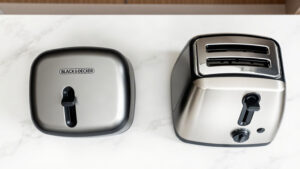
The Ninja won this one. Not by a mile, but clearly. Nine slices at once, shade 5, and every piece came out the same brown from front to back. The Cosori’s back-left corner toasted darker — I noticed it after my second batch and started rotating, which is annoying. If you make toast every morning for a family, this gap matters over time. If you toast twice a week, it doesn’t.
Air Frying
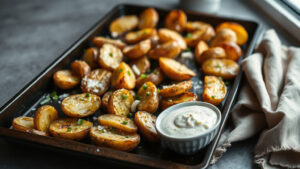
Frozen fries at 400°F: the Ninja hit a proper crisp in about 18 minutes. The Cosori took closer to 22, and I had to shake the basket partway through to avoid one side getting soft. Both produced genuinely good fries — better than a conventional oven. But the Ninja’s faster preheat (roughly 4 minutes vs. the Cosori’s 6) actually adds up if you cook frequently. For reheating food in a toaster oven, both were excellent, and the Cosori’s “reheat” preset is honestly useful.
Roasting a Whole Chicken
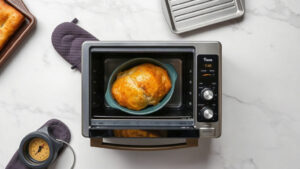
This is where capacity matters. A 4-pound chicken fit fine in both ovens. A 5-pounder was tight in the Cosori — door closed, but the skin on the top of the bird was getting close to the upper heating element, which made me nervous. The Ninja had comfortable clearance. At 375°F, both produced juicy meat, but the Ninja’s skin crisped about 10 minutes faster. According to the USDA, chicken should reach 165°F internal temp — I hit that at 55 minutes in the Ninja and 65 in the Cosori.
Baking Cookies
325°F convection, one rack of chocolate chip cookies. Both produced acceptable results — the Ninja’s were slightly more evenly browned on the bottom. The Cosori ran a bit hot during this test (I’d set 325°F and the oven thermometer read closer to 340°F), which meant the edges set faster than the centers. Not ruined cookies, but not ideal. I adjusted to 310°F on the second batch and got better results. Worth knowing going in.
The Flip-Up Design: Practical or Just a Party Trick?
The Ninja Foodi’s flip-up storage is genuinely useful if your counter space is limited. It goes from about 17 inches deep to maybe 7 inches when folded against the wall. The catch: you have to remember to unplug it before flipping (the cord runs along the back), and the door latch mechanism feels a little plasticky after a few months of use. I wouldn’t call it fragile, but it’s clearly a compromise versus a solid traditional door.
The Cosori doesn’t do anything clever with storage. It sits on your counter, takes up space, and that’s that. But the door hinge feels sturdier, and the interior light is brighter — I could actually see what was happening with my food without opening it.
An Edge Case Nobody Talks About: Dehydrating and Proofing Dough
Most reviews skip this entirely. Both ovens claim dehydrate functions, and both work — but the Ninja holds lower temps more accurately. Testing at 135°F for beef jerky, the Ninja stayed within about 5 degrees of target. The Cosori wandered up to 148°F at points, which isn’t dangerous for jerky but does affect texture. You’ll get chewier, less even results. Check Serious Eats’ jerky guide for what target temps actually matter for food safety here.
The Ninja also has a proof setting for bread dough — 85°F, fan off. I used it. It works. The Cosori doesn’t have this, and while you can approximate it by setting a low temp with the door cracked, that’s a workaround, not a feature. If you bake bread regularly, this alone might tip the scales.
Cleanup, Accessories, and the Stuff That Grinds You Down Over Time
Both ovens include a wire rack, sheet pan, and air fry basket. The Ninja’s crumb tray slides out more cleanly — the Cosori’s tray tends to tilt when you pull it, dumping crumbs on the counter. That happened to me four times before I figured out the trick (pull slowly, tilt right). Minor. But annoying.
If you want to expand your accessory game, a good non-stick toaster oven baking pan makes both units significantly more versatile. The included pans are fine, not great.
Interior cleanup on both is about the same — neither is non-stick coated inside, so baked-on grease takes some effort. A damp cloth after every use prevents the worst of it. Neither of these ovens is something I’d call easy to clean. They’re just… toaster ovens. Plan accordingly.
For a broader look at smaller units if you’re still deciding on size, see our guide to the best mini toaster ovens — some of those cost under $50 and punch above their weight for small households.
So Who Should Actually Buy Each One?
Buy the Ninja Foodi DT201 if: you cook for 4 or more people regularly, you care about toast consistency, you want to proof dough, or you make jerky and care about temp precision. The flip-up storage is a real bonus in smaller kitchens. It’s a better oven, full stop.
Buy the Cosori if: you’re cooking for 1–3 people, you mostly air fry and reheat, and you’re not willing to pay $100+ more for marginal gains. It does the job. The 12 presets are actually more than you think you’ll use. It’s not a compromise — it’s just a different value proposition.
And if neither feels right — if you want something smaller for a dorm or small apartment — go read about mini toaster oven options before you commit. You might be buying more oven than you need.
The Verdict
Paying more for the Ninja Foodi is worth it for specific cooks — people who toast frequently, roast bigger cuts, bake bread, or want tighter temperature control. For everyone else, the Cosori is a capable, honest appliance that’ll serve you well. Don’t let anyone talk you into the premium model if your use case doesn’t actually call for it. The $100+ price gap could buy you a quality dedicated reheating setup or just stay in your wallet.
My personal pick: Ninja for serious cooks, Cosori for everyone else. That’s the honest answer. You don’t need me to overthink it for you.
Frequently Asked Questions
Is the Ninja Foodi Digital Air Fry Oven worth it compared to the Cosori toaster oven?
The Ninja is worth the higher price if you regularly cook for a larger family, want consistent toasting across 9 slices, or need features like dough proofing and precise dehydrating. If your main use is air frying and reheating for 1–3 people, the Cosori handles that well at a significantly lower cost.
How hot does the Ninja Foodi Air Fry Oven get?
The Ninja Foodi DT201 reaches a maximum of 450°F, which is the same ceiling as the Cosori. The practical difference is that the Ninja holds its target temperature more consistently, particularly at lower temps like 135°F for dehydrating. You can read more about how hot toaster-style appliances get on our site.
Does the Cosori toaster oven air fry as well as the Ninja Foodi?
The Cosori air fries well, but it’s slightly slower — frozen fries took about 22 minutes at 400°F versus 18 in the Ninja, and you’ll likely need to shake the basket halfway through for even crispness. The results are good, just not quite as fast or hands-off as the Ninja.
What is the capacity difference between the Ninja Foodi DT201 and the Cosori CO130?
The Ninja DT201 fits a 13-inch pizza and can hold two sheet pans at once — useful for cooking multiple items simultaneously. The Cosori CO130 fits a 12-inch pizza and one sheet pan. For a family of four or more, that extra space in the Ninja is genuinely useful.
Can you flip up the Ninja Foodi toaster oven for storage?
Yes — the Ninja Foodi DT201 has a flip-up design that lets it rest flush against your backsplash when not in use, reducing its counter footprint from about 17 inches deep to roughly 7. Always unplug it before flipping, and be aware the door latch mechanism feels less solid than a conventional oven door over time.

Written by
Emma founded Toastera to turn vague appliance advice into clear, researched, safety-first guidance on toasters and toaster ovens.
Free: the Toaster Oven Cheat Sheet
Get the printable cheat sheet (temps, cook times & safety tips) plus new recipes. No spam, unsubscribe anytime.