The Ninja Foodi XL Pro Air Oven is the better pick for most everyday cooks — it offers more usable capacity, solid air frying performance, and a lower price point than the Breville Smart Oven Air Fryer Pro. The Breville is genuinely more precise and better built, but you’re paying a significant premium for features that most weeknight dinners don’t need. If you cook for a family, want versatility without fussing over settings, and don’t want to spend Breville money, go Ninja.
Safety First: Both of these appliances run at high heat (up to 450°F–500°F) and draw significant wattage. Never place either unit under low-hanging cabinets or against a wall — leave at least 5 inches of clearance on all sides. Keep the crumb tray emptied regularly; built-up grease can ignite. Always use oven mitts when pulling out racks or pans, and never leave either appliance running unattended when cooking high-fat foods like bacon or chicken wings.
Key Takeaways
- The Ninja Foodi XL Pro gives you more cooking capacity for less money — a real advantage for families or batch cooking.
- The Breville Smart Oven Air Fryer Pro has more precise temperature control and better overall build quality, but it costs significantly more.
- For air frying specifically, the Ninja performs at least as well as the Breville in everyday tests — crispier chicken, faster fries.
- The Breville handles baking and slow-roasting with more consistency, especially if you care about even browning across the whole rack.
- Neither is a budget appliance. But if you’re choosing between the two, the Ninja is easier to justify for most households.
How I Actually Tested These Two
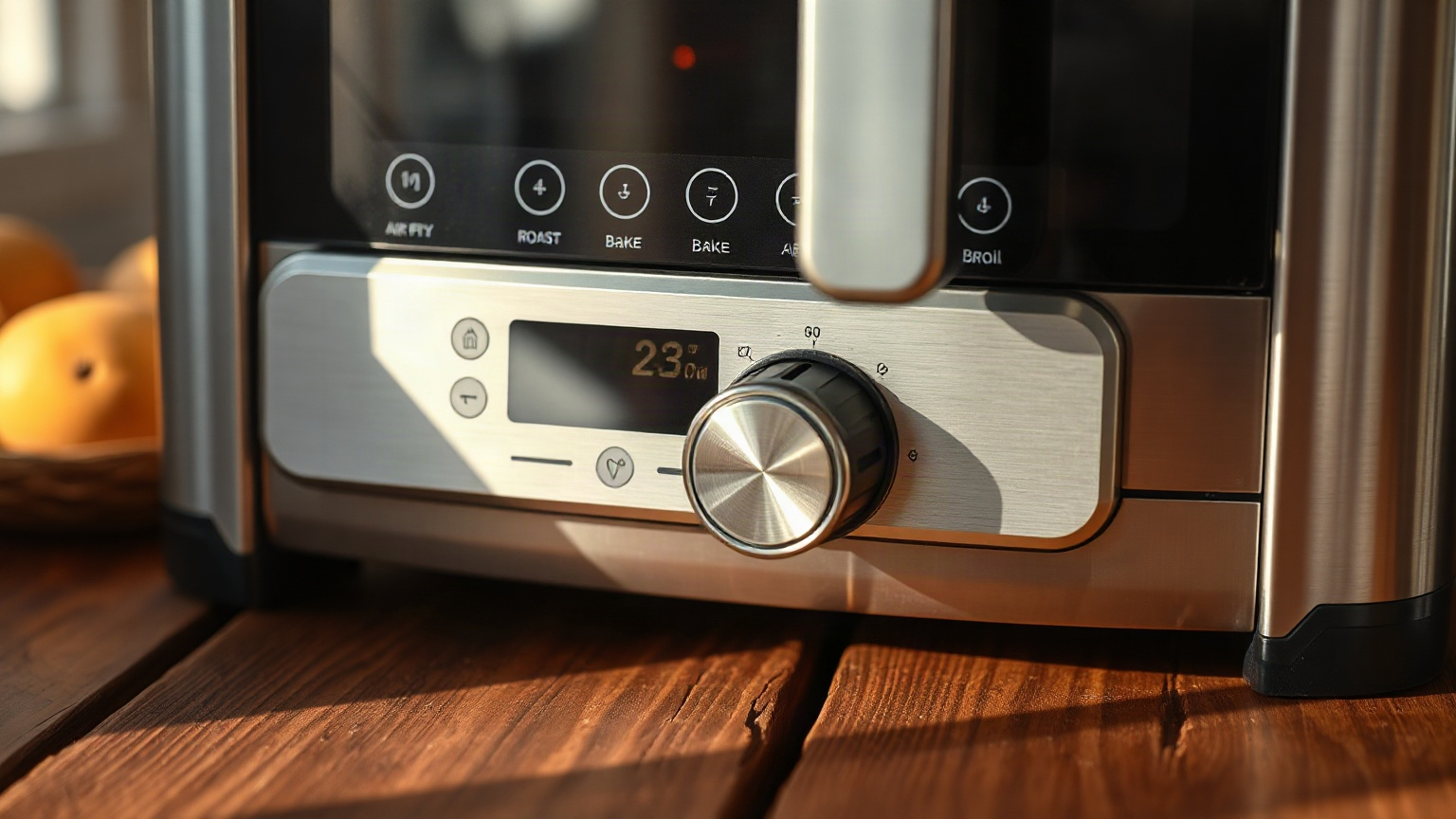
I had both of these on my counter for about six weeks. Not a controlled lab setting — my actual kitchen, with real meals, cooking for two adults and occasionally for a crowd. I rotated between them for everything: weeknight sheet pan dinners, weekend roast chicken, frozen fries at 11pm, reheating leftover pizza (my personal benchmark for any oven, honestly). I ran both at their air fry settings, their bake settings, and a few times on toast mode just to see how they compared on basics.
I also want to be upfront: I came into this slightly biased toward Breville. I’ve used their smart ovens for years and I think they make genuinely excellent machines. So if the Ninja ended up surprising me — and it did, a little — that’s worth saying.
Capacity and Footprint: Bigger Than You Think
The Ninja Foodi XL Pro is big. Like, really big. It’s marketed as fitting a 13×9 pan, a 12-inch pizza, or two 8-inch round cake pans simultaneously. In practice, I found it genuinely comfortable for a spatchcocked 4-pound chicken with room to spare around the edges. That matters for airflow, and for not feeling cramped.
The Breville Smart Oven Air Fryer Pro is also a large unit — it fits a 9×13 pan and a 13-inch pizza — but it’s slightly more compact on the countertop despite offering similar interior volume. Breville is just better at engineering efficient use of space. The Ninja, by contrast, takes up a lot of real estate. My counter isn’t huge, and the Ninja genuinely inconvenienced me a few times when I needed space for prep.
If counter space is tight, the Breville is actually the more practical choice physically, even though it costs more. Something to consider before you pull the trigger on either one.
Air Frying Performance: Where the Ninja Holds Its Own
Here’s what I wasn’t expecting. The Ninja’s air fry mode is really good. Not “good for the price” good — just good. I ran frozen sweet potato fries at 400°F for 14 minutes with a flip at the 7-minute mark, and they came out properly crispy, not soggy in the middle. Same with chicken wings: 380°F for 22 minutes, dry-brined overnight. Genuinely excellent results.
The Breville also air fries well. But I noticed that it was slightly less aggressive — it felt more like a convection oven doing its best impression of an air fryer rather than a dedicated air fry machine. Not bad. Just different. If you’re primarily buying one of these for the air fry function, the Ninja honestly wins that round.
For more context on reheating food in a toaster oven, including how air fry mode compares to convection for leftovers, that’s a whole rabbit hole worth exploring separately.
The Controls Situation
The Ninja uses a big dial with a digital display. Simple. You pick your function, set temp, set time, go. I had no issues figuring it out on day one.
The Breville has more settings and more precision — you can adjust things like the number of heating elements active, convection fan speed on some modes, and it has a built-in smart algorithm that adjusts cooking based on what you’ve selected. First time I used it, I definitely over-thought it. There’s a slight learning curve. Not steep, but it’s there. Once I got comfortable, I appreciated the flexibility. But if you just want to set it and walk away, the Ninja is less intimidating.
Baking and Roasting: Where Breville Pulls Ahead
This is where the Breville earns its price. I baked a batch of chocolate chip cookies on both — same dough, same pan size, roughly the same position in the oven. The Breville came out with even browning edge to edge. The Ninja had slightly darker edges and a paler center on the first batch. I adjusted the rack position on the second batch and it improved, but it required more attention.
For roasting, similar story. A whole chicken in the Breville browned beautifully and evenly. In the Ninja, I got great crispiness on the top but had to flip and rotate to get even color on the sides. Not a dealbreaker — that’s just good roasting practice anyway — but the Breville was more forgiving.
The Breville also maintains temperature more accurately. According to Serious Eats’ toaster oven testing, temperature consistency is one of the biggest differentiators between budget and premium countertop ovens, and that tracks with what I experienced. If you do a lot of baking, Breville is worth the extra investment.
You’ll also want a good toaster oven baking pan — both of these come with usable accessories, but a dedicated nonstick pan makes a noticeable difference in browning consistency regardless of which oven you use.
Head-to-Head Comparison
| Feature | Ninja Foodi XL Pro Air Oven | Breville Smart Oven Air Fryer Pro |
|---|---|---|
| Capacity | XL (fits 13×9 pan, large chicken) | Large (fits 9×13 pan, 13″ pizza) |
| Max Temperature | 450°F | 450°F |
| Air Fry Performance | Excellent — aggressive and fast | Good — more like strong convection |
| Baking Consistency | Good, may need adjustments | Excellent — very even results |
| Temperature Precision | Decent | Superior (Element IQ system) |
| Ease of Use | Very easy — minimal learning curve | Moderate — more options to navigate |
| Countertop Footprint | Large | Large but slightly more compact |
| Build Quality | Good (mostly plastic exterior) | Premium (stainless steel, feels solid) |
| Price Tier | Mid-range | Premium |
| Best For | Air frying, family meals, versatility | Baking, precision cooking, serious cooks |
Price and Value: An Honest Take
The Ninja Foodi XL Pro sits comfortably in the mid-range tier — typically a fair bit under $300, often on sale. The Breville Smart Oven Air Fryer Pro regularly runs $400 or more. That’s a real gap. Both are quality appliances. Neither is cheap.
Whether that gap is worth it depends entirely on how you cook. If you bake frequently, care about precision, and already own Breville products (I’m biased here, I admit), the premium is defensible. If you mostly want a do-everything countertop oven that air fries well and heats a whole chicken, the Ninja delivers that without the sticker shock.
I’d also check out our roundup of the best mini toaster ovens if neither of these feels right — there are solid options at lower price points if you’re cooking for one or two.
My Verdict
For everyday cooking — actual weeknight dinners, reheated leftovers, roast vegetables, the occasional batch of wings — the Ninja Foodi XL Pro is the one I’d buy. It’s easier to use, it air fries better, and it costs meaningfully less. Those aren’t small things.
But. If you bake regularly — real baking, cookies and bread and roasted fish that needs even heat — the Breville’s consistency is genuinely superior and worth the extra money. It’s a better machine in some real ways. I just think most people don’t need those ways often enough to justify the price difference.
The Breville is the better oven. The Ninja is the better buy. That’s my honest take after six weeks of actual use.
For more on how these compare to traditional ovens in terms of heat output and cooking performance, see our piece on how hot a toaster gets — it puts countertop appliance temperatures in useful context. And the Food Network’s air fryer tips are actually useful if you’re new to the air fry function on either of these ovens.
Frequently Asked Questions
Is the Ninja Foodi XL Pro Air Oven worth it compared to the Breville Smart Oven Air Fryer?
The Ninja Foodi XL Pro is worth it for most everyday cooks — it air fries extremely well, offers plenty of capacity, and costs significantly less than the Breville. The Breville is a better machine for precision baking and consistent heat distribution, but if those aren’t your priorities, the Ninja gives you 80% of the performance at a lower price point.
What temperature does the Ninja Foodi XL Pro Air Oven reach?
The Ninja Foodi XL Pro Air Oven reaches a maximum temperature of 450°F. That’s sufficient for air frying, roasting chicken, and most baking tasks. It matches the Breville’s top temperature, so neither has a significant advantage at the high end of the dial.
Can the Breville Smart Oven Air Fryer Pro replace a regular oven?
For most cooking tasks — roasting, baking, air frying, toasting — the Breville Smart Oven Air Fryer Pro can genuinely replace a full-size oven for one to four people. It preheats faster, uses less energy, and for smaller batches it often outperforms a conventional oven on browning. Very large holiday cooking is where you’d still want your main oven.
Which is easier to clean, the Ninja Foodi XL Pro or the Breville Smart Oven Air Fryer?
The Ninja Foodi XL Pro is slightly easier to clean day-to-day — the interior is straightforward to wipe down and the accessories are largely dishwasher-safe. The Breville’s crumb tray and interior are also manageable, but its more complex heating element arrangement can trap grease in harder-to-reach spots. Neither is a joy to deep-clean after a greasy roast.
How long does it take to air fry chicken wings in the Ninja Foodi XL Pro?
Air frying chicken wings in the Ninja Foodi XL Pro takes roughly 20–24 minutes at 380°F, depending on wing size and whether they’ve been dry-brined or patted dry beforehand. Flip them halfway through. Dry-brining overnight makes a noticeable difference in crispiness and is worth the extra step.

Written by
Emma founded Toastera to turn vague appliance advice into clear, researched, safety-first guidance on toasters and toaster ovens.
Free: the Toaster Oven Cheat Sheet
Get the printable cheat sheet (temps, cook times & safety tips) plus new recipes. No spam, unsubscribe anytime.