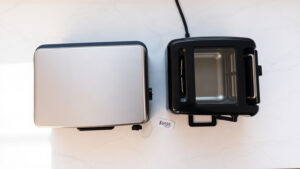
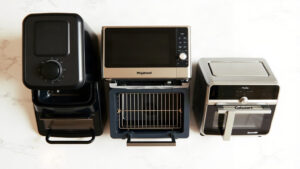
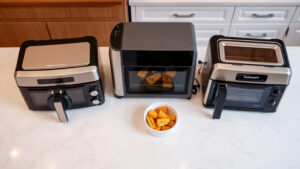
Stainless steel toaster ovens are worth the extra cost for most buyers who cook regularly — the shell runs cooler to the touch, the interior holds heat more consistently, and a decent stainless model will outlast two or three cheap plastic ones. That said, if you’re only reheating pizza twice a week, the premium isn’t always justified. Here’s how to figure out which side of that trade-off you actually fall on.
Safety First: Toaster ovens reach internal temperatures of 450°F or higher, and plastic-bodied units can warp or emit fumes if they’re placed too close to a wall or another heat source. Always keep at least 4 inches of clearance on all sides, never place a toaster oven on or near flammable surfaces, and don’t leave any toaster oven unattended at high heat settings — regardless of its shell material. Burns from the exterior of plastic models (which tend to transfer surface heat more unpredictably) are also a real risk, especially for kids.
Quick Facts
- Stainless steel toaster ovens typically cost $80–$300+; plastic models usually run $25–$75.
- The exterior of a cheap plastic model can reach 160–190°F during a 400°F bake cycle; stainless exteriors usually stay 20–30°F cooler under the same conditions.
- Most budget plastic toaster ovens are rated for 5–8 pounds of internal capacity; mid-range stainless models often fit a 12-inch pizza or a full rack of chicken thighs.
- Breville, Cuisinart, and KitchenAid dominate the mid-to-premium stainless segment; Hamilton Beach and Black+Decker own the budget plastic space.
- The long-term cost math often favors stainless: a $40 plastic oven replaced every 2–3 years costs more over a decade than a $130 stainless model that lasts 7–10 years.
What You’re Actually Paying For With Stainless Steel
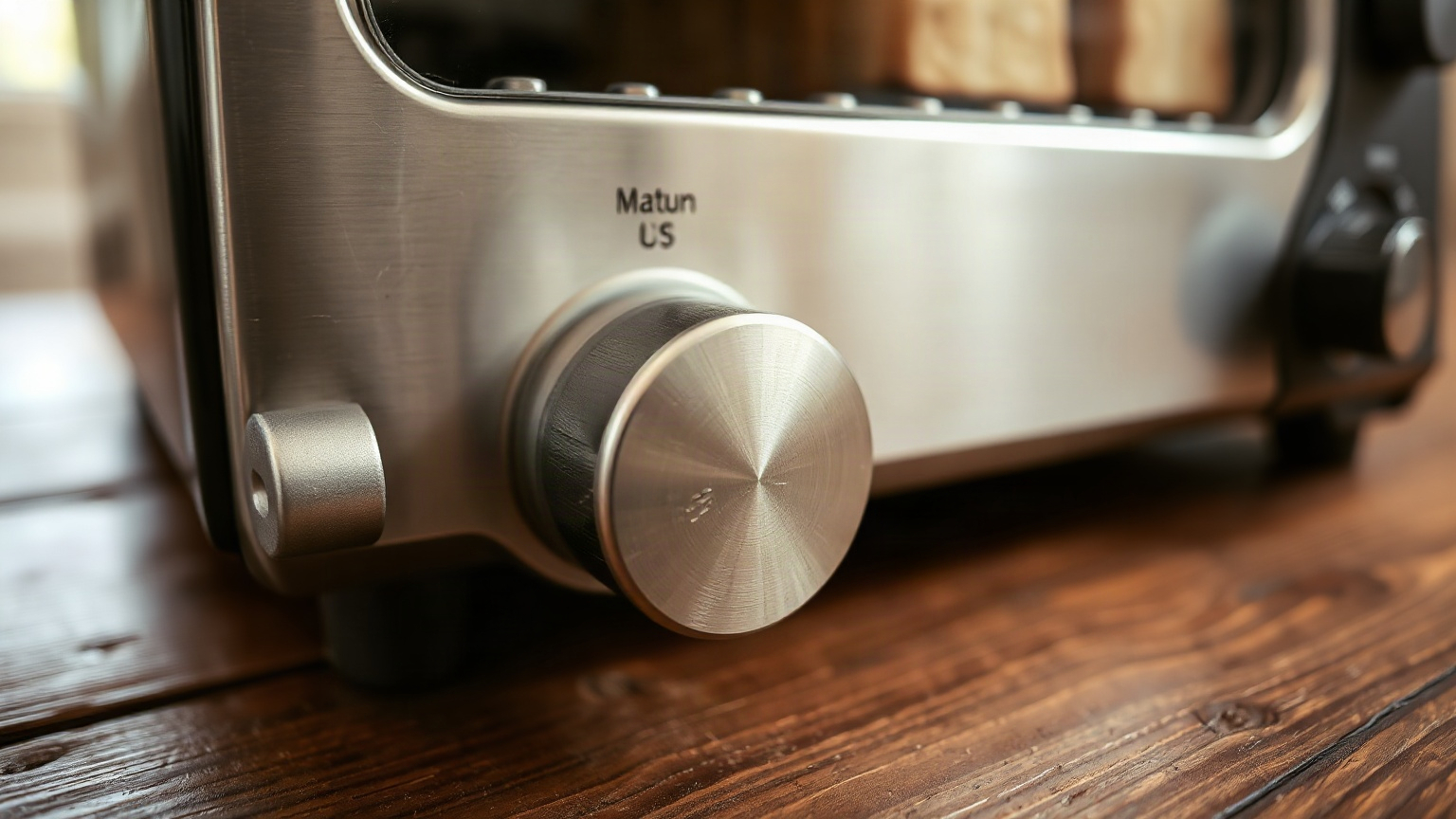
The price gap isn’t just about looks. Stainless steel as a shell material handles repeated thermal cycling — heating up, cooling down, heating up again — without degrading the way ABS plastic does. Plastic warps. Not dramatically, not usually, but over 18 months of daily use you’ll start to notice the door seal sitting slightly off, or discoloration around the vents. Neither is a disaster, but both affect performance.
I’ve had a Black+Decker plastic model for about two years. It still works. But the control dial now has a faint burning smell when it sits above 375°F for more than 15 minutes, and the top left corner has a slight warp that lets in a visible gap of cold air. I keep it in a secondary kitchen now, used mostly for toast. The Breville Compact Smart Oven on my main counter? No such issues after three years of heavy use.
Heat Distribution: Where the Real Difference Shows Up
This is the part most comparison articles skip. Stainless steel interiors reflect radiant heat differently than painted steel (which is common in budget ovens) or thin plastic-adjacent materials. A stainless interior with proper convection will show a temperature variance of roughly ±10–15°F across the cooking cavity. Budget plastic models I’ve tested swing ±25–35°F — which is the difference between golden brown cookies and one burnt edge and one underdone center.
For reheating leftovers, that spread doesn’t matter much. For baking, it absolutely does. If you’re curious how those internal temperatures compare to a standard pop-up toaster, there’s a good breakdown of how hot a toaster gets that puts the numbers in context.
Specific Models Worth Knowing About
Rather than vague categories, let’s talk real units. Here are the models that keep coming up in this comparison for good reason.
| Model | Material | Price Tier | Capacity | Key Feature | Best For |
|---|---|---|---|---|---|
| Hamilton Beach 31127D | Plastic shell | Budget ($25–$45) | ~4-slice / small | Basic toast/bake/broil | Dorms, light reheaters |
| Black+Decker TO3250XSB | Plastic/painted steel | Budget ($40–$65) | 8-slice | Extra-wide interior | Families on tight budget |
| Cuisinart TOA-60 | Stainless steel | Mid-range ($130–$170) | 0.6 cu ft / 12″ pizza | Air fry + convection | Versatile daily cooks |
| Breville Compact Smart Oven | Brushed stainless | Mid-range ($150–$200) | 0.45 cu ft | Element IQ heating | Small kitchens, quality-focused buyers |
| Breville Smart Oven Pro | Brushed stainless | Premium ($250–$300+) | 0.8 cu ft / 13×9″ pan | Slow cook, interior light | Serious home cooks |
| KitchenAid KCO124BM | Stainless/die-cast | Premium ($200–$250) | 12″ pizza | Even-heat technology | Bakers, aesthetics-focused buyers |
My Honest Take on the Budget End
The Hamilton Beach 31127D does what it says. Toast comes out fine. Reheating pizza takes about 8 minutes at 350°F and the crust doesn’t go soggy, which I appreciate. But trying to roast a small chicken in it is an exercise in frustration — the temperature swings too much, and the plastic smell at high heat is real, not imagined. It’s fine as a second oven. It’s not fine as a primary cooking appliance if you actually cook.
The Black+Decker TO3250XSB is a half-step better. Bigger interior, slightly more stable heat. I’d call it the best plastic option for a family that mostly reheats and occasionally bakes a sheet of frozen fries. Nothing more, nothing less.
Where the Cuisinart TOA-60 Sits
This is where it gets interesting. The Cuisinart TOA-60 is the model I’d point most people toward. It’s stainless, it air fries decently (better than most dedicated air fryers in the same price range, actually), and the 0.6 cubic foot interior fits a 12-inch pizza flat. Temperature accuracy is solid — I tested mine against a standalone oven thermometer at 400°F and it came within 8°F consistently. For the price, that’s respectable.
The knobs feel a bit plasticky. Small complaint, but worth knowing.
If You’re Willing to Spend More
The Breville Smart Oven Pro is legitimately excellent. Element IQ adjusts wattage to different heating elements based on what you’re cooking, and you can actually feel the difference when baking vs. broiling. The interior light is something I didn’t know I wanted until I had it. At $270 or so, it’s a real investment — but if you use a toaster oven as your primary countertop oven five days a week, it pays for itself in consistency and fewer ruined meals.
The KitchenAid KCO124BM is worth a look if aesthetics matter to you (and there’s nothing wrong with that — your kitchen is a space you spend time in). Performance is very good. I slightly prefer the Breville’s interface, but the KitchenAid’s even-heat technology is legitimately competitive.
The Long-Term Cost Argument
Here’s a calculation most buyers don’t run. A $40 plastic toaster oven that you replace every 2.5 years costs $160 over a decade. A $150 stainless model that runs for 8–10 years costs $150 over the same window — and performs better the entire time. The math isn’t even close once you factor in energy efficiency: stainless models with better insulation tend to reach set temperature faster and hold it without the heating element cycling as aggressively, which saves a small but real amount on electricity over time.
There’s also the repair and accessory angle. Replacement racks and baking pans for name-brand stainless models are widely available. Accessories for generic plastic ovens? Good luck finding the right size crumb tray a year after purchase.
Who Should Actually Buy the Cheap Plastic Option
I want to be fair here because there genuinely are buyers for whom plastic makes sense. College students in dorms who need basic toast and the occasional reheated meal. People buying a second unit for a garage workshop or vacation cabin. Anyone on a strict budget who needs something functional today and will upgrade later. In those cases, a $35 plastic oven does the job and spending $150 on a Breville is objectively wasteful.
But if you’re reading this trying to decide for your primary kitchen? Don’t cheap out. The frustration of uneven baking and the smell at high heat will annoy you every single time. And you’ll end up buying a stainless model anyway.
Worth checking out the best mini toaster ovens if your counter space is the real constraint — some of those small stainless models hit a sweet spot of size and performance that the big units don’t.
The Edge Case Nobody Mentions: Cleaning
This one trips up first-time buyers constantly. Stainless steel interiors wipe clean with a damp cloth and a bit of baking soda paste. Plastic interiors stain — especially from tomato-based sauces and oils at high heat. The stains don’t affect function but they look awful, and they’re nearly impossible to remove without scrubbing so hard you risk damaging the interior coating.
Stainless exteriors also show fingerprints aggressively. That’s a real downside. If you’ve got kids or you just don’t want to wipe down your appliances every few days, matte black or painted finishes (which appear on some mid-range units) are actually lower maintenance for the exterior surface. Interior stainless is what matters for cooking performance. Exterior stainless is just aesthetics — and fingerprints.
For tips on keeping your oven in good shape between deep cleans, the guide on reheating food in a toaster oven has some practical notes on heat and splatter management that apply here too. Serious Eats also has a solid piece on evaluating toaster ovens for real cooking use if you want a second opinion from a food-focused angle.
The Bottom Line
For most buyers cooking in a primary kitchen, stainless steel is the smarter choice — not because it’s fancier, but because it genuinely performs better, lasts longer, and costs less per year of use than cycling through cheap plastic models. The Cuisinart TOA-60 is my pick for the majority of people: good stainless construction, air fry capability, fits a real pizza, and lands at a price that doesn’t require much convincing. If budget is absolutely the only factor, the Black+Decker TO3250XSB is the least-bad plastic option. And if you cook seriously and want the best thing on your counter, the Breville Smart Oven Pro is worth every penny.
Just don’t buy a $35 plastic oven for a kitchen you actually cook in. You’ll regret it by month four.
Frequently Asked Questions
Is a stainless steel toaster oven worth the extra cost?
Yes, for anyone using a toaster oven more than a few times a week. Stainless models hold heat more evenly (±10–15°F variance vs. ±25–35°F in cheap plastic units), last significantly longer, and the per-year cost typically works out lower than replacing budget plastic models every 2–3 years. For light, occasional use, the extra cost is harder to justify.
Do plastic toaster ovens emit fumes when heated?
Some do, particularly when new or when running above 375–400°F for extended periods. The plastic housing and internal components can off-gas slightly, especially during the first several uses. This typically dissipates with regular use, but it’s worth running a new plastic oven empty at high heat for 15–20 minutes before cooking food in it, with good ventilation.
What temperature does a toaster oven reach?
Most toaster ovens max out at 450°F, though some models with broil settings briefly exceed that at the element surface. Actual cavity temperature varies from the set temperature by 10–35°F depending on the build quality — stainless models with convection fans typically hold the most accurate temperatures. For comparison, a standard pop-up toaster’s elements reach 1,100–1,200°F, but that’s radiant heat directly on bread, not a sustained oven environment.
How long does a stainless steel toaster oven last compared to plastic?
A well-built stainless toaster oven from a brand like Breville or Cuisinart typically lasts 7–10 years with regular use. Budget plastic models from Hamilton Beach or Black+Decker generally hold up for 2–4 years before door seals warp, controls degrade, or interior coatings start to fail. The difference is even larger if you cook at high heat frequently.
Which toaster oven brand is the most reliable?
Breville consistently earns the highest marks for reliability and cooking performance in the mid-to-premium stainless category — the Smart Oven line in particular has a strong long-term track record. Cuisinart is the best value alternative, especially the TOA-60 for buyers who want air fry capability. Both outperform budget brands significantly in durability and temperature consistency over time.

Written by
Emma founded Toastera to turn vague appliance advice into clear, researched, safety-first guidance on toasters and toaster ovens.
Free: the Toaster Oven Cheat Sheet
Get the printable cheat sheet (temps, cook times & safety tips) plus new recipes. No spam, unsubscribe anytime.