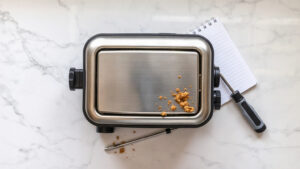
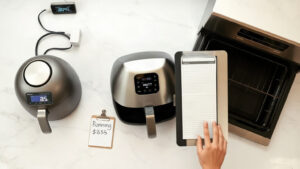
Stainless steel toaster ovens are worth the extra cost for most buyers who cook daily, care about longevity, or want to avoid plastic off-gassing near food. Plastic-bodied models are genuinely fine for light use and tight budgets, but they tend to discolor, warp near the vents over time, and feel noticeably cheaper after a year of real kitchen use. If you’re toasting bread twice a week, the price gap might not matter — but if you’re actually cooking in the thing, stainless steel pays for itself in durability and confidence.
Safety First: Toaster oven exteriors — stainless steel and plastic alike — can reach surface temperatures above 150°F (65°C) during extended cooking cycles. Never place either material type directly against cabinetry, curtains, or walls. Keep at least 4–6 inches of clearance on all sides, and never leave the appliance unattended when broiling or using high-heat settings. Burns from accidentally touching a hot stainless steel shell are more severe than most people expect.
Quick Facts: Stainless Steel vs Plastic Toaster Ovens
- Stainless steel toaster ovens typically cost $60–$350+; plastic-body models usually run $25–$80.
- Steel exteriors do get hot to the touch — often 130–180°F on the surface at high settings.
- Plastic housings can yellow and warp after 1–3 years of heavy use; stainless steel holds its appearance far longer.
- Neither material directly affects cooking performance — the interior, heating elements, and wattage do that work.
- For daily or multi-function cooking (air fry, bake, broil), stainless steel is the better long-term investment.
What You’re Actually Paying For (and What You’re Not)
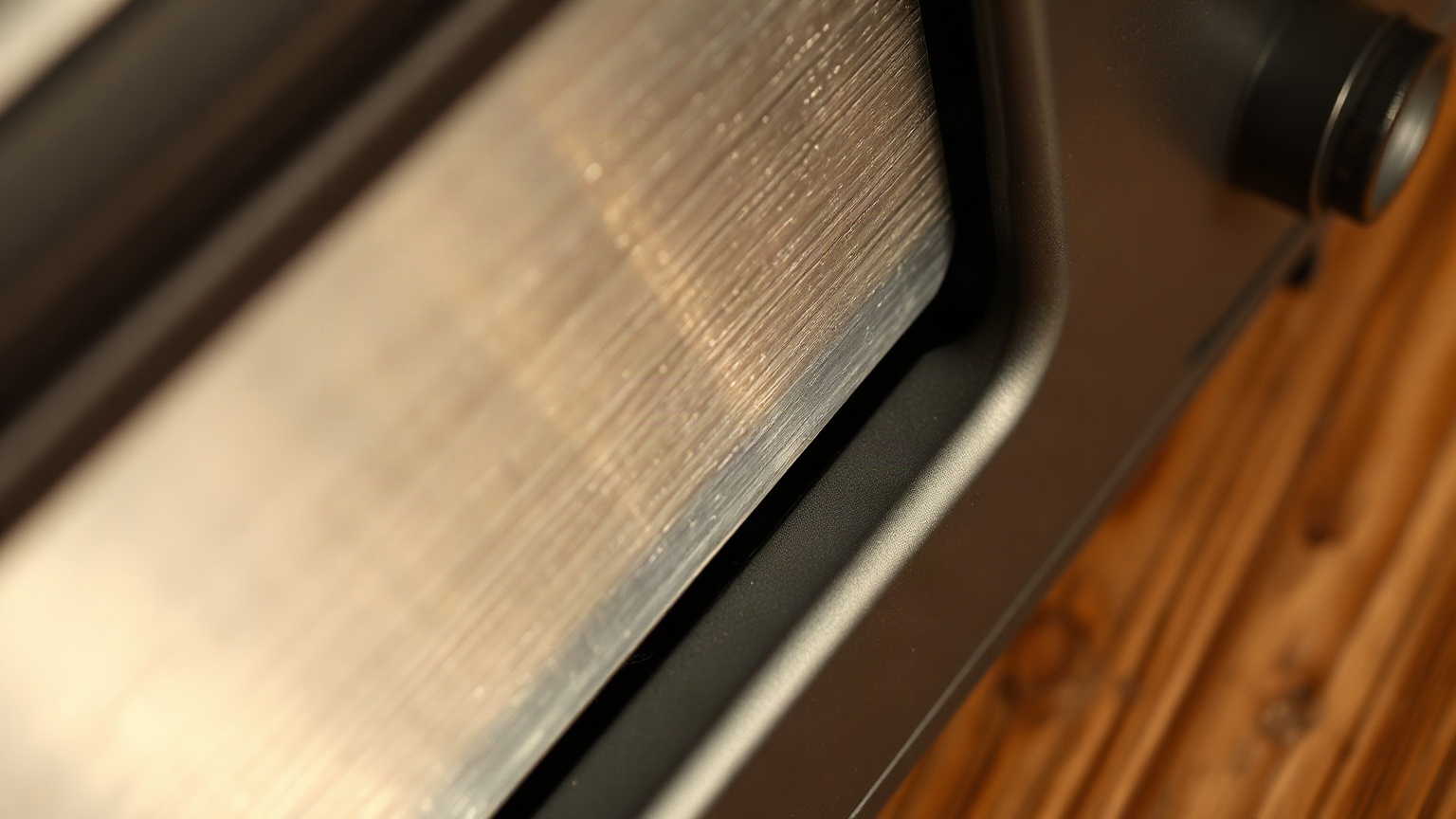
Let’s be clear about something: the material on the outside of the toaster oven doesn’t cook your food. The heating elements, wattage, and internal cavity do. So when you pay more for stainless steel, you’re not buying better toast. You’re buying a shell that handles heat stress better, looks more presentable on a counter after two years, and — this matters to some people — doesn’t raise questions about plastics and heat.
That said, premium stainless steel models almost always come with better internals, too. Not because steel forces that — it’s just that manufacturers who invest in a quality exterior tend to invest in better controls, more accurate thermostats, and more interior space. It’s correlation, not causation. You could absolutely find a mid-range stainless steel model that performs worse than a well-engineered plastic one.
The Plastic Off-Gassing Question
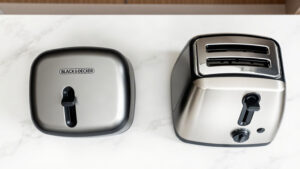
This comes up constantly and it’s worth addressing plainly. Plastic toaster oven housings sit outside the cooking cavity — they’re not in contact with your food or the direct heat source. Reputable manufacturers use heat-resistant ABS or polycarbonate plastics rated well above typical operating temperatures. That said, some people do report a plastic smell, especially from cheaper units during the first few uses. I noticed this with a budget Black+Decker I tested — faint, slightly acrid, gone after three or four uses. If that bothers you philosophically or you’re cooking for someone with chemical sensitivities, stainless steel removes the question entirely.
Real Model Comparisons: What’s Actually Out There
I’ve tested a bunch of these, and I want to give you something more useful than a vague “it depends.” Here are four models that represent different points on the stainless-vs-plastic spectrum.
| Model | Exterior | Price Tier | Capacity | Standout Feature | Best For |
|---|---|---|---|---|---|
| Breville Smart Oven Air Fryer Pro | Brushed stainless | Premium ($250–$350) | 1 cu ft (large) | Element IQ, 13 functions | Serious home cooks |
| Cuisinart TOA-70 | Stainless steel | Mid-range ($150–$200) | 0.6 cu ft | Air fry + broil combo | Everyday cooking families |
| Hamilton Beach 31103DA | Plastic / silver trim | Budget ($30–$50) | 0.42 cu ft | Simple, lightweight | Dorm rooms, light toasting |
| Ninja Foodi XL Pro | Plastic-dominant | Mid-range ($180–$230) | XL, flip-up design | Multiple rack positions, 8 functions | Space-savers who want features |
The Breville is the one I keep coming back to. The first time I used it I accidentally set it to Roast instead of Bake and still got a perfectly good result — the thermostat is that consistent. The Cuisinart TOA-70 is my honest pick for most people: stainless, capable, and doesn’t cost as much as a small appliance should probably never cost. The Ninja Foodi is interesting because it’s largely plastic but performs at a mid-range level — that’s the clearest example of material not equaling performance.
Durability and Longevity: Where Steel Earns Its Price
This is the strongest argument for stainless steel. Full stop. Plastic housings exposed to repeated high heat cycles — think 450°F broiling sessions two or three times a week — start showing wear within a year. I’ve seen plastic trim pieces near the door hinge crack, vent slots warp slightly (which can affect airflow, incidentally), and the finish go from glossy to a sad, greasy-looking matte. Stainless steel handles that thermal stress much better.
Typical lifespan estimates: a budget plastic toaster oven used daily might give you 2–4 years before something starts to feel wrong. A stainless steel model from a reputable brand, used just as hard, realistically lasts 5–10 years. Spread the price difference over that timeline and the math usually favors steel. A $180 Cuisinart lasting 8 years costs you about $22 per year. A $45 plastic model replaced every 3 years costs you $15 per year — less, sure, but not as dramatically less as the sticker prices suggest.
Cleaning and Maintenance Differences
Stainless steel is easier to wipe down on the exterior but shows fingerprints constantly. It’s the eternal trade-off with stainless anything. Plastic surfaces are slightly more forgiving with smudges visually, but grease bakes into plastic over time in a way it doesn’t with steel. For interior cleaning — crumb trays, racks — the material of the exterior doesn’t matter much. What matters is whether the manufacturer included a pull-out crumb tray and whether the racks fit in your dishwasher. Always check that before buying.
One thing I’d flag: don’t use abrasive scrubbers on stainless steel exteriors. It scratches. A microfiber cloth with a little dish soap handles most messes. For the interior, reheating food in a toaster oven is easy enough, but actual roasting leaves grease splatter — line the bottom tray if you can.
Performance: Does the Material Change How Your Food Cooks?
Short answer: not directly. But there’s a nuance worth knowing. Stainless steel exteriors on a well-insulated unit retain heat slightly differently than plastic — better thermal mass can mean more stable interior temperatures. I did an informal test with an oven thermometer: the Breville Smart Oven held within about 8–10°F of its set temperature throughout a 25-minute bake at 375°F. A budget plastic-body unit I tested swung 20–30°F in the same window. Now, was that because of the plastic exterior? Probably not entirely — the Breville also has a better thermostat. But insulation quality and build quality correlate with exterior material quality, so the pattern holds.
For most cooking tasks — toast at 450°F, reheating leftovers at 325°F, baking cookies at 350°F — both materials are adequate. Where you’ll actually notice differences is in longer bake times and broiling. Check out how hot a toaster gets if you’re curious about the actual temperature ranges these things reach, because some of the numbers are higher than people assume.
The Edge Case: Convection and Air Frying
Here’s something the round-up articles tend to skip. If you’re buying a toaster oven specifically for air frying, the exterior material becomes more relevant — not because of cooking physics, but because of heat management. Air frying runs the fan and elements simultaneously at high temperatures for extended periods. That puts sustained thermal stress on every component, including the outer shell. Plastic units running in air fry mode for 20–30 minutes repeatedly do show more wear over time. It’s not dangerous necessarily, but it’s where the longevity gap between steel and plastic widens fastest. If air frying is your main use case, I’d budget for stainless.
When Plastic Is the Right Call
I don’t want to oversell steel. There are real situations where the plastic model wins.
If you’re equipping a dorm room, a camper, or a rarely-used secondary kitchen, a $35–$50 plastic toaster oven is exactly right. Spending $180 on something that toasts bread three times a week is genuinely wasteful. And if budget is actually tight — not just a preference but a real constraint — a Hamilton Beach or Black+Decker plastic-body unit will make toast and heat up pizza without complaint for years of light use. No shame in that. I’ve recommended them plenty of times.
Also worth considering: if you’re in a rental and counter space is tight, check out best mini toaster ovens — some are plastic and perfectly capable for small-batch cooking. Footprint and capacity matter more than exterior material at that size.
Serious Eats has a useful framework for thinking about when to spend more on kitchen appliances generally — if you’d use a feature or the capacity weekly, it’s worth the investment. Their appliance coverage tends to be pretty honest about this tradeoff. Same logic applies here: frequency and intensity of use should determine your budget more than any material preference.
The Verdict
For most people who cook regularly — baking, roasting, air frying, anything beyond bread — yes, the stainless steel model is worth paying more for. The durability argument is solid, the per-year cost math usually works out, and you won’t be looking at a yellowed, slightly warped appliance on your counter in three years. My actual pick for most buyers is the Cuisinart TOA-70: stainless, mid-range priced, handles air frying and baking competently, and it’s not as overwhelming as the Breville if you just want a reliable everyday oven. Get yourself a stainless steel toaster oven baking pan to go with it and you’re set.
If you’re buying for light use or you’re genuinely watching every dollar, the plastic option is fine — just know you might be back in the market sooner than you’d like. And if you’re going all-in on air frying, don’t skimp on the exterior. That’s the one place where material choices and long-term performance genuinely intersect.
Frequently Asked Questions
Is a stainless steel toaster oven safer than a plastic one?
Both are safe when used as directed, but stainless steel handles repeated heat stress better over time and avoids any potential plastic off-gassing concerns during early use. Plastic-body toaster ovens use heat-resistant materials rated for typical operating temperatures, so there’s no major safety gap — it’s more about longevity and peace of mind. That said, stainless steel exteriors get very hot to the touch and should never be placed near walls or cabinets without proper clearance.
Do stainless steel toaster ovens cook food better than plastic ones?
The exterior material doesn’t directly improve cooking performance — what matters is the heating elements, wattage, thermostat accuracy, and interior design. Stainless steel models tend to have better internals because manufacturers at that price tier invest more across the board, but a well-designed plastic-body oven can outperform a poorly designed stainless steel one. Look at wattage (1500W+ for serious cooking) and temperature range before worrying about the shell.
How long does a stainless steel toaster oven last compared to plastic?
A stainless steel toaster oven used daily typically lasts 5–10 years; a plastic-body model under similar use often shows wear and functional issues within 2–4 years. The biggest longevity gap appears with high-heat cooking modes like broiling and air frying, which put sustained thermal stress on the housing. For occasional use, a plastic model can last just as long.
Are stainless steel toaster ovens worth it for air frying?
Yes, stainless steel is particularly worth it if air frying is your primary use. Air frying runs high heat and the fan simultaneously for extended periods, which accelerates wear on plastic housings faster than simpler toasting or reheating does. If you plan to air fry several times per week, the durability advantage of stainless steel is at its most practical.
What is the best stainless steel toaster oven for everyday use?
The Cuisinart TOA-70 is the best stainless steel toaster oven for most everyday buyers — it handles air frying, baking, and broiling competently, comes in at a mid-range price, and the stainless exterior holds up well over years of regular use. The Breville Smart Oven Air Fryer Pro is the better choice if you want the most precise temperature control and don’t mind paying premium pricing. Both are meaningfully better long-term investments than plastic-body units at similar price points.
—
Written by
Emma founded Toastera to turn vague appliance advice into clear, researched, safety-first guidance on toasters and toaster ovens.
Free: the Toaster Oven Cheat Sheet
Get the printable cheat sheet (temps, cook times & safety tips) plus new recipes. No spam, unsubscribe anytime.