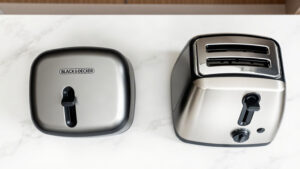
A toaster oven cooks faster than a full-size convection oven at the same temperature — usually by 20 to 30 percent. The reason is simple physics: less interior space means less air to heat, so the heating elements affect your food more directly and the temperature recovers faster every time you open the door. In practical terms, if a recipe says 25 minutes at 375°F in a conventional oven, you might be done in 17 to 19 minutes in a toaster oven set to the exact same temperature.
Safety First: Toaster ovens run extremely hot on the outside — the top and sides can reach 200°F or more during use. Keep at least 4 inches of clearance on all sides, never place one under a cabinet, and always use oven mitts when handling racks or pans. Never leave a toaster oven unattended at high temperatures, especially with fatty foods that can smoke or ignite.
Key Takeaways
- At the same set temperature, a toaster oven typically cooks food 20–30% faster than a full-size convection oven.
- Toaster ovens preheat in 3–6 minutes; full-size convection ovens usually need 10–15 minutes to stabilize.
- A convection toaster oven narrows the gap significantly — it can match or beat a large convection oven for most small-batch cooking.
- The cooking speed advantage shrinks (and can reverse) with dense foods like whole roasts or large casseroles.
- For most everyday tasks — toast, sheet pan veggies, chicken thighs, reheating leftovers — a toaster oven is the faster, more efficient choice.
Why Smaller Really Does Mean Faster
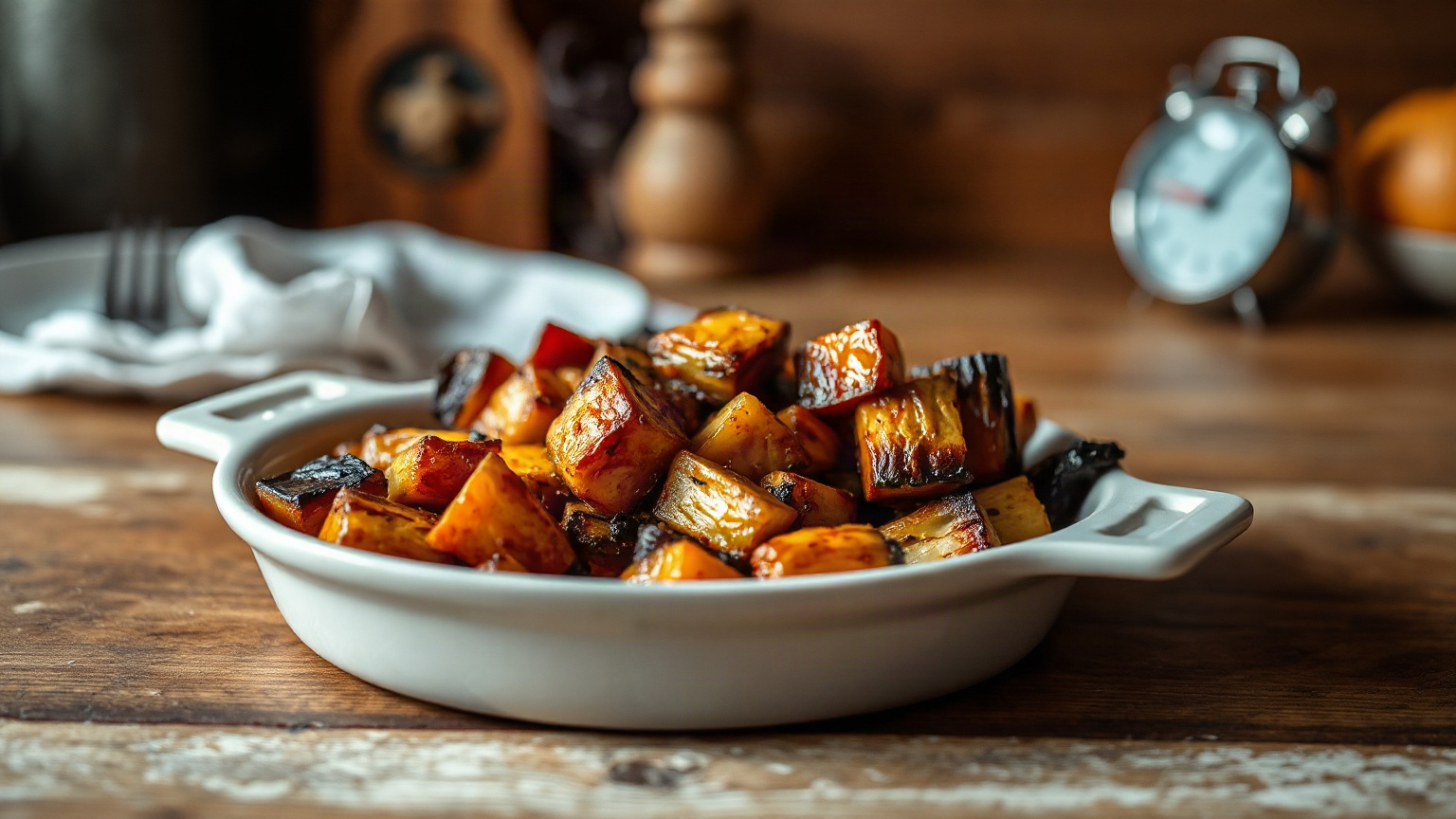
I spent a few weeks running side-by-side tests in my own kitchen — a Breville Smart Oven Pro on the counter, a mid-size convection wall oven at 36 inches. Same temperature, same food, same rack position as much as possible. The results were pretty consistent. The toaster oven won on speed almost every time, and not by a trivial margin.
Here’s the core reason: a standard countertop toaster oven has an interior volume of roughly 0.5 to 1.0 cubic feet. A full-size convection oven sits somewhere between 4.5 and 6 cubic feet. The heating elements in the toaster oven are inches away from your food. In the big oven, there’s a lot more dead space to fill before the radiant heat gets to work. Proximity matters enormously.
And the other factor people underestimate? Recovery time. Every time the oven door opens, heat escapes. A toaster oven bounces back to 375°F in under a minute. A large oven can take 3–5 minutes to restabilize, and during that window your food is cooking unevenly. Over a 20-minute bake, those dips add up.
The Preheat Advantage Is Bigger Than You Think
Preheat times don’t sound exciting. But if you’re cooking dinner after work, they really do matter. In my tests, my Breville hit 400°F in about 4 minutes and 45 seconds. My full-size convection oven took just over 12 minutes to fully stabilize at the same temperature — and I’m talking about when the preheat indicator actually reflects a stable, consistent temp throughout the cavity, not just at the sensor.
That’s roughly 7–8 minutes of extra waiting before food even goes in. For something like roasted broccoli or reheating a slice of pizza, the toaster oven isn’t just faster per minute of cooking — it’s faster start to finish by a significant margin. Reheating food in a toaster oven is genuinely one of the best arguments for owning one.
Does Convection Mode Change Things?
Yes, and this is where it gets more nuanced. A convection toaster oven — one with a built-in fan that circulates air — closes the gap with a large convection oven considerably. The fan strips away the insulating layer of cool air sitting directly against your food’s surface, which speeds browning and moisture loss. On a convection setting, I’d say my toaster oven was still 10–15% faster than the big oven on convection, not the 25–30% I saw with standard bake modes.
If you’re comparing a convection toaster oven to a large standard (non-convection) oven? The toaster oven is faster by a wide margin. The convection fan adds a real meaningful difference for things like cookies, roasted vegetables, and chicken skin. More on that below.
Head-to-Head: Real Cooking Tests at the Same Temperature
I tested five common foods at 400°F in both ovens. Here’s what I found, roughly.
| Food | Toaster Oven (Standard Bake) | Full-Size Convection Oven | Difference |
|---|---|---|---|
| Frozen french fries (12 oz) | 14 min | 20 min | ~30% faster |
| Chicken thighs (bone-in, 2 pieces) | 28 min | 38 min | ~26% faster |
| Roasted broccoli (1 cup florets) | 13 min | 18 min | ~28% faster |
| Chocolate chip cookies (6 cookies) | 10 min | 12 min | ~17% faster |
| Whole chicken (3.5 lbs) | 75 min | 65 min | ~15% SLOWER |
That last row is the edge case most articles skip. A whole chicken — or any large, dense protein — can actually cook faster in a full-size oven. Why? The toaster oven’s heating elements are so close that the exterior browns and even risks burning before the interior reaches a safe temperature. The bigger oven gives more even ambient heat with more room for hot air to circulate around a large item. I’ve scorched the outside of a 4-pound chicken in my Breville while the thigh joint was still technically underdone. First time I tried it, I was pretty confident. Lesson learned.
For large roasts or whole birds, a full-size convection oven genuinely has the edge. That’s not a knock on toaster ovens — they’re just not built for that scale.
Temperature Adjustments: Do You Need to Change Anything?
This trips people up constantly. Most toaster oven guides suggest reducing the temperature by 25°F when converting from a standard oven recipe. That advice is fine — but it’s based on the assumption that both ovens bake equally. Since a toaster oven runs hotter relative to its set temp (due to proximity of elements), matching the recipe’s stated temp and just watching your time is sometimes the better move, especially for delicate baked goods.
My approach: for savory food, I start with the same temperature and check 5 minutes early. For baking — cookies, muffins, quick breads — I drop 25°F and check frequently. You get a feel for it after a few rounds. A good oven thermometer for toaster ovens is genuinely worth owning because the built-in thermostat on cheaper models can be off by 25–50°F. Mine was 40 degrees hot at the top of the range when I first tested it. That’s a lot.
Convection Mode Temperature Math
If your convection toaster oven has a dedicated convection setting, the old standard rule applies: reduce temp by 25°F and reduce time by about 25%. So a recipe calling for 375°F for 20 minutes becomes roughly 350°F for 15 minutes. That said, I never trust rules blindly on new recipes. Start checking at the 12-minute mark. Ovens vary, food thickness varies, and a two-dollar timer is your best friend. For more on cooking in toaster ovens specifically, check out Serious Eats’ breakdown on how convection cooking actually works.
Which Models Actually Deliver on Speed?
Not all toaster ovens preheat and cook equally fast. Here’s an honest look at some popular models and where they stand.
| Model | Price Tier | Convection Fan | Preheat Speed (est.) | Best For |
|---|---|---|---|---|
| Breville Smart Oven Air Fryer Pro | Premium | Yes (+ super convection) | ~4–5 min to 400°F | All-around performance, serious cooks |
| Cuisinart TOA-70 | Mid-range | Yes (air fryer convection) | ~5–7 min to 400°F | Versatility, families cooking varied meals |
| Ninja Foodi Digital Air Fry Oven | Mid-range | Yes (high-speed air fry) | ~4–6 min to 400°F | Speed-focused cooking, air frying |
| Hamilton Beach Easy Reach | Budget | No | ~6–9 min to 400°F | Basic baking and toast, small households |
My honest pick for most people? The Breville Smart Oven Air Fryer Pro is hard to beat if budget isn’t the deciding factor. The super convection setting is legitimately fast, the thermostat is accurate, and I’ve had mine for going on three years without a single issue. It’s also big enough to do a 12-inch pizza or a 9×13 pan, which covers most household cooking needs. The preheat time is the shortest I’ve consistently seen in a toaster oven this capable.
If you want to spend less, the Cuisinart TOA-70 is a solid mid-range option. Slightly slower to preheat in my experience, but the build quality is decent and the capacity is generous for the price tier. The Hamilton Beach is fine for toast and reheating — don’t expect it to match the others on speed or browning quality. And check out our list of the best mini toaster ovens if counter space is a real constraint for you.
The Bottom Line
For 90% of what most people cook on a daily basis — vegetables, chicken pieces, fish fillets, reheated leftovers, small batch baking — a toaster oven at the same set temperature will cook faster than a full-size convection oven. The preheat advantage alone often makes it the quicker choice from the moment you decide to start cooking. Use a good toaster oven wire rack so air can circulate under your food, check for doneness a few minutes before the recipe suggests, and get yourself an oven thermometer so you know what temperature you’re actually working with.
The one exception worth keeping in mind: large, dense items. A 4-pound roast or a whole chicken is probably better in the big oven. Everything else? The toaster oven has it covered, and faster.
Frequently Asked Questions
Does a toaster oven cook faster than a convection oven at the same temperature?
Yes — a toaster oven typically cooks 20 to 30 percent faster than a full-size convection oven at identical temperatures, mainly because the heating elements are physically closer to the food and the smaller cavity heats more efficiently. The preheat time is also considerably shorter, usually 3–6 minutes versus 10–15 minutes for a large oven. The exception is large, dense foods like whole roasts, where the proximity of the elements can cause uneven cooking.
Should I reduce the temperature when using a toaster oven instead of a regular oven?
A 25°F reduction is a common starting point, especially for baked goods, since toaster ovens radiate heat more intensely from nearby elements. For savory dishes, many people — myself included — keep the temperature the same and just start checking for doneness 5 minutes before the recipe’s suggested time. An inexpensive oven thermometer will tell you if your toaster oven’s thermostat is running hot, which is common in cheaper models.
Is a convection toaster oven the same as a convection oven?
They use the same principle — a fan circulates hot air to cook food more evenly and quickly — but the scale is very different. A convection toaster oven has a much smaller interior, so it preheats faster and often cooks small batches more efficiently than a large convection oven. For large quantities or big cuts of meat, a full-size convection oven has the capacity advantage. For everyday cooking, the convection toaster oven handles most tasks faster overall.
How much faster does a toaster oven preheat compared to a full-size oven?
Most toaster ovens reach 400°F in 4 to 7 minutes; full-size ovens typically take 10 to 15 minutes to truly stabilize at the same temperature. That’s a difference of 7–10 minutes before you’ve even put any food in. For short cooking tasks — reheating, roasting vegetables, baking a few cookies — that preheat gap is often the single biggest time factor.
Can I use regular oven recipes in a toaster oven without changing anything?
You can, but you should plan to check for doneness earlier than the recipe states — typically 5 to 10 minutes before the suggested time. Large batch recipes often won’t work well because of limited capacity, and dense or large items may cook unevenly. For most single-serving to four-serving recipes, a direct conversion works fine with just a small time reduction and an eye on the food as it approaches done.

Written by
Emma founded Toastera to turn vague appliance advice into clear, researched, safety-first guidance on toasters and toaster ovens.
Free: the Toaster Oven Cheat Sheet
Get the printable cheat sheet (temps, cook times & safety tips) plus new recipes. No spam, unsubscribe anytime.