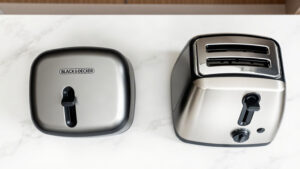
Yes, you can absolutely bake a potato in a toaster oven instead of a conventional oven — and honestly, it works better in a lot of situations. A toaster oven reaches the same baking temperatures (375–425°F) as a full-size oven, but its smaller cavity heats up faster and circulates heat more efficiently around a single potato or two. The practical upshot: you’ll get a fully cooked baked potato in roughly 45–55 minutes at 400°F, compared to 60–75 minutes in a conventional oven, with virtually no difference in the final result.
Safety First: Toaster ovens run extremely hot and their exterior walls can reach burn-level temperatures during a long bake like this. Keep the oven at least 4 inches from walls and cabinets, never place it under overhead cabinets without proper clearance, and use oven mitts rated for high heat when removing the potato or the rack. Don’t leave the toaster oven completely unattended for a 50-minute bake — check at the halfway point, especially if your model runs hot.
Quick Facts: Toaster Oven Baked Potato at a Glance
- Bake at 400°F on the Bake setting (or Convection Bake if your oven has it) for 45–55 minutes depending on potato size
- A medium Russet (about 8 oz) is the sweet spot for toaster oven baking — large ones over 12 oz can cook unevenly
- Convection mode cuts roughly 10 minutes off the cook time versus standard bake
- Toaster ovens preheat in 5–8 minutes vs. 15–20 minutes for a conventional oven, which adds up
- Sweet potatoes work just as well — same temp, same method, usually done 5 minutes sooner
How the Two Ovens Actually Compare
The biggest misunderstanding I see is that people assume a toaster oven is just a smaller, weaker version of a real oven. It’s not. Most countertop toaster ovens max out at 450°F — the same ceiling as most home conventional ovens — and their heating elements are physically much closer to the food. That proximity matters.
Where a conventional oven wins is consistency across a large load. If you’re cooking a sheet pan of twelve potatoes for a crowd, a full-size oven handles that better. But for one to four potatoes? The toaster oven is genuinely faster and wastes less energy doing it.
| Factor | Toaster Oven | Conventional Oven |
|---|---|---|
| Preheat time | 5–8 minutes | 15–20 minutes |
| Cook time (1 medium Russet, 400°F) | 45–55 minutes | 60–75 minutes |
| Energy used per bake session | ~0.4–0.5 kWh | ~1.5–2.0 kWh |
| Max temp (typical) | 450°F | 450–500°F |
| Skin crispness (without foil) | Very good to excellent | Good |
| Best for | 1–4 potatoes | 5+ potatoes, large batches |
| Uneven cooking risk | Higher if overcrowded | Lower with proper spacing |
I actually tracked this with a kitchen thermometer one afternoon — my Breville Smart Oven sat at a stable 398°F within 7 minutes. My full-size Whirlpool took 19 minutes to hit 400°F and confirmed temp. That’s nearly 12 minutes of standing around doing nothing, which I find quietly maddening.
The Right Way to Bake a Potato in a Toaster Oven
There’s not much to it, but a few small things make a real difference.
Prep the Potato Properly
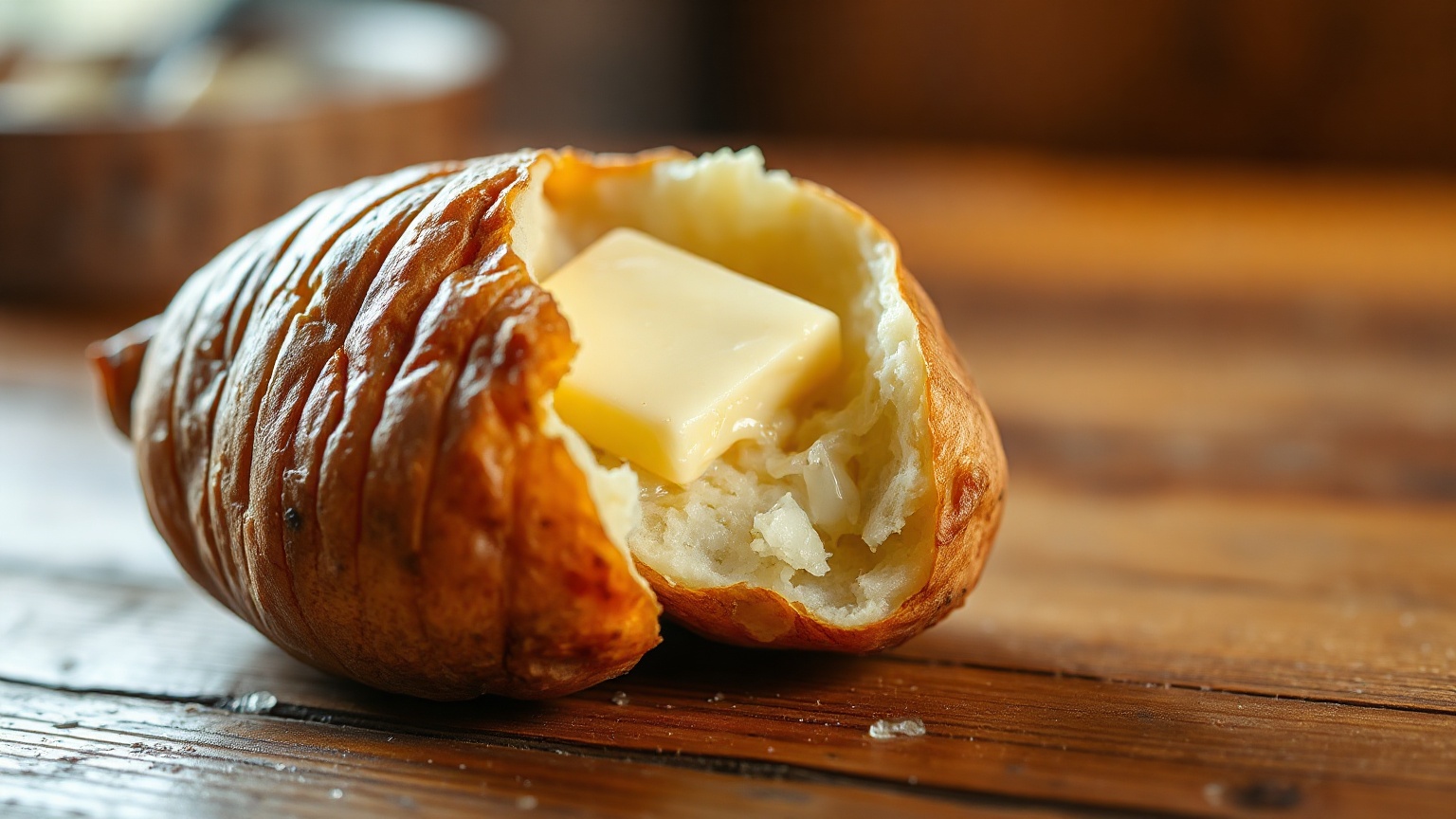
Scrub it well. Dry it completely — this is the step people skip, and then they wonder why the skin is soft and a little sad. Pat it dry with a paper towel, then rub the outside with a thin coat of olive oil or neutral oil and a decent pinch of kosher salt. Poke it 8–10 times with a fork. Not optional. Steam builds up inside as it cooks, and without those holes, you’re risking a split potato and a mess on your rack.
Skip the Foil
I know foil feels like the right move — it’s what a lot of people grew up doing. But wrapping in foil traps steam and gives you a soft, almost steamed skin rather than a properly crispy one. In a toaster oven especially, where airflow is part of what makes things cook well, foil works against you. Put the potato directly on the wire rack, or on a toaster oven baking pan with a rack if you want to catch any drips.
Settings and Temperature
Set it to 400°F. If your toaster oven has a convection setting, use it — the fan pushes hot air around the potato continuously and you’ll shave off 8–12 minutes. If it only has a basic Bake setting, that’s fine, just go to 55 minutes and check early.
Middle rack position. Always. The top rack puts the potato too close to the upper heating element, which scorches the top before the inside is done. I made that mistake the first time I tried this on a smaller 4-slice toaster oven — burned the top half of the skin before the potato was remotely cooked through.
How to Tell When It’s Done
The only reliable method is to stab it with a skewer or a thin knife and feel for resistance. It should slide in with almost no push. The skin should look a bit wrinkled and the potato should give slightly when you squeeze it (use a towel). Internal temp should be around 205–210°F if you want to get precise about it — Serious Eats has a good breakdown of why that temperature range matters for texture. Below 200°F and you’ll get a dense, slightly waxy center.
Russet vs. Sweet Potato — Does It Matter Which Oven You Use?
For Russets, the toaster oven is honestly my first choice at this point. The skin gets genuinely crispy, the flesh goes fluffy, and it’s done before I’ve had time to forget about it. For sweet potatoes, same deal — 400°F, 45–50 minutes, they tend to cook a few minutes faster because they’re generally a bit smaller and the natural sugars help them along. You will get some caramelized drips onto the rack. Just line the bottom tray with foil (not the rack, the drip tray below) and it wipes up without drama.
One thing nobody talks about: Yukon Golds. They don’t bake the same way — they’re waxier and denser, and if you try to treat them like a Russet you’ll get a weird, almost gummy texture. Not ideal for a classic baked potato. If that’s all you have, cut them in half and roast them cut-side down with oil. Much better result. See my notes on reheating food in a toaster oven if you end up with leftovers — reheating a baked potato in the toaster oven is miles better than the microwave.
When a Conventional Oven Still Makes More Sense
I’m not pretending the toaster oven wins every scenario. It doesn’t.
Cooking for six people? Don’t fight your toaster oven trying to stack or rotate five large Russets. You’ll get uneven cooking and frustration. Pull out the full-size oven, line a sheet pan with a wire rack, and let it do its thing. Also, if you’re already running a conventional oven for a roast or something else, throwing the potatoes in costs you nothing extra in terms of energy or preheat time.
Very large potatoes — the kind that weigh close to a pound each — can also be tricky in a smaller toaster oven. The heating elements are close, and a giant potato might not cook through evenly before the outside is overdone. If your potato barely fits with clearance on all sides, that’s a red flag.
Also worth knowing: toaster oven capacity varies a lot. A compact 4-slice model with a tight interior is a different beast from something like the Breville Smart Oven Pro or a larger countertop oven. If you’re doing this regularly and your current model feels cramped, it might be time to size up.
Energy Use: The Underrated Reason to Use a Toaster Oven
This doesn’t get enough attention. A standard conventional oven pulls 2,000–5,000 watts and runs for 60–75 minutes for a baked potato. A toaster oven runs 1,200–1,800 watts for 45–55 minutes. That’s roughly three to four times the energy for the conventional oven, for the exact same result on the plate. If you’re baking potatoes a few times a week through the winter, that adds up. The U.S. Department of Energy has noted that countertop ovens can use up to 50% less energy than conventional ovens for small cooking tasks. Baked potatoes fall squarely in that category.
There’s also the heat issue. Running a full-size oven for an hour in summer heats up your kitchen noticeably. The toaster oven does it too, but on a much smaller scale. Minor point, maybe, but I notice it.
The Bottom Line
For everyday baked potatoes — one, two, maybe three at a time — the toaster oven is genuinely the better tool. It’s faster, it uses less energy, and the skin comes out at least as good if not better than what you’d get from a conventional oven. The key variables are potato size (medium Russets are your friend), skipping the foil, using the middle rack, and checking internal temp if you want to be sure.
Conventional oven still has its place. Big batches, giant potatoes, or when it’s already on for something else. But for a Tuesday night potato? Toaster oven. Every time. You can find out more about how hot a toaster oven gets if you want to geek out on the temperature side of things.
Frequently Asked Questions
Can you bake a potato in a toaster oven at the same temperature as a regular oven?
Yes — 400°F works in both. Toaster ovens reach the same baking temperatures as conventional ovens, typically up to 450°F. The main difference is that a toaster oven preheats faster and the smaller space means heat surrounds the potato more efficiently, which shortens the total cook time by 10–20 minutes.
How long does it take to bake a potato in a toaster oven?
How long does it take to bake a potato in a toaster oven?
A medium Russet potato (around 8 oz) takes 45–55 minutes at 400°F on the Bake setting. Using convection mode cuts that to roughly 38–45 minutes. Larger potatoes over 10–12 oz may need up to 60 minutes — check doneness with a skewer rather than relying solely on time.
Should I wrap a potato in foil when baking it in a toaster oven?
No. Foil traps steam and softens the skin, which defeats the whole point of baking a potato rather than microwaving it. Place the potato directly on the rack or on a baking pan so hot air can circulate all the way around it. You’ll get a noticeably crispier, more satisfying skin without the foil.
Can you bake a sweet potato in a toaster oven the same way?
Sweet potatoes bake well in a toaster oven using the same method — 400°F, middle rack, no foil. They typically finish about 5 minutes faster than a same-sized Russet because of their natural sugar content and slightly different density. Expect some caramelized drips, so put foil on the drip tray underneath, not the rack itself.
Is it safe to leave a toaster oven on for an hour to bake a potato?
Most modern toaster ovens are designed to run safely for extended periods, but you shouldn’t leave them completely unattended for an hour-long bake. Check at the halfway mark, make sure there’s adequate clearance around the unit, and avoid placing it under low-hanging cabinets where heat can build up. If your model has an auto-shutoff timer, set it as a backup.

Written by
Emma founded Toastera to turn vague appliance advice into clear, researched, safety-first guidance on toasters and toaster ovens.
Free: the Toaster Oven Cheat Sheet
Get the printable cheat sheet (temps, cook times & safety tips) plus new recipes. No spam, unsubscribe anytime.