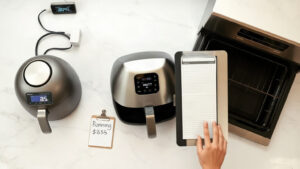
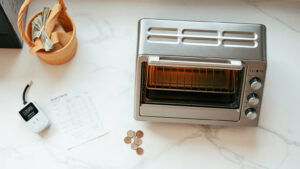
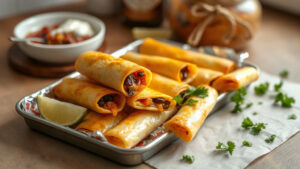
The numbers on a toaster oven’s temperature dial represent actual temperature settings, typically ranging from around 150°F to 450°F (65°C to 232°C). Unlike pop-up toasters — where the dial controls timing or current — toaster ovens use a thermostat, so you’re selecting a real heat target. That means setting it to 350°F actually holds the oven near that temperature, which matters a lot when you’re baking something that can’t just be guessed.
Safety First: Toaster ovens reach internal temperatures exceeding 450°F and their outer surfaces can get hot enough to cause burns within seconds of contact. Always use oven mitts when inserting or removing food, keep the unit at least 4 inches from walls and cabinets, and never leave it unattended on high-heat settings. If you smell burning plastic or see smoke that isn’t from food, unplug the appliance immediately.
Quick Facts
- Toaster oven dials show actual temperature (°F or °C), not time or “browning levels” like pop-up toasters
- Most models range from 150°F to 450°F — with 350°F being the sweet spot for everyday baking and reheating
- Toaster oven thermostats can run 15–25°F off from the dial reading, especially on cheaper models
- Some dials also include function labels (Bake, Broil, Toast, Warm) alongside or instead of numbers
- An inexpensive oven thermometer is the single most useful thing you can add to your toaster oven setup
Toaster Ovens vs. Pop-Up Toasters: The Dial Is Completely Different
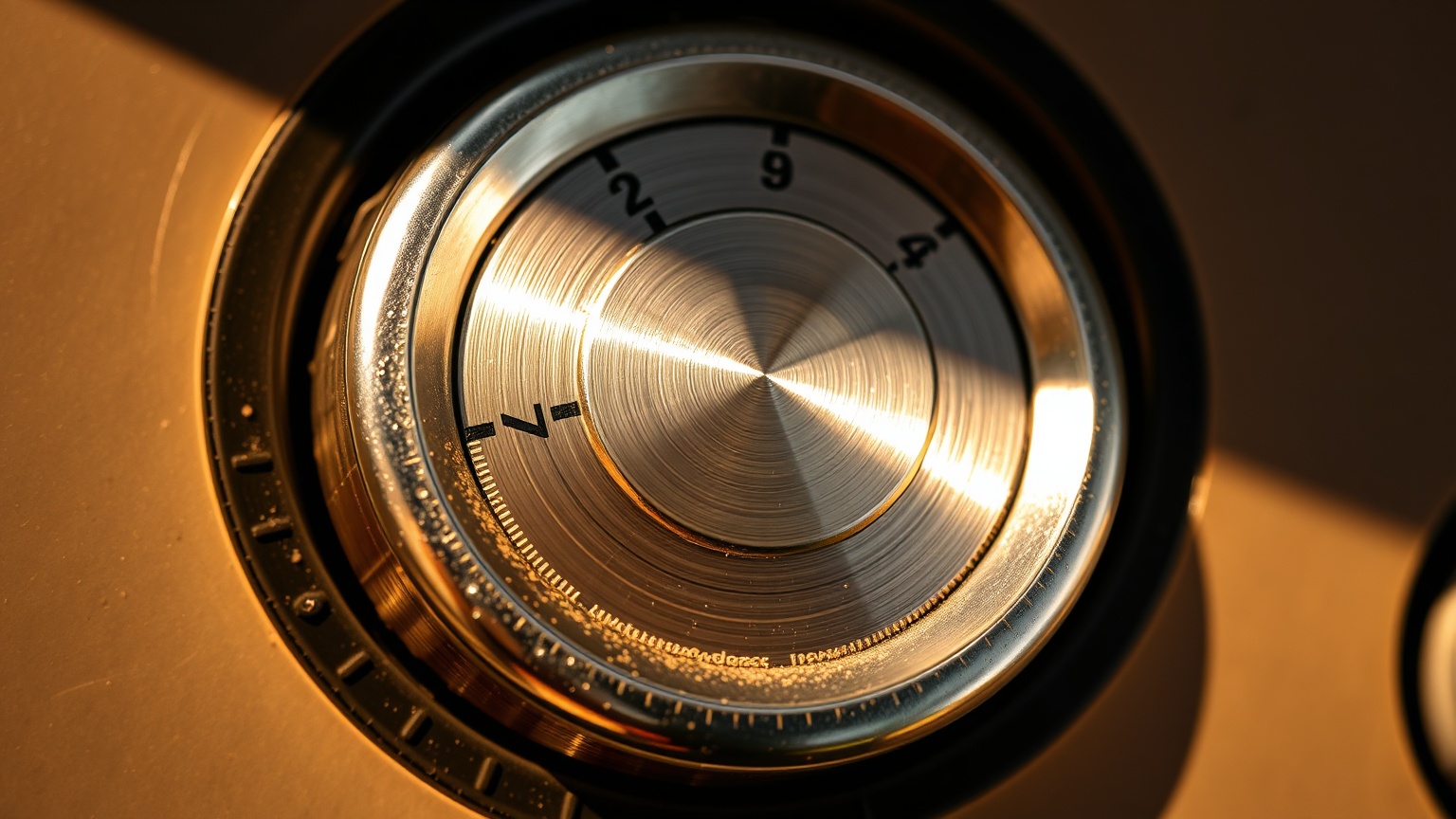
This is where people get tripped up, and honestly, I don’t blame them. Pop-up toaster dials — those 1-through-7 knobs — are not temperature controls. Depending on the toaster’s design, they control either a timer (how long the heating element stays on) or the amount of electrical current flowing through the circuit. A higher number on your pop-up toaster means more heat exposure, not a higher set temperature. There’s no thermostat involved.
Toaster ovens work completely differently. They have actual thermostats. When you turn the dial to 375°F, a sensor inside the oven monitors the temperature and cycles the heating elements on and off to maintain that target. It’s the same basic principle as your full-size kitchen oven, just smaller and faster to preheat.
I made this mistake myself when I first got a countertop convection model. I treated the temperature dial like a “how toasty do you want it” knob and then wondered why my frozen pizza came out raw in the middle but scorched on top. Turns out I’d set it to 200°F thinking that was a moderate setting. It was not.
What the Temperature Numbers Actually Correspond To
Most toaster ovens sold in the US use Fahrenheit, and the dial usually starts somewhere between 150°F and 200°F on the low end, topping out at 450°F. Here’s how those ranges typically break down in practice:
| Temperature Range | What It’s Good For | Notes |
|---|---|---|
| 150–200°F | Keeping food warm, proofing dough | Too low for cooking anything through |
| 250–300°F | Slow reheating, dehydrating | Good for leftover pizza without making it rubbery |
| 325–375°F | Baking cookies, casseroles, roasting vegetables | The everyday workhorse range |
| 400–425°F | Frozen foods, chicken thighs, roasting | Most frozen snacks call for this |
| 450°F | Broiling, high-heat crisping | Watch closely — things brown fast |
For most of what I use my toaster oven for — reheating leftovers, baking a small batch of cookies, crisping up day-old fries — I rarely go below 325°F or above 400°F. The 350°F mark gets used constantly. If I had to pick one temperature to defend to the death, it’d be 375°F. Versatile, fast enough, doesn’t murder delicate things.
If you’re curious about how this compares to a standard pop-up toaster’s internal temps, I wrote about how hot a toaster gets in a separate piece — the numbers are surprisingly high for something with no thermostat.
Why Your Dial Might Be Lying to You (And What to Do About It)
Here’s something the marketing materials don’t mention: toaster oven thermostats are often inaccurate. Not slightly off — sometimes wildly off. I tested a popular mid-range toaster oven (a Cuisinart TOA-60, if you’re curious) and found it ran about 18°F hot at the 350°F setting. Set it to 350, it’d stabilize around 368. Not catastrophic, but enough to over-brown muffins.
Budget models can be worse — 25°F or more of variance isn’t unusual. And the offset isn’t always consistent across the range. A unit might be accurate at 300°F and 40°F hot at 450°F.
The Fix: An Oven Thermometer
Get a cheap oven thermometer. Seriously. A small oven thermometer designed for toaster ovens costs about $8-12 and takes the guesswork out completely. Set your toaster oven to 350°F, wait 10 minutes, check the thermometer. If it reads 370°F, you know to dial back 20 degrees whenever a recipe calls for 350°F. Do this once and you’ve basically calibrated your appliance for free.
This single step changed my baking results noticeably. Cookies stopped spreading unevenly. Chicken actually hit safe internal temps without going dry. It’s a small thing that matters a lot.
Hot Spots Are a Separate Problem
Even if the average temperature is accurate, toaster ovens often have hot spots — areas where the heating element is closer or airflow is uneven. The back tends to run hotter than the front in most countertop models. Rotating your pan halfway through cooking isn’t just a suggestion — it’s basically required for anything that needs even browning. A good toaster oven baking pan with low sides helps airflow, which reduces some of this unevenness.
What About the Function Settings? (Bake, Broil, Toast, Warm)
Most toaster ovens have a separate function dial in addition to the temperature dial. These aren’t just labels — they actually control which heating elements fire and how.
- Bake: Both top and bottom elements cycle on and off to maintain temperature. Standard for most cooking.
- Broil: Top element stays on continuously at high heat. Basically direct radiant heat from above. Fast browning, very easy to burn things.
- Toast: Both elements run at full power for a set time — temperature dial often doesn’t apply here. This is the pop-up toaster equivalent.
- Warm: Low heat, usually around 150–170°F, to hold food without cooking it further.
- Convection Bake: On models that have it, a fan circulates hot air — temperatures run about 25°F hotter than conventional, so reduce recipe temps accordingly.
On Toast mode specifically, the temperature dial is often irrelevant. The timer dial or shade selector takes over. This is why your toast can come out burnt even if you had the temperature set to something seemingly modest — Toast mode bypasses normal thermostat control on many machines.
For more on getting the best results from different modes, my guide on reheating food in a toaster oven gets into the specifics of which setting actually works for what.
The Edge Case Nobody Talks About: Analog Dials With No Numbers
Some older or very cheap toaster ovens don’t have temperature numbers at all. The dial just shows Low, Medium, High — or sometimes nothing except tick marks. These models often don’t have a real thermostat; they’re controlling heating element intensity similar to how a pop-up toaster does it. You’re not setting a target temperature, you’re setting a power level.
This matters because recipes assume temperature control. If your toaster oven doesn’t have actual temperature numbers, it probably can’t bake reliably. It might toast fine. It’s not going to reliably hold 350°F for 22 minutes while your banana bread sets. That’s just the honest reality of those units.
If you’re shopping for something better, check out the best mini toaster ovens — most of the decent ones do have proper thermostats and real temperature markings.
Another edge case: some European models use Celsius on the dial, which catches people off guard. 200°C looks alarming until you realize it’s 392°F — totally normal for roasting. If your dial maxes out around 220-230 and uses smaller numbers overall, it’s probably Celsius. The Serious Eats guide to bake vs. broil vs. roast has a good breakdown of why temperature selection matters for each method, regardless of unit.
Practical Temperature Guide for Common Tasks
Since I’ve tested a lot of these scenarios firsthand, here’s what I actually use and why:
- Reheating pizza: 325°F for 8-10 minutes on a rack. Low and slow keeps the crust from getting cardboard-hard.
- Frozen french fries: 400°F for 15-18 minutes, flip halfway. The bag usually says 425°F but toaster ovens run small — 400°F gets there.
- Baking cookies (small batch): 350°F, check at 10 minutes. Pull them when they look barely done; carryover heat finishes the job.
- Roasting vegetables: 400-425°F for caramelization. Lower than that and they steam instead of roast.
- Chicken thighs: 400°F for 25-30 minutes. Always verify with a meat thermometer — 165°F internal minimum per USDA food safety guidelines.
A properly fitting toaster oven wire rack makes a real difference for anything that needs air circulation underneath — chicken especially. If your unit came with a shallow pan but no rack, it’s worth picking one up separately.
The Bottom Line
The numbers on a toaster oven dial are real temperatures — not levels, not timing mechanisms, not suggestions. They tell the thermostat what to aim for, which is why they matter for anything beyond simple toasting. The two caveats worth remembering: your dial might not be perfectly accurate (get a thermometer), and Toast mode often ignores the temperature dial entirely (that’s by design).
Once you understand what the dial is actually doing, the appliance stops feeling arbitrary. It behaves like a small oven — because that’s exactly what it is.
Frequently Asked Questions
Do the numbers on a toaster oven mean the same thing as on a regular pop-up toaster?
No — they mean completely different things. On a pop-up toaster, the numbers control time or electrical current. On a toaster oven, the numbers represent actual target temperatures in Fahrenheit (or Celsius on some models), controlled by a real thermostat. Treating them the same way leads to undercooked or burned food.
How accurate is a toaster oven temperature dial?
Most toaster ovens are off by at least 10-25°F from what the dial reads, and budget models can vary even more. The variance can also shift depending on where you are in the temperature range — accurate at 300°F, notably off at 425°F. An inexpensive oven thermometer placed inside the toaster oven gives you a real reading so you can adjust accordingly.
What temperature should I set my toaster oven for baking?
350°F is the standard starting point for most baking — cookies, muffins, small cakes. If your toaster oven runs hot (which many do), try 325-340°F and check doneness a few minutes early. Convection models can bake at 25°F lower than the recipe temperature because the fan circulation speeds up heat transfer.
Why does my toaster oven burn food even at a normal temperature setting?
The most common cause is a thermostat that runs hotter than the dial indicates — especially toward the higher end of the range. Hot spots near the back heating element are also a factor. Try lowering the dial by 20-25°F, rotating pans halfway through cooking, and placing food on the middle rack rather than near the top or bottom elements.
What does it mean when a toaster oven dial has no numbers, just Low, Medium, High?
Those labels usually mean the toaster oven controls heating element intensity rather than maintaining a true thermostat temperature. These units work fine for simple toasting and warming but aren’t reliable for recipes that require holding a specific temperature. If you want consistent baking results, look for a model with actual degree markings on the dial.
—
Written by
Emma founded Toastera to turn vague appliance advice into clear, researched, safety-first guidance on toasters and toaster ovens.
Free: the Toaster Oven Cheat Sheet
Get the printable cheat sheet (temps, cook times & safety tips) plus new recipes. No spam, unsubscribe anytime.