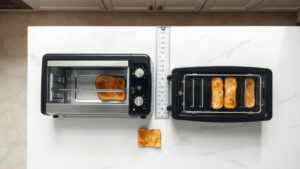
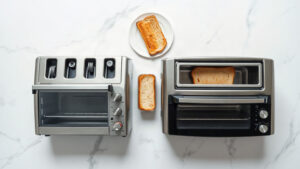
Toast frozen waffles in a toaster by placing one waffle per slot and running it on a medium-high setting (around 4–5 on a 1–6 dial) for one cycle, then a second shorter cycle if you want genuinely crispy edges. A standard pop-up toaster runs between 300°F and 450°F depending on the setting — hot enough to drive off surface moisture and caramelize the waffle’s exterior. The two-cycle method is what actually gets you crispy rather than just warm.
Safety First: Never force an oversized or thick homemade waffle into a toaster slot — if it gets stuck, unplug the toaster immediately before attempting to remove it. Keep the toaster on a clear, heat-safe surface away from paper towels or curtains, and never walk away while it’s running. Waffles with syrup or sugar toppings already applied can drip into the heating element and cause a fire.
Quick Facts
- Standard toaster setting for frozen waffles: medium-high (4 out of 6, or about 65–70% of max dial)
- Best technique for crispy edges: two toast cycles — the first heats through, the second crisps
- Most standard frozen waffles (Eggo, store brand) are 4 inches square and fit a regular toaster slot; Belgian-style thick waffles often don’t
- Never thaw first — toasting from frozen gives better texture than toasting from room temp
- If your toaster runs hot or cold, adjust by half a setting and note the result — toasters vary more than ovens do
I’ve probably toasted a few hundred frozen waffles at this point, partly out of habit and partly because I’ve spent more time than I’d like to admit testing different toasters for this site. The honest truth is that most people are slightly under-toasting their waffles and then wondering why the texture is soggy in the middle. Here’s what actually works.
The Right Toaster Setting for Frozen Waffles
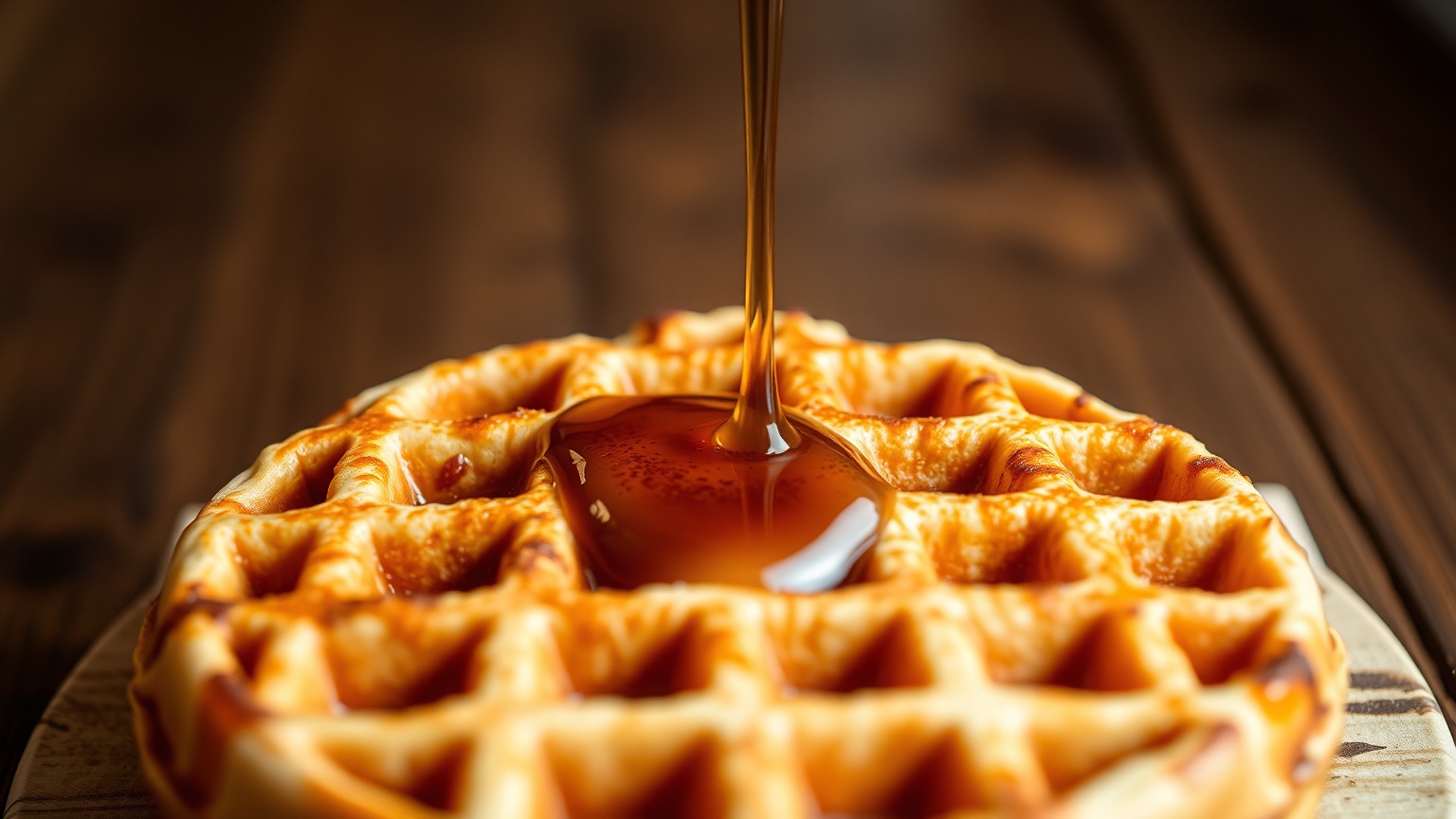
Toaster dials aren’t standardized. A “4” on a Black+Decker 2-slot doesn’t mean the same thing as a “4” on a Cuisinart. That said, most frozen waffles — Eggo, Great Value, Nature’s Own, whatever’s in your freezer — do best at roughly 65–70% of your toaster’s maximum dial. So if your dial goes from 1 to 6, that’s around 4 to 4.5.
The reason you don’t want to just crank it to max: high heat browns the outside fast but leaves the center cold and slightly rubbery. You want enough heat to penetrate the waffle, not just char the surface grid.
First time I tested this systematically, I ran eight identical Eggo homestyle waffles through a stainless 2-slot pop-up toaster at settings 2, 3, 4, 5, and 6 — two waffles per setting. Setting 2 was basically just warm. Setting 6 was dark brown bordering on burnt at the high points of the grid pattern. Setting 4 was the sweet spot: fully heated, lightly golden, but still a bit soft. Setting 5 added more color without crossing into burnt territory. That’s my personal go-to now, with a second cycle on 3 if I want them properly crispy.
Toaster Settings vs. Results: What to Expect
| Dial Setting (1–6 scale) | Approx. Temp Range | Result on Frozen Waffle | Crispy Edges? |
|---|---|---|---|
| 2 | ~300°F | Warm, soft, barely toasted | No |
| 3 | ~330°F | Heated through, pale gold | Slightly |
| 4 | ~370°F | Good color, heated center | Somewhat |
| 5 | ~400°F | Golden-brown grid, light crunch | Yes |
| 6 | ~430–450°F | Deep brown, can taste bitter | Yes, but risky |
For more detail on what’s actually happening inside that slot, see our breakdown of how hot a toaster gets — the numbers above are approximate because every toaster model varies.
Why Two Toast Cycles Beat One
This is the thing nobody tells you. One cycle on a medium-high setting gets the waffle heated and gives you some color. But the edges — those raised grid lines that are supposed to be the best part — they’re still a little soft. A second cycle, shorter, on a slightly lower setting fixes that.
Here’s how I do it: first cycle on 5 (or whatever your medium-high is), let the waffle pop up and sit for about 30 seconds, then drop it back in on 3 for a second, shorter cycle. That brief rest lets steam escape from the surface. If you immediately re-toast without waiting, you just steam the waffle again, which softens the exterior you just worked to crisp.
The second cycle is where the grid edges actually develop that crunch. The Maillard reaction needs sustained dry heat, and the first cycle is largely spent evaporating ice crystals. By cycle two, you’re working with a dry surface. That’s when the browning happens fast.
Yes, it takes an extra 90 seconds. Worth it.
How to Tell When Your Waffle Is Done Right
Color is your best guide. You’re looking for an even golden-amber color across the raised grid points — not pale yellow, not dark brown. The pockets in between will be lighter; that’s normal and fine.
Pick it up and press the grid lines lightly with your fingertip (be careful, it’s hot). They should feel firm and slightly rigid, not spongy. If they give when you press, they need more time.
Sound matters too. When you bite into a properly toasted waffle, there’s a faint crunch at the grid ridges before you hit the softer interior. If it’s silent and dense all the way through, it was under-toasted.
Signs You’ve Gone Too Far
The grid points turn dark brown or blackish. The waffle smells slightly bitter, like scorched grain. And if you’re using flavored waffles — blueberry, chocolate chip — those add-ins burn faster than plain waffles. Drop your setting by half a step for anything with fruit or chocolate.
Edge Cases Your Toaster Might Throw At You
Most guides cover standard-size frozen waffles. Here’s what happens when yours are slightly different:
Thick or Belgian-Style Frozen Waffles
These are a problem for standard 2-slot toasters. A Belgian waffle that’s 1 inch or more thick often won’t fit in a normal slot, or it’ll fit but sit lopsided against the heating element on one side. You get uneven toasting: one face overdone, the other barely warm. For thick waffles, a toaster oven is genuinely the better tool. Check out our guide to reheating food in a toaster oven for the right time and temp approach, or browse our picks for best mini toaster ovens if yours is due for an upgrade.
Waffles That Have Been in the Freezer a Long Time
Freezer-burned waffles are drier going in, which actually means they crisp faster — and can burn faster. If you’ve had a box sitting open in the freezer for more than a month, drop your setting by half a step and check after the first cycle before committing to a second one.
Mini Waffles
Eggo Minis and similar small waffles are thin and cook through almost immediately. One cycle on 3 or 4 is usually plenty. They’re also at risk of falling through the toaster slot grate if your toaster has wide slots. I’ve lost two mini waffles that way. Use a toaster with a removable crumb tray and check it after, or just use a toaster oven with a toaster oven wire rack for these.
Gluten-Free Frozen Waffles
This one surprised me. Gluten-free waffles — brands like Van’s or Kashi’s GF line — have a different starch structure that makes them more prone to getting hard and chewy rather than crispy when over-toasted. One cycle on medium (about 4 out of 6) is usually ideal. The second cycle often takes them from crispy to brick-hard at the edges. Test one before you commit your whole breakfast.
A Few Tips That Actually Make a Difference
Don’t stack waffles in the same slot. Sounds obvious but I’ve seen it done. They’ll steam each other and you’ll get a soft, depressing result on both.
Toast from frozen, not thawed. If you thaw a waffle first, it goes limp and moist before it even hits the toaster, and then you’re fighting extra steam during the first cycle. The texture is never quite the same. Serious Eats has documented similar behavior with other frozen foods — the ice crystals, when heated rapidly, produce a better crust structure than slow-thaw moisture does. Serious Eats is generally a reliable reference for that kind of food science reasoning.
If your toaster has a “frozen” or “defrost” setting, it runs a longer, lower-heat cycle first. It’s designed for bread, not waffles, and in my experience it makes waffles too soft. Skip it. Just use the regular toast setting and rely on the two-cycle method instead.
And let the waffle rest about 60 seconds after the final cycle before you eat it. The interior is still redistributing heat. Eat it immediately and the center is sometimes still cold in the middle while the edges are perfectly crispy. It’s annoying, but a minute of patience fixes it. The Food Network applies the same logic to proteins — resting lets heat equalize — and it works the same way on a thick frozen waffle.
Final Thoughts
Getting crispy-edged frozen waffles from a toaster isn’t complicated, but it does take a little more intentionality than just dropping them in and walking away. Medium-high setting, two cycles with a short rest in between, toast from frozen, and a 60-second wait before eating. That’s really the whole method. Adjust your dial half a step up or down based on your specific toaster, and make a note of what works — toasters are inconsistent enough that it’s worth remembering your sweet spot once you find it.
If you’re regularly making waffles for more than one or two people, a toaster oven honestly handles it better at scale. But for a single waffle on a Tuesday morning, a pop-up toaster done right is hard to beat.
Frequently Asked Questions
What toaster setting should I use for frozen waffles?
Medium-high — around 4 to 5 on a 1–6 dial — works best for most standard frozen waffles. This is roughly 65–70% of your toaster’s maximum. Starting lower risks a soggy result; starting at maximum risks burning the outside before the center heats through.
How do I get crispy edges on frozen waffles in a toaster?
Run the waffle through two toast cycles: the first on medium-high to heat it through, then let it rest 30 seconds to release steam, and run it again on a medium setting for a shorter cycle. The second cycle is where the grid edges actually firm up and brown. Skipping the rest between cycles just re-steams the surface instead of crisping it.
Should I thaw frozen waffles before toasting?
No — toast them straight from frozen. Thawing first makes the waffle limp and adds surface moisture that fights against crispiness in the toaster. Waffles toasted from frozen have better texture because the ice vaporizes rapidly under heat rather than slowly making the waffle soggy before it even toasts.
Why is my frozen waffle still soggy in the middle after toasting?
The most common cause is under-toasting on too low a setting, or only running one toast cycle. The center of a thick frozen waffle needs sustained heat to fully warm through. Try one cycle on medium-high followed by a second cycle on medium, then let the waffle rest 60 seconds before eating to let internal heat equalize.
Can I toast Belgian-style thick frozen waffles in a regular toaster?
Often not well. Thick Belgian waffles — typically 1 inch or more — frequently don’t fit standard toaster slots, and when forced in, they toast unevenly because one side sits closer to the heating element. A toaster oven at 350°F for 4–5 minutes gives better, more even results for thick waffles.
—
Written by
Emma founded Toastera to turn vague appliance advice into clear, researched, safety-first guidance on toasters and toaster ovens.
Free: the Toaster Oven Cheat Sheet
Get the printable cheat sheet (temps, cook times & safety tips) plus new recipes. No spam, unsubscribe anytime.