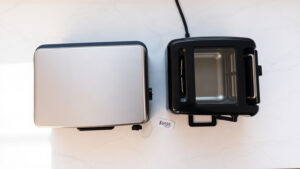
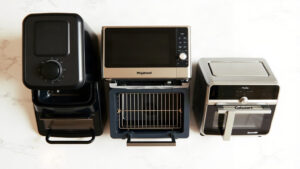
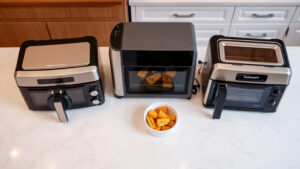
A toaster is usually the better choice for English muffins — it toasts both cut faces simultaneously in about 2 minutes, producing that crispy, slightly charred nook-and-cranny texture most people want. A toaster oven can do the job too, but it takes longer (4–6 minutes minimum) and you’ll need to flip the muffin halves or use the broil setting to get anything close to the same result on both sides. If speed and texture are your priorities, a wide-slot toaster wins. If you’re toasting a batch for a crowd, or adding toppings before toasting, the toaster oven earns its place.
Safety First: Both toasters and toaster ovens run heating elements at extremely high temperatures — toaster slots can exceed 1,100°F internally. Never leave either appliance unattended while in use, keep crumb trays emptied to avoid grease fires, and always unplug before cleaning. English muffins have a looser crumb structure than regular bread, so crumbs fall fast; check that crumb tray more often than you think you need to.
Quick Facts: Toaster vs Toaster Oven for English Muffins
- A standard toaster reaches internal slot temperatures of 1,100°F+, but the bread surface typically hits around 300–400°F — enough to toast an English muffin in roughly 2 minutes on a medium setting.
- A toaster oven set to 375°F on the toast/broil setting takes 4–6 minutes and requires either broiling or flipping to toast both faces properly.
- Wide-slot toasters (slots at least 1.5 inches wide) are specifically important for English muffins — standard-slot toasters often compress the halves and toast unevenly.
- Toaster ovens shine when you’re loading toppings — butter, cheese, or egg — before or during toasting, which is physically impossible in a slot toaster.
- For a single muffin, two halves, eaten immediately: toaster. For four or more halves, or for open-faced anything: toaster oven.
Why English Muffins Are Harder to Toast Than Regular Bread
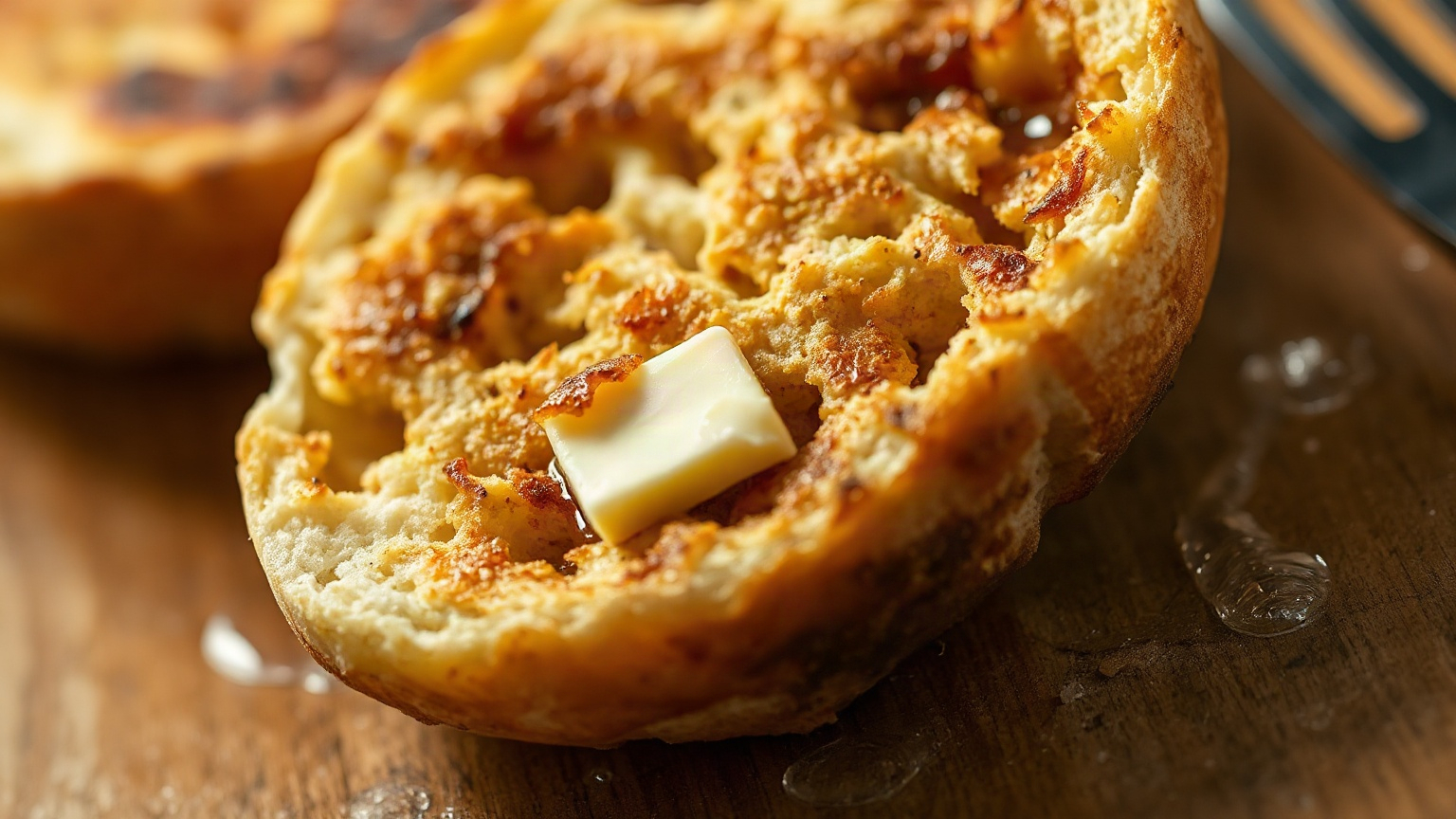
Regular sandwich bread is uniform. English muffins aren’t. The fork-split surface is jagged, uneven, and full of air pockets — those famous nooks and crannies — which means heat doesn’t distribute across them the way it does on a flat bread slice. Some parts toast fast. Others barely brown at all. It’s genuinely more challenging than it looks.
They’re also thicker and slightly heavier. A Thomas’ English muffin half is typically about ¾ to 1 inch thick, compared to maybe ½ inch for a standard bread slice. That extra mass matters. And because they’re denser at the base and airy at the top (the cut face), the cut side needs more heat exposure, not less. Getting that right depends entirely on which appliance you’re using and how you’re using it.
The Toaster: Fast, Consistent, But With One Real Limitation
What a Toaster Does Well
Drop two muffin halves into a wide-slot toaster, push the lever, and in about 90 seconds to 2 minutes you’ve got two evenly toasted faces with that specific crunch that makes an English muffin worth eating. The radiant heat from both sides of the slot hits the cut face directly. That’s actually ideal — it’s the cut face that needs the most heat, and a toaster delivers it aggressively and evenly.
I’ve found that setting 4 out of 6 on most toasters hits the sweet spot: golden-brown with some slightly darker spots in the deeper crannies. Setting 3 leaves them too pale and almost chewy. You really want a little char in there. That’s the whole point.
For more on how toaster heating elements actually work, see our guide on how hot a toaster gets — the numbers are more interesting than you’d expect.
The Slot Width Problem (And How to Fix It)
Here’s where a lot of people go wrong. Standard toaster slots are about 1 inch wide — sometimes less. An English muffin half can measure 1.25 to 1.5 inches thick depending on the brand. Forcing them in means the sides get compressed, the muffin halves don’t sit evenly, and you end up with patchy toasting. Occasionally they get stuck. I once had a muffin half wedge itself so firmly in a cheap 2-slice toaster that I had to unplug the thing and fish it out with tongs. Not a great morning.
The fix: a wide-slot toaster designed for English muffins. Models like the Cuisinart CPT-180 or the Breville BTA720XL have slots at 1.5 inches or wider. That extra half-inch makes a real difference. The muffin sits straight, both faces get consistent exposure, and you don’t risk fusing breakfast to your appliance.
The Toaster Oven: Slower, But More Versatile
How to Toast English Muffins in a Toaster Oven (Correctly)
Most people place muffin halves cut-side up on the rack, set the toaster oven to toast or broil, and wonder why only the tops got crispy while the bottoms stayed pale and soft. The issue is geometry. A toaster oven’s top heating elements do most of the work in toast mode; the bottom elements are usually weaker or don’t cycle on as frequently.
The correct method: place halves cut-side up, set to broil at 400–425°F, position the rack in the upper-middle slot, and broil for 3–4 minutes. Watch them. Broil is unforgiving and the difference between perfect and burnt is maybe 45 seconds. I’ve ruined more muffins this way than I care to admit, usually because I walked away to pour coffee.
Alternatively, the toast setting on something like the Breville Smart Oven Air Fryer has a dedicated toast function that adjusts heating element cycles automatically — it actually does a decent job on English muffins at shade 4 of 5, taking about 5 minutes total. The Cuisinart TOA-70 is similarly competent. Budget options like the Hamilton Beach 31127D work, but the broil setting is aggressive and you really need to watch the clock.
When the Toaster Oven Actually Wins
Open-faced toppings. Full stop. If you want to butter the muffin halves before toasting, melt cheese on top, add a slice of tomato, or build a mini pizza situation, a toaster oven is the only appliance that can do that. A slot toaster physically cannot. And honestly, a broiled English muffin with sharp cheddar and a little hot sauce is worth the extra 3 minutes every single time.
Batch cooking is the other scenario. A standard toaster fits two halves — one muffin. A mid-size toaster oven fits six to eight halves at once. If you’re feeding three or four people, doing multiple toaster cycles is annoying and the first round goes cold before the last one’s done. For groups, the toaster oven is just more practical. See also our piece on reheating food in a toaster oven if you’re often working with leftovers.
Head-to-Head Comparison: By the Numbers
| Factor | Wide-Slot Toaster | Toaster Oven (Broil/Toast Mode) |
|---|---|---|
| Time to toast 1 muffin (2 halves) | ~2 minutes | 4–6 minutes |
| Cut-face crisping quality | Excellent (direct radiant heat) | Good on broil, uneven on toast |
| Bottom/exterior toasting | Minimal (intentional) | Better, especially with convection |
| Batch capacity | 2–4 halves max | 6–8 halves typical |
| Toppings before toasting | Not possible | Yes, fully supported |
| Wattage draw | 800–1,500W | 1,200–1,800W |
| Counter footprint | Small (roughly 7″ x 11″) | Medium to large (12″–20″ wide) |
| Price range (entry-level) | $25–$50 | $50–$150+ |
The Edge Case Nobody Talks About: Frozen English Muffins
Most toaster and toaster oven comparisons only test fresh or thawed muffins. But frozen English muffins are genuinely common — a lot of people buy them in bulk and freeze them. And the behavior is different enough to matter.
In a slot toaster, frozen muffin halves don’t fit as cleanly because the freeze sometimes causes slight expansion or warping. They also tend to come out with a strange texture split: very crispy on the outer nooks but almost steamy and doughy in the middle, because the ice turns to steam before the inside gets properly hot. Using the frozen/defrost setting (or running a second cycle at a lower setting) helps, but it’s a workaround.
A toaster oven handles frozen muffins noticeably better. Set it to 350°F on bake for 5 minutes first to defrost and warm through, then switch to broil for 2–3 minutes to crisp the face. Total time is 7–8 minutes, but the result is more consistent — no steamy center, no oddly soggy texture. Worth knowing if frozen is your default. Serious Eats has a good breakdown of English muffin structure that explains why that interior moisture behavior happens.
Which Specific Models Are Actually Worth Buying?
If you’re leaning toward a toaster, the Cuisinart CPT-180 and the Breville BTA720XL are both solid. The Breville has slightly better build quality and the slot width is more generously sized; the Cuisinart is cheaper and gets the job done without complaint. Either one handles English muffins well. Avoid budget no-name toasters with slots under 1.25 inches — they’ll frustrate you.
For toaster ovens, the Breville Smart Oven Air Fryer (BOV900BSS) is genuinely excellent — its toast function is calibrated better than most, and the convection fan helps even out the heat so you’re not constantly rotating things. The Cuisinart TOA-70 is a solid mid-range pick with more cooking functions than you might expect to use but good toast performance. The Ninja Foodi is capable but the interface can be annoying and it runs larger than most people anticipate. The Hamilton Beach 31127D is the budget option — fine for occasional use, not for daily English muffin devotees.
Check out our full rundown of the best mini toaster ovens if counter space is tight — some of the compact models perform surprisingly well on this specific task.
For those who want a dedicated toaster oven accessory to improve results, a toaster oven wire rack and nonstick baking pan set lets you position muffin halves at the right height relative to the top elements — makes a noticeable difference.
My Honest Pick
For most people who just want an English muffin in the morning without thinking too hard: get a wide-slot toaster. It’s faster, simpler, and produces a better cut-face texture with zero fuss. The Breville BTA720XL is my personal preference — it’s not cheap, but it’s reliable and the slots are actually wide enough.
If you already own a toaster oven, or if you regularly cook for more than two people, or if you’re the kind of person who tops your muffins before toasting — don’t bother buying a toaster. Use the broil setting, watch the clock, and enjoy the extra versatility. You don’t need both appliances for this task. One good one, used correctly, is enough.
And for frozen muffins specifically? Toaster oven, every time. That’s the one scenario where the extra steps genuinely pay off.
Frequently Asked Questions
How hot does a toaster get when toasting English muffins?
Toaster heating elements can reach over 1,100°F internally, though the surface of the bread itself typically gets to 300–400°F. That’s more than enough to properly brown and crisp an English muffin’s cut face in under 2 minutes on a medium setting. The high heat concentration in the slot is actually what makes toasters so effective for this specific job.
Can you put an English muffin in a regular toaster?
You can, but standard toasters with 1-inch slots often struggle with English muffins because the halves are thicker and can wedge in unevenly. A wide-slot toaster with at least 1.5-inch slots works much better and produces more consistent results. If you only have a standard-slot toaster, go slowly and don’t force the halves in — if they don’t slide in with light resistance, use the toaster oven instead.
What temperature should a toaster oven be set to for English muffins?
For the best results, set your toaster oven to broil at 400–425°F with the rack in the upper-middle position. Place muffin halves cut-side up and broil for 3–4 minutes, watching closely. If you prefer the toast function, use a shade 4 of 5 setting and allow 5–6 minutes total — though broil gives a crispier cut face.
Is a toaster oven or toaster better for frozen English muffins?
A toaster oven handles frozen English muffins better than a slot toaster. The two-stage method — bake at 350°F for 5 minutes to defrost, then broil for 2–3 minutes to crisp — avoids the steamy, doughy center that frozen muffins often develop in a slot toaster. It takes about 7–8 minutes total, but the texture is significantly more consistent.
Do I need both a toaster and a toaster oven for English muffins?
No — one appliance used correctly is enough. A wide-slot toaster covers the daily single-muffin use case faster and with better cut-face crunch. A toaster oven covers batches, topped muffins, and frozen ones more reliably. Buy whichever matches how you actually eat breakfast rather than buying both.

Written by
Emma founded Toastera to turn vague appliance advice into clear, researched, safety-first guidance on toasters and toaster ovens.
Free: the Toaster Oven Cheat Sheet
Get the printable cheat sheet (temps, cook times & safety tips) plus new recipes. No spam, unsubscribe anytime.