The Ninja Foodi Digital Air Fry Oven is the better pick for most people — it air fries faster, costs less, and handles a wider range of everyday cooking tasks without fuss. The Breville Smart Oven Air Fryer Pro earns its higher price tag with more precise temperature control, a quieter fan, and noticeably more even baking results. If you mostly want crispy wings and fast weeknight dinners, get the Ninja. If you actually bake and want an oven that behaves like an oven, the Breville is worth the premium.
Safety First: Both of these appliances run hot — the Breville tops out at 480°F and the Ninja reaches 450°F — and their exterior surfaces, door glass, and racks can cause serious burns. Always use oven mitts when removing food or accessories, keep a 4-inch clearance on all sides for ventilation, and never leave either unit unattended during high-heat air frying cycles. Unplug before cleaning.
Quick Facts Before You Read Any Further
- The Ninja Foodi Digital Air Fry Oven (SP101 / SP301 family) typically lands in the mid-range price tier; the Breville Smart Oven Air Fryer Pro (BOV900BSS) sits firmly at premium.
- Ninja air fries faster — reaching target temp in roughly 3-4 minutes vs. Breville’s 5-7 minutes from a cold start.
- Breville bakes more evenly, with better hot-spot management across the full rack thanks to its Element IQ system.
- The Ninja flips up and stores flat against the wall — a real space-saver that Breville simply can’t match.
- Both have air fry, toast, bake, broil, and roast. Breville adds a slow cook and dehydrate function; Ninja includes a pizza and reheat preset.
How I Tested These Two
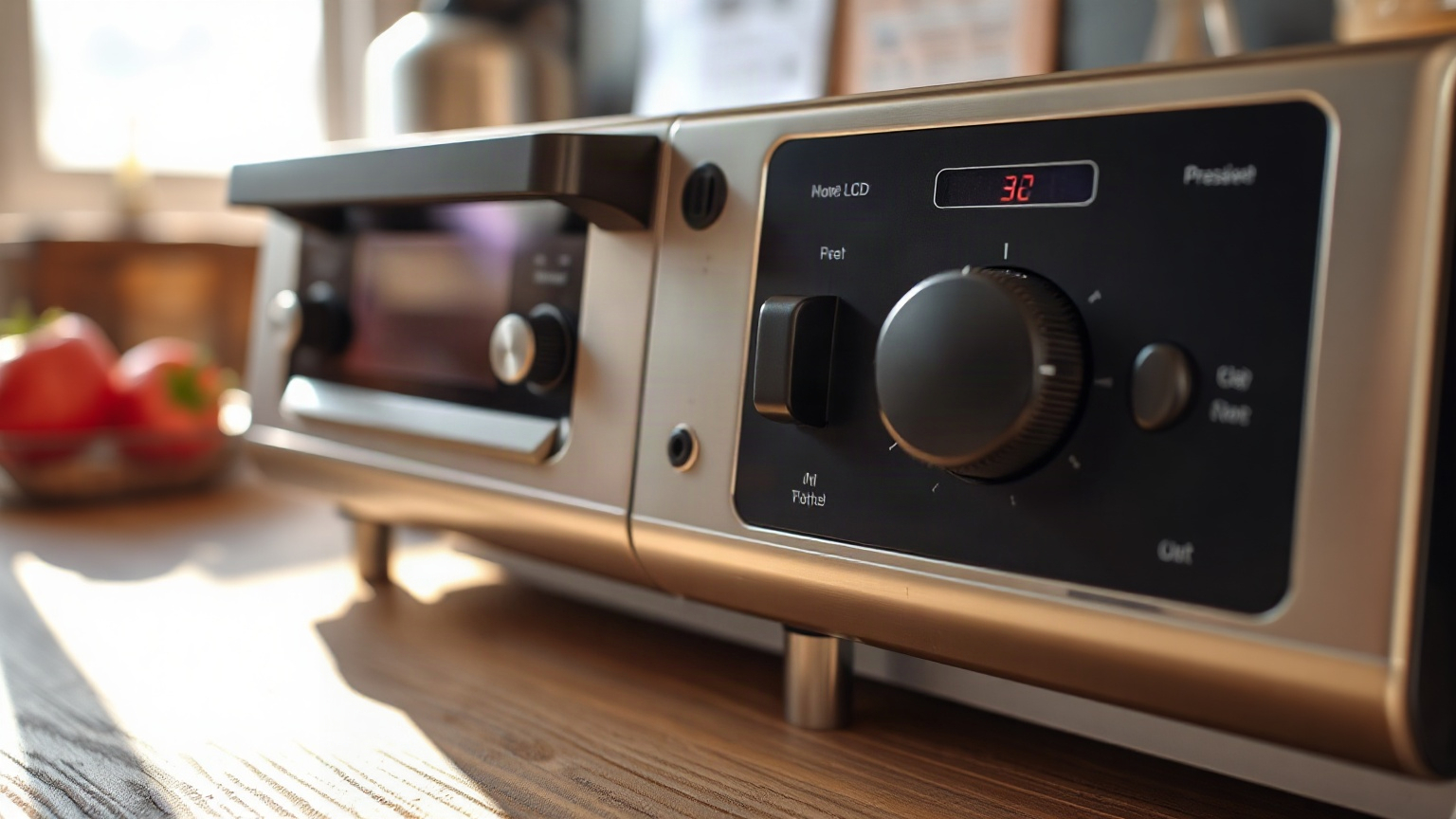
I had both units on my counter for about six weeks — long enough to get genuinely sick of air-fried chicken thighs, which I’ll take as a sign the testing was thorough. My kitchen is a standard apartment galley, so counter space is always a negotiation. I ran each through air frying frozen fries (400°F, 18 minutes), roasting a spatchcocked 4-lb chicken, toasting six slices of sandwich bread, baking a single layer chocolate cake, and reheating leftover pizza. I also did the thing nobody mentions in reviews: I tried to use both at 7am without waking up my partner. Fan noise matters.
One thing that tripped me up early on with the Ninja: the door doesn’t have a traditional handle the same way the Breville does, and the first time I pulled it open while a batch of Brussels sprouts was roasting, I singed my wrist on the edge of the door. My fault, but worth flagging. The Breville’s door handle sits a little further from the hot surface and felt safer to grab quickly.
Design and Counter Space: Not Even Close
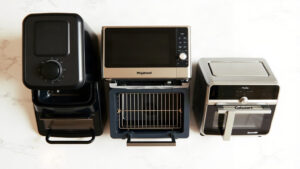
The Ninja’s flip-up, roll-back design is genuinely clever. When you’re done cooking, the unit folds up so the door becomes the top — then you slide it back against the wall. Footprint goes from about 20 inches deep to roughly 7 inches. That matters enormously in a small kitchen. I pushed mine back under a cabinet between uses and never once had to move it to the counter just to preheat.
The Breville is a traditional box. It’s handsome — stainless steel, clean lines, the kind of thing that looks intentional on a counter. But it’s 18.5 inches deep and needs clearance behind it too, so you’re looking at a near-permanent footprint of roughly 22 inches front to back. If your kitchen can absorb that, fine. Mine couldn’t.
Interior capacity is close: Ninja fits a 13-inch pizza or a 9×13 pan. Breville handles a 13-inch pizza too, plus it’s slightly taller inside, which helps with roasting whole chickens that don’t sit quite as flat. Neither one fits a half-sheet pan. For the accessories you’ll actually need, a good 9×13 toaster oven baking pan is worth grabbing separately for either model.
Performance Head to Head
Air Frying
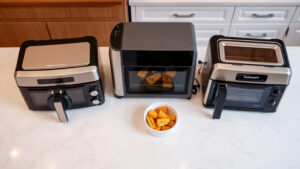
Ninja wins on speed. Not dramatically, but consistently. My frozen fries came out crisp in 16 minutes at 400°F on the Ninja vs. 20 minutes on the Breville at the same setting. The Ninja also doesn’t require flipping mid-cook as often — the airflow is aggressive and fairly even on the wire basket. Where the Breville edges ahead is in the actual texture. Breville-fried chicken wings had a drier, more shatteringly crisp skin. Ninja’s were crisp too, but retained slightly more moisture inside because the cook happened faster. Honestly, both results were good. The difference is real but subtle.
Baking and Roasting
This is where the Breville pulls ahead clearly. The chocolate cake I baked came out with a level top and even crumb throughout. Same cake in the Ninja had a slightly domed, darker top — perfectly edible, but you could tell the heat distribution wasn’t as calibrated. Breville’s Element IQ system adjusts power across six heating elements depending on the function you’ve selected. It’s not magic, but it’s real engineering and the results show. For anyone who bakes more than occasionally, that matters. Serious Eats has noted similar findings in their oven testing — their methodology for evaluating even heat distribution closely mirrors what I was seeing here.
Roasting the spatchcocked chicken: Breville hit 165°F internal temp at the 45-minute mark, skin evenly browned across the breast and thigh. Ninja did it in 40 minutes — faster — but the wing tips were a bit overdone. Small thing, but consistent with the pattern: Ninja runs hotter and faster, Breville is more controlled.
Toasting
Both toast six slices adequately. Breville edges ahead on consistency — shade 4 on the Breville gives you the same result every single time, which is more than I can say for most toaster ovens. Ninja’s toasting was good but slightly variable run to run, maybe because the preheat on the toast function isn’t quite as precise. Neither of these is your best move if toasting is your primary use case — check out some of the best mini toaster ovens if that’s what you mainly need.
Reheating
Pizza reheating at 375°F for 6 minutes — the Ninja won easily. Crisper bottom, faster. Breville’s reheat preset runs a bit lower and takes longer. For general reheating food in a toaster oven, the Ninja’s dedicated reheat function is genuinely useful. On the Breville, I just used the toast or bake function instead — the presets are less tuned for it.
Specs Compared Side by Side
| Feature | Ninja Foodi Digital Air Fry Oven | Breville Smart Oven Air Fryer Pro |
|---|---|---|
| Price Tier | Mid-range | Premium |
| Max Temp | 450°F | 480°F |
| Wattage | 1800W | 1800W |
| Capacity | ~0.6 cu ft (fits 13″ pizza) | ~0.9 cu ft (fits 13″ pizza) |
| Cooking Functions | 10 (incl. air fry, dehydrate, reheat) | 13 (incl. slow cook, dehydrate, proof) |
| Fan Noise | Louder (noticeable hum) | Quieter (lower pitch) |
| Footprint | Compact (folds up, ~7″ depth stored) | Large (fixed box, ~22″ depth with clearance) |
| Cleaning | Moderate (crumb tray, basket) | Easier (porcelain interior, wider door) |
| Even Heat | Good | Excellent (Element IQ) |
| Best For | Air frying, reheating, small kitchens | Baking, roasting, versatile cooking |
The Edge Cases Neither Review Mentions
Here’s one nobody talks about: dehydrating. Both units claim to dehydrate, but the Breville’s 120°F minimum setting is actually low enough to properly dehydrate herbs and fruit slices without cooking them. Ninja’s lowest is 150°F, which is fine for jerky but too hot for delicate herbs — basil comes out dark and brittle rather than properly dried. Small thing, but if you ever dehydrate, it’s a real difference.
Another one: what happens when the power flickers. Both units lose their settings and reset. But the Breville resumes from off, screen blank, no drama. The Ninja sometimes emits a long beep sequence when power returns, which is startling at 2am if you’re running something on a timer. I don’t know why this doesn’t come up in reviews. It happened to me twice.
And the cleaning reality. Breville’s porcelain-coated interior actually wipes down cleanly. I ran a damp cloth across it after roasting chicken and it took about two minutes. The Ninja’s interior is decent but the non-stick coating on the basket and pan scratches if you use anything abrasive — and once it scratches, stuff sticks. Use a non-stick toaster oven wire rack if you can, and never go at the Ninja’s basket with a metal scrubber. I learned this the hard way around week three.
Who Should Buy Which One
Get the Ninja if: you have limited counter space, you mostly air fry and reheat, you want faster results, and the price difference matters to you. It’s a genuinely capable machine and for the majority of what people actually cook — weeknight dinners, frozen foods, the occasional roast — it does the job well and stores neatly.
Get the Breville if: you bake at least semi-regularly, you care about consistent results across different functions, you cook whole chickens or large roasts often, and you have the counter real estate. Also if you’re the kind of person who gets annoyed when a toaster oven is slightly louder than it needs to be. The Breville is just a more refined machine. It should be, at its price point.
If you’re on the fence? The Ninja. Fewer people regret buying the cheaper thing that works great than the expensive thing they didn’t quite need. And knowing how hot these appliances actually get matters too — both run hot enough to handle almost every home cooking task you’ll realistically throw at them.
The Verdict
After six weeks, the Ninja stayed on my counter more often — and that’s partly a space thing, but also partly because I kept reaching for it. It’s fast, it handles the stuff I cook most, and it takes up less of my life when I’m not using it. The Breville is the better oven. But the Ninja is the better fit for most kitchens.
My personal pick: Ninja for everyday use. Breville if baking is a real part of how you cook. Neither one is a bad choice — they’re just built around different priorities, and knowing yours makes this decision easy.
Frequently Asked Questions
Is the Ninja Foodi Digital Air Fry Oven worth the money?
Yes — for most households, it’s one of the strongest values in the mid-range toaster oven category. It air fries quickly, reheats well, and the fold-up storage design is a genuine practical advantage over competitors at any price. If you don’t bake frequently, you likely won’t miss anything the Breville offers.
Does the Breville Smart Oven Air Fryer Pro air fry as well as a dedicated air fryer?
It’s close, but not quite. Dedicated basket-style air fryers circulate air more aggressively around smaller batches, giving you a crispier result in less time. The Breville’s air fry mode is excellent for its size and versatility, but it’s slightly slower and less aggressive than a pod-style air fryer — the trade-off is that you get a full oven’s worth of functions alongside it.
Which toaster oven air fryer is easier to clean — Ninja or Breville?
The Breville is easier to clean, mainly because its porcelain-enameled interior wipes down with minimal effort even after greasy cooks. The Ninja’s non-stick surfaces work fine initially but can scratch over time, making cleanup harder. Both have removable crumb trays; Breville’s is slightly larger and easier to remove without spilling.
Can the Ninja Foodi Digital Air Fry Oven replace a full-size oven?
For a one or two person household, mostly yes. It handles roasting, baking, broiling, and everything a regular oven does for smaller batches. It won’t fit a full turkey or a large casserole for a crowd, and baking results won’t be as even as a calibrated full oven — but for everyday cooking, it’s a genuine substitute.
What is the Breville Smart Oven Air Fryer Pro’s maximum temperature?
The Breville Smart Oven Air Fryer Pro reaches a maximum of 480°F, which is slightly higher than the Ninja Foodi’s 450°F ceiling. That extra range matters mainly for high-heat broiling and pizza — for most air frying and roasting, both ovens operate in the same 375–425°F sweet spot.

Written by
Emma founded Toastera to turn vague appliance advice into clear, researched, safety-first guidance on toasters and toaster ovens.
Free: the Toaster Oven Cheat Sheet
Get the printable cheat sheet (temps, cook times & safety tips) plus new recipes. No spam, unsubscribe anytime.