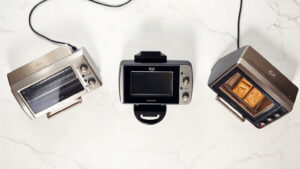
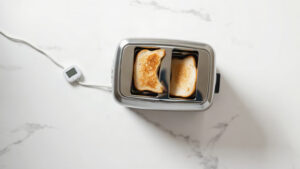
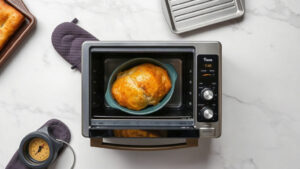
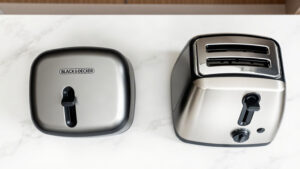
A toaster’s heating element works by passing electricity through a thin wire made of nichrome alloy, which resists the current enough to generate intense heat — typically reaching between 300°F and 1,200°F (150°C–650°C) depending on the setting and where you measure. That resistance converts electrical energy directly into thermal radiation. In practice, it means your bread is being cooked by glowing-hot wires, not by heated air, which is why toast happens so fast.
Safety First: Toaster heating elements carry live mains voltage and reach temperatures high enough to ignite crumbs, paper, or plastic instantly. Never insert metal objects into a toaster, never operate it near water, and always unplug before attempting any cleaning or inspection. If your toaster’s wires appear cracked, frayed, or the element sparks, stop using it immediately and replace the unit.
Quick Facts About Toaster Heating Elements
- Nichrome wire (roughly 80% nickel, 20% chromium) is the standard heating element material in most pop-up toasters and toaster ovens.
- The element’s surface temperature can hit 1,000°F+ at peak, though the interior of your toaster stays far lower due to reflected heat and airflow.
- Most pop-up toasters draw 800–1,500 watts; toaster ovens typically run 1,200–1,800 watts.
- The orange glow starts at around 930°F (500°C) — that’s the point where the wire begins emitting visible light in the red-orange spectrum.
- In Broil or Bagel mode on a toaster oven, only the top element is active — the bottom one stays cold. This surprises a lot of people the first time they use it.
What the Heating Element Is Actually Made Of
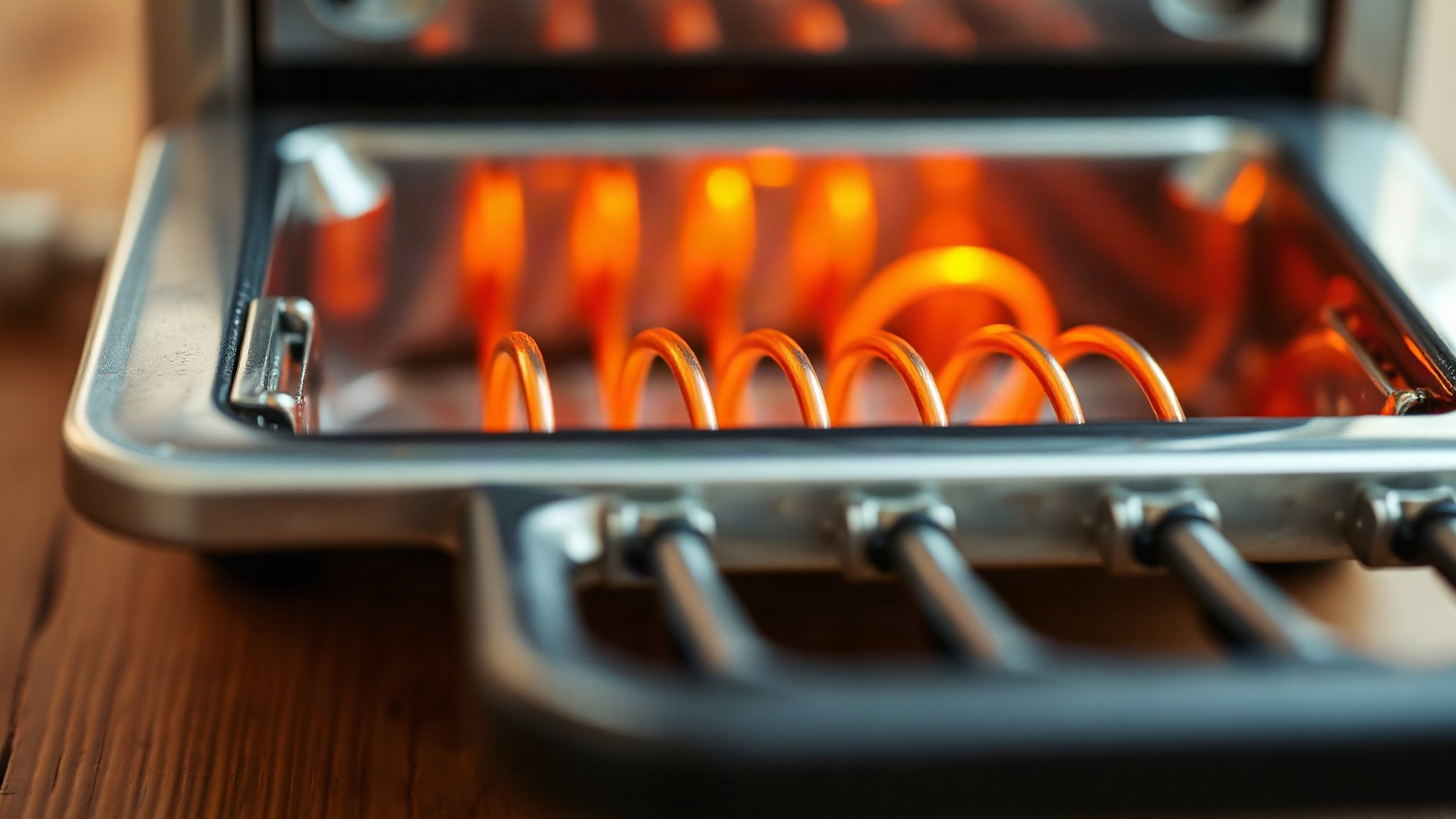
Nichrome. That’s basically the whole answer. Short for nickel-chromium, it’s a metal alloy that has been used in heating applications since the early 1900s. The reason it works so well comes down to a few things that happen to line up perfectly for kitchen appliances.
First, nichrome has high electrical resistivity. When electrons try to push through the wire, they meet resistance — and that friction generates heat. A material like copper would let electricity flow too easily; you’d get a wire that barely warms up. Nichrome sits in the sweet spot where it resists enough to produce serious heat without burning out.
Second, it doesn’t oxidize at high temperatures the way iron or steel would. Chromium forms a thin oxide layer on the surface that actually protects the wire underneath. That’s why a nichrome element can glow orange hundreds of times without crumbling. Good design, honestly.
In cheaper toasters, the nichrome wire is wound directly around a mica sheet — a thin, heat-resistant mineral. More expensive units (and most toaster ovens) use thicker-gauge wire or quartz tubes to keep the heat more even. The gauge matters. Thinner wire heats up faster but burns out sooner. Thicker wire takes a few extra seconds but lasts significantly longer.
Why It Glows Orange the Second You Push the Lever Down
This part is pure physics. When any object gets hot enough, it starts to emit electromagnetic radiation — including visible light. Below roughly 930°F (500°C), that radiation is infrared, which you feel as heat but can’t see. Once the wire crosses that threshold, it starts glowing a deep red, then orange.
Nichrome heats up fast. A thin element in a pop-up toaster can go from room temperature to glowing in under five seconds. I timed it once with a cheap stopwatch: my Dualit’s elements were visibly orange in about 3.5 seconds from a cold start. That surprised me — I’d assumed there was some kind of ramp-up period. Nope. The low thermal mass of the wire means it hits operating temperature almost immediately, which is actually the entire point.
What you’re seeing is called incandescence. Same principle as an old incandescent light bulb, just at lower temperature and without a vacuum to prevent oxidation. The nichrome’s oxide layer handles that job instead.
The color of the glow gives you a rough temperature read, too. Dull red? Around 950°F. Bright orange? You’re looking at 1,000–1,100°F. If it ever goes white-hot — and it shouldn’t in a normal toaster — something’s wrong.
How the Toaster Controls the Heat (and Shuts Itself Off)
This is the part that confused me when I first started poking around inside old toasters. You’d think there’s a timer. There isn’t. Not in most pop-up toasters, anyway.
The Bimetallic Strip Trick
Most traditional pop-up toasters use a bimetallic strip — two different metals bonded together. When the strip heats up, the two metals expand at different rates, causing the strip to bend. Once it bends far enough, it releases the latch holding the bread carriage down, the spring fires, and your toast pops up. The browning dial adjusts how much bending is needed before the trip point, which is why “darker” settings literally require more heat to accumulate before it trips.
It’s elegantly mechanical. No microcontroller required. That said, it means your toast doneness can vary slightly based on ambient temperature — a toaster in a cold kitchen actually runs a touch lighter on the first slice because the strip starts cooler. First time I noticed that was a winter morning when my first two slices came out noticeably paler than the rest of the batch. Took me embarrassingly long to figure out why.
Electronic Timing in Modern Toasters
Higher-end toasters and virtually all toaster ovens have moved to electronic timers or thermostats. A thermostat senses the interior temperature and cycles the element on and off to maintain a target range. This gives you much more repeatable results. It’s also why reheating food in a toaster oven works so reliably — the thermostat keeps the cavity at a consistent temp rather than just blasting heat until a spring trips.
Top Element vs. Bottom Element — What’s Actually Heating Your Food
In a toaster oven, you typically have two separate heating elements: one across the top, one across the bottom. They don’t always run at the same time, and understanding which is on when makes a real difference in results.
| Toaster Oven Mode | Top Element | Bottom Element | Best Used For |
|---|---|---|---|
| Bake | On | On | Casseroles, baked goods, reheating |
| Broil | On (full power) | Off | Melting cheese, browning surfaces |
| Toast | On | On | Bread, bagels (both sides) |
| Bagel | On | Off (or low) | Warming cut side, keeping crust |
| Warm / Keep Warm | On (low cycle) | On (low cycle) | Holding temp without cooking further |
The Bagel setting is the one that catches people off guard. You put the bagel in cut-side up, the top element toasts the cut face, and the bottom stays off so the rounded crust doesn’t get hard and crackly. Smart. But if you pop it in cut-side down by accident, you’ll get the wrong result and spend the next thirty seconds wondering why your toaster oven is apparently broken. Not speaking from experience. (I am absolutely speaking from experience.)
For a deep look at actual temperatures inside the cavity, check out this piece on how hot a toaster gets — the numbers at element level versus food level are pretty different.
Wattage, Temperature, and What They Mean for Your Toast
Here’s a table worth keeping in mind if you’re shopping for a new unit or just trying to understand your electricity bill.
| Appliance Type | Typical Wattage | Element Surface Temp | Time to Toast (medium) |
|---|---|---|---|
| Budget pop-up toaster | 800–1,000W | ~950–1,050°F | 2.5–4 min |
| Mid-range pop-up toaster | 1,000–1,200W | ~1,000–1,100°F | 2–3 min |
| Compact toaster oven | 1,200–1,400W | ~900–1,100°F | 3–5 min |
| Full-size toaster oven | 1,500–1,800W | ~1,000–1,200°F | 3–5 min |
Higher wattage doesn’t always mean faster toast, by the way. It depends on how the wattage is distributed across the elements, how close the elements are to the bread, and whether the unit has good reflective interior surfaces. A well-designed 1,200W toaster oven can outperform a sloppy 1,800W one in browning evenness. I’ve tested units where the back corner of every slice stayed pale no matter what I did — element placement was just poor.
If you’re in the market, the best mini toaster ovens we’ve tested handle element distribution pretty well for their size. Worth a look before you buy.
For good baking results in a toaster oven, a solid nonstick toaster oven baking pan helps a lot — the dark surface absorbs radiant heat from the element efficiently. And a proper toaster oven wire rack keeps food centered in the heat zone, which matters more than people think.
The Edge Case Nobody Talks About: Element Failure Patterns
Here’s something the standard explainers skip entirely. Nichrome wire doesn’t usually fail all at once. It tends to develop a hot spot — a point where the wire has slightly corroded or thinned, causing localized higher resistance. That spot glows brighter and hotter than the rest of the element. Over time it oxidizes faster, eventually burning through.
The practical sign: your toast starts coming out unevenly browned, with one band more done than the rest. That’s not crumb buildup (usually). That’s a dying element. At that point the toaster is telling you it’s time. Trying to compensate by dropping the browning setting doesn’t fix it — you’ll just get toast that’s half pale, half scorched.
Also worth knowing: elements in toaster ovens can arc if grease accumulates on them. A small pop, a flash of light — that’s a grease ignition event, not a short circuit. It’s more common than people realize, and it’s exactly why regular crumb tray cleaning matters. The Serious Eats toaster oven guide covers maintenance basics that help extend element life significantly.
One more thing: if you’ve ever noticed your toaster oven’s element cycling on and off with a faint click during baking, that’s completely normal. The thermostat is just doing its job, cutting power when the target temp is reached and restoring it when the cavity cools a few degrees. No cause for concern.
The Bottom Line
The humble nichrome wire is doing a lot of work every time you drop a slice of bread in. It heats up in seconds, glows orange because of basic physics, and in a well-made toaster, it’ll do this thousands of times before it gives out. Understanding how it works — which elements fire in which modes, why your first morning slice sometimes comes out lighter, what uneven browning actually signals — makes you a better user of the appliance and helps you catch problems before they become real ones.
Toasters are simple machines. But they’re not dumb ones. And now you know exactly what’s happening in there.
Frequently Asked Questions
How hot does a toaster heating element get?
The surface of a nichrome heating element in a pop-up toaster typically reaches 950°F to 1,100°F (510°C–595°C) during normal operation. The air inside the toaster slot stays much cooler — usually 300°F to 500°F — because the heat transfer is primarily radiant, not convective. That radiant heat is what browns the bread surface so quickly.
Why does a toaster glow orange?
The orange glow is incandescence — any material heated above roughly 930°F (500°C) begins emitting visible light in the red-to-orange spectrum. Nichrome wire crosses that threshold within seconds of power being applied, which is why the glow appears almost immediately. The specific color of the glow corresponds directly to the element’s surface temperature.
Is it safe to leave a toaster plugged in?
A toaster draws no meaningful power while idle, but leaving it plugged in does carry a small risk — particularly if crumbs have accumulated near the element or if there’s a faulty internal switch that could energize the element unexpectedly. Unplugging when not in use is the safer habit, and it’s especially important if you have pets or children who might accidentally push the lever down. Most fires attributed to toasters involve units left plugged in and unattended.
Why does only one heating element light up in my toaster oven?
That’s intentional. In Broil and Bagel modes, most toaster ovens power only the top element so heat comes from above — that’s what browns the surface of food without overcooking it from below. In Bake mode, both top and bottom elements run and cycle together to maintain even temperature. If you’re seeing only one element glow during Bake, that could indicate a failed element worth having checked.
How long do toaster heating elements last?
A nichrome element in a pop-up toaster is typically rated for 20,000 to 30,000 cycles — which translates to many years of daily use for most households. Toaster oven elements tend to have shorter practical lifespans due to grease exposure and the wider temperature ranges they operate across. Uneven browning or a visibly brighter hot spot on the wire is the most reliable early sign that an element is starting to fail.

Written by
Emma founded Toastera to turn vague appliance advice into clear, researched, safety-first guidance on toasters and toaster ovens.
Free: the Toaster Oven Cheat Sheet
Get the printable cheat sheet (temps, cook times & safety tips) plus new recipes. No spam, unsubscribe anytime.