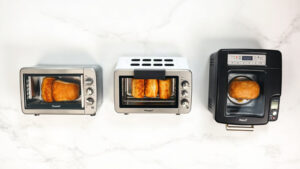
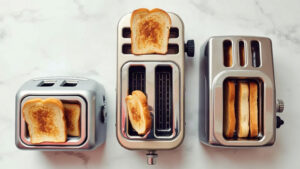
An air fryer typically uses less electricity than a toaster oven per month — but the gap is smaller than most people expect, and it depends heavily on what you’re actually cooking. Air fryers generally run between 1,200–1,800 watts and heat up fast, while toaster ovens pull anywhere from 1,200–1,800 watts too, but often run longer cycles. The real difference shows up in cook time and frequency, not raw wattage alone.
Safety First: Both air fryers and toaster ovens draw significant amperage during operation — never plug either into an extension cord or a shared power strip with other high-draw appliances. Always check that the outlet is rated for the wattage of your appliance (most kitchen outlets handle 15A/1,800W max), and keep both appliances unplugged when not in use to reduce standby draw and fire risk.
Quick Facts: Air Fryer vs Toaster Oven Electricity Use
- A typical air fryer uses 0.5–0.9 kWh per cooking session; a toaster oven uses 0.8–1.4 kWh for a comparable task
- At the U.S. average electricity rate of ~$0.16/kWh, cooking with an air fryer daily could save you $3–$8/month versus a toaster oven
- Wattage alone doesn’t tell the whole story — cook time and preheat behavior matter just as much
- Toaster ovens win on capacity; air fryers win on speed and, usually, monthly electricity cost
- Combo units (air fryer toaster ovens) split the difference but tend to run closer to toaster oven energy levels
Why Wattage Is Only Half the Story
People see that an air fryer is rated at 1,500 watts and a toaster oven is also rated at 1,500 watts and think, okay, same thing. Not quite. Energy consumption is wattage multiplied by time. And that’s where air fryers pull ahead.
An air fryer preheats in about 2–3 minutes. Most toaster ovens take 5–10 minutes to reach temperature, and some of the older or cheaper ones cycle on and off pretty aggressively to hold temp, which means they’re drawing power in bursts across a longer window. A typical air fryer session for chicken thighs — say, 375°F for 22 minutes — uses roughly 0.75 kWh. The same chicken in a toaster oven at 400°F, accounting for preheat and a longer cook time of around 30–35 minutes, can push 1.1–1.3 kWh.
That difference per session seems small. But run that math daily for a month and you’re looking at real money.
The Real Monthly Numbers (With Actual Math)
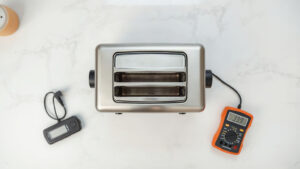
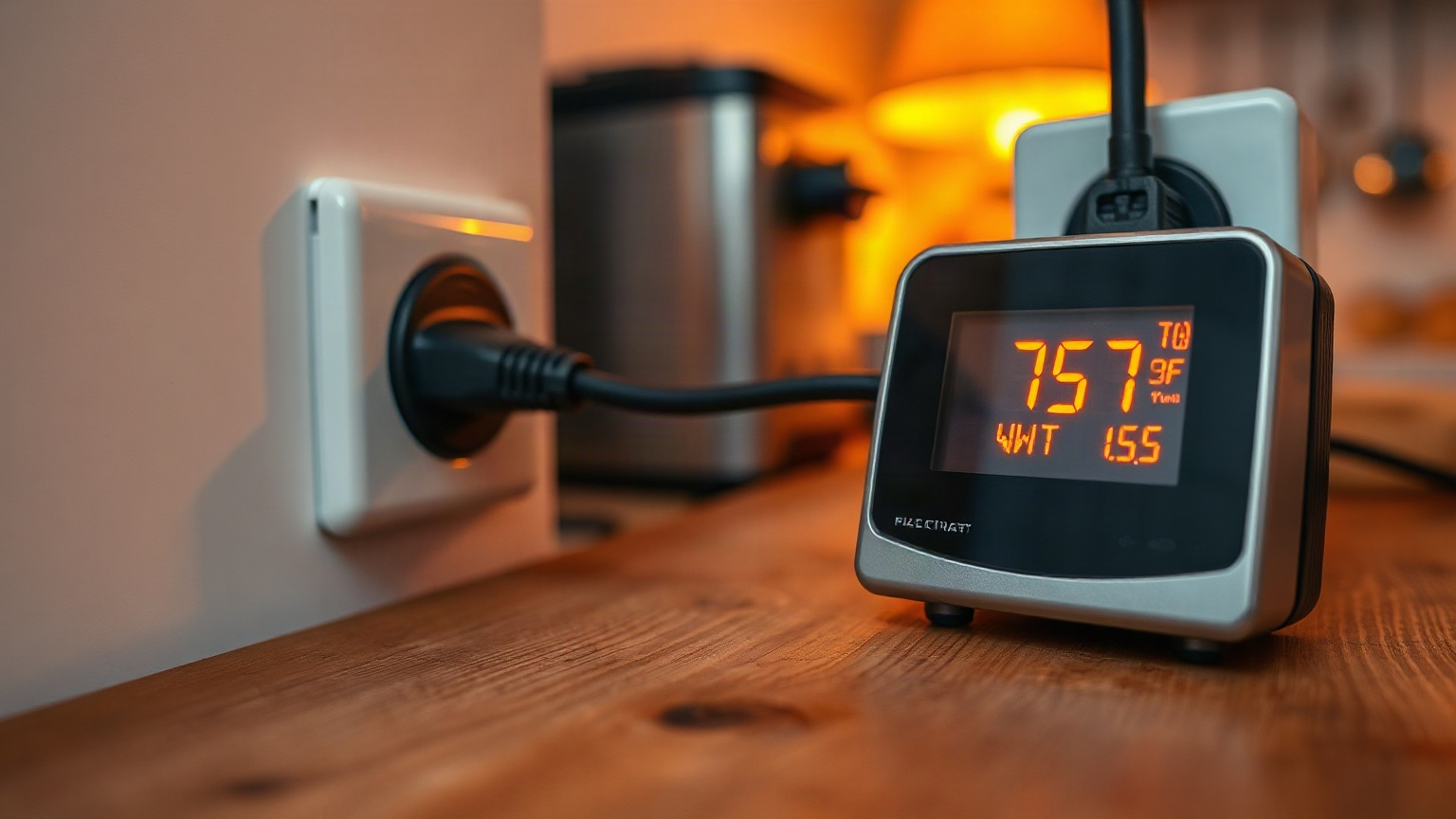
I tracked my own usage for a month using a plug-in power meter — a Kill A Watt, specifically. I was cooking dinner most nights, usually proteins or vegetables, nothing elaborate. Here’s what I found:
My air fryer (a 1,700-watt Cosori) averaged 0.68 kWh per session. My Breville Smart Oven averaged 1.15 kWh for the same types of meals. At my local rate of $0.17/kWh, that’s $0.12 per air fryer session vs. $0.20 per toaster oven session. Daily cooking, 30 days: $3.40 vs. $5.90. So about $2.50/month in my case.
Not life-changing. But multiply that over a year — $30 saved — and it’s a nice dinner out.
Side-by-Side Monthly Cost Estimates
| Appliance | Avg Wattage | Avg Session kWh | Daily Cost (@$0.16/kWh) | Monthly Cost (30 days) |
|---|---|---|---|---|
| Compact Air Fryer (e.g., Cosori 5.8 qt) | 1,500–1,700W | 0.60–0.75 kWh | $0.10–$0.12 | $3.00–$3.60 |
| Standard Toaster Oven (e.g., Hamilton Beach) | 1,200–1,500W | 0.85–1.10 kWh | $0.14–$0.18 | $4.20–$5.40 |
| Breville/Premium Toaster Oven | 1,800W | 1.10–1.40 kWh | $0.18–$0.22 | $5.40–$6.60 |
| Air Fryer Toaster Oven Combo (e.g., Cuisinart TOA-70) | 1,800W | 0.90–1.20 kWh | $0.14–$0.19 | $4.20–$5.70 |
These are real-world estimates, not theoretical maximums. Your actual bill will vary based on your local electricity rate, how long your sessions run, and whether your appliance has convection (which tends to shorten cook time and reduce total energy used).
When a Toaster Oven Actually Uses Less Power
Here’s the edge case nobody seems to mention: for certain tasks, a toaster oven is the more efficient choice.
Reheating a large portion of lasagna, toasting a whole bagel flat, or slow-warming something at 250°F — a toaster oven’s lower baseline wattage and gentler heat cycling can actually beat an air fryer’s aggressive fan on those slower, lower-temp jobs. My air fryer’s fan runs the whole time even at low temps, so for a 20-minute warm-up at 275°F, it’s not really saving anything. The toaster oven at the same task draws less peak power and doesn’t dry food out as badly. For reheating food in a toaster oven, this is worth keeping in mind.
Also, if you’re cooking large batches — a full sheet of roasted vegetables, a whole chicken — you’ll load a toaster oven once and be done. An air fryer would require two or three batches, which triples the energy use. At that point the toaster oven wins handily, both in convenience and electricity cost.
The Combo Unit Problem
I should say something about combo units, because they’re everywhere now. The Cuisinart TOA-70 and the Ninja Foodi Dual Zone and similar machines are marketed as “the best of both worlds.” And they’re fine. But they tend to run like toaster ovens in terms of energy — that 1,800-watt draw is always there — and the air fryer mode isn’t quite as efficient as a dedicated compact air fryer. The basket is bigger, so the hot air has more volume to heat. You lose a bit of the speed advantage.
That said, if you’d otherwise buy both appliances, a combo makes sense. Just don’t expect it to match a dedicated air fryer on electricity cost.
Specific Models and Which to Pick
Let’s get concrete, because “it depends on your use case” isn’t useful.
Best for Low Monthly Electricity Cost: Cosori Air Fryer (5.8 qt)
Compact, fast-heating, typically runs 1,500–1,700W but finishes most jobs in under 25 minutes. For one or two people cooking dinner regularly, this is the lowest monthly electricity cost option. You can find the Cosori 5.8 qt air fryer on Amazon. Honest opinion: the basket is a pain to clean thoroughly, but the energy savings are real.
Best Toaster Oven for Efficiency: Hamilton Beach Easy Reach
Budget-friendly, lower wattage (around 1,200W), and surprisingly good at holding temperature without constantly cycling back up. Not flashy. For people who mostly toast, reheat, and occasionally bake small items, this keeps your monthly cost lower than premium models and is among the best mini toaster ovens in the budget category.
Best Premium Combo: Breville Smart Oven Air Fryer Pro
This thing is excellent and I genuinely like it. The convection system is smart enough to reduce cook time significantly, which partially offsets the higher 1,800W draw. It’s spacious, precise, and handles everything from toast to a small roast. But it will cost you more per month than a dedicated air fryer. Premium price tier, premium performance. Find the Breville Smart Oven Air Fryer Pro on Amazon if you want to see current pricing.
Model Comparison at a Glance
| Model | Type | Wattage | Capacity | Price Tier | Monthly Cost Est. |
|---|---|---|---|---|---|
| Cosori 5.8 qt Air Fryer | Air Fryer | 1,700W | 5.8 qt | Budget–Mid | ~$3.00–$3.60 |
| Hamilton Beach Easy Reach | Toaster Oven | 1,200W | 4-slice | Budget | ~$4.20–$4.80 |
| Cuisinart TOA-70 | Combo | 1,800W | 0.6 cu ft | Mid | ~$4.50–$5.70 |
| Ninja Foodi Dual Zone | Air Fryer | 1,690W | Dual basket | Mid | ~$3.60–$4.80 |
| Breville Smart Oven Air Fryer Pro | Combo | 1,800W | 1.0 cu ft | Premium | ~$5.40–$6.60 |
My pick? For most people cooking for one or two: get the Cosori or similar dedicated air fryer. You’ll spend less per month, cook faster, and the learning curve is about 15 minutes. If you regularly cook for four or feed a family, the Breville combo is worth the extra electricity cost because you’re only loading it once. The Hamilton Beach is genuinely underrated if you mostly need toasting and simple reheating — and the low wattage shows up on your bill.
Practical Tips to Cut Costs Either Way
A few things I’ve actually found useful, not just theoretical suggestions:
- Don’t preheat an air fryer for things like frozen fries or reheated pizza — they don’t need it and you’re wasting 2–3 minutes of full-power draw for nothing
- Use the toaster oven’s convection setting if it has one — it cuts 15–25% off cook time, which reduces kWh per session even at higher wattage
- Batch cook when you use a toaster oven — fill the rack, not just one corner. Half-empty ovens are electricity waste
- Both appliances cycle heating elements on and off to hold temp, so opening the door repeatedly costs you more than people realize
- For small tasks (one slice of toast, warming a cup of soup) neither of these is the right tool — a dedicated toaster or microwave is faster and cheaper
I’d also say: don’t obsess over electricity cost as the deciding factor. The difference between the most and least efficient option here is maybe $30–$40 per year. Cook with the one that fits your actual habits. According to the U.S. Department of Energy, countertop appliances generally use significantly less electricity than full-sized ovens for small to medium cooking tasks — so either choice beats your range oven on monthly cost. And if you want to understand the broader temperature and heating element picture, our breakdown of how hot a toaster gets is worth a read.
The Bottom Line
Air fryers do use less electricity than toaster ovens per month, in most typical cooking scenarios — probably $2–$5 less per month if you’re cooking daily. The savings come from shorter cook times and faster preheat, not from lower wattage. For big batches, gentle reheating, or large families, a toaster oven or combo unit makes more practical sense even if the monthly cost is slightly higher. And honestly, the Breville or a good combo unit is the better long-term tool for people who cook seriously — the electricity difference just isn’t enough to justify a cramped air fryer basket if you’re feeding more than two people regularly.
Run your own numbers with a power meter if you really want to know. It costs about $15 and removes all the guesswork.
Frequently Asked Questions
Does an air fryer use less electricity than a toaster oven per month?
Yes, in most everyday cooking scenarios an air fryer uses roughly 0.3–0.6 kWh less per session than a standard toaster oven, adding up to $2–$5 in monthly savings if you cook daily. The savings come from shorter cook times and faster preheating, not necessarily lower peak wattage. For large-batch cooking, the gap shrinks or reverses.
How many watts does an air fryer use compared to a toaster oven?
Most air fryers run between 1,200 and 1,800 watts, and most toaster ovens fall in the same range — so peak wattage is often identical. The real difference is that air fryers finish cooking faster, meaning they run at that wattage for fewer minutes per session. Total energy consumed per meal is what matters, and air fryers typically win that comparison by 20–40%.
Is it cheaper to use an air fryer or toaster oven every day?
An air fryer is cheaper for daily use when cooking single portions or meals for one to two people, typically costing around $3–$3.60 per month in electricity versus $4.20–$6.60 for a toaster oven. If you regularly cook large batches that require multiple air fryer rounds, a toaster oven becomes the cheaper daily option. Your local electricity rate also affects the exact numbers.
Does a toaster oven or air fryer cook faster?
Air fryers cook faster in almost every comparison, largely because the compact chamber and powerful circulating fan concentrate heat more intensely than a toaster oven’s larger interior. A typical chicken breast takes 18–22 minutes in an air fryer vs. 25–35 minutes in a toaster oven. Faster cooking is the main reason air fryers use less total electricity per session.
Should I replace my toaster oven with an air fryer to save on electricity?
Replacing a toaster oven with a dedicated air fryer saves roughly $25–$50 per year in electricity — not a compelling financial reason on its own. The better reason to switch is cook time and convenience for smaller portions. If you cook for a family or frequently roast large items, keep the toaster oven; the electricity savings from an air fryer won’t offset the limitations in capacity.

Written by
Emma founded Toastera to turn vague appliance advice into clear, researched, safety-first guidance on toasters and toaster ovens.
Free: the Toaster Oven Cheat Sheet
Get the printable cheat sheet (temps, cook times & safety tips) plus new recipes. No spam, unsubscribe anytime.