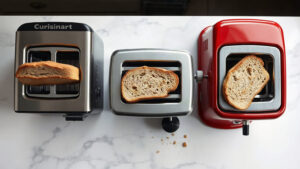
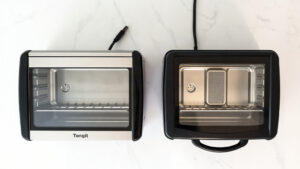
A toaster oven can replace a microwave for many reheating tasks — but not all of them. It excels at restoring crispness to pizza, fries, roasted vegetables, and bread, things a microwave actively ruins. Where it falls short is speed and convenience: reheating a bowl of soup takes about 12–15 minutes in a toaster oven versus 90 seconds in a microwave, and it can’t heat liquids efficiently at all. If you reheat a wide variety of foods and don’t want to wait, you’ll probably want both.
Safety First: Toaster ovens run hot — most reach 400–450°F — and the exterior walls, rack, and baking pan can cause serious burns. Always use oven mitts (not dish towels) when removing food, never leave a toaster oven unattended on high heat, keep it at least 4 inches from cabinet walls or anything flammable, and never use it to reheat food in plastic containers or sealed bags. Unplug the unit when not in use if it doesn’t have an automatic shutoff.
Quick Takeaways
- Toaster ovens reheat solid foods better than microwaves — crispier texture, more even browning, no rubbery edges.
- Microwaves are 4–10x faster for liquids, soups, casseroles, and anything in a deep bowl.
- A toaster oven at 325°F for 8–10 minutes will revive leftover pizza far better than any microwave setting ever will.
- The honest answer: toaster ovens can fully replace microwaves for people who mostly reheat solid foods and don’t mind a few extra minutes. They can’t for people who rely on quick soup, coffee reheating, or steaming vegetables.
- Counter space and your actual reheating habits matter more than any spec sheet comparison.
What a Toaster Oven Actually Does Well (That a Microwave Butchers)
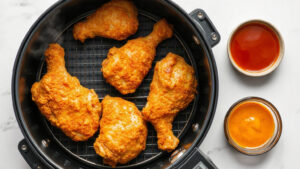
Let’s be real: microwaves are a miracle for speed and a disaster for texture. I’ve reheated leftover roast chicken in a microwave exactly once since I got my first toaster oven. Never again. The skin went limp and rubbery in about 90 seconds. The same chicken, reheated at 350°F for 10 minutes in a toaster oven on a toaster oven wire rack, came out with crisp skin and genuinely hot meat all the way through.
Foods where the toaster oven wins, pretty decisively:
- Pizza — 325°F for 8 minutes on a bare rack, no pan needed. The crust crisps back up almost like it’s fresh. This alone might justify ditching the microwave for some people.
- French fries and roasted potatoes — 400°F for 6–8 minutes. Microwave fries are depressing. Toaster oven fries are genuinely edible.
- Bread, rolls, croissants — 300°F for 4–5 minutes. The crust gets back some of its crunch. Microwaved bread goes stale-soft and chewy in a way that feels almost offensive.
- Leftover meat — chicken thighs, steak, pork chops. Cover loosely with foil, 325°F, about 10–12 minutes depending on thickness.
- Casseroles and baked pasta — 350°F, covered with foil to retain moisture, 15–18 minutes. Better results than a microwave, though it takes longer.
I’d also add: reheating a frozen burrito. Microwave makes the tortilla weirdly steamy and uneven. Toaster oven at 375°F for 12 minutes makes it actually good. Check out our full guide on reheating food in a toaster oven for specific times and temps across a wider range of dishes.
Where a Toaster Oven Cannot Keep Up
I’ll be honest here because a lot of toaster oven fans — myself included, to a point — tend to oversell this. There are real limits.
Liquids and Soups
A toaster oven cannot reheat a bowl of soup efficiently. Full stop. You’d need to transfer it to an oven-safe dish, wait for preheat, and babysit it for 15+ minutes to get it properly hot. A microwave does the same thing in 2 minutes. If you eat a lot of soup, stew, chili, or broth-based dishes, keeping your microwave makes sense.
Reheating Coffee or Tea
Obviously. This isn’t even a competition. A toaster oven cannot reheat beverages. At all.
Speed
Even the fastest toaster ovens need 3–5 minutes to preheat before you’ve even started heating your food. For a quick snack between meetings, that’s annoying. Microwaves win on pure convenience every time.
Steaming Vegetables
Microwaves are genuinely good at steaming vegetables quickly — a bag of frozen broccoli is done in 4 minutes. A toaster oven roasts vegetables, which is different and sometimes better, but if you want steamed texture specifically, the microwave is the right tool. This is an edge case most comparison articles skip entirely, and it matters if you have kids who only eat a specific texture of carrots (speaking from experience here).
The Speed and Energy Trade-Off: By the Numbers
Here’s a comparison that’s actually useful. These are typical ranges, not cherry-picked best cases.
| Task | Microwave | Toaster Oven | Winner |
|---|---|---|---|
| Reheat slice of pizza | 45–60 sec (soft, soggy) | 8–10 min at 325°F (crispy) | Toaster oven (quality) |
| Reheat bowl of soup | 90–120 sec | 15–20 min (needs oven-safe bowl) | Microwave |
| Warm up bread roll | 20–30 sec (goes rubbery) | 4–5 min at 300°F (crusty) | Toaster oven (quality) |
| Reheat leftover chicken | 2–3 min (rubbery skin) | 10–12 min at 350°F (crispy) | Toaster oven |
| Steam frozen vegetables | 3–5 min | Not practical | Microwave |
| Reheat coffee/tea | 60–90 sec | Not possible | Microwave |
| Reheat french fries | 1–2 min (soggy) | 6–8 min at 400°F (crispy) | Toaster oven |
| Energy use (typical) | 700–1200 watts | 1200–1800 watts | Microwave (efficiency) |
That wattage difference matters if you’re using it multiple times a day. Toaster ovens also take longer, so total energy per task is usually higher. That said, if your toaster oven is replacing oven preheat cycles too, you can come out ahead. Here’s more on how hot toaster ovens actually get and what that means for cooking performance.
Who Can Actually Replace Their Microwave (And Who Probably Shouldn’t)
I’ve seen this question framed as a simple yes/no, and that’s the wrong way to think about it. It really depends on what you actually put in your microwave day to day.
You’ll probably be fine without a microwave if:
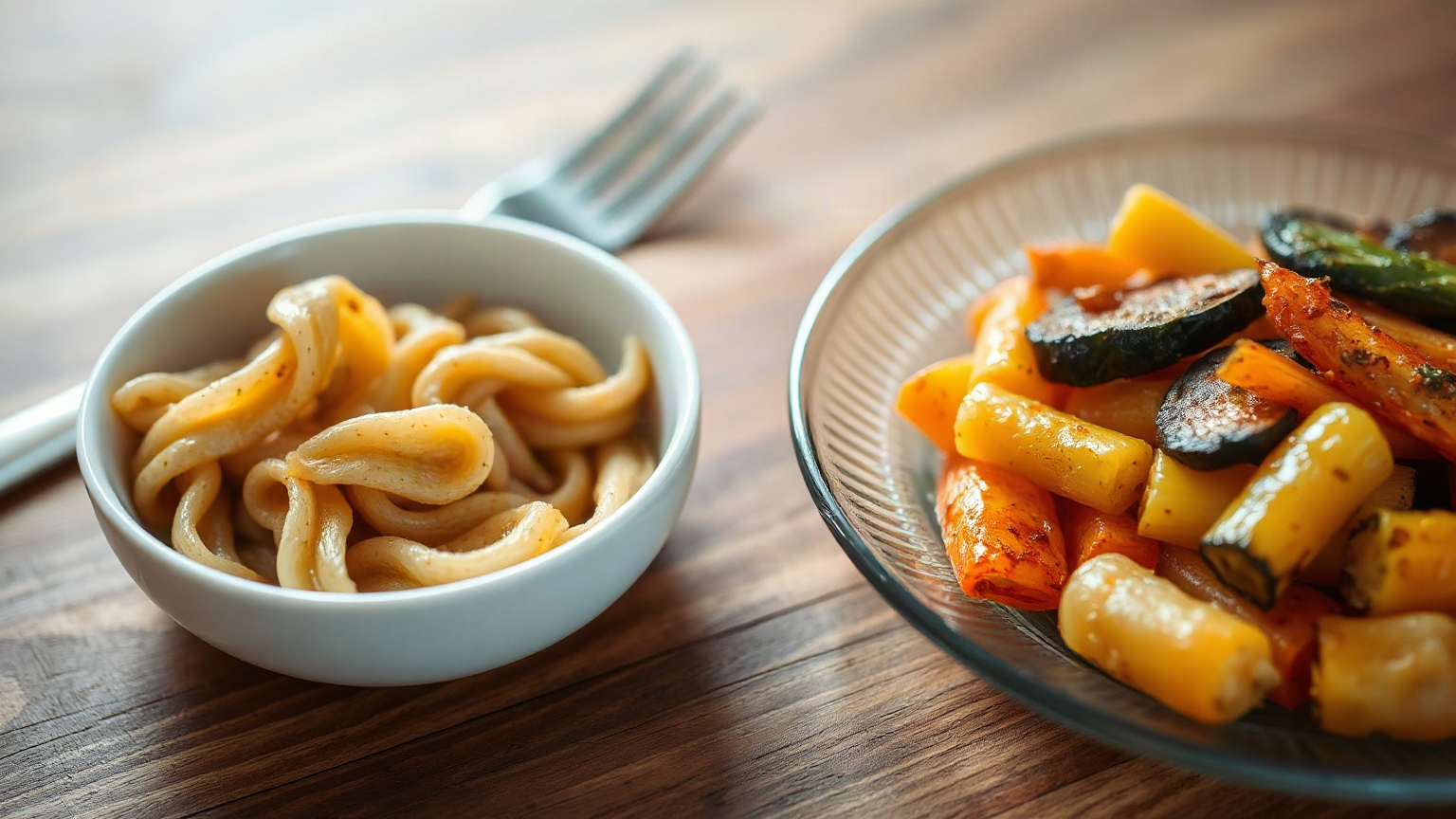
- Most of your reheating involves solid foods — leftovers like pizza, roasted meats, baked goods, casseroles, sandwiches.
- You don’t reheat coffee or beverages (or you use a stovetop for that).
- You’re okay with an extra 8–15 minutes of wait time.
- Counter space is genuinely limited and you need to pick one appliance.
You’ll miss your microwave if:
- You regularly reheat soups, stews, or anything liquid.
- You have kids who need food reheated quickly and without fuss.
- You steam vegetables frequently.
- You reheat drinks.
- You’re often in a genuine time crunch at meals.
My honest take: I went three months using only a toaster oven, intentionally, to test this properly. I cook mostly solid foods — leftovers from roasted chicken, pasta bakes, toast, the occasional frozen thing. I genuinely didn’t miss the microwave much. The one moment I really wanted it was reheating leftover congee. Thick, starchy, liquid-adjacent — the toaster oven had no good answer for that. I ended up doing it in a small saucepan on the stove. Not terrible, but annoying.
If you’re shopping for a toaster oven that can handle the full load of reheating duties, the Breville Smart Oven Air Fryer is the one I’d point most people toward — it preheats faster than cheaper models, the convection is real (not decorative), and the interior is large enough to handle a 9-inch pan without awkward tilting. The Cuisinart TOA-70 is a solid mid-range pick if the Breville’s price is off-putting. For small kitchens or apartments, our list of best mini toaster ovens has options that won’t take over your counter.
Tips for Getting the Most Out of Toaster Oven Reheating
A few things that tripped me up early on, and that I wish someone had told me before I started:
- Always preheat. I skipped this for the first few weeks and couldn’t figure out why food was reheating unevenly. Even 3–4 minutes of preheat makes a real difference.
- Use a rack, not just a pan, for crispy foods. Air circulation underneath is what gets fries and pizza crusts crispy again. A flat toaster oven baking pan works fine for casseroles but kills crispness on everything else.
- Cover with foil for moisture. Chicken breasts, leftover pork, anything that dries out easily — a loose foil tent keeps moisture in without trapping steam weirdly like plastic wrap does in a microwave.
- Lower temperature than you think. Most people run toaster ovens too hot for reheating. 300–350°F is usually right. Higher and you’re drying the outside before the center is warm.
- Check earlier than you expect. Toaster ovens vary a lot by model. The first few times with a new unit, check at the halfway mark. Serious Eats has a good breakdown of reheating pizza specifically that’s worth reading.
The Verdict
A toaster oven can replace a microwave for reheating — but only for certain people. If your leftovers are mostly solid foods, if you value texture over speed, and if you’re not regularly reheating soups or beverages, you can absolutely make it work. I did it for three months and barely suffered.
But if you’re heating soup three times a week, have kids who need dinner warmed in 90 seconds, or regularly reheat anything liquid, the microwave is genuinely irreplaceable for those tasks. No toaster oven is going to fix that.
The real answer most articles won’t give you: a mid-size toaster oven with convection handles 70–80% of what most people actually use a microwave for. Whether that 70% covers your specific habits is a question only you can answer. Look at what you’ve reheated in the last two weeks. If it’s mostly solid food, make the switch. If it’s half soup and half leftovers, keep both and free up counter space somewhere else.
Frequently Asked Questions
Can a toaster oven replace a microwave for reheating leftovers?
Yes, for most solid leftovers — pizza, chicken, pasta bakes, fries, bread — a toaster oven does a better job than a microwave, with crispier texture and more even heating. It can’t reheat soups, liquids, or beverages, so if those are a regular part of your meals, you’ll still want a microwave around.
How long does it take to reheat food in a toaster oven vs. a microwave?
Toaster ovens typically take 4–5 minutes to preheat plus 6–15 minutes to reheat food, depending on what it is. Microwaves reheat most foods in 1–3 minutes with no preheat needed. The toaster oven is significantly slower but produces better texture for most solid foods.
Is a toaster oven more energy-efficient than a microwave for reheating?
Microwaves are generally more energy-efficient for reheating because they use 700–1200 watts and finish in a fraction of the time. Toaster ovens draw 1200–1800 watts and run much longer per task, so total energy use per reheating session is usually higher. That said, if you’re replacing larger oven use with a toaster oven, you can still come out ahead overall.
What foods should you never reheat in a toaster oven?
Avoid reheating anything in plastic containers, sealed bags, or Styrofoam — these can melt or release harmful chemicals at toaster oven temperatures. Soups and liquids are also impractical since most toaster ovens can’t safely hold a bowl of broth. Anything that needs steam-reheating (like certain rice dishes) also doesn’t translate well.
What temperature should I use to reheat food in a toaster oven?
For most leftovers, 325–350°F is the right starting point. Use 300°F for delicate items like bread or pastries, and go up to 400°F for things you want extra crispy, like fries or pizza crust. The USDA recommends reheating all leftovers to an internal temperature of 165°F, so for thicker items like chicken, use a food thermometer to check.

Written by
Emma founded Toastera to turn vague appliance advice into clear, researched, safety-first guidance on toasters and toaster ovens.
Free: the Toaster Oven Cheat Sheet
Get the printable cheat sheet (temps, cook times & safety tips) plus new recipes. No spam, unsubscribe anytime.