A toaster oven reheats pizza far better than a microwave. The dry, radiant heat from a toaster oven’s elements crisps the crust back up and re-melts the cheese without turning it rubbery, while a microwave blasts moisture into the slice and leaves you with a soggy, chewy mess. If you’ve got three to four extra minutes, the toaster oven wins every single time.
Safety First: Toaster ovens run at temperatures up to 450°F and their exterior surfaces get hot enough to cause burns. Keep the oven on a stable, heat-resistant surface away from cabinets, never leave it unattended with greasy food inside, and let pizza cool on a rack for at least 60 seconds before handling — molten cheese is much hotter than it looks.
Quick Facts: Toaster Oven vs Microwave for Reheating Pizza
- A toaster oven set to 375°F reheats a cold pizza slice in 4–6 minutes and restores crust crispiness.
- A microwave reheats the same slice in 45–90 seconds but makes the crust soft and often gummy.
- Toaster ovens use roughly 1,200–1,800 watts; microwaves typically run at 700–1,200 watts, but the shorter microwave cycle can actually use less total energy for a single slice.
- For more than two or three slices, a full-size oven at 400°F for 8–10 minutes still edges both appliances.
- The one edge case where a microwave wins: thin, saucy slices like a New York-style margherita that you actually want soft.
I’ve reheated a lot of leftover pizza. More than I’d like to admit, honestly. And after years of testing both appliances in my own kitchen — including side-by-side tests on slices from the same box — I have pretty strong opinions about this. Let me walk you through exactly what happens inside each machine, the numbers behind it, and when (if ever) you’d choose the microwave on purpose.
What Actually Happens to Pizza Inside Each Appliance
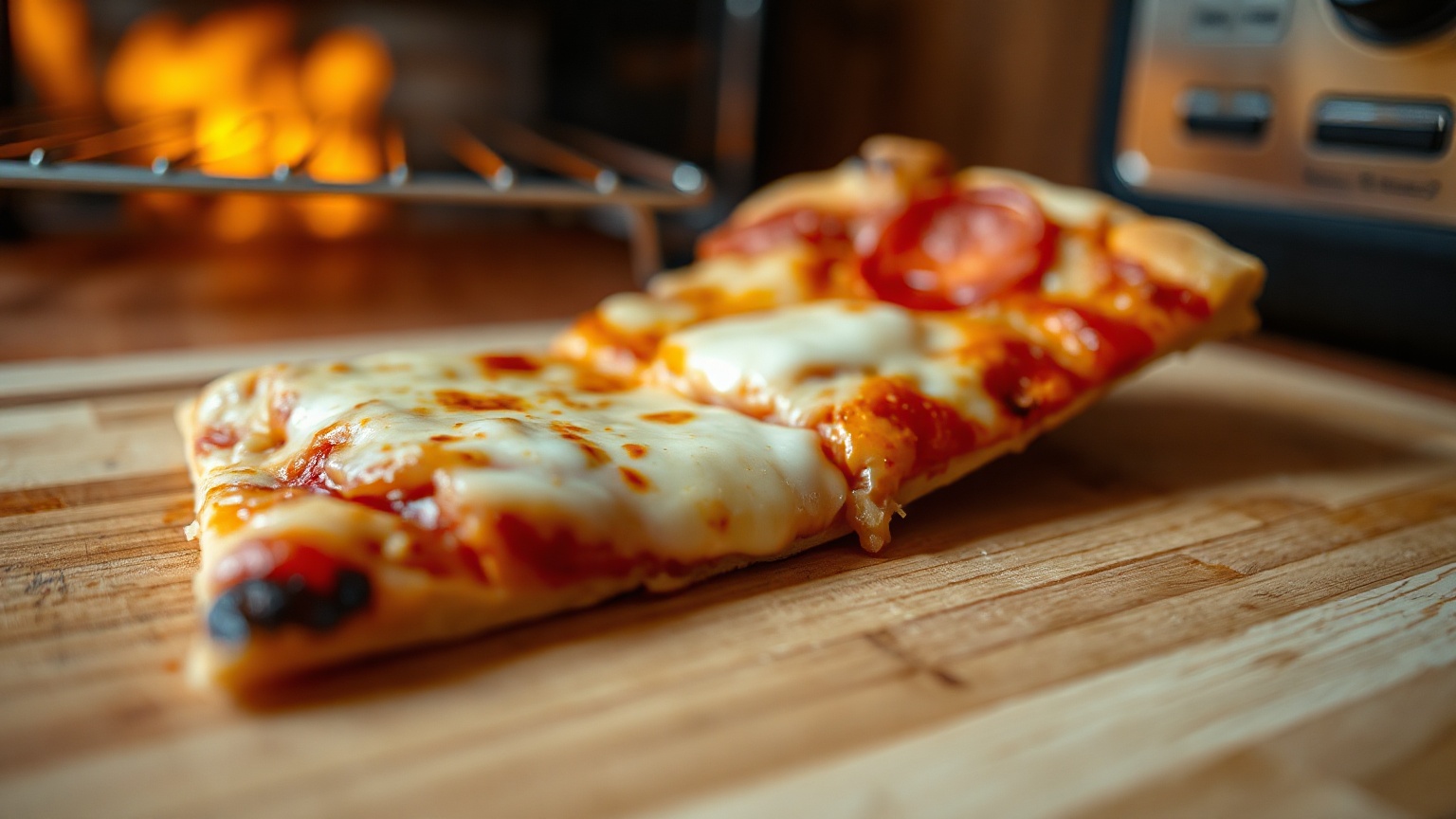
The Toaster Oven: Dry Heat Does the Work
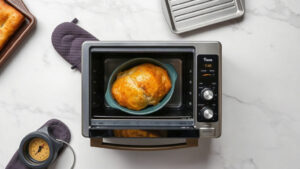
A toaster oven heats pizza using radiant heat from its top and bottom elements, plus some convection if your model has a fan. That dry heat does two things at once: it re-gelatinizes the starches in the crust so they firm back up, and it melts the cheese fresh without steaming it. The result looks and tastes close to the original bake. Not identical, but genuinely good.
The sweet spot I’ve landed on is 375°F on the toast or bake setting, slice placed directly on the rack (not a pan), for about 4–5 minutes. Rack placement matters more than most people realize. A pan traps steam underneath the crust, which partially undoes all the good work the dry heat is doing from above. Direct rack contact lets air circulate under the slice and helps the bottom crisp up the way it should. You can check out more detail on reheating food in a toaster oven if you want a broader guide, but pizza specifically really benefits from that rack-direct setup.
First time I tried it, I made the rookie mistake of using a baking pan and wondered why the bottom was still soft. Took a second attempt to figure out. Now I never go back.
The Microwave: Speed at a Cost
Microwaves heat food by exciting water molecules. Fast, yes. But for pizza, that means all the moisture in the sauce and toppings gets agitated and basically steams the crust from within. The cheese heats unevenly — scorching hot in spots, barely warm in others — and the crust goes from cold and crisp to soft and almost spongy in under a minute.
There is one microwave trick that helps: put a small ceramic mug of water in the microwave alongside the slice. The water absorbs some of the microwave energy and prevents the cheese from overheating, which reduces that rubbery texture. It doesn’t fix the crust problem. But if you’re in a rush, it’s the best you can do.
Another option some people swear by is microwaving at 50% power for 90 seconds instead of full power for 45 seconds. In my tests, the difference in crust texture was real but minor. You’re still not getting anything resembling crispy.
Side-by-Side Comparison: The Real Numbers
| Factor | Toaster Oven | Microwave |
|---|---|---|
| Reheat time (1–2 slices) | 4–6 minutes (plus ~2 min preheat) | 45–90 seconds |
| Crust texture | Crispy, close to original | Soft, often gummy |
| Cheese texture | Even melt, slightly browned | Uneven, can go rubbery |
| Temperature needed | 350–400°F | N/A (uses microwave frequency) |
| Wattage | 1,200–1,800W | 700–1,200W |
| Total energy (1 slice) | ~0.2–0.25 kWh | ~0.02–0.04 kWh |
| Best for | Any pizza you want to taste good | When speed is the only priority |
| Worst at | Impatient people, bulk reheating | Keeping crust texture |
That energy figure is worth pausing on. A microwave wins on energy efficiency for a single slice by a significant margin — roughly 5–10x less electricity per slice compared to a toaster oven that has to preheat. Honestly, if you’re reheating pizza twice a day and your electricity bill is already a concern, the microwave is the more practical choice from a cost standpoint. But taste-wise? It’s not close.
Step-by-Step: How to Reheat Pizza in a Toaster Oven Properly
Here’s exactly how I do it, every time.
- Set the toaster oven to 375°F on bake or toast mode. If your unit has convection, use it — it speeds things up by about a minute and gives the cheese a nicer finish.
- Let it preheat for 2 minutes. Smaller toaster ovens heat up fast; don’t skip this step or the crust won’t crisp properly.
- Place the slice directly on the toaster oven wire rack. No foil, no pan unless your toppings are prone to dripping (heavy meat toppings, extra cheese) — in which case, put the pan on the rack below to catch drips, not under the slice itself.
- Reheat for 4–5 minutes. At 5 minutes, check the underside — it should have color on it. If it’s still pale, go another 60–90 seconds.
- Let it rest on the rack for a full minute before eating. The crust continues to firm up as it cools slightly, and the cheese settles so it doesn’t slide off and scald your chin.
For thick, deep-dish slices, I bump the temperature to 400°F and add a couple minutes. The extra mass takes longer to heat through. Chicago-style pizza especially benefits from a slightly lower temp for longer — 350°F for 8 minutes — otherwise the top cheese browns before the center is actually warm. Worth knowing if that’s your thing.
If you want something to rest the slice on that makes cleanup easier, a small toaster oven baking pan under the rack works well for catching cheese drips without affecting crust crispiness.
The Edge Case: When the Microwave Actually Wins
I promised an honest answer, so here it is. There are a few situations where I’d actually reach for the microwave first.
Thin-crust pizza with lots of sauce — particularly a New York margherita or a very saucy Neapolitan slice — can come out decent in the microwave because you’re not chasing a crispy crust in the first place. The sauce reheats beautifully. The cheese gets melty. If the slice was already a bit soft to begin with and that’s how you like it, the microwave is fine.
Cold pizza. This one’s going to divide people, but I know plenty of folks who prefer leftover pizza cold straight from the fridge. And if your goal is just to take the chill off — not actually warm it up — the microwave at 20–30% power for 30 seconds is legitimately the move. The toaster oven isn’t going to help you there.
Reheating five or six slices at once? Neither appliance handles that gracefully. Use a full-size oven at 400°F on a baking stone or sheet for 8–10 minutes. Serious Eats has tested this extensively and consistently comes back to the oven or skillet method for larger quantities — worth reading if you’re a pizza leftover obsessive.
The skillet method, by the way, is the other strong competitor here. Low-medium heat, covered pan, 3 minutes. Gets the crust extremely crispy but doesn’t melt the cheese as evenly as a toaster oven does. It’s my backup method when the toaster oven is occupied.
Which Appliance Should You Actually Own?
If you already own both, use the toaster oven. That’s the simple answer.
But if you’re thinking about which to invest in more seriously, a decent toaster oven does everything a microwave does for reheating — and does most of it better — while also being able to bake, broil, and toast. A microwave reheats faster and handles liquids, soups, and vegetables with more finesse. They’re genuinely different tools, not direct replacements for each other.
For pizza specifically, though? Get a toaster oven with a convection fan. You don’t need anything fancy. The Breville Smart Oven Compact, the Cuisinart TOA-28, the Hamilton Beach 31123D — any of these will reheat a pizza slice better than any microwave made. My personal unit is a mid-range Cuisinart and it handles daily pizza reheat duty without complaint. If you want more options, the best mini toaster ovens guide has a ranked list worth reading through.
The Verdict
Toaster oven. Not even close, for most pizza. 375°F, directly on the rack, 4–5 minutes. That’s genuinely all it takes to bring a cold slice back to something worth eating. The microwave gets the job done if you’re truly in a hurry or you like softer, saucier pizza to begin with — but it cannot recreate a crispy crust, full stop. If crispy crust matters to you (and it should), the toaster oven is your answer. Food Network agrees, and so does anyone who’s actually run both side by side and paid attention to the difference.
And honestly? Even a slightly imperfect toaster oven reheat beats a microwave reheat on any day where you have the extra four minutes. Which, most days, you do.
Frequently Asked Questions
Does reheating pizza in a toaster oven really make it crispy again?
Yes, and it works reliably. Placing the slice directly on the wire rack at 375°F for 4–5 minutes lets dry radiant heat re-crisp the crust from below while re-melting the cheese from above. The crust won’t be identical to a fresh bake, but it’s genuinely crispy rather than soft or chewy. Rack placement is the key detail most people skip.
How long does it take to reheat pizza in a toaster oven?
Plan on about 6–8 minutes total: roughly 2 minutes of preheating and 4–6 minutes of actual cook time at 375°F. Thicker slices like deep-dish or Sicilian need closer to 8–10 minutes at a slightly lower temperature (350°F) to heat through without burning the top. Thin-crust slices are usually done in 4 minutes flat.
Why does pizza get soggy in the microwave?
Microwaves heat food by vibrating water molecules, which generates steam inside the pizza’s crust and toppings. That trapped steam softens the crust rather than crisping it, and can also make the cheese go rubbery from uneven heating. It’s a fundamental limitation of how microwaves work — not a fixable problem, just a tradeoff you accept when you choose speed over texture.
What temperature should a toaster oven be set to for reheating pizza?
375°F is the best all-purpose setting for most pizza styles. It’s hot enough to crisp the crust without scorching the cheese before the middle heats through. For thick slices, drop to 350°F and add a couple of minutes. For a very thin, cracker-crust slice, you can push to 400°F but watch it closely after the 3-minute mark.
Is a toaster oven or microwave better for reheating pizza?
A toaster oven is better for reheating pizza if you care about texture — it restores crust crispiness and melts the cheese evenly, which a microwave physically cannot do. A microwave is faster (45–90 seconds vs. 6–8 minutes) and uses less electricity for a single slice, so it wins on convenience alone. For anything beyond bare-minimum warming, the toaster oven is the right tool.

Written by
Emma founded Toastera to turn vague appliance advice into clear, researched, safety-first guidance on toasters and toaster ovens.
Free: the Toaster Oven Cheat Sheet
Get the printable cheat sheet (temps, cook times & safety tips) plus new recipes. No spam, unsubscribe anytime.