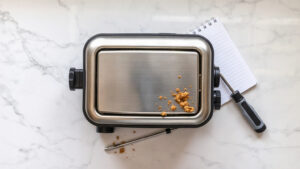
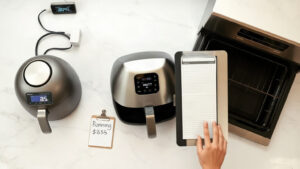
For reheating leftover pasta, a toaster oven wins for sauced pasta (penne, rigatoni, lasagna) because it heats gently and evenly without drying out the exterior, while an air fryer is the better call for already-dry pasta dishes or anything you want to crisp up — think baked mac and cheese or pasta bakes. The air fryer runs hotter and faster but can turn plain spaghetti into something weirdly jerky-like if you’re not careful. Know your pasta, pick your appliance accordingly.
Safety First: Both air fryers and toaster ovens reach temperatures above 400°F and retain heat in their baskets and racks long after cooking stops. Always use oven mitts when pulling out any dish, never place hot accessories on bare countertops or plastic surfaces, and keep the appliance at least six inches from walls or cabinets. If you’re adding liquid (water or broth) to a hot pan inside either appliance, add it before the appliance preheats — splashing liquid onto a hot heating element is a burn and electrical hazard.
Quick Facts: Air Fryer vs Toaster Oven for Pasta
- Toaster ovens reheat sauced pasta best at 325–350°F for 10–15 minutes, covered loosely with foil.
- Air fryers work well for pasta bakes and crispy mac and cheese — use 350°F for 5–8 minutes, stirring once.
- Microwaves beat both for speed, but the texture trade-off is real — rubbery noodles, uneven heat.
- Adding 1–2 tablespoons of water or broth before reheating sauced pasta in either appliance prevents the sauce from seizing up.
- Pasta with cream-based sauces (alfredo, carbonara) behaves differently than tomato-based — see the breakdown below.
Why This Question Actually Matters
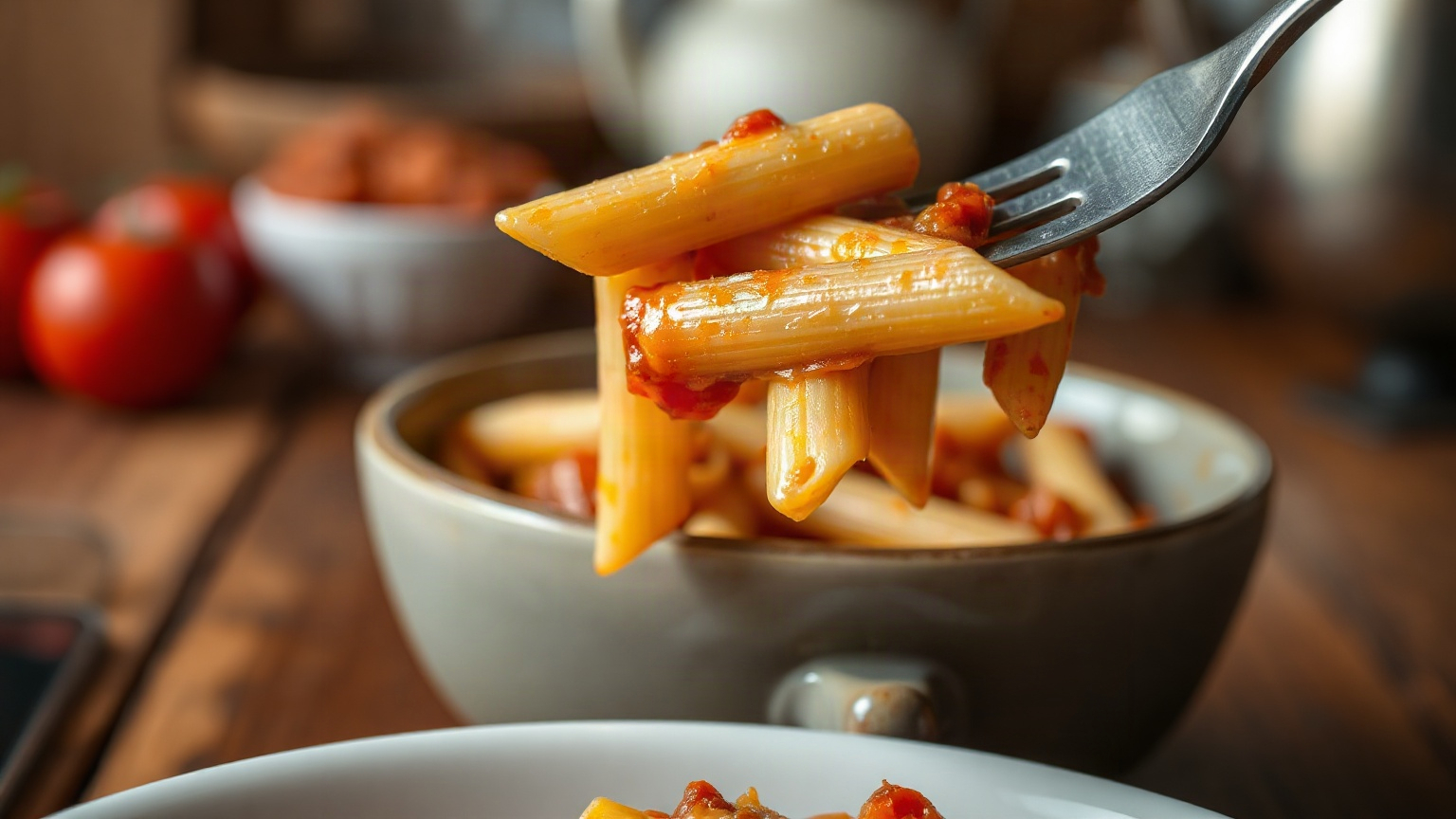
I’ve reheated a lot of pasta. Probably too much, if I’m honest. And for years I defaulted to the microwave like everyone else, which is fine if you’re okay with a sad, steamy bowl of unevenly warmed noodles with sauce that’s simultaneously scalded in one spot and cold in another. Then I started using my toaster oven for everything, and eventually got an air fryer too, and the difference — especially for pasta — is genuinely worth talking about.
The problem is that “leftover pasta” covers a huge range of situations. Cold penne with marinara is a completely different reheating challenge than a baked ziti that’s already got a crust on it, or a cream-heavy fettuccine alfredo that breaks if you look at it wrong. So let’s actually go through the scenarios instead of giving you a one-size answer.
The Core Difference: How Each Appliance Actually Heats
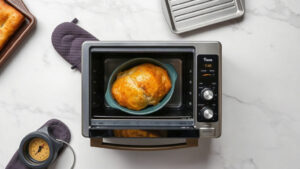
Toaster ovens use radiant heat from top and bottom heating elements. The heat is ambient — it surrounds the food, which means it penetrates more slowly and gently. That’s actually what you want for a sauced pasta dish. You’re not trying to blast it; you’re trying to bring it back up to temperature without destroying the texture of the noodles or causing the sauce to separate.
Air fryers are essentially small convection ovens with a powerful fan. The circulating hot air is aggressive. Great for crisping. Not always great for delicate or moisture-dependent dishes. The fan can evaporate surface moisture fast — which is why dry pasta dishes thrive in there, and why plain spaghetti with marinara can come out weirdly tacky on the outside if you don’t manage the moisture.
| Feature | Toaster Oven | Air Fryer |
|---|---|---|
| Heating method | Radiant (ambient heat) | Convection (circulating fan) |
| Best pasta type | Sauced pasta, casseroles | Pasta bakes, mac & cheese, crispy dishes |
| Reheat temp for pasta | 325–350°F | 340–360°F |
| Reheat time (1–2 cups) | 10–15 minutes | 5–8 minutes |
| Moisture retention | Better (especially foil-covered) | Lower (fan dries surface quickly) |
| Texture result | Even, tender | Slightly crispy outside |
| Hands-on effort | Low (set and walk away) | Medium (stir halfway) |
For more detail on how these appliances compare across all reheating tasks, I’ve got a full breakdown at reheating food in a toaster oven — worth a look before you commit to a method.
Reheating by Pasta Type: What Actually Works
Sauced Pasta (Marinara, Arrabbiata, Puttanesca)
Toaster oven, no contest. Put your pasta in an oven-safe dish — I use a small ceramic baking dish or sometimes just a toaster oven baking pan — add a tablespoon or two of water or pasta water if you saved it (please start saving your pasta water), cover loosely with foil, and reheat at 325°F for about 12 minutes. Check it. Stir if needed. Another couple of minutes if the center’s still cold.
The foil matters. It traps steam, which keeps the noodles from drying out and helps the sauce re-emulsify instead of just turning into a dry crust around the edges. First time I reheated pasta in the toaster oven without foil, I got something closer to pasta chips around the rim of the dish. Lesson learned.
Cream-Based Sauces (Alfredo, Carbonara, Cream Sauces)
This is where things get fiddly. Cream sauces break easily — the fat separates from the liquid if you overheat them, and you end up with an oily, grainy mess. Toaster oven at the lowest useful setting, 300–325°F, with foil and a splash of cream or milk rather than water. Go slow. Check it at 8 minutes. You want warm, not hot.
Air fryer? I wouldn’t. The high-velocity air makes the sauce dry out on the surface of the noodles way too fast, and by the time the center is warm, the edges are done. Not ideal. Serious Eats has written about why cream sauces are notoriously hard to reheat — the science backs up what I’ve experienced in practice.
Baked Pasta (Ziti, Lasagna, Mac and Cheese)
Here’s where the air fryer earns its place. Baked pasta already has a crust on it. It’s denser. It can handle — and actually benefits from — the aggressive circulating heat. Reheat at 350°F for 6–8 minutes in the air fryer basket, and you’ll get a crispy top with a heated-through interior. I usually put my mac and cheese slice directly on a piece of foil in the basket so the bottom doesn’t overcrisp.
Toaster oven works too, just takes longer — about 15 minutes at 350°F. If you want that re-crisped top on your lasagna, pull the foil off for the last 3–4 minutes. Both are solid here, but the air fryer is genuinely faster and the crust is better.
Plain Pasta (No Sauce, Just Oil or Butter)
Honestly? This is the edge case nobody talks about. Cold aglio e olio, or plain buttered noodles someone saved from dinner. The air fryer can handle this really well — 350°F, 4–5 minutes, toss halfway through, and you get slightly crispy-edged noodles that are kind of great in a way they weren’t when fresh. It’s almost intentional at that point. Add a little more olive oil before you put it in.
Toaster oven for the same thing tends to just dry them out without the crispiness payoff. Less useful here.
Practical Tips That Actually Help
- Preheat your appliance first. Don’t put cold pasta into a cold toaster oven and then start the timer. Always let it come to temperature — usually 3–5 minutes — before the food goes in. Skipping this is probably the most common mistake I see people make.
- Portion size matters more than you’d think. A big mound of pasta in the center of a small toaster oven dish heats unevenly. Spread it out. Same for the air fryer basket — don’t pile it in, single-ish layer is the goal.
- Use a toaster oven wire rack for baked pasta dishes to get airflow underneath and avoid a soggy bottom on things like lasagna slices.
- Check the internal temp if you’re unsure. The USDA recommends reheating leftovers to 165°F internally. A cheap instant-read thermometer is worth having for dishes like lasagna where the center can hide cold spots.
- Don’t leave either appliance unattended for the full cook time on your first attempt with a new dish. Pasta can go from perfect to overdone in two minutes when you’re running hot.
Which Models Handle This Best
If you’re shopping for an appliance primarily to reheat leftovers including pasta, appliance choice genuinely matters. Here’s my honest take on the popular options:
| Model | Type | Capacity | Price Tier | Best For |
|---|---|---|---|---|
| Breville Smart Oven Air Fryer Pro | Toaster oven + air fryer | Large (fits 9×13) | Premium | All pasta types, does both well |
| Cuisinart TOA-70 | Toaster oven + air fryer | Mid-large | Mid-range | Solid all-rounder, good for baked pasta |
| Ninja Foodi XL Pro | Air fryer / toaster oven combo | Large | Mid-range | Great for crispy pasta bakes, fast reheat |
| Hamilton Beach Easy Reach | Toaster oven | Small-medium | Budget | Gentle reheating, sauced pasta |
My personal pick for pasta reheating specifically: the Breville Smart Oven Air Fryer Pro wins because it can do both jobs and does them accurately. The temperature calibration is better than the Cuisinart in my experience — the Cuisinart runs about 15–20 degrees hot, which matters a lot when you’re trying to gently reheat an alfredo. The Ninja Foodi XL Pro is the runner-up for people who do more crispy reheating than sauced-pasta reheating.
If budget is the priority, the Hamilton Beach is fine for gentle reheating but don’t expect it to crisp anything. The best mini toaster ovens roundup has more options if you’re working with limited counter space.
The Honest Verdict
Here’s where I land after testing this genuinely more than any reasonable person should: the toaster oven is the safer, more reliable choice for most leftover pasta scenarios. It’s more forgiving, it handles moisture better, and it doesn’t require you to babysit it. If 90% of your reheated pasta is sauced noodles, get a good toaster oven and use the foil trick.
But if you reheat pasta bakes or mac and cheese regularly — or if you just like crispy edges — the air fryer earns its counter space. Neither appliance is universally better. They’re good at different things, and once you know which you’ve got in front of you, the right call is obvious.
The microwave remains the fastest option, and Food Network’s pasta reheat guide covers it well if that’s your priority. But for texture? You already know the answer. That’s why you’re here.
Frequently Asked Questions
Can you reheat pasta in an air fryer without drying it out?
Yes, but you need to add a small amount of liquid first — about a tablespoon of water, broth, or olive oil depending on the dish — and stir or toss the pasta halfway through reheating. Run it at 350°F for 5–7 minutes and don’t go longer than needed. Sauced pasta is more prone to drying out than pasta bakes, so the toaster oven is usually the smarter call for those.
What temperature should I use to reheat pasta in a toaster oven?
325–350°F is the right range for most pasta dishes. Lower temps (325°F) work better for cream-based sauces that break under high heat, while 350°F is fine for tomato-based sauces and baked pasta. Always cover the dish loosely with foil to trap steam and keep the noodles from drying out.
Is it safe to reheat pasta in a toaster oven?
Yes, completely safe — as long as you use oven-safe dishes (no plastic, no wax paper, no anything that says “not for oven use”). The USDA recommends bringing reheated leftovers to an internal temperature of 165°F, so if you’re reheating a thick baked pasta dish, check the center with an instant-read thermometer. Don’t reheat pasta more than once after it’s been refrigerated.
How long does it take to reheat pasta in an air fryer vs toaster oven?
An air fryer reheats a 1–2 cup portion of pasta in about 5–8 minutes at 350°F. A toaster oven takes 10–15 minutes at 325–350°F for the same amount. The air fryer is faster, but that speed is also why it’s easier to over-dry or over-crisp pasta — especially plain sauced noodles.
Can you reheat pasta bake or lasagna in an air fryer?
Yes, and it actually does a great job. Baked pasta dishes like lasagna, baked ziti, or mac and cheese reheat well in the air fryer at 350°F for 6–8 minutes — the circulating heat re-crisps the top and heats through the interior without the dish becoming waterlogged. Put the portion on a piece of foil in the basket so the bottom doesn’t burn, and check it at the 6-minute mark.

Written by
Emma founded Toastera to turn vague appliance advice into clear, researched, safety-first guidance on toasters and toaster ovens.
Free: the Toaster Oven Cheat Sheet
Get the printable cheat sheet (temps, cook times & safety tips) plus new recipes. No spam, unsubscribe anytime.