For one or two people, a compact toaster oven (roughly 0.5–0.8 cubic feet) handles 90% of daily cooking tasks — toast, reheated leftovers, roasted vegetables, even a small chicken breast — without heating up your whole kitchen or running up your electricity bill. Full-size toaster ovens (1.0–1.8 cubic feet) earn their counter space only if you regularly cook larger portions, bake full-size sheet pans, or want air frying capacity that a compact unit simply can’t match. Most solo cooks and couples genuinely don’t need the bigger machine, but there are real exceptions worth knowing about.
Safety First: Toaster ovens reach internal temperatures of 450°F or higher and exterior surfaces can get hot enough to cause serious burns — never place a toaster oven directly against cabinet undersides, walls, or curtains. Maintain at least 4–6 inches of clearance on all sides and never leave it running unattended with fatty foods, as grease splatter is a real fire risk. Always unplug before cleaning.
Key Takeaways
- Compact toaster ovens (under 0.8 cu ft) are genuinely sufficient for 1–2 people for most everyday cooking — toast, reheating, small roasts, and baking up to a 9-inch pan.
- Full-size toaster ovens shine when you need to cook a 12-inch pizza, a whole chicken, or a full sheet of cookies — tasks that come up less often for small households.
- Compact models preheat 30–40% faster and typically use 1,000–1,200 watts vs. 1,500–1,800 watts for full-size units, which adds up on your electricity bill over time.
- Counter space is often the deciding factor — a compact unit can save 6–8 inches of linear counter space compared to a full-size model.
- If you want a genuine air fryer function with a large enough basket to be useful, a mid-size or full-size unit is almost always the better pick.
What “Compact” and “Full-Size” Actually Mean in Practice
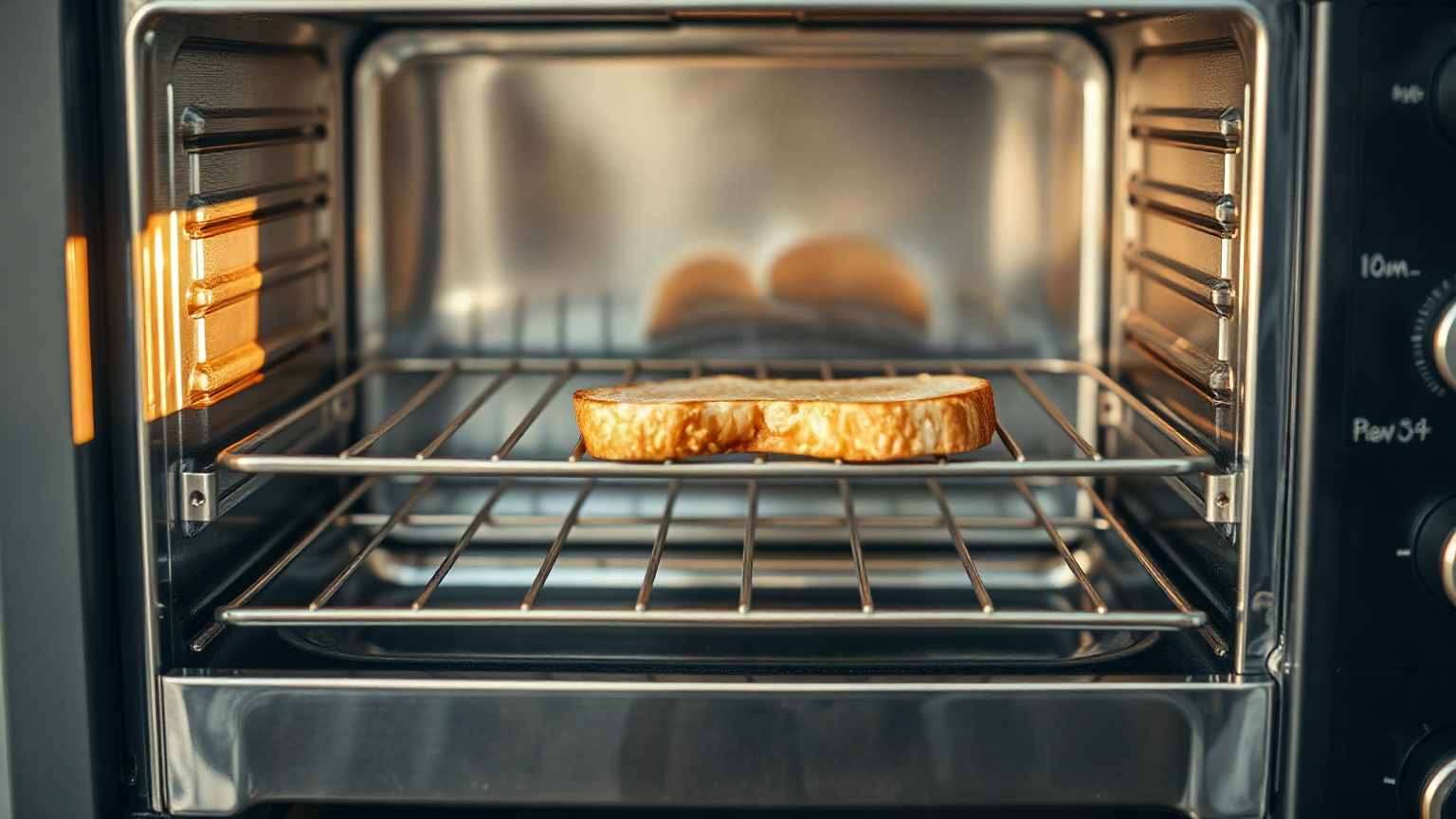
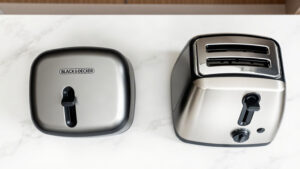
The industry doesn’t have a locked-in standard for these labels, which trips people up constantly. Generally, a compact toaster oven fits 2–4 slices of toast and has an interior around 0.5–0.8 cubic feet. Think: the Cuisinart TOA-60 or the Black+Decker TO1760SS. A full-size unit — the Breville Smart Oven Air Fryer Pro, the Cuisinart TOA-70, the Ninja Foodi XL — fits 6 slices of toast, often a 13×9-inch baking pan, and sometimes a full 12-inch pizza. Those are genuinely different machines.
Interior capacity matters more than exterior footprint, but they’re obviously linked. A full-size Breville is about 20 inches wide on the counter. A compact unit might be 14–16 inches. That’s not a trivial difference if your kitchen is small. My old apartment had maybe 18 inches of usable counter next to the outlet I wanted to use. Decision made for me, honestly.
The Real-World Size Test: What Each Can and Can’t Do
What a compact toaster oven handles fine
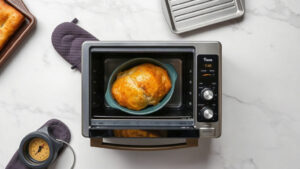
Two slices of toast, obviously. But also: a couple of chicken thighs roasted at 400°F for 30 minutes (they come out genuinely crispy, better than a full oven in my experience because the heat is so concentrated). Reheating pizza without turning it into a soggy disaster — see my full notes on reheating food in a toaster oven for the exact settings I use. A 9×9 baking pan fits in most compact models, which means brownies, a small casserole, roasted vegetables. Salmon fillets. Bone-in chicken breast. A single-serve frozen lasagna.
For one or two people eating at normal times, this is basically your whole life.
Where compact units actually fall short
A 12-inch frozen pizza won’t fit. That matters to some people and not at all to others. A whole roasted chicken — even a small 3-lb bird — is borderline in most compact models and genuinely cramped in the smaller ones. Air frying in a compact unit works, but the basket is usually so small that you’re cooking in multiple batches, which defeats a lot of the time-saving appeal. And if you bake regularly — real baking, like a dozen cookies or a loaf of bread — you’ll hit the ceiling fast.
Also worth mentioning: some compact models have slightly less precise temperature control. Not always. But the cheaper compact units can run hot or uneven in ways that a better full-size unit won’t. I burned the edges of two batches of roasted broccoli in a budget compact oven before I figured out I needed to pull the rack down one position. Small annoyance, but real.
Energy Use, Preheat Speed, and the Math That Actually Matters
This is where compact ovens quietly win for small households. Here’s a quick comparison of how common models stack up:
| Model | Size Category | Wattage | Interior Capacity | Avg. Preheat to 400°F | Price Tier |
|---|---|---|---|---|---|
| Hamilton Beach 31127D | Compact | 1,000W | ~0.5 cu ft | ~5–6 min | Budget |
| Cuisinart TOA-60 | Compact/Mid | 1,800W | ~0.6 cu ft | ~5–7 min | Mid-range |
| Breville BOV450XL | Compact | 1,800W | ~0.45 cu ft | ~4–5 min | Mid-range |
| Ninja Foodi XL Pro | Full-Size | 1,800W | ~1.0 cu ft | ~8–10 min | Mid-range |
| Cuisinart TOA-70 | Full-Size | 1,800W | ~0.95 cu ft | ~8–10 min | Mid-range |
| Breville Smart Oven Air Fryer Pro | Full-Size | 1,800W | ~1.0 cu ft | ~8–11 min | Premium |
The preheat gap is real and it compounds. If you’re making dinner every night, shaving 4–5 minutes off preheat adds up to something like 24 hours a year saved. Probably not life-changing, but it’s there. And a smaller cavity means the food closer to the heating elements — which actually helps cooking efficiency more than most people expect, especially for things like roasting at high heat.
Energy cost difference is real but modest. Running a 1,000W unit vs. a 1,800W unit for 30 minutes a day works out to roughly $10–15 per year difference in electricity, depending on your rate. Not the reason to choose one over the other, but it’s a point for compact.
Specific Model Verdicts for 1–2 People
Best compact picks
The Breville BOV450XL Mini Smart Oven is my top pick for one or two people who want reliable, consistent results without a lot of fussing. It’s got a decent array of preset functions, Element IQ technology that adjusts heat distribution intelligently, and it fits a 9-inch pan cleanly. I’ve used it for everything from broiling salmon to reheating leftover Thai food (set to 325°F, convection on — works perfectly). It’s mid-range priced and earns every dollar.
The Hamilton Beach 31127D is the budget option I’d recommend to someone who just needs basic toast-and-reheat functionality. No air frying, no convection. But it’s reliable, easy to clean, and runs about $40–50. Good first toaster oven for a college apartment or a first home.
Check out our full roundup of the best mini toaster ovens for more options at every price point.
When to go full-size even for 1–2 people
Here’s my honest take: if you don’t have a full-size oven (studio apartment, converted space, tiny rental kitchen with a broken oven you’ve given up on), get the full-size toaster oven. The Breville Smart Oven Air Fryer Pro is expensive but it is genuinely close to a real oven replacement. The Cuisinart TOA-70 is a solid mid-range alternative — worth checking the current price on Amazon because it frequently goes on sale.
Also: if you’re a serious baker or you regularly entertain even occasionally, the compact unit will frustrate you faster than you think. A pan of brownies for two people is fine. But if friends are coming over and you want to bake a tray of appetizers and then roast something, a compact oven just doesn’t have the room to breathe.
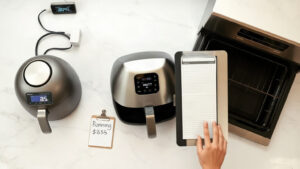
The Ninja Foodi XL is worth a look for anyone who wants air frying to actually work — the basket size in full-size models makes a meaningful difference for things like frozen fries or chicken wings. You can do a real portion in one batch instead of two or three.
The edge case nobody mentions: humid climates and small kitchens
Here’s something I haven’t seen covered anywhere: in a small kitchen, a full-size toaster oven running at 450°F for 45 minutes can noticeably heat up the room. In summer or in a hot climate, that matters. Compact ovens, with their smaller cavity and faster cook times, tend to dump less heat into the room overall. It’s not dramatic, but in a studio apartment in July, you feel it. This is a real vote for compact that nobody in the buying guides seems to bring up.
For context on how hot these machines actually get internally and on their exterior surfaces, see our breakdown of how hot a toaster gets.
Accessories: What You Actually Need
Most toaster ovens come with a crumb tray and a basic rack. Some include a baking pan. The thing is, the included pans are often flimsy and slightly the wrong size for anything you’d actually buy separately. I’d recommend grabbing a quality small toaster oven baking pan that fits your specific model — measure the interior first because even models labeled “fits a 9-inch pan” can have subtle differences in depth. A parchment sheet cut to size is also something I use every single time I roast vegetables. Cleanup goes from annoying to nothing.
You can also find good toaster oven cooking tips that apply whether you’re using a compact or full-size model — the principles are the same.
The Bottom Line
For most people cooking for one or two, a compact toaster oven is the smarter buy — faster, cheaper to run, takes up less space, and handles 90% of what you’ll actually make. The Breville BOV450XL is where I’d spend the money if budget allows. Go up to a full-size model only if you’re replacing a missing oven entirely, you bake regularly, or you want air frying that’s actually practical. The Cuisinart TOA-70 is my full-size pick for couples at a reasonable price. Avoid buying a full-size unit “just in case” — that logic is how you end up with a refrigerator-sized machine taking up your counter forever, mostly running at half capacity.
Frequently Asked Questions
Can a compact toaster oven replace a full-size oven for one or two people?
For most everyday cooking — roasting, reheating, baking in small batches, broiling — yes, a compact toaster oven handles it well. The exceptions are large-format cooking like a full roasting pan, a 13×9 casserole, or cooking for a group. If those situations come up more than occasionally, you’ll want the larger unit or to supplement with a proper oven.
How much counter space does a compact toaster oven vs full-size toaster oven take up?
A typical compact toaster oven footprint runs about 14–16 inches wide and 10–12 inches deep. Full-size models generally run 18–22 inches wide and 14–17 inches deep. That’s a meaningful difference in a small kitchen — roughly the width of a laptop in either direction. Always measure your counter and allow 4–6 inches of clearance on each side before buying.
Is a compact toaster oven energy efficient compared to a full-size model?
Compact toaster ovens typically draw 1,000–1,200 watts compared to 1,500–1,800 watts for full-size models. Because the smaller cavity heats up faster and the food is closer to the elements, you’re often running the unit for less time too. The real-world energy savings over a year are modest — maybe $10–20 — but the faster preheat is a daily convenience that adds up.
What size toaster oven do I need for two people?
A 0.5–0.8 cubic foot capacity toaster oven fits two generous portions of most dishes and accommodates a 9-inch baking pan. That’s genuinely enough for two people in most cooking scenarios. Bump up to a 0.9–1.0 cubic foot model if you frequently cook bone-in meats, want air frying capacity that doesn’t require batching, or occasionally cook for more than two people.
Which toaster oven brands are best for small households?
Breville consistently makes the most reliable compact and mid-size toaster ovens — the BOV450XL (compact) and the Smart Oven Air Fryer Pro (full-size) are both well-built and accurate. Cuisinart’s TOA-60 and TOA-70 are solid mid-range alternatives with good air frying performance. For budget buyers, Hamilton Beach is dependable for basic toast-and-reheat use. Avoid off-brand units without a clear return policy — temperature inconsistency is a real problem at the low end.

Written by
Emma founded Toastera to turn vague appliance advice into clear, researched, safety-first guidance on toasters and toaster ovens.
Free: the Toaster Oven Cheat Sheet
Get the printable cheat sheet (temps, cook times & safety tips) plus new recipes. No spam, unsubscribe anytime.