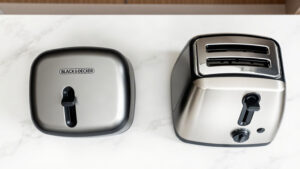
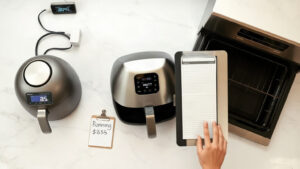
A toaster oven typically lasts between 5 and 10 years before it starts losing its ability to heat properly, with the average landing around 6 to 8 years for daily use. The heating elements degrade over time from repeated thermal cycling, and cheap internal thermostats drift out of calibration well before the elements actually burn out. Practically speaking, if your toaster oven is taking twice as long to toast bread or can’t seem to hit temperatures above 250–300°F reliably, it’s probably not worth repairing.
Safety First: A toaster oven with degraded heating elements, a cracked interior, or a fraying power cord is a fire and shock hazard — not just an inconvenience. If you notice sparking, burning smells that aren’t food-related, or visible damage to the cord or heating coils, unplug the unit immediately and stop using it. Do not attempt to replace heating elements yourself unless you are qualified to work with high-voltage appliances.
Quick Facts: Toaster Oven Lifespan at a Glance
- Average lifespan: 6–8 years with regular use; up to 10 years with light use and proper maintenance
- First parts to fail: the internal thermostat and quartz heating elements, often before the unit looks damaged
- A toaster oven that can’t exceed 250°F is functionally useless for most cooking — baking, broiling, and even proper reheating require 325–450°F
- Budget models (under $50) typically last 3–5 years; mid-range and premium models can push well past 8 years
- Repair is rarely cost-effective — a replacement thermostat plus labor often runs $40–$80, which approaches the price of a new budget unit
What Actually Wears Out First Inside a Toaster Oven
Most people assume the heating elements go first. They’re the glowing orange coils, so they seem like the obvious weak link. But honestly, in my experience, the thermostat fails first — or rather, it drifts. It doesn’t die dramatically. It just starts lying to you.
I had a Hamilton Beach unit that I used almost daily for about four years. Set it to 375°F for roasting vegetables, and it would technically turn on, the elements would glow, but I started noticing my broccoli was coming out limp instead of charred at the edges. Eventually I put an oven thermometer inside (something I’d recommend to anyone who cooks in a toaster oven more than occasionally) and the actual internal temperature was reading 290°F. The dial said 375. That’s a 85-degree gap — and that’s when I knew the thermostat was shot.
The Thermostat
The thermostat is a bimetallic or electronic sensor that tells the heating elements when to cycle on and off. With hundreds of heat-up and cool-down cycles, the calibration drifts. In older mechanical thermostats especially, the bimetallic strip fatigues and stops responding accurately. The appliance still works — technically. But it’s lying about temperature, which is arguably worse than not working at all, because you don’t immediately know something’s wrong.
The Heating Elements
Quartz heating elements — the type in most modern toaster ovens — are more efficient and heat up faster than the older nichrome wire coils, but they’re also more brittle. A hard knock, a splash of cold water on a hot element, or just enough thermal cycling and they can crack. Nichrome wire elements last longer physically but lose wattage output over time as the wire oxidizes. Either way, a degraded element means the oven either takes forever to reach temperature or can’t sustain it.
The Timer and Controls
Mechanical dials wear out. The timer spring weakens. Digital control panels can develop button failures or software glitches — especially on cheaper units with low-quality tactile switches. This is more annoying than dangerous, but a broken timer that keeps the oven on indefinitely is a real fire risk. Don’t ignore it.
How Lifespan Varies by Brand and Price Tier
Not all toaster ovens are built the same, obviously. But the price-to-longevity relationship is pretty linear here, more so than with a lot of appliances.
| Price Tier | Typical Brands | Expected Lifespan | First Failure Point |
|---|---|---|---|
| Budget (under $50) | Hamilton Beach, Black+Decker | 3–5 years | Thermostat drift, loose door seal |
| Mid-range ($50–$150) | Cuisinart, Oster, Ninja | 5–8 years | Control panel, heating element |
| Premium ($150–$300+) | Breville, Panasonic | 8–10+ years | Element degradation after heavy use |
Breville, in particular, has a reputation for building toaster ovens that last. The Smart Oven line uses PID temperature control (that’s a more precise electronic thermostat, not a bimetallic strip) which holds calibration far longer. I’ve seen people using a Breville Smart Oven Air Fryer for 7 or 8 years without meaningful temperature issues. That’s unusual for the category.
Budget units from Black+Decker or the lower-end Hamilton Beach models, on the other hand, are often engineered to a price point that makes 3–4 years fairly realistic. That’s not necessarily a criticism — if you’re a light user and replace it every few years, you might actually come out ahead financially versus dropping $250 upfront. But if you’re using it daily for actual cooking (not just reheating), buy mid-range at minimum. You’ll thank yourself in year four.
For best mini toaster ovens by category and use case, I’ve covered specific models in more depth elsewhere on this site.
The Signs Your Toaster Oven Is Failing (Before It Dies Completely)
Here’s the thing — a failing toaster oven rarely just stops working one day. It degrades. Slowly. And you might not notice for months unless you’re paying attention.
It’s Taking Longer Than It Used To
If toast that used to take 4 minutes now needs 7, that’s not a setting issue. The heating elements are losing output. A fresh toaster oven at 400°F should preheat in about 5–8 minutes. If you’re waiting 15+ minutes and it still doesn’t feel hot inside, something’s degraded.
Uneven Heating
Food that’s burnt on one side and underdone on the other. One side of the rack always darker. This usually means one heating element has failed or is underperforming while the other still works normally. Most toaster ovens have both a top and bottom element — lose one, and you lose even heat distribution.
It Can’t Hold High Temperatures
This one’s subtle. The oven heats to, say, 350°F, but the moment you open the door and put food in, it never fully recovers. It stays stuck around 275–300°F for the rest of the cook. A healthy oven bounces back within a few minutes. One with a failing thermostat or weak element just… doesn’t.
For reference, reheating food in a toaster oven properly needs at least 300–325°F. Below that and you’re just warming things, not actually reheating them food-safe.
Visible Damage to the Cord or Plug
Fraying, cracking, discoloration near the plug — stop using it immediately. Seriously. A damaged cord on a 1200–1800 watt appliance is a house fire waiting to happen. This isn’t a “keep an eye on it” situation.
Burning Smells That Aren’t Food
There’s the normal smell of burning crumbs. Then there’s the sharp, acrid smell of burning plastic or electrical components. If you’re getting the latter, unplug it. That smell means insulation or wiring is overheating somewhere inside the unit.
Can You Extend a Toaster Oven’s Life? Practical Tips That Actually Help
Some of this is obvious. Some of it isn’t.
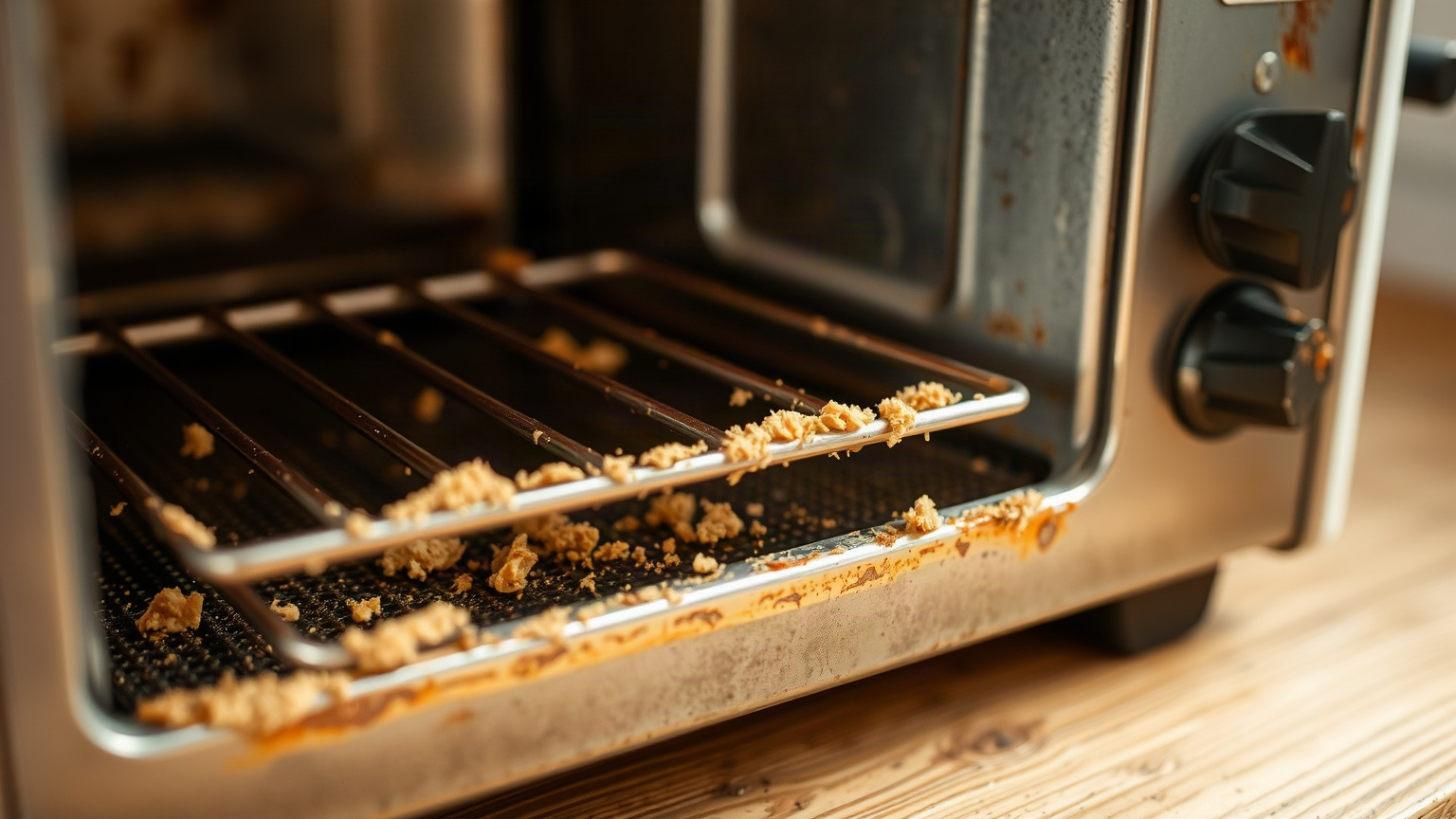
Clean the crumb tray religiously. I know, I know — everyone says this. But accumulated grease and crumbs at the bottom of the oven don’t just cause smells; they insulate the interior and force the heating elements to work harder to maintain temperature. That extra cycling adds up over years. I empty mine after every third or fourth use, and I wipe the interior walls with a damp cloth (when cool, obviously) about once a month.
Use a toaster oven baking pan rather than foil directly on the rack. Foil on the rack restricts airflow and can reflect heat unevenly back onto the elements, stressing them. A proper pan also catches drips before they hit the heating elements below.
Don’t use it as a storage unit. I’ve seen people leave bread bags and boxes on top of toaster ovens. The top surface gets genuinely hot during use and can damage whatever’s sitting there — and the heat venting through the top needs somewhere to go.
Let it cool before covering or storing it. Trapping heat inside speeds up wear on the internal components. Give it 20–30 minutes to fully cool with the door slightly ajar.
If you want to know more about how hot a toaster gets versus a toaster oven during normal operation, that piece covers the temperature differences in more detail — it’s relevant if you’re trying to understand why your appliance is cycling the way it does.
One thing I’d add that most people overlook: use a proper toaster oven wire rack that fits your specific unit correctly. A rack that’s too small slides around and can knock against heating elements. After years of use, that kind of repeated contact causes wear you won’t see until an element actually cracks.
The Edge Case Nobody Talks About: Voltage Fluctuations and Toaster Oven Lifespan
This one barely gets mentioned anywhere, and it should. If you’re in a home or apartment with older wiring, or you’re in a region with inconsistent power supply, your toaster oven is experiencing regular voltage spikes and drops. That’s genuinely hard on heating elements and electronic controls.
A toaster oven pulling 1500 watts expects consistent 120V supply. Older homes, particularly those built before the 1970s, sometimes deliver 110–115V consistently, and that lower voltage forces elements to run hotter and longer to compensate. According to the U.S. Department of Energy, voltage variation is one of the leading causes of premature appliance failure that homeowners don’t account for.
If you’re burning through toaster ovens every 2–3 years and can’t figure out why, it might not be the brand. It might be your outlet. A plug-in voltage tester costs about $10 and is worth checking before you blame Hamilton Beach again.
When to Replace vs. When to Repair
Short answer: almost always replace. A thermostat replacement — if you can even find the part — runs $15–$30 for the component. But labor at a small appliance repair shop, if you can find one (increasingly rare) runs $40–$60 minimum for the diagnostic alone. You’re often spending $70–$90 to fix a $60 appliance.
The exception is a premium unit. If you have a Breville Smart Oven that you paid $250 for three years ago and it’s just a door spring or a crumb tray slide that’s broken, yes — look for replacement parts. Breville actually stocks parts and has reasonable customer service. For anything else, under $150 original purchase price, just replace it.
Serious Eats has a decent explainer on what to look for in a replacement toaster oven if you’re shopping new — their testing methodology is thorough and worth reading before you spend money.
So When Should You Actually Replace Yours?
If your toaster oven is over 6 years old and showing any two of the warning signs above, replace it. Don’t wait for it to fail completely — a toaster oven that can’t hold temperature is probably also a toaster oven with degraded internal insulation and aging wiring. The risk profile goes up as the appliance ages, not just the inconvenience.
If it’s under 3 years old and already struggling with temperature, it might be a defective unit. Check the warranty — most manufacturers offer 1 to 2 years, and some problems (like a thermostat that was never calibrated correctly from the factory) should be covered.
And if you’re still on the fence, just buy a cheap oven thermometer. Put it inside, set the oven to 350°F, let it preheat for 10 minutes, and read the actual temperature. If there’s more than a 25–30 degree gap, you’ve got your answer.
Frequently Asked Questions
How long does a toaster oven last before it stops heating properly?
Most toaster ovens start showing noticeable heating problems between 5 and 8 years of regular use. Budget models often show thermostat drift and reduced heating capacity around year 3–4, while premium brands like Breville can hold calibration for 8–10 years. The first sign is usually extended preheat time or a larger-than-normal gap between the set temperature and actual interior temperature.
Why is my toaster oven not heating above 250°F?
A toaster oven stuck below 250–275°F almost always indicates either a failed or severely drifted thermostat, or a cracked/degraded heating element. Verify with a standalone oven thermometer to confirm it’s not a dial calibration issue. In most cases, repair isn’t cost-effective unless the unit is less than 2 years old and still under warranty.
What is the average life expectancy of a toaster oven?
The average toaster oven lifespan is 6 to 8 years with regular daily use. Light users (a few times per week) may see 8–10 years before meaningful performance degradation. Build quality matters significantly — budget models under $50 realistically last 3–5 years, while mid-range and premium units can reach or exceed the 8-year mark with basic maintenance.
Is it safe to use a toaster oven that’s not heating evenly?
Uneven heating by itself isn’t necessarily a safety hazard, but it’s a strong indicator that a heating element has partially failed. A partially failed element can develop hot spots and draw irregular current, which in some cases leads to overheating of adjacent components. If you notice uneven heating alongside any burning smell or visible discoloration inside the oven, stop using it.
How do I know if my toaster oven’s heating element is bad?
The clearest sign is visual — a healthy quartz element glows evenly orange-red across its full length when active. Dark spots, visible cracks, or sections that don’t glow indicate a failed area. For nichrome wire elements, the test is functional: place an oven thermometer inside, set to 400°F, and check after a 10-minute preheat. More than a 30–40 degree shortfall points to element degradation.

Written by
Emma founded Toastera to turn vague appliance advice into clear, researched, safety-first guidance on toasters and toaster ovens.
Free: the Toaster Oven Cheat Sheet
Get the printable cheat sheet (temps, cook times & safety tips) plus new recipes. No spam, unsubscribe anytime.