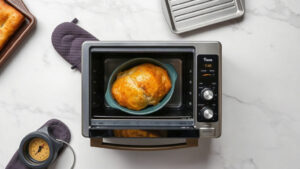
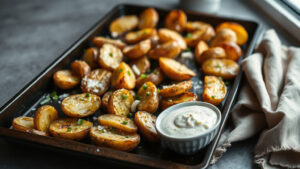
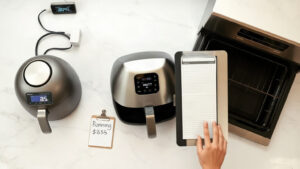
A toaster oven can handle nearly everything a full kitchen can, just on a smaller scale. Most compact models reach 450°F, which is hot enough to roast, bake, broil, and toast real food — not just reheat it. For dorm life without a microwave, that’s basically your entire cooking setup covered in one appliance.
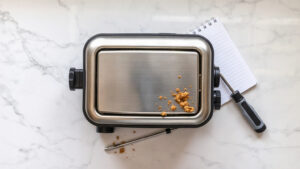
Safety First: Toaster ovens get very hot on the exterior surfaces and can cause serious burns — never place one inside a cabinet, against a wall, or on carpet. Check your dorm’s specific appliance policy before you plug anything in; some schools ban toaster ovens entirely or require a specific wattage limit (usually under 1,000W). Always unplug the unit when you leave the room, and never leave it running unattended with foil blocking the crumb tray, as grease buildup is a real fire risk.
Quick Facts Before You Start Cooking
- Most dorm-friendly toaster ovens sit between 700W and 1,200W — check your school’s wattage policy first
- A standard 4-slice / 0.5 cubic foot toaster oven fits a 9-inch pizza or a small sheet pan, which is more than enough for one or two people
- Preheat time is usually 5–8 minutes, faster than most full ovens
- You do not need special “toaster oven recipes” — just cut your portions down and reduce cook time by about 25% compared to standard oven times
- A small toaster oven baking pan and a wire rack are the only accessories you genuinely need to own
Why a Toaster Oven Actually Works for Dorm Cooking
I’ll be honest: I was skeptical the first time I tried making a real dinner in a 1,000W countertop model. It seemed like the kind of thing that would produce sad, unevenly cooked food. I was wrong. What I’ve found after testing probably a dozen different units is that a decent toaster oven — even a budget one — produces crispier results than a microwave ever could, and often crispier than a full oven because the heating elements are right there, inches from your food.
The catch is that small interior space heats unevenly if you’re not paying attention. One side runs hotter. Rotate your pan halfway through. That’s about the only real adjustment dorm cooking requires compared to a standard kitchen setup. If you want to go deeper on how these ovens actually heat, I wrote about how hot a toaster gets in a separate piece — worth a skim if you’re new to this.
For dorm rooms specifically, the appeal is obvious. No stove. Probably no microwave. Maybe a mini fridge and a communal kitchen down the hall that nobody wants to use at 10pm. A best mini toaster ovens roundup I put together covers what to buy if you’re still shopping — but if you already have one sitting on your desk, let’s just get cooking.
The 7 Meals (With Actual Times and Temps)
1. Sheet Pan Eggs and Vegetables
This one surprised me. Crack two eggs onto a greased baking pan, throw in whatever vegetables you have — pre-cut peppers, cherry tomatoes, spinach — add a little salt, and bake at 375°F for 12–14 minutes. The eggs set, the vegetables soften slightly and get a little color on the edges. It’s not a fancy brunch situation. It’s just a solid breakfast that takes no skill whatsoever. The first time I made it I pulled it out at 10 minutes and the whites were still jiggly, so 12 minutes minimum in a compact unit.
2. Quesadillas
Place a flour tortilla flat on the rack, add shredded cheese and anything else you have (canned black beans, pre-cooked chicken strips, salsa), fold in half, and broil on high for 3–4 minutes per side. Watch it. Broil cycles run hot and the line between perfectly crispy and burnt is about 90 seconds. I set a timer and stand there the first time with any new oven. It’s worth it — you get real crunch that no microwave quesadilla ever achieves.
3. Roasted Chickpeas
This one’s genuinely useful because roasted chickpeas keep for days and you can eat them as a snack, throw them on a salad, or add them to anything needing protein. Drain and dry a can of chickpeas very well (wet chickpeas steam instead of roast — that’s the part everyone skips and regrets), toss with olive oil and whatever spices, and roast at 400°F for 25–30 minutes, shaking the pan once at the halfway point. The result should be dry, crunchy, and a little crackly. If they’re chewy, they need more time.
4. Baked Potato
Scrub a medium potato, stab it about eight times with a fork (this matters — skipping it causes the thing to split open), rub with a tiny amount of oil and salt, and bake directly on the rack at 400°F for 45–50 minutes. That’s longer than most recipes say. In a small toaster oven the skin gets genuinely crispy, which is the point of a baked potato in the first place. Top with whatever — shredded cheese melts perfectly if you add it in the last 2 minutes under the broiler.
5. Pizza Toast (Better Than Frozen Pizza, Actually)
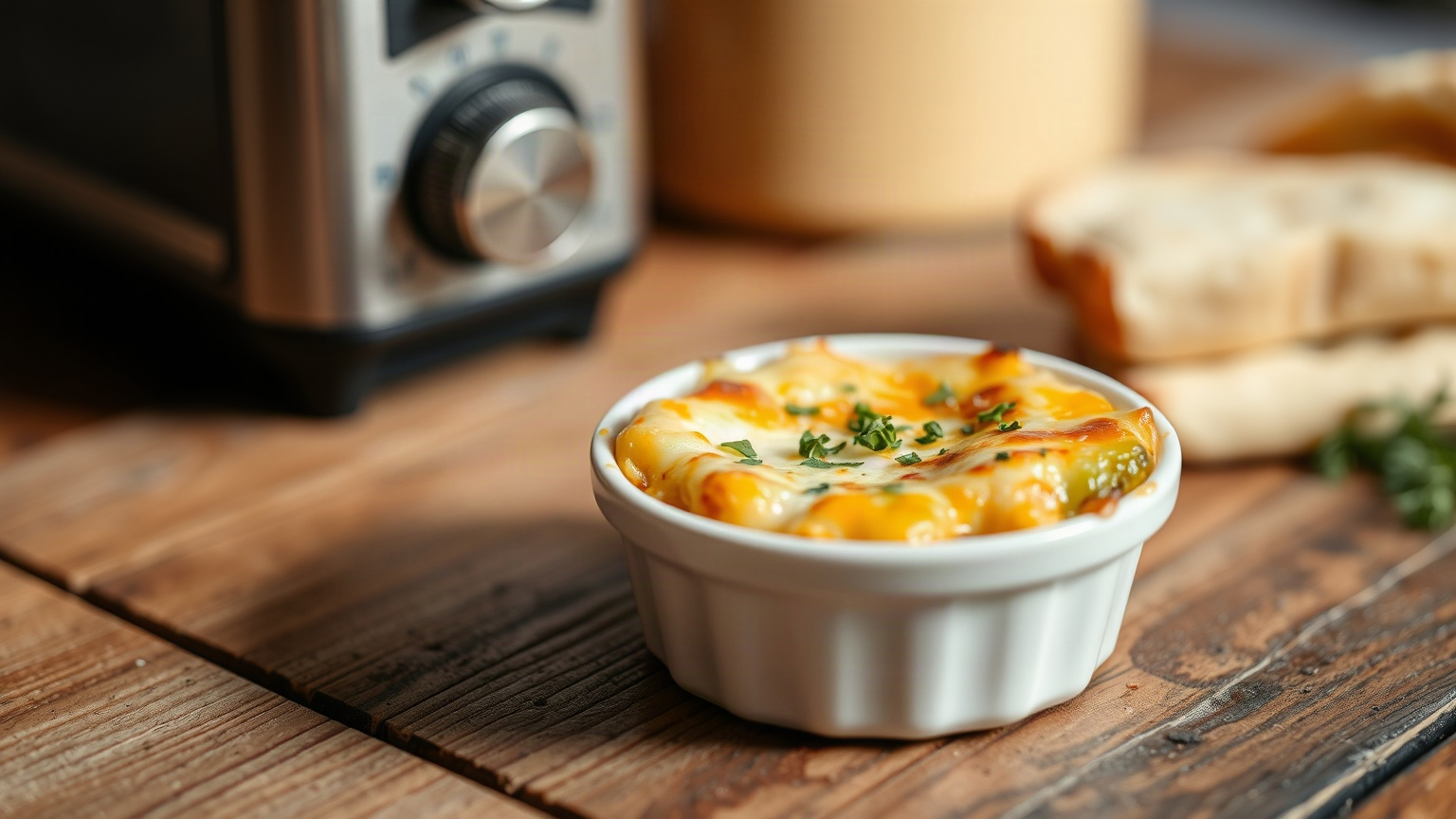
Take a thick slice of bread — sourdough or a ciabatta roll if your dining hall or nearby grocery carries it — spread on jarred marinara, add shredded mozzarella and any toppings. Broil on high for 4–5 minutes until the cheese bubbles and starts to brown. This takes under 10 minutes total and tastes noticeably better than the frozen personal pizzas that sell for the same price at the campus store. The bread gets crisp on the bottom because it’s sitting on metal, which frozen pizza crust rarely achieves without a specific pan.
6. Salmon Fillet
Here’s the one that shocks people. A single salmon fillet — fresh or thawed from frozen — fits easily in any standard toaster oven. Season it, place it on a lightly oiled piece of foil on the baking pan, and bake at 400°F for 12–15 minutes depending on thickness. The USDA recommends an internal temperature of 145°F for fish, so if you have a cheap meat thermometer, use it. The result is genuinely good salmon. Not restaurant-quality, but real food. The edge case nobody mentions: if you’re in a shared dorm room, your roommate will smell this. Just a heads up.
7. Cookie (Single Serving)
One cookie. At 11pm. This is absolutely a valid use of cooking equipment. Mix 1 tablespoon of softened butter, 1.5 tablespoons of brown sugar, a tiny pinch of salt, a few drops of vanilla extract, and about 3 tablespoons of flour with a small handful of chocolate chips. Shape into a rough disc on a piece of foil on the pan. Bake at 325°F for 9–11 minutes. It will look underdone when you take it out. Leave it on the pan for 5 minutes. It’ll finish setting up. Eaten warm it’s actually excellent — chewy in the middle, slightly crispy at the edge. I’ve made some version of this more times than I’ll admit.
What You Actually Need to Stock
You don’t need much. The pantry list for all seven meals above is pretty short: olive oil or cooking spray, salt, a few basic spices (garlic powder, paprika, oregano covers most things), canned chickpeas, jarred marinara, shredded cheese, flour tortillas, and eggs. Add in a potato, a salmon fillet, and bread and you’ve got a week of actual meals.
Equipment-wise: the pan that comes with your toaster oven is fine for most things. A toaster oven wire rack that fits inside your specific model is useful for things like quesadillas and toast-style items where you want airflow underneath. That’s really it. You don’t need silicone mats or special pans at first.
A Quick Comparison: What a Toaster Oven Does vs. What You’d Miss Without One
| Cooking Task | Toaster Oven | Microwave Only | No Appliances |
|---|---|---|---|
| Crispy texture on food | Yes, consistently | No (steams food) | No |
| Baking (cookies, potatoes) | Yes | No | No |
| Reheating pizza | Excellent — stays crispy | Soggy results | No |
| Broiling / melting cheese | Yes | Limited | No |
| Cooking raw protein (fish, eggs) | Yes | Possible but poor texture | No |
| Speed for simple reheating | Moderate (5–10 min) | Fast (1–3 min) | No |
For more on reheating specifically, this guide on reheating food in a toaster oven covers leftovers from the dining hall or delivery food far better than I’ll get into here.
The Edge Case: What to Do If Your Dorm Bans Toaster Ovens
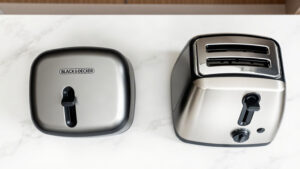
Some schools do ban them. Usually it’s a wattage policy rather than a blanket ban, which means a 700W model might be technically allowed when a 1,500W unit isn’t. Check the actual number in your student housing policy, not just the category. Most small toaster ovens marketed specifically for dorms — like the Black+Decker 4-slice model — run around 1,000W and slip under stricter limits.
If you’re truly stuck with zero heating appliances: a kettle is sometimes allowed even when toaster ovens aren’t. You can make oatmeal, instant noodles, couscous, and surprisingly good pour-over coffee with just boiling water. It’s not the same, but it’s not nothing. The Serious Eats approach to dorm cooking has a decent section on kettle-only meals if that’s your situation.
Wrapping Up
A toaster oven in a dorm room changes what’s actually possible for dinner. The seven meals above aren’t aspirational recipes from a food blog. They’re things that genuinely work in a small space with limited supplies and no cooking experience required. Start with the baked potato or the quesadillas — both are nearly impossible to mess up badly. Save the salmon for when you’ve got the hang of your oven’s quirks. And make the cookie at least once. You’ll thank yourself.
For more on which small ovens are actually worth buying, the Food Network’s toaster oven tips are a reasonable starting point for understanding what features matter. But honestly, almost any functional toaster oven beats cooking nothing.
Frequently Asked Questions
Can you really cook a full meal in a dorm room toaster oven?
Yes, a real meal — not just reheated stuff. Proteins, vegetables, eggs, and even baked goods all work fine in a standard toaster oven. The portion size is smaller than a full kitchen, but the cooking method and results are genuinely comparable. The main limitation is you can’t cook a large volume of food at once.
What wattage toaster oven is allowed in most dorms?
Most schools that allow toaster ovens cap wattage at 1,000W or 1,200W, though policies vary widely. Check your specific housing agreement — it’ll usually list it under “prohibited appliances” or “electrical policy.” Models in the 700W to 1,000W range are the safest bet for compliance.
How long does it take to cook food in a toaster oven compared to a regular oven?
Toaster ovens often cook 10–25% faster than full-size ovens because the heating elements are closer to the food and the interior is smaller, so it holds heat more efficiently. Preheat takes about 5–8 minutes versus 15–20 for a full oven. Keep an eye on food the first time you make something new — things like broiling especially go faster than you’d expect.
Is it safe to use a toaster oven in a dorm room?
It’s safe with basic precautions: keep it at least 4 inches from walls and curtains, never run it unattended, clean the crumb tray regularly to prevent grease buildup, and unplug it when you leave. The main risks are fire from accumulated grease or placing the unit against something flammable — both are very preventable with routine care.
What’s the best toaster oven for a college dorm room?
For most students, a 4-slice toaster oven in the 1,000W range — like the Black+Decker TO1760SS or similar budget models — hits the right balance of size, function, and wattage compliance. You don’t need convection or air fry features for basic dorm cooking. A simple bake/broil/toast unit under $40 does everything on this list.

Written by
Emma founded Toastera to turn vague appliance advice into clear, researched, safety-first guidance on toasters and toaster ovens.
Free: the Toaster Oven Cheat Sheet
Get the printable cheat sheet (temps, cook times & safety tips) plus new recipes. No spam, unsubscribe anytime.