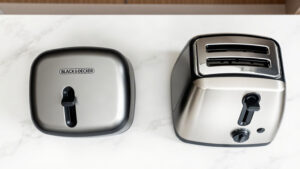
A toaster oven costs roughly 2 to 3 cents per hour to run, while a conventional electric oven costs between 8 and 13 cents per hour — meaning a full-size oven can cost four to six times more to operate for the same task. The main reason is simple physics: a smaller cavity heats up faster and loses less energy to the surrounding air. For everyday cooking like reheating leftovers, baking a chicken breast, or making toast, that gap adds up to real money over a year.
Safety First: Both conventional ovens and toaster ovens draw significant electrical current and reach temperatures high enough to cause serious burns. Never leave either appliance unattended for extended periods, keep flammable materials at least 12 inches away from a toaster oven’s exterior vents, and always use oven mitts rated for at least 400°F when removing cookware. If your toaster oven’s heating elements glow unevenly or you smell burning plastic, unplug it immediately and inspect before next use.
Quick Facts
- A standard electric conventional oven draws 2,000–5,000 watts; most toaster ovens draw 1,000–1,800 watts.
- At the U.S. average electricity rate of roughly 16 cents per kWh (2024), a conventional oven costs about 8–13¢ per hour vs. 2–3¢ per hour for a mid-size toaster oven.
- Toaster ovens preheat in 4–6 minutes; conventional ovens typically take 15–20 minutes, burning energy before you even put food in.
- Switching daily cooking tasks to a toaster oven can realistically save $30–$80 per year on your electricity bill, depending on usage.
- The efficiency advantage shrinks (and can reverse) when you’re cooking large batches that need multiple toaster oven cycles.
The Real Numbers: Wattage, kWh, and What That Means for Your Bill
Let’s get into the actual math, because a lot of articles stop at “toaster ovens use less energy” without telling you how much less. That vagueness doesn’t help you decide anything.
A conventional electric oven typically pulls between 2,000 and 5,000 watts depending on whether you’re using the bake element alone or cranking the broil element at the same time. A practical midpoint for normal baking is around 3,500 watts, or 3.5 kW. Run that for one hour and you’ve used 3.5 kWh. At the 2024 U.S. national average of about 16 cents per kWh, that’s 56 cents per hour — though with a preheating cycle factored in, real-world cost per cooking session often runs higher per useful cooking minute.
Most toaster ovens sit between 1,000 and 1,800 watts. My go-to counter unit, a Breville Smart Oven, is rated at 1,800W. At full tilt, that’s 1.8 kWh per hour, which costs about 29 cents. But here’s the thing — it almost never runs at full power for a full hour, because it preheats in under 5 minutes and the thermostat cycles the elements on and off. In practice, a 30-minute bake in a toaster oven might actually consume 0.4–0.6 kWh total, versus a conventional oven that burned through at least 0.8 kWh just preheating.
| Appliance | Typical Wattage | kWh per Hour (full draw) | Cost per Hour (@ $0.16/kWh) | Avg. Preheat Time |
|---|---|---|---|---|
| Conventional Electric Oven | 2,000–5,000W | 2.0–5.0 kWh | 32¢–80¢ | 15–20 min |
| Conventional Gas Oven | ~18,000 BTU/hr | ~0.5 kWh equivalent* | Varies by gas rate | 10–15 min |
| Large Toaster Oven (e.g. Breville BOV900) | 1,800W | 1.8 kWh | ~29¢ | 4–6 min |
| Mid-Size Toaster Oven (e.g. Cuisinart TOA-60) | 1,500W | 1.5 kWh | ~24¢ | 4–5 min |
| Compact Toaster Oven (e.g. Hamilton Beach 31127) | 1,000W | 1.0 kWh | ~16¢ | 3–4 min |
One thing that tripped me up early on: I kept comparing wattage ratings as if ovens run at full wattage constantly. They don’t. Both appliances cycle. But conventional ovens cycle over a much larger thermal mass — more air volume, heavier cavity walls — so they work harder overall to maintain temperature. The toaster oven’s small cavity stabilizes quickly and holds heat with less effort.
My First-Hand Test: Baking a Chicken Breast Two Ways
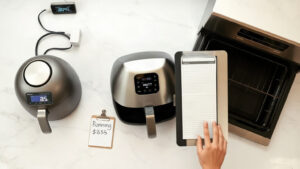
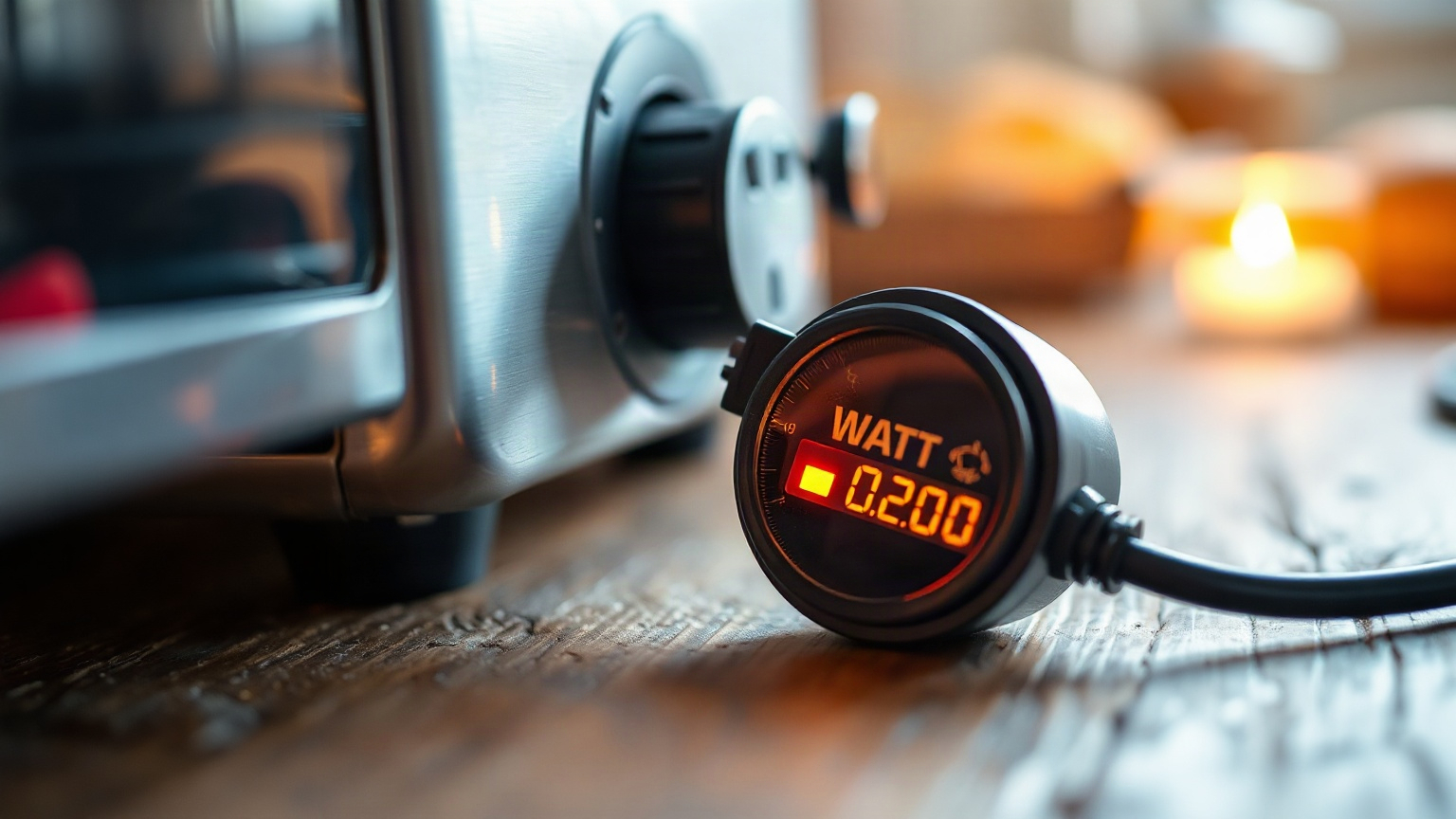
I ran the same meal through both appliances with a plug-in energy monitor (a Kill A Watt meter, roughly $25 on Amazon — worth every cent if you’re serious about this stuff).
The task: one bone-in chicken breast, 400°F, cooked until the internal temp hit 165°F.
Conventional oven (GE 30″ electric range): Preheat took 18 minutes. Total cook time was 35 minutes after that. The Kill A Watt showed 1.1 kWh consumed from the moment I turned the dial to the moment I pulled the chicken. At 16 cents per kWh, that’s about 17.6 cents for a single chicken breast. In summer, that heat also dumped into my kitchen, which I’ll come back to.
Toaster oven (Breville Smart Oven, 1,800W): Preheated to 400°F in just under 5 minutes. Same chicken, same result — 165°F internal temp — in 30 minutes total active cook time. The Kill A Watt showed 0.48 kWh. That’s 7.7 cents. Less than half the cost, for identical food.
Over a year, if I make that chicken twice a week, I’m saving roughly $10 just on that one dish. Doesn’t sound like a lot. But stack it with reheating pizza, roasting vegetables, making garlic bread, baking cookies in small batches — the savings compound. Realistically, frequent toaster oven users save $30 to $80 annually, sometimes more in households with high electricity rates (California, Hawaii, parts of New England can run 25–35 cents per kWh).
Where the Conventional Oven Wins (And Don’t Let Anyone Tell You Otherwise)
I want to be honest here because a lot of “toaster oven vs. oven” content is written by people who seem determined to make the toaster oven win every scenario. It doesn’t.
Large Batch Cooking
If you’re roasting a 14-pound turkey, making three dozen cookies, or cooking a full sheet pan of vegetables alongside a casserole — the conventional oven is cheaper per unit of food. Running a toaster oven through two or three cycles to match that output costs more in total energy than one conventional oven run. The math inverts completely.
Consistent Even Heating Across Large Pans
Toaster ovens can have hot spots, especially on cheaper models. My Breville handles a 9×13 pan okay, but it’s tighter than I’d like. For larger, more complex bakes — think layered lasagna or a full cake — a conventional oven’s even, consistent heat distribution usually produces better results. The energy cost advantage of the toaster oven doesn’t matter much if you’re running it multiple times or fighting with uneven browning.
Gas Ovens Change the Calculation
This is the edge case almost nobody mentions. If you have a gas conventional oven and you’re in a region with cheap natural gas, the cost-per-hour comparison shifts significantly. Natural gas typically costs around $1.00–$1.50 per therm, and a gas oven running at 18,000 BTU/hr uses roughly 0.18 therms per hour — about 18 to 27 cents per hour in fuel cost alone. That’s still more expensive than a toaster oven in most cases, but it narrows the gap considerably. And gas ovens don’t produce the same heat dump into your kitchen as electric ones do. If your concern is summer cooling costs, gas oven vs. toaster oven is a closer race than you’d think.
The Hidden Cost: What Your Kitchen Temperature Is Doing to Your AC Bill
Nobody talks about this enough. In summer, your conventional oven dumps heat into your kitchen. That heat load then gets processed by your air conditioner. A central AC unit running at 3,000 watts to remove oven heat uses more electricity than a toaster oven would have in the first place.
I live in the mid-Atlantic region, where summers run hot and humid. On a 90°F day, using my conventional oven for 45 minutes raises the kitchen temperature noticeably — enough that my AC cycles on and stays on. Switching to the toaster oven on those days doesn’t just save on oven electricity. It keeps the kitchen cooler and reduces the AC load. That’s a real, if harder-to-quantify, cost savings.
The U.S. Department of Energy has noted that cooking appliances contribute meaningfully to household heat gain, and that using smaller appliances during hot months can reduce cooling costs. It’s not just hippie stuff — it’s thermodynamics.
Choosing the Right Toaster Oven for Daily Use (And My Actual Picks)
If the numbers above have you thinking about shifting more of your cooking to a toaster oven, the model you choose matters more than most buying guides admit. A cheap 1,000W unit will save you more on electricity but struggle to hold temperature accurately, meaning longer cook times that eat back some of those savings.
Here’s how I’d break it down:
Breville Smart Oven Air Fryer Pro (BOV900BSS) — Premium tier. 1,800W, 13 cooking functions, holds a 9×13 pan with room to spare. Accurate thermostat. This is what I use daily and it’s the one I’d recommend to anyone who cooks regularly. More expensive upfront, but it actually does what it promises. Check current prices for the Breville BOV900.
Cuisinart TOA-70 — Mid-range. 1,800W, solid air fry capability, good interior capacity. Slightly less precise thermostat than the Breville but significantly less expensive. Great for most households. If you’re making the switch from conventional oven for everyday meals, this is the practical choice.
Hamilton Beach 31127D — Budget tier. 1,000W, basic functions, small footprint. Fine for reheating and simple baking. If you mostly want to reheat leftovers and make toast without running your big oven, this gets the job done and the energy savings are real even at its modest wattage. Check out our list of best mini toaster ovens if this size range fits your kitchen.
| Model | Wattage | Price Tier | Capacity | Best For |
|---|---|---|---|---|
| Breville BOV900BSS | 1,800W | Premium | ~0.8 cu ft (fits 9×13) | Daily driver, replaces oven for most tasks |
| Cuisinart TOA-70 | 1,800W | Mid-range | ~0.6 cu ft | Most households, air fry + bake |
| Hamilton Beach 31127D | 1,000W | Budget | ~0.4 cu ft | Reheating, simple baking, small kitchens |
If you want a proper toaster oven baking pan or a replacement wire rack for better airflow, those accessories genuinely improve cooking results — especially for anything you’re crisping up. Cheap pan = steamed food. Good pan = proper browning. That’s not a minor thing.
For more on getting the most out of the smaller appliance, the reheating food in a toaster oven guide covers temperatures and times that most people get wrong the first time (I definitely did).
The Bottom Line
For most everyday cooking tasks, a toaster oven is genuinely cheaper to run — not marginally, but meaningfully. The combination of lower wattage, faster preheat, and smaller thermal mass makes the math pretty decisive. My Kill A Watt test showed the toaster oven using less than half the electricity for the same chicken breast. And for reheating food, the savings are even more dramatic because you don’t need to preheat as long or hold temperature as precisely.
That said, the conventional oven earns its place for big batch cooking, whole roasts, and anything that needs a large, evenly-heated cavity. Don’t get rid of it. Just stop using it by default for every cooking task.
The practical switch is simpler than people make it: anything under a pound and under an hour, use the toaster oven. Anything bigger or longer, think about whether it actually needs the big oven. Most of the time, it doesn’t. And that’s real money back in your pocket without changing what you eat or how you cook.
Frequently Asked Questions
How much does it cost to run a toaster oven for an hour?
A typical toaster oven running at 1,500–1,800 watts costs approximately 24 to 29 cents per hour at the U.S. average electricity rate of 16 cents per kWh. In practice, most toaster oven tasks run 20–40 minutes, so your real per-session cost is often 8 to 15 cents. That’s significantly less than a conventional electric oven, which costs 32 to 80 cents per hour depending on its wattage.
Is a toaster oven more energy efficient than a conventional oven?
Yes, for most single-dish or small-batch cooking tasks, a toaster oven uses 50–75% less electricity than a conventional electric oven. The efficiency comes from three factors: lower wattage draw, faster preheat time, and a smaller cavity that holds heat without working as hard. The advantage disappears for large batch cooking that requires multiple toaster oven cycles.
How much money can I save per year by using a toaster oven instead of a conventional oven?
Realistically, $30 to $80 per year for a household that cooks daily — more if you’re in a high electricity-rate state like California or Hawaii where rates run 25–35 cents per kWh. The savings are largest for frequent small tasks like reheating, baking single portions, and making toast or bagels. You’ll also see indirect savings in summer from reduced air conditioning load.
Can a toaster oven fully replace a conventional oven?
For one to two people, a large-capacity toaster oven like the Breville BOV900 can handle 80–90% of what a conventional oven does, including roasting, baking, and broiling. For families regularly cooking large portions — whole birds, multiple sheet pans, large casseroles — a conventional oven is still necessary. A toaster oven works best as a first choice for everyday meals, with the big oven as backup for large events.
Does a gas oven cost less to run than a toaster oven?
It depends on your local gas and electricity rates. At typical U.S. rates, a gas oven costs about 18 to 27 cents per hour in fuel — more than a toaster oven, but less than most electric conventional ovens. If natural gas is very cheap in your area, the cost gap between a gas oven and a toaster oven narrows significantly, especially for longer cooking sessions where preheat time is a smaller share of total runtime.

Written by
Emma founded Toastera to turn vague appliance advice into clear, researched, safety-first guidance on toasters and toaster ovens.
Free: the Toaster Oven Cheat Sheet
Get the printable cheat sheet (temps, cook times & safety tips) plus new recipes. No spam, unsubscribe anytime.